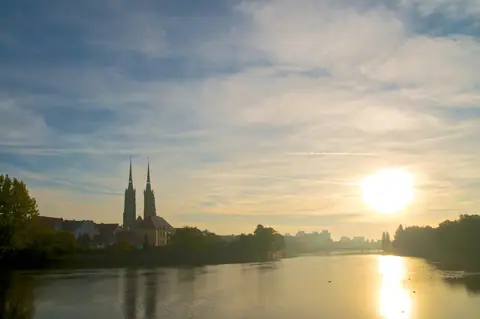
Photo: Aneta Pawska · CC BY-SA 4.0
Wrocław
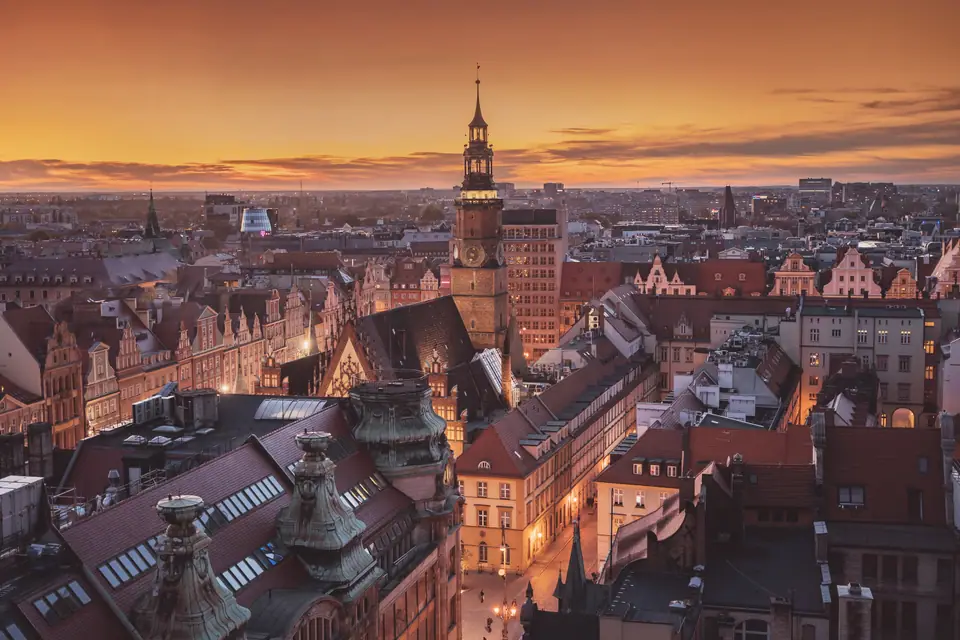
Spread across twelve islands of the River Odra and linked by more than a hundred bridges, Poland's third-largest city pairs pastel Market Square gables and Gothic brick spires with pioneering concrete architecture and a dusk gas lamplighter.
Quick decisions
When is it lively?
May through September fills riverside lawns and the Pergola fountain basin, while December brings the sprawling Christmas market onto Rynek.
Where should we stay?
Choose Stare Miasto for level walks to sights, the Four Denominations Quarter for quiet courtyards near cafes, or Nadodrze for painted residential blocks.
Do we need a car?
No. Walk central islands on foot and reach Great Island or outer districts easily on blue MPK trams and city buses.
What needs booking?
Reserve Panorama Racławicka timed slots ahead on weekends, and confirm Hydropolis or Zoo Afrykarium timed tickets during school holidays.
Getting around?
Tap a contactless bank card or phone on blue in-tram validators for digital tickets, or use Jakdojade and stop ticket machines.
Spending less
Dine at historic Bar Miś milk bar, pair one Panorama ticket with three sibling National Museum sites, and watch dusk lamps light free.
What should we eat?
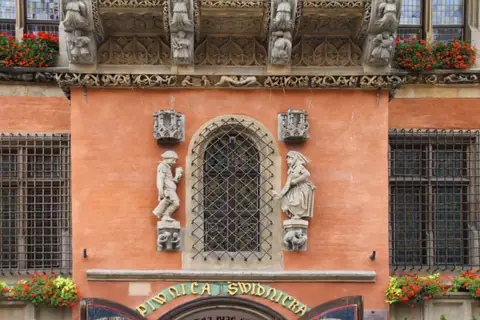
Order potato-and-curd pierogi ruskie, sourdough żurek śląski, late-night toasted knysza, and revived Schöps wheat beer inside Piwnica Świdnicka.
Overview
Set on the Silesian Lowlands along the River Odra and four tributaries, Wrocław holds 672,601 permanent residents inside a flat basin woven with twelve islands and over a hundred bridges. A Piast stronghold on Ostrów Tumski Cathedral Island earned its bishopric in AD 1000, centuries before 13th-century charters framed the spacious Market Square. Bohemian, Habsburg and Prussian crowns each left deep layers here prior to 1945, when Polish settlers and scholars arrived from Lwów with relocated libraries and museum collections.
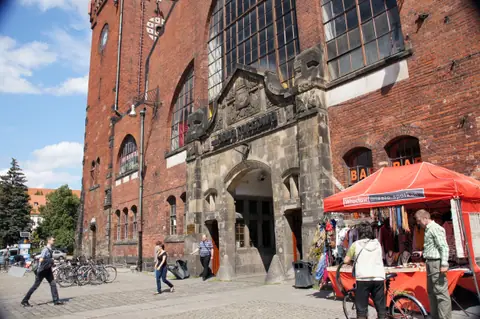
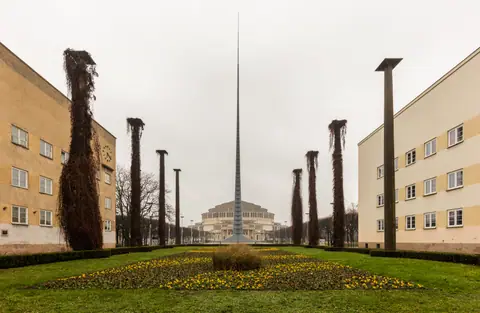
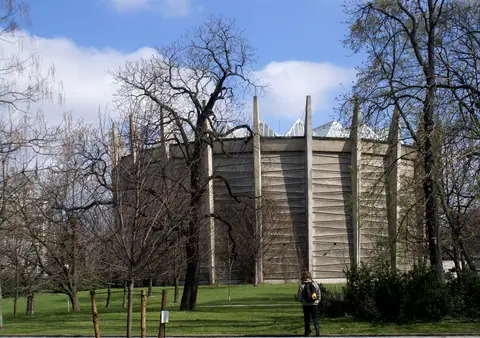
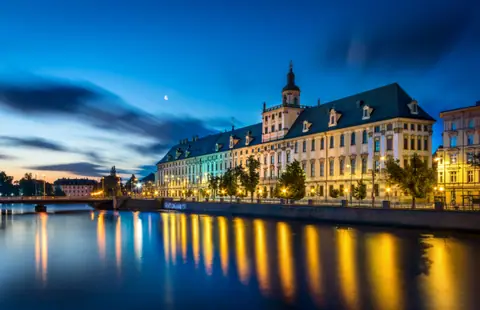
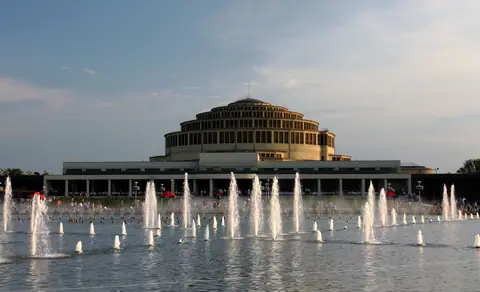
That tangled past turns daily walks into sharp contrasts. You cross cast-iron river spans between Baroque university vaults, red-brick Gothic churches, the vaulted 1908 Hala Targowa food market, and Max Berg's concrete UNESCO Centennial Hall out on Great Island. Lower Silesia keeps its own easy pace, so start with our island-by-island orientation guide before mapping tram rides.
Getting there
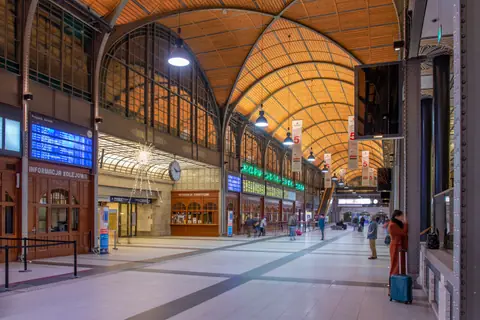
Copernicus Airport (WRO) sits roughly 10 to 13 kilometres west of town, tied directly to the main station and central stops by municipal bus 106 and night bus 206 on standard transit fares. Rapid PKP Intercity and EuroCity trains pull straight into Neo-Gothic Wrocław Główny from Kraków in about three hours, Warsaw in under four, Berlin in four to four and a half hours, Prague in roughly four hours, and Gdańsk up north.
Motorists approach on the east-west A4 motorway or the S8 expressway via the A8 bypass, leaving the car parked once inside town. Blue validators inside buses and trams take contactless cards without printing paper stubs, covered in full inside our Wrocław arrival and tram guide.
Where to stay
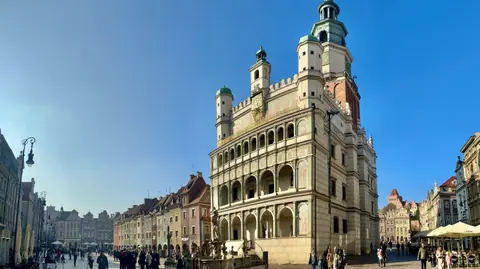
Newcomers staying inside the historic moat ring around Stare Miasto walk to Rynek and the Old Town Hall with zero morning transit, trading lively evening terraces for doorstep convenience. Calm, character-rich courtyards await just west in the Four Denominations Quarter around ul. Pawła Włodkowica, where historic houses of worship sit near independent wine bars.
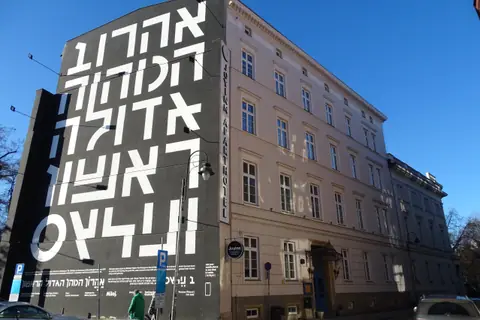
Travellers looking for residential bakery streets choose north-bank Nadodrze across the Oder bridges, while early rail commuters anchor in 19th-century Przedmieście Świdnickie close to Wrocław Główny.
Things to do
Walk the island spine on foot from Rynek and Plac Solny through medieval Stare Jatki and Hala Targowa, then step over Sand Island onto Ostrów Tumski before the evening gas lamplighter makes his round. Pair central walks with Max Berg's concrete rotunda at Hala Stulecia and the Japanese Garden on Great Island.
Reserve a 30-minute timed slot inside the 114-metre Racławice Panorama, which unlocks permanent galleries across all four National Museum branches for three months, and count bronze dwarfs across curbs along the route.
Food and drink
Everyday plates in Lower Silesia balance hearty peasant staples with revitalised city traditions. Students and office workers queue at no-frills milk bars such as Bar Miś on ul. Kuźnicza for steaming bowls of soup and potato-and-curd pierogi ruskie named after historical Red Ruthenia.
Under the Old Town Hall, restored medieval vaults at Piwnica Świdnicka pour small-batch takes on historical Schöps wheat beer paired with sourdough żurek śląski, while late-night stalls near Główny fold vegetables and garlic sauce inside toasted knysza.
Culture
Shelter from mountain cold makes Wrocław Poland's warmest tracked lowland regional capital, averaging 9.7 °C across 1991 to 2020 climate normals with July bringing both 26 °C highs and 91 mm of summer thunderstorms. Expect Polish złoty rather than euros, clean EU-standard tap water, and major supermarkets shuttered on non-shopping Sundays.
Seasonal life gathers around Pergola fountain shows and summer film festivals before festive wooden stalls reclaim Rynek from late November, with easy onward hops west to Dresden or Leipzig.
Weather by month
Wrocław is warmest in July, with average highs around 26°C, and coldest in January, when nights drop to about -3°C. July is the wettest month by rainfall (91 mm), with rain on about 14 days. For mild weather with fewer rainy days, aim for August and September.
| Month | Low | Range | High | Rain | Rainy days |
|---|---|---|---|---|---|
| Jan | -3°C | 3°C | 28 mm | 16 d | |
| Feb | -3°C | 5°C | 26 mm | 13 d | |
| Mar | 0°C | 9°C | 35 mm | 14 d | |
| Apr | 4°C | 15°C | 31 mm | 11 d | |
| May | 8°C | 20°C | 60 mm | 13 d | |
| Jun | 12°C | 23°C | 65 mm | 13 d | |
| Jul | 14°C | 26°C | 91 mm | 14 d | |
| Aug | 13°C | 25°C | 60 mm | 12 d | |
| Sep | 9°C | 20°C | 48 mm | 11 d | |
| Oct | 5°C | 14°C | 38 mm | 12 d | |
| Nov | 1°C | 8°C | 31 mm | 13 d | |
| Dec | -2°C | 4°C | 28 mm | 15 d |
Averages of daily values from 2015 to 2024. Rainy days are days with at least 1 mm of rain. Source: Open-Meteo · Compare destinations by month.
Wrocław on the map
Every place we cover in Wrocław. Tap a category or pin to explore.
In-depth Wrocław guides
Browse the guides grouped by topic: sights, neighbourhoods, food, transport, day trips and trip planning.
Sights, Landmarks & Parks
Key monuments, viewpoints, museums and nature trails.
- Islands, Market Arches and Bronze Dwarfs on FootA numbered four-stage walking circuit uniting Wrocław Market Square, University Baroque gems, Hala Targowa arches, Ostrów Tumski and rainy-day interiors.
- Max Berg's Concrete Ribs: Hala Stulecia and Great IslandArchitectural guide to Great Island (Wielka Wyspa): Centennial Hall dome, Poelzig Four Domes & Pergola, Iglica, Afrykarium and tram routes.
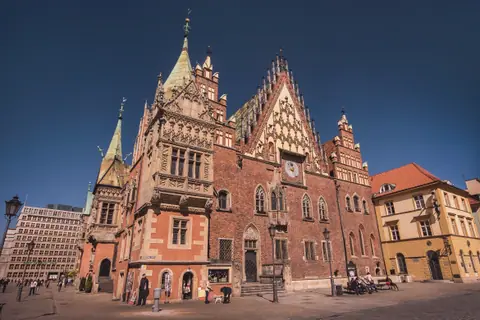
- Rynek Gables, Plac Solny and the Gothic Old Town HallUrban architecture of Rynek Market Square: Stary Ratusz, 1580 clock, Stüler Nowy Ratusz, 24-hour Plac Solny and medieval Stare Jatki.
- Cathedral Island at Dusk: Gas Lamps and Brick SpiresAtmospheric evening walk across Ostrów Tumski: Cathedral north-tower lift, two-tier Holy Cross church, Most Tumski and hand-lit gas lamps.
- Lwów's 114-Metre Cyclorama and the Krasnale TrailInside the 114-metre Racławice Panorama rotunda, MNWr Four Museums ticket inclusion, Orange Alternative origins and Tomasz Moczek bronze dwarfs.
Neighbourhoods & Where to Stay
Districts, historic quarters and the best bases for your stay.
Food & Drink
Local dishes, markets, cafés and dining districts.
Getting Around & Arrival
Airport transfers, public transit, passes and driving rules.
Trip Planning & Itineraries
When to visit, what to pack and day-by-day routes.
- Bridges Over the Oder: Reading Wrocław's River IslandsUnderstanding Wrocław through its Oder channels, multi-crown past, 1945 border transformation, University Baroque rooms and daily basics.
- Warmest Polish Summers, July Downpours and Odra FrostIMGW 1991 to 2020 climate rhythms across Wrocław, highlighting May garden blooms, July thunderstorm peaks, film weeks and frost on Rynek.
Need your embassy or consulate in Poland? See embassies and consulates in Poland.
Reviews
Log in to write a review.
No reviews yet.