Photo: Juraj Patekar · CC BY 2.0
The Upper Town, St Mark's Church & Lotrščak Tower
Medieval Gradec's sunlit ridge linking the reopened 1890 funicular, Lotrščak's midday cannon, Stone Gate, and St Mark's tiled roof.
Climb above Ban Jelačić Square onto the Gradec plateau and overhead tram wires vanish behind ochre townhouses and quiet cobbled lanes. Gornji grad keeps the compact street outline granted by King Béla IV in 1242. Travellers cross from gate to gate briskly while discovering medieval defences and quiet museums.
Start on the southern rampart edge above Lower Town, trace ancient walls eastward, and descend through candlelit Stone Gate toward central Dolac steps.
Climbing up via the overhauled 1890 funicular
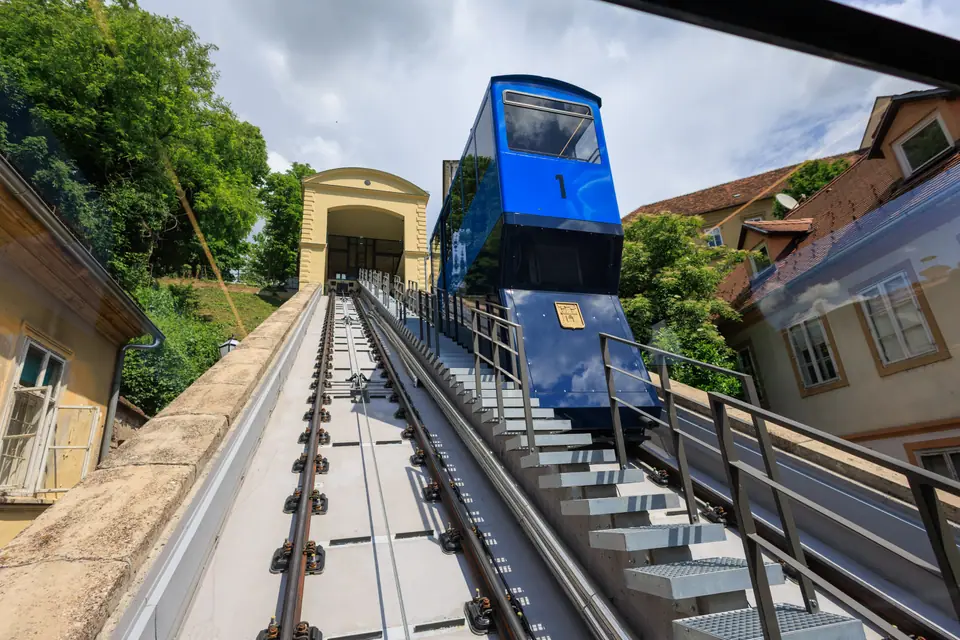
Tucked at the northern end of Tomićeva Street stands the stone boarding station of the Zagreb Funicular (Uspinjača). Opened in 1890 on a 66-metre inclined track at a 52% grade and electrified in 1934, it reaches Strossmayer Promenade smoothly in around 64 seconds.
Closed in January 2025 for its comprehensive 16-month mechanical modernisation, the historic line reopened cleanly on 19 May 2026. Air-conditioned cabins replicate classic 1974 bodywork while adding automated platform gates and smooth access for 28 riders per trip. Confirm live ZET boarding times online or climb the adjacent Zakmardi steps on foot.
Lotrščak Tower and the 1877 Grič Cannon salute
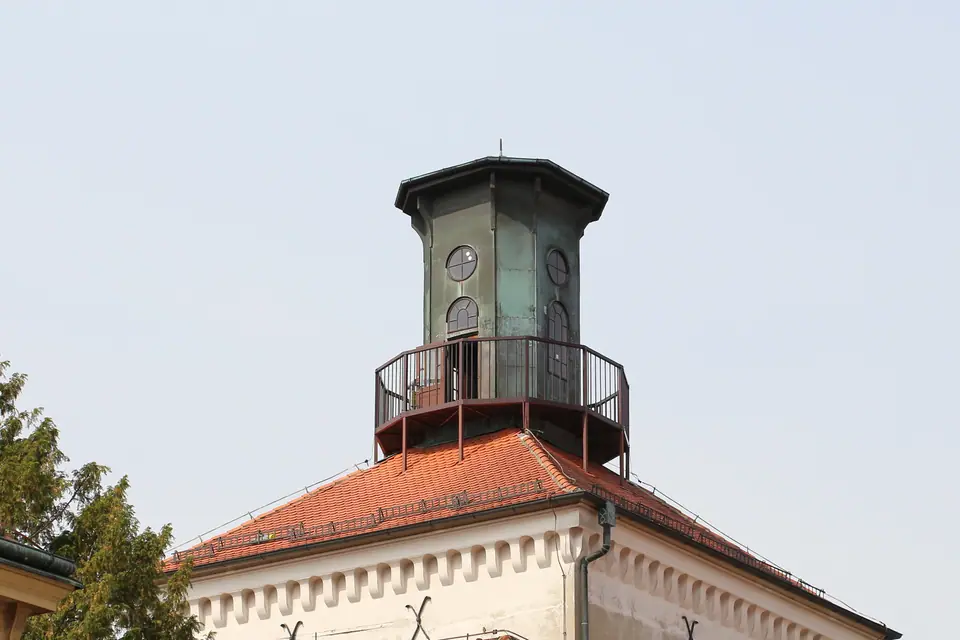
Upper station exits step straight out beside square thirteenth-century Lotrščak Tower, built around 1266 to reinforce Gradec's southern defensive curtain. Its medieval Latin name campana latrunculorum recalls the curfew bell rung nightly before timber city gates bolted fast.
Every day since 1 January 1877, a gunner has fired the Grič Cannon out across the southern terrace exactly at noon. Reach the walkway well before midday if startled by loud acoustic blasts. Inside, steep wooden flights climb into the lookout lantern for sweeping views across both central hills and Lower Town parks.
Strolling Strossmayer Promenade along ancient defences
Shaded Strossmayer Promenade runs east along Gradec's southern defensive wall beneath mature chestnut trees and wrought-iron park benches. Halfway down rests Ivan Kožarić's bronze statue of Croatian poet Antun Gustav Matoš looking thoughtfully over Ilica roofs toward Zagreb Cathedral's scaffolded towers on Kaptol. Look east past old balustrade streetlamps for bright dawn angles over green cathedral trees.
Stone flights drop easily toward Mesnička Street or connect east onto leafy Katarina Square beside yellow Dverce Palace. Summer evenings fill wooden stages here with acoustic music, puppet shows, and outdoor cinema beneath warm lights.
St Mark's Church roof and current square security perimeter
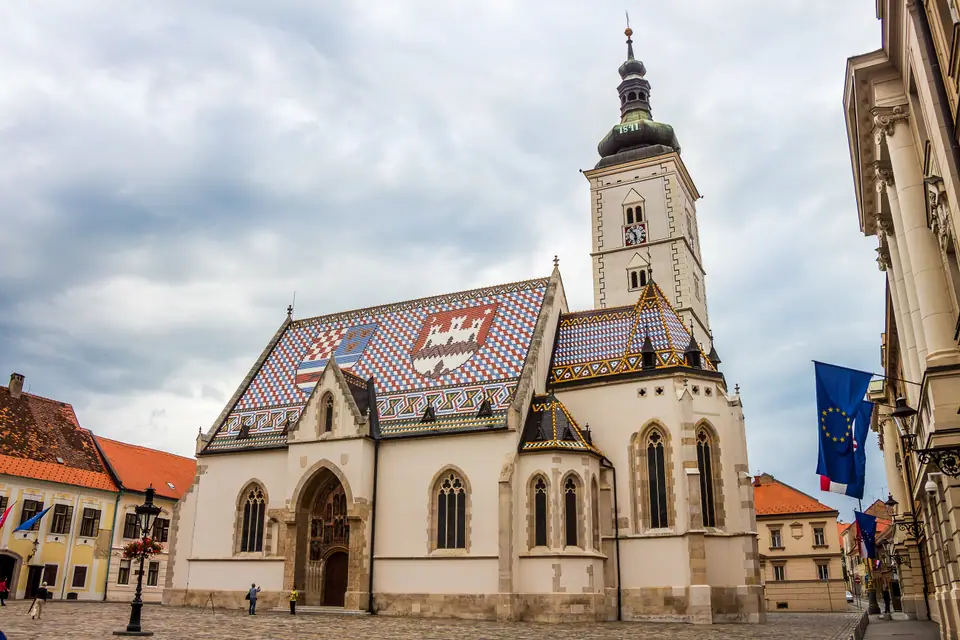
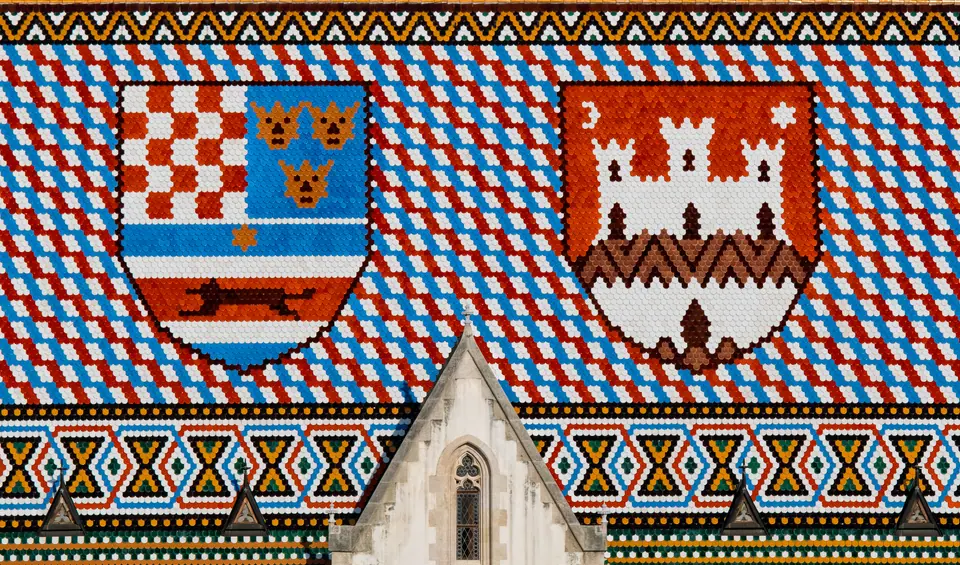
Walking north along Ćirilometodska Street leads toward St Mark's Square (Trg sv. Marka), framed by Banski Dvori Government Palace on the west and the Croatian Parliament (Sabor) facing east. St Mark's Church keeps thirteenth-century Romanesque walls beside a fourteenth-century Gothic nave. Architect Hermann Bollé crowned its 1878-1882 restoration with vivid glazed coat-of-arms roof tiles.
Following a shooting outside government offices in October 2020, police established a Category 1 security perimeter restricting casual crossing inside St Mark's Square. Major structural Parliament reconstruction also continues toward 2028. Worshippers attending scheduled Mass check through security checkpoints, while crisp views of the glazed roof remain easy from Demetrova and Ćirilometodska corners.
Museum of Broken Relationships inside Kulmer Palace
Steps south of St Mark's Square at Ćirilometodska 2, neoclassical Kulmer Palace houses the Museum of Broken Relationships. Artists Olinka Vištica and Dražen Grubišić opened its permanent home in October 2010 after touring heartbreak keepsakes worldwide since 2006. The project received the Kenneth Hudson Award in May 2011 for Europe's most innovative museum and opened a partner branch in Chiang Mai in November 2024.
Bright minimal galleries show roughly 3,500 donated objects linked to ended relationships across countries and decades. Expect wedding gowns sealed in glass, a carved wood axe, house keys, and candid handwritten captions. Leave unhurried quiet time inside before drifting down toward lunch along Skalinska and Tkalčićeva Street.
Kamenita vrata: candlelit gateway to Gradec
Heading east down Kamenita Street past Zagreb's historic medieval pharmacy walks straight through Kamenita vrata (Stone Gate), the sole surviving fortified entrance into Gradec. When a catastrophic fire destroyed wooden houses across Upper Town in May 1731, a framed painting of the Virgin and Child emerged unmarked inside the gatehouse ash.
Residents soon installed iron grilles and oak pews directly beneath the stone barrel vault, turning the carriageway into an active neighbourhood chapel. Hundreds of engraved marble and brass plaques marked Hvala coat shaded brick walls leading out onto sloped Radićeva Street.
Subterranean escape through 1943 Grič Tunnel
To cross beneath Gradec without climbing outdoor stairs in July heat, follow green tunnel signs linking Mesnička Street and Radićeva via Grič Tunnel. Workers excavated the 350-metre subterranean vault in 1943 as a public wartime air-raid shelter. The arched concrete passage remained closed after 1945 apart from civil shelter use during the early 1990s.
Renovated and opened cleanly in 2016 as a daytime pedestrian route with side stairs rising toward Tomićeva and Ilica courtyards, the tunnel carries cool air beneath warm-weather sightseeing walks and hosts festive winter light installations.
Evening walk back via Opatička Street and Popov toranj
Before dropping back down to Ban Jelačić Square, stroll north of St Mark's along peaceful Opatička Street. Aristocratic baroque palaces flank calm cobbles housing the Zagreb City Museum inside the 1650 Convent of Poor Clares. Glass cabinets inside preserve historical town charters, guild seals, and scale architectural models showing old Gradec walls. Further north stands the seventeenth-century Priest's Tower (Popov toranj), housing Zagreb's 1903 astronomical dome. At twilight, city lamplighters ignite historic gas streetlamps here individually by hand.
Where it is
- 1The Upper Town, St Mark's Church & Lotrščak Tower
- Zagreb Franjo Tuđman International Airport (ZAG) · about 11 km from here in a straight line
- Directions in Google Maps
Stations and taxi ranks: OpenStreetMap. Airports: OurAirports. Distances are in a straight line.
Traveller tips
Real advice from people who have been to Zagreb. Every tip is read by our team before it goes live.
No tips yet. Been here? Yours could be the first.
Thank you! Your tip will appear here after a quick review.
More in Zagreb
Continue exploring Zagreb with related neighbourhood, food, and planning guides