Photo: Vislupus · CC BY-SA 4.0
Things to Do in Zagreb
Walking between medieval hilltop gates, offbeat museums, shaded Austro-Hungarian parks, and forested ridge escapes.
Zagreb rarely subjects visitors to timed-entry queues or distant museum campuses. Compact ridges, leafy city squares, and forested foothills lie minutes apart on foot or by blue tram. Following a logical hillside sequence cuts out needless climbs between morning markets and sunset views.
Start around busy produce stalls in morning light, ride up onto Gradec toward noon, and save flat Lower Town gardens for afternoon shade.
Ban Jelačić Square and morning market life at Dolac
Orientation begins on broad Ban Josip Jelačić Square. Blue electric trams pass directly beside the stone Manduševac spring fountain. Stone steps north of the clock column climb into Dolac Market, opened in 1930 to move noisy food stalls off the plaza. Street musicians often gather beneath the stone terrace stairways on sunny mornings.
Crimson parasols shade seasonal growers and flower bunches across the open upper terrace. Below stairs, covered halls shelter butchers, coastal fish counters, and artisanal sir i vrhnje dairy vendors. Because phased centenary roof repairs sometimes move tables onto nearby European Square, verify live layouts via our central market walkthrough.
Riding the reopened 1890 funicular up to Gradec
Walk two short blocks west along Ilica to reach Tomićeva Street and the lower Zagreb Funicular station. Opened in 1890 along a 66-metre inclined track at a 52% grade, this short cableway resumed passenger runs on 19 May 2026 following a 16-month overhaul.
Air-conditioned replica cabins climb smoothly to Strossmayer Promenade, bypassing the steep Zakmardi steps beside the rails. Check running times on ZET's portal before joining the queue. Funicular rides require a separate fare beyond ordinary Zone 1 tram passes.
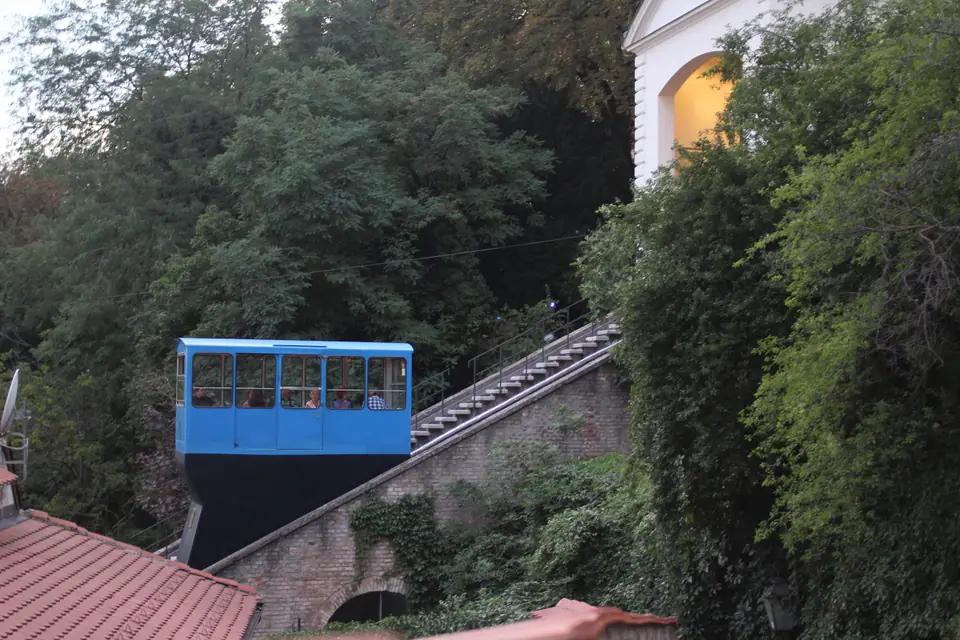
Lotrščak cannon terrace and St Mark's tiled roof
Square thirteenth-century Lotrščak Tower rises immediately outside the upper funicular doors. Medieval builders raised its heavy masonry walls to guard Gradec's southern gate. Every day at noon since 1 January 1877, a gunner has fired the Grič Cannon out across the Sava Valley.
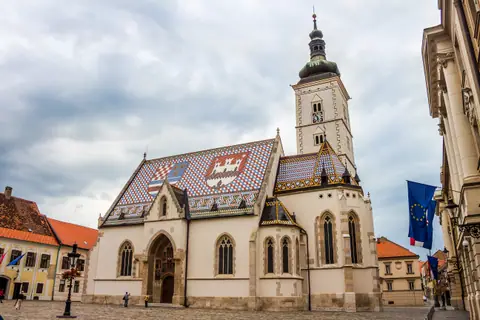
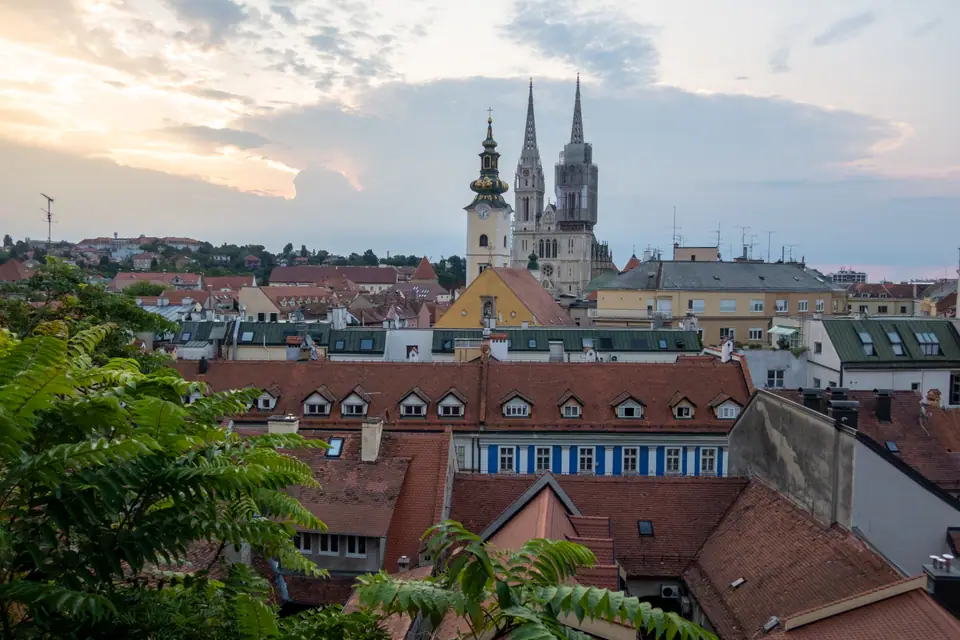
Step onto the terrace before midday to avoid startling cannon noise. Steep wooden stairs then lead inside the lookout cupola for clear 360-degree views across terracotta rooftops. Further north along Ćirilometodska Street gleams St Mark's Church beneath its 1882 glazed heraldic roof. Review active security barriers in our Upper Town monument notes.
Passing the Stone Gate shrine and Grič Tunnel
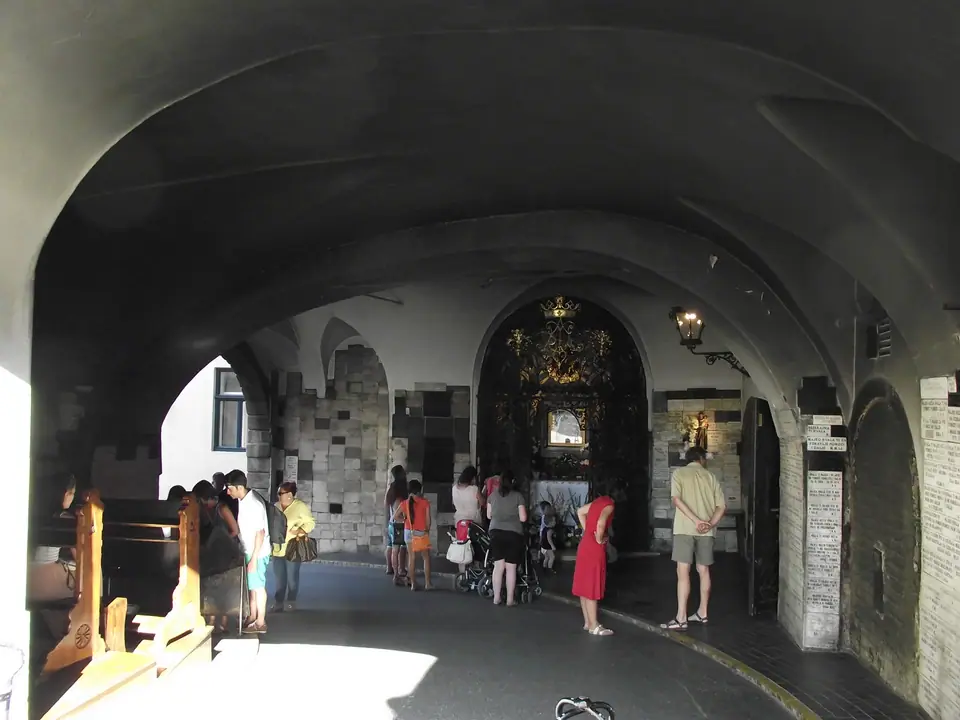
East down Kamenita Street, foot traffic funnels beneath Kamenita vrata, the surviving medieval Stone Gate linking Gradec with Radićeva Street. A sweeping blaze in 1731 burned timber rooftops across Upper Town while sparing an oil painting of the Virgin Mary inside the gatehouse.
Residents turned that shaded archway into an active candlelit chapel lined with gratitude plaques marked Hvala. Underneath Gradec, 350-metre Grič Tunnel runs flat between Mesnička Street and Radićeva. Crews excavated the bunker in 1943, and walkers gained cool summer crossings when it opened cleanly in 2016.
Offbeat collections inside Upper Town palaces
Baroque townhouses across Gradec reward curiosity inside intimate museum rooms that seldom fill up. Foremost is the Museum of Broken Relationships inside Kulmer Palace on Ćirilometodska 2. Artists Olinka Vištica and Dražen Grubišić opened its permanent galleries in October 2010. Morning tickets keep exhibition halls calm before group tours reach Gradec lanes.
Holder of the 2011 Kenneth Hudson Award for Europe's most innovative museum, its halls display roughly 3,500 personal objects submitted from breakups globally. Steps away along Ćirilometodska and Opatička streets, small museums showcase Croatian naïve reverse-glass painting and civic history inside a 1650 convent. Quiet courtyard benches offer welcome pauses between baroque rooms.
Kaptol's earthquake scars and Mirogoj's arcades
Crossing Tkalčićeva east into Kaptol brings travellers before Zagreb Cathedral. Hermann Bollé's twin neo-Gothic spires once climbed 108.4 metres above town. Heavy exterior scaffolding remains wrapped around truncated stone belfries after March 2020 earthquake damage. Fortunately, public entry resumed inside the braced vaulted nave in December 2025.
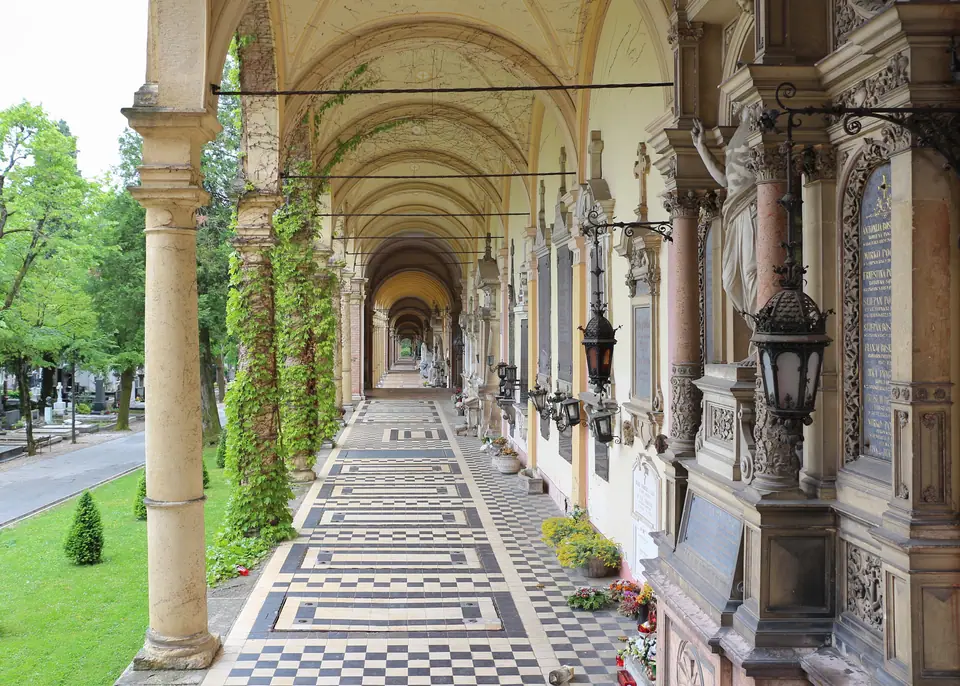
North up forested hills, ZET Bus 106 climbs past villas to 1876 Mirogoj Cemetery. Hermann Bollé enclosed its serene alleys with ivy-wrapped red arcades and green copper domes. While fenced northern wings undergo structural work, central garden walkways stay open; pair both sites via our Kaptol and Mirogoj heritage guide.
Walking Lenuci's Green Horseshoe museums
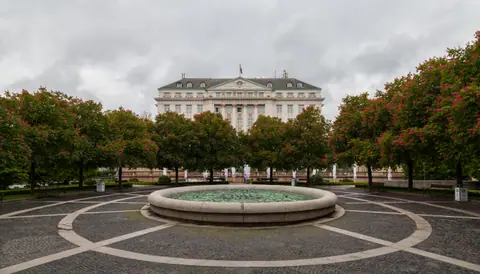
South of Ban Jelačić Square, Zagreb opens out into balanced nineteenth-century parkland framed by cream and yellow institutions. Begin under Zrinjevac plane trees beside the 1884 weather pillar and 1891 music stand. Continue straight past the yellow Art Pavilion standing on King Tomislav Square facing Glavni kolodvor.
Turn west through the 1889 Botanical Garden toward the 1895 Croatian National Theatre and Ivan Meštrović's bronze Well of Life fountain. Nearby on Roosevelt Square, the neo-Renaissance Mimara Museum reopened on 7 November 2026 after major repairs. Temporary Museum of Arts and Crafts exhibitions run along Ilica 163 into 2027. Grab coffee near Cvjetni trg before walking back north along Masarykova Street.
Woodland breaks in Maksimir Park and Medvednica
Whenever afternoon asphalt reflects summer heat, ZET Trams 11 or 12 reach Maksimir Park's 1794 entry gate cleanly. Shaded oak paths pass five artificial lakes, a red-and-cream 1843 belvedere pavilion, and the 1925 Zagreb Zoo grounds. Cool mountain breezes wait higher up on wooded Mount Medvednica north of town.
Board the 5,017-metre Sljeme Cable Car to climb directly toward alpine clearings around 1,035 metres. Pack an extra windproof shell because summit air cools quickly above city streets. Plan ridge trails via Medvedgrad walls using our Sljeme and Maksimir day-trip notes, then finish over warm plates from our Zagreb dining guide.
Where it is
- 1Zagreb
- Zagreb Franjo Tuđman International Airport (ZAG) · about 10 km from Zagreb in a straight line
- Directions in Google Maps
Stations and taxi ranks: OpenStreetMap. Airports: OurAirports. Distances are in a straight line.
Traveller tips
Real advice from people who have been to Zagreb. Every tip is read by our team before it goes live.
No tips yet. Been here? Yours could be the first.
Thank you! Your tip will appear here after a quick review.
More in Zagreb
Continue exploring Zagreb with related neighbourhood, food, and planning guides