Turkey Travel Guide: Regions, Routes and Practical Tips
How to choose regions, build a route and get around Turkey on a first trip, from Istanbul to the Aegean and the Turquoise Coast.
Turkey is bigger than most first-time visitors expect. The drive from Istanbul to the Iranian border is roughly as long as Paris to Rome, and the country spans two continents, seven official regions and several climates. Snow can sit on the Cappadocia rock cones while people swim at Antalya. This guide is about choosing where to go, putting it into a route that doesn't waste days on the road, and the practical side: flights, buses and fast trains, money, mosques and food.
We are based in Denizli, in the southwest, so the Aegean is home ground for us. We say so where it matters.
The short answer
For a first trip of ten days or so, do Istanbul, Cappadocia and one stretch of coast, and fly between them. That covers the three things most people come for: a great historic city, a strange volcanic landscape, and ancient ruins by the sea. Istanbul needs three or four days on its own; our Istanbul guide handles the city in detail, so we keep it brief here.
The choice you actually have to make is the coast. The Aegean (Ephesus, Pamukkale, olive groves, İzmir) is stronger on ancient sites. The Mediterranean around Antalya and the Lycian coast is stronger on beaches, boat days and warm water well into autumn. With two weeks you can have both.
The regions at a glance
Six areas cover almost everything a first trip is likely to include.
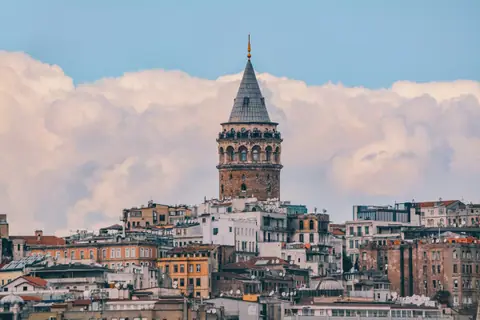
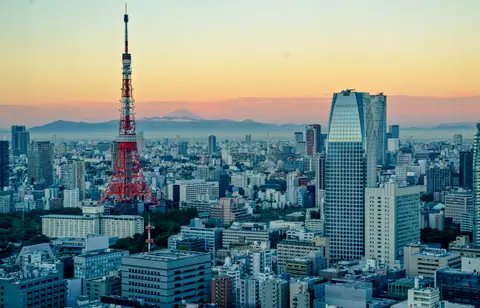
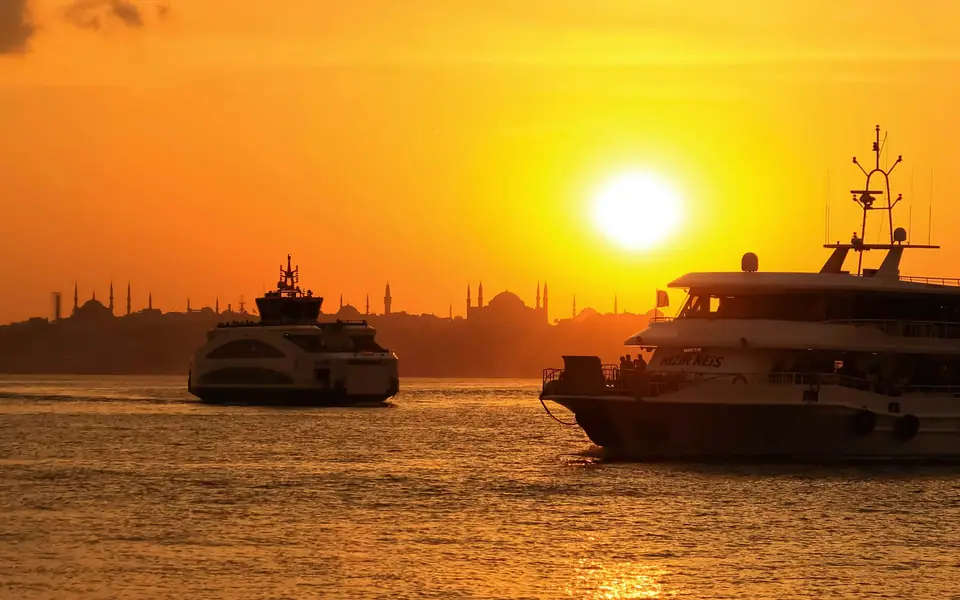
- Istanbul. Hagia Sophia, the Blue Mosque, Topkapı Palace, the Grand Bazaar, and the Bosphorus, the strait that splits the city between Europe and Asia. Ferries are public transport here, and they are the cheapest sightseeing boats you will ever take. Foreign visitors now see Hagia Sophia from the upper galleries with a ticket; our Hagia Sophia guide explains the system.
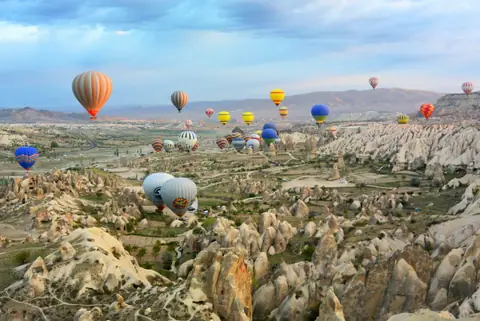
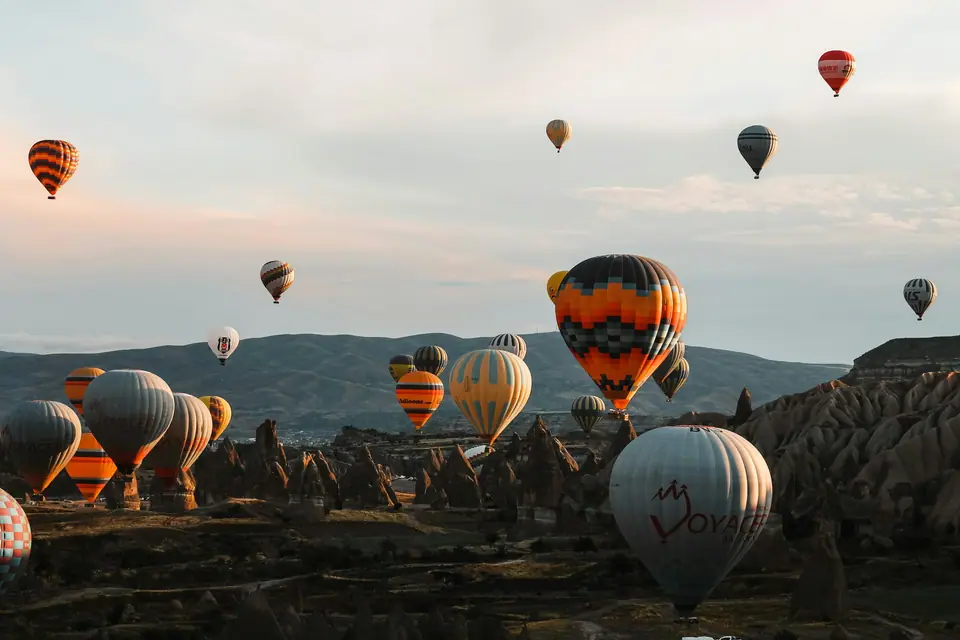
- Cappadocia. A plateau in Central Anatolia where soft volcanic rock has eroded into cones, pillars and valleys. People carved churches, homes and whole underground cities into it. Most visitors stay in Göreme or Ürgüp and plan the first morning around a balloon flight.
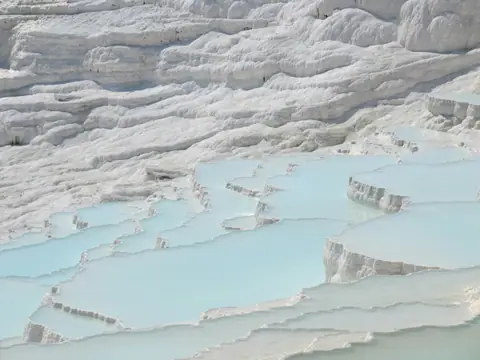
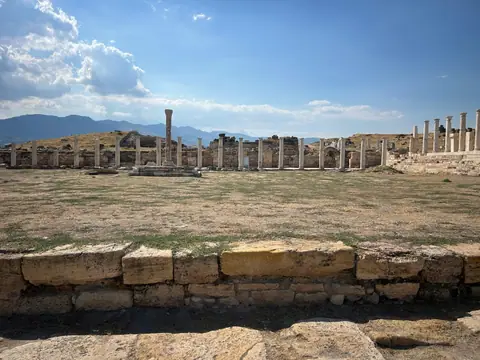
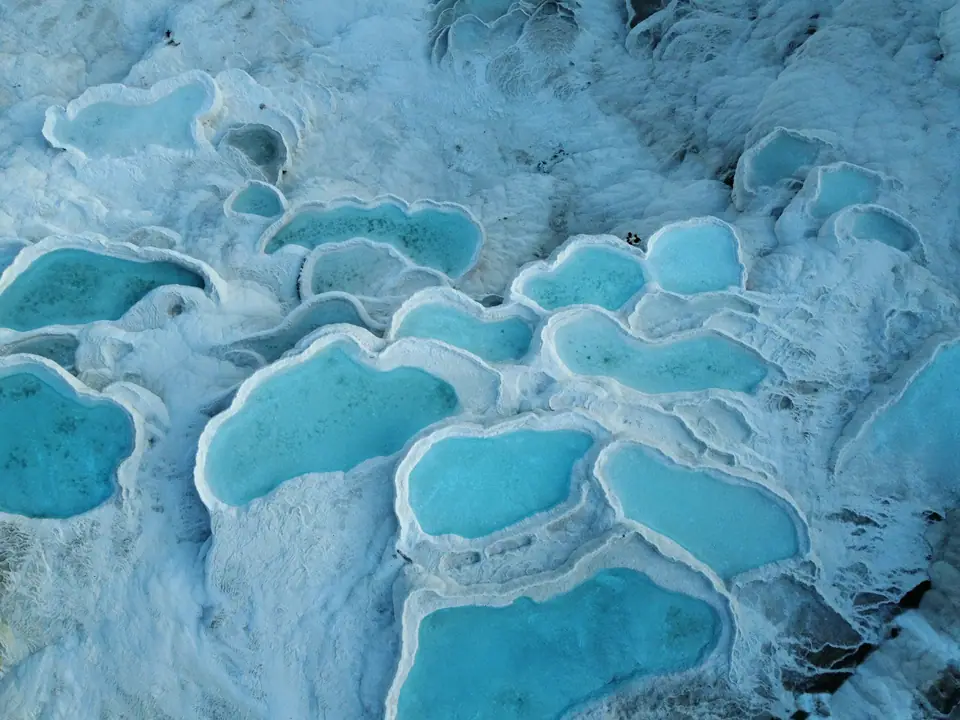
- The Aegean. Ephesus near Selçuk is one of the best-preserved Roman cities in the eastern Mediterranean. Inland, Pamukkale has white travertine terraces above the ruins of Hierapolis. Close to it, Tripolis, Laodicea and Aphrodisias see a fraction of the visitors. İzmir, the third city, is relaxed and easy to like.
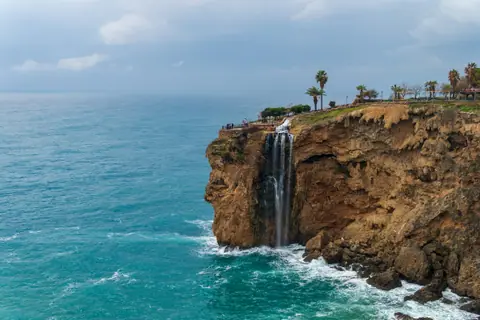
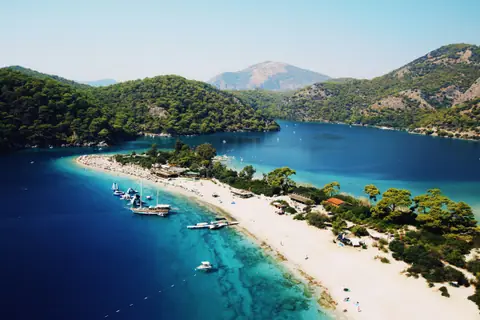
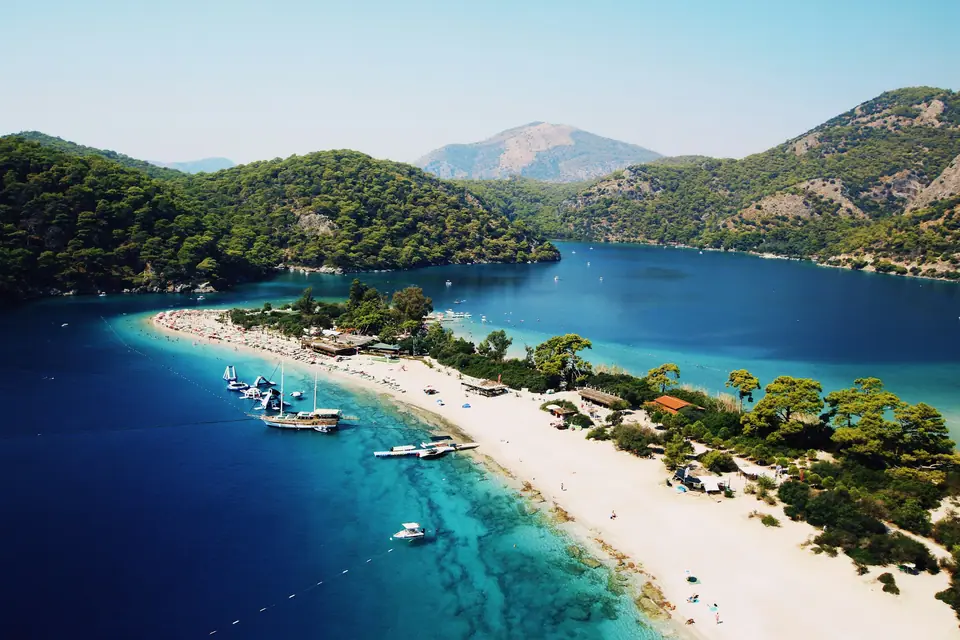
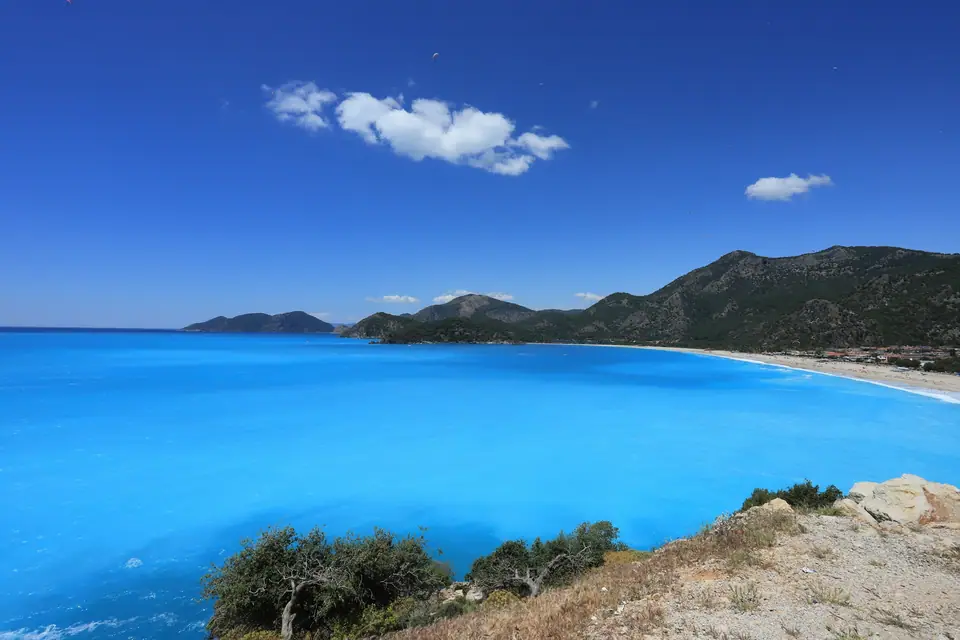
- The Turquoise Coast. Antalya, with its walled old town (Kaleiçi) and the big sites of Perge and Aspendos nearby, then west along the Lycian coast: Olympos, Kaş, Kalkan, Fethiye and Ölüdeniz. Pine forest runs down to clear water, and rock-cut Lycian tombs stand above the harbours.
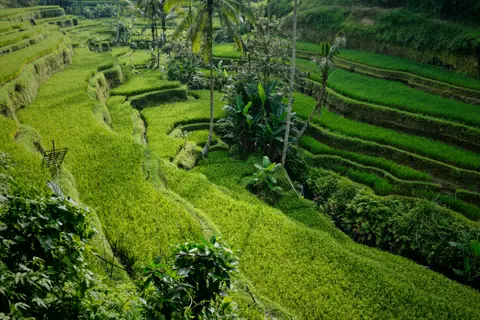
- The Black Sea. Green, wet and steep, with tea terraces around Rize, highland meadows (yayla) such as Ayder, and Sümela Monastery on a cliff near Trabzon. Very different from the rest of the country, and mostly a summer trip.
- The southeast. Gaziantep for food, Şanlıurfa and Göbekli Tepe (stone temples roughly 11,000 years old), honey-coloured Mardin above the Mesopotamian plain, and the stone heads on Mount Nemrut. Antakya is still rebuilding after the February 2023 earthquakes. Better for a second trip, or for travellers who come mostly to eat.
Ankara, the capital, is useful as a rail hub and has an excellent Museum of Anatolian Civilisations, but few first-timers stay long. Konya, home of the Mevlana Museum and the whirling dervish tradition, is an easy add-on by fast train.
Three sample routes
Our rule: no more than one long travel day in every three, and fly whenever the bus would take more than about six hours. Most long-haul flights land at Istanbul Airport, so the routes start there. Domestic flights from Istanbul reach Kayseri or Nevşehir (for Cappadocia), İzmir (for Ephesus), Denizli (for Pamukkale) and Antalya in roughly an hour to an hour and a half.
7 days: Istanbul and Cappadocia
- Days 1 to 4: Istanbul. Our 3-day Istanbul itinerary covers the first three; use the fourth for a Bosphorus ferry and Kadıköy on the Asian side.
- Day 5: morning flight to Cappadocia. Afternoon in Rose Valley.
- Day 6: balloon at dawn, then the Göreme Open Air Museum and an underground city.
- Day 7: fly back to Istanbul for your onward flight.
10 days: add the Aegean
- Days 1 to 3: Istanbul.
- Days 4 and 5: Cappadocia.
- Day 6: fly to İzmir (usually via Istanbul), train or car to Selçuk.
- Day 7: Ephesus early, the Terrace Houses, then Şirince in the afternoon.
- Day 8: train or drive to Pamukkale (about three hours).
- Day 9: the terraces and Hierapolis in the morning, Tripolis or Laodicea in the afternoon.
- Day 10: fly home from Denizli via Istanbul, or from İzmir.
14 days: the classic loop
- Days 1 to 3: Istanbul.
- Days 4 to 6: Cappadocia, with a day of valley walking.
- Days 7 and 8: Selçuk and Ephesus.
- Days 9 and 10: Pamukkale and the ancient cities around Denizli.
- Days 11 to 14: south to the coast, about four hours by road to Antalya or Fethiye. Base in Kaş or Kalkan for a boat day to Kekova's sunken city, or stay in Antalya and use our Antalya day trips guide. Fly out from Antalya or Dalaman.
People cut Pamukkale to a stop of a few hours on the bus between Ephesus and Antalya. It works, but the terraces are at their best at sunset and first light, when the tour buses have gone. One night makes the difference.
Getting around
Turkey has four ways to cover distance, and a good route mixes them.
Domestic flights are frequent and usually cheap if booked a few weeks ahead. Turkish Airlines, its low-cost brand AJet, Pegasus and SunExpress cover the main routes. Note that Istanbul has two airports, Istanbul Airport (IST) on the European side and Sabiha Gökçen (SAW) on the Asian side, and connections between them take hours. Check which one your ticket uses.
Long-distance buses reach every town. Companies such as Metro, Kamil Koç and Pamukkale Turizm run comfortable coaches with seat screens, and an attendant serves tea and snacks. Buses leave from the otogar (bus station), often outside the centre; many companies run a free servis minibus between the otogar and the town. Overnight buses save a hotel night but not much energy.
YHT high-speed trains (Yüksek Hızlı Tren) run from Istanbul to Ankara via Eskişehir in about four and a half hours, and on to Konya, Karaman and Sivas. Trains from Istanbul use Söğütlüçeşme and Pendik on the Asian side, and Halkalı in the west. Book through the TCDD Taşımacılık website or app; seats sell out at weekends and around holidays. The Aegean has slower regional trains, including İzmir to Selçuk and on to Denizli.
A rental car makes sense on the coasts and around Pamukkale, where many sites have no public transport. Motorways and the big bridges use electronic tolls (HGS), and rental cars normally come with the sticker. Driving in Istanbul is a bad idea. In smaller towns, the dolmuş, a shared minibus on a fixed route that stops wherever you wave it down, fills the gaps between villages and beaches.
When to go
April to early June and September to October are the easy months almost everywhere. July and August are very hot inland: Ephesus and Pamukkale regularly pass 35°C, with little shade on either site. The coast is busy then, and the sea stays warm until late October.
- Istanbul: any month. Spring brings the tulip festival in April; winter is grey and wet but quiet.
- Cappadocia: spring and autumn for walking. Winter is cold, sometimes snowy, and balloons fly less often. Mornings are chilly even in summer.
- The Aegean and Pamukkale: April, May, late September and October. In summer, visit sites at opening time.
- Antalya and the Lycian coast: swimming from late May to October. June and September have warm water with fewer crowds.
- The Black Sea: June to September. It rains in every month, less in summer.
- The southeast: spring and autumn. Summer heat in Şanlıurfa and Mardin is severe.
Watch the religious holidays. The two bayram holidays move about eleven days earlier each year, and during them half the country travels: buses, trains and domestic flights fill up and coastal hotels book out.
Money, tipping and mosque etiquette
The currency is the Turkish lira, and inflation has been high for years, so any price in an older guide or forum post is out of date. Cards, including contactless, work in most hotels, restaurants and shops. Carry cash for the dolmuş, markets, small cafés, public toilets and tips. When a card machine or ATM offers to charge you in your home currency, refuse and pay in lira; the conversion rate is worse. Ticket prices for foreign visitors at state museums and ancient sites are set in euros and change regularly, so check the official museum site.
Tipping is modest. In restaurants, around 5 to 10 percent is normal when service isn't on the bill. Round up taxi fares. In a hamam (Turkish bath), a small tip to the attendant who scrubs you is customary.
Mosques are open to visitors outside prayer times, and the longest closure is around Friday midday prayers. The rules are simple:
- Take your shoes off at the entrance and carry them in the plastic bags provided.
- Women cover their hair; a scarf in the day bag solves it. Everyone covers shoulders and knees.
- Keep your voice down, and never walk in front of someone who is praying.
- Photos are usually fine without flash, but not of people at prayer.
Outside mosques, dress in Istanbul and the resorts is as relaxed as anywhere in southern Europe. Inland towns and the east are more conservative, and long trousers or a skirt below the knee draw less attention there.
What to eat, region by region
Turkish food is much more than kebab, and it changes a lot between regions. Start the day with kahvaltı, the Turkish breakfast: cheese, olives, tomatoes, cucumber, honey, eggs and endless small glasses of tea. It is often the best meal of the day.
- Istanbul: meze (small shared plates) and grilled fish in a meyhane, a traditional tavern where the drink is rakı, an aniseed spirit mixed with water. On the street, balık ekmek (grilled fish in bread) at Eminönü and simit, a sesame bread ring.
- The Aegean: zeytinyağlı dishes, vegetables cooked in olive oil and served cool, and wild greens (ot) in spring. In İzmir, try boyoz, a flaky pastry eaten at breakfast. Around Denizli, look for Denizli kebabı, lamb slow-roasted in a wood oven and served on bread.
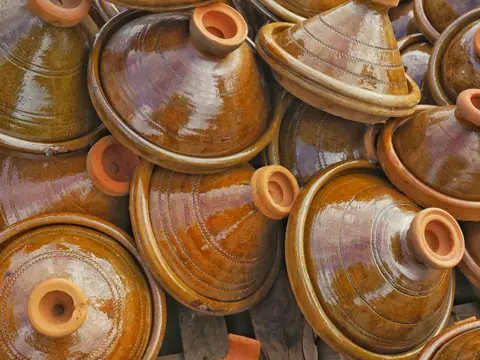
- Cappadocia and Central Anatolia: testi kebabı, a meat stew cooked in a sealed clay pot that is cracked open at the table. From nearby Kayseri, mantı, tiny dumplings under yoghurt and chilli butter.
- The Mediterranean: Antalya's piyaz, a white bean salad dressed with tahini, and fresh fish in the harbour towns. Many village restaurants on the Lycian coast make gözleme, thin pastry folded over cheese or spinach and cooked on a griddle.
- The Black Sea: hamsi (anchovies), fried or baked with rice, and muhlama, melted cheese with cornmeal and butter. The tea comes from the hills above you.
- The southeast: Gaziantep's pistachio baklava and lahmacun (thin flatbread topped with spiced minced meat), and the kebabs of Adana and Urfa, named after their cities.
At lunch, look for a lokanta, a workers' canteen with ready-cooked dishes in trays by the window. You point, they plate, and it is often the most honest food in town.
Practical questions
Do we need a visa?
It depends on your passport. Many nationalities can visit without a visa for short stays, usually up to 90 days in any 180; others need an e-Visa, applied for online in a few minutes. Turkey is not in the Schengen Area, so EU rules don't apply. Check the current rule for your nationality on the official site, evisa.gov.tr, and buy an e-Visa only there; many lookalike sites charge extra. Your passport generally needs to be valid for at least six months from arrival.
Is the Museum Pass a sensible buy?
Often, if you plan several state sites. The Museum Pass Türkiye covers state museums and ancient sites across the country for 15 days from first use. Regional versions cover Istanbul (5 days), Cappadocia (3 days), the Aegean (7 days) and the Mediterranean (7 days). Each site can be entered once. Some places need an extra ticket, such as the Dark Church at Göreme. The Müzekart you may read about is for Turkish citizens only, so visitors can't buy it. Compare the pass against single tickets on the official museum site before you commit.
Can we drink the tap water?
Municipal water is treated, but most Turks drink bottled or filtered water, and so do we. Bottled water is sold everywhere. Tap water is fine for brushing teeth.
What changes during Ramadan?
Less than people fear. In Istanbul, the Aegean and the resorts, restaurants and cafés stay open through the day. In conservative towns, some places close until sunset and eating in the street is best kept discreet. At sunset, the iftar meal breaks the fast, and the atmosphere around big mosques is festive. Sites stay open, though hours can shift slightly. The end of Ramadan brings Ramazan Bayramı, a busy holiday for travel.
Is there a tourist tax?
Turkey charges a national accommodation tax on hotel and guesthouse stays, a small percentage of the room rate that is normally included in the price. The rate was temporarily lowered for part of 2026. You won't have to handle it yourself.
Is the Antalya Museum open?
No. It closed in July 2025 to be rebuilt on the same site, with reopening expected no earlier than the end of 2026. Check the official museum site before planning around it.
What a second trip looks like
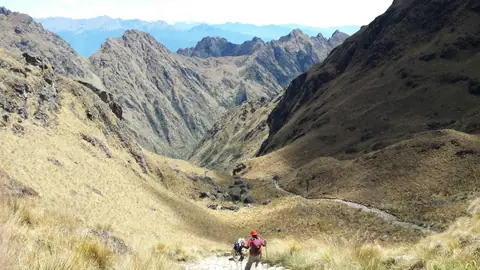
Most first trips follow the same triangle, and for good reason. The second is where Turkey opens up. It might be the Lycian Way, a long waymarked trail between Fethiye and Antalya that you can walk in sections. It might be a week in the southeast eating your way from Gaziantep to Mardin, or the Black Sea highlands in July, when the meadows are green and the cloud comes up the valleys in the afternoon.
For us, it would start where we live. The inland Aegean between Denizli, Aphrodisias and the Meander valley has more ancient cities than any one trip can cover, and most of them are empty by mid-afternoon. Plan the first trip around the famous names, then come back for the ones on the road signs.