







Hagia Sophia Guide: Tickets, Rules and the Gallery Route
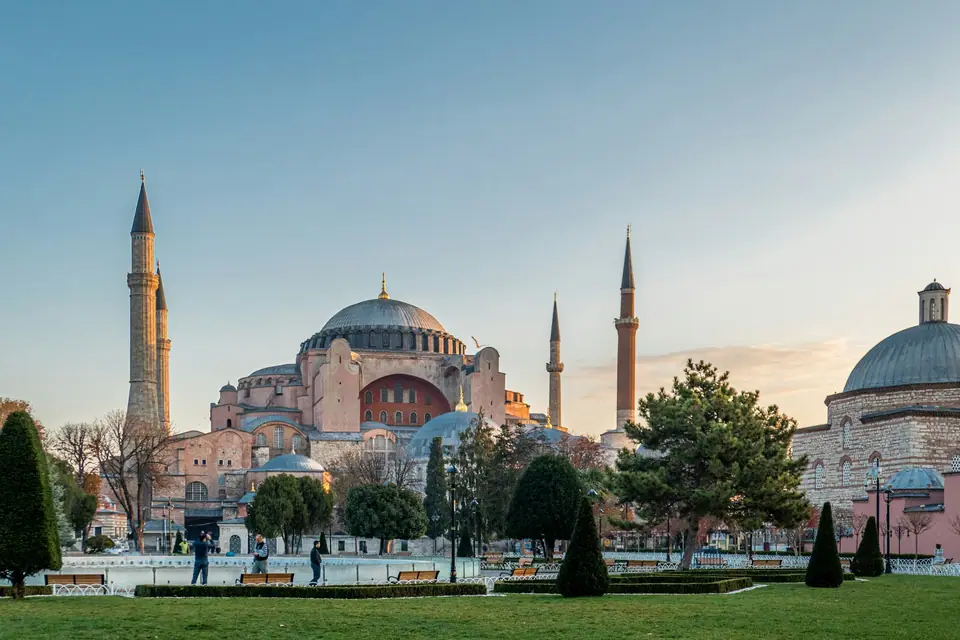
Hagia Sophia was built in just five years and finished in 537 under the emperor Justinian. It served as the greatest church in Christendom for over nine centuries, became a mosque after the Ottoman conquest in 1453, a museum in 1934, and a mosque again in 2020. The way you visit has changed a lot since then, so here are the questions people actually ask.
How does a visit work now?
Since January 2024 the building has been split in two. The ground floor is kept for worship. Foreign visitors buy a ticket, go in through a separate visitor entrance on the south side, and follow a route up the ramps to the upper galleries, looking down into the main hall from above. You no longer stand under the dome on the marble floor, and for people who knew the old museum that's a real loss.
Who needs a ticket?
Anyone on a sightseeing visit with a foreign passport. The fee is set in euros, so check the current figure on the official ticket site before you go. Turkish citizens entering to pray use the ground floor for free, and they can also buy the gallery ticket like anyone else. Buy only from the official booth or website. The men in Sultanahmet offering "skip the line" entry are selling tours, not a faster door.
When is it closed to visitors?
The visitor route can pause around the daily prayer times, and the longest closure is at Friday midday. Opening hours change by season. Go as early as possible. By late morning in summer the queue near the Ahmed III Fountain stretches back towards Topkapı's gate.
What's the dress code?
Shoulders and knees covered for everyone, and women cover their hair. Scarves are available near the entrance, but bringing your own is more comfortable. Shoes come off on the carpeted sections. Our what to wear guide has more.
What should you look for?
In the south gallery, the Deësis mosaic of Christ between the Virgin and John the Baptist, from the 13th century, damaged but still one of the most beautiful faces in Byzantine art. Nearby are the imperial mosaics of the Empress Zoe and of John II Komnenos. On a marble parapet, look for runes scratched by a Viking guardsman, usually read as "Halfdan". And from above you get the full scale of the dome, the giant Ottoman calligraphy roundels and the light falling through forty windows.
Is the ticket worth it?
On a first visit, yes. The mosaics are only in the galleries, and seeing the dome from that height is still extraordinary. If you mostly want to sit quietly inside a great domed mosque, the Blue Mosque across the square and Süleymaniye on the next hill are free. Both are in our things to do list.