Quick Field Data
- UNESCO Inscription: 2017 (Ref. 1544), historic urban settlement in Yazd Province, Islamic Republic of Iran; Criteria (iii) and (v).
- Scale & Footprint: 195.67 hectares of conserved mud-brick quarters, vaulted alleyways, bazaars, cisterns, mosques, synagogues, Zoroastrian shrines and Dolat-abad Garden.
- Access & Ticketing: Protected as a 2005 Iranian National Monument administered by ICHHTO and Yazd Municipality; public lanes remain open around the clock, while museums, monuments and Dolat-abad Garden issue official entry tickets.
- Arrival Logistics: Shahid Sadooghi Airport (AZD) sits eight kilometres away beside Iranian Railways national links, with long-distance regional air corridors south toward Dubai (749 kilometres).
Oasis Urbanism Between the Spice and Silk Roads
Rising out of Iran's central desert plateau roughly 270 kilometres southeast of Isfahan, the Historic City of Yazd shows how human engineering turned extreme aridity into a thriving urban oasis. Positioned close to ancient Spice and Silk Road caravan routes, the 195.67-hectare old city retains its earthen adobe skyline largely intact despite 20th-century wide-street projects elsewhere in Iran. Yazd acts today as capital of Yazd Province, county and district, growing from 423,006 residents (114,716 households) in 2006 and 486,152 in 2011 to 529,673 (158,368 households) in 2016. Yet roughly 80 percent of historic core houses remain privately owned and lived in by local families.
Historical evidence confirms deep Persian roots on this plateau long before modern borders formed. Archaeological finds 12 kilometres north point to Achaemenid Empire occupation (550 BC to 330 BC), while Pliny the Elder recorded the Parthian town of Issatis, linked to Sagartian roots and Yazd's former names Kath and Isatis. Under the Sasanian Empire (224 to 651), Yazd gained prominence when Yazdegerd I (reigned 399 to 420) opened an imperial mint stamped YZ. Later, the 1441 Persian chronicle Tarikh-i Yazd credited Yazdegerd II (reigned 438 to 457) with refounding the city whose Persian name means pure and holy, literally City of God.
Remote desert approaches shielded Yazd from major medieval wars that devastated northern Persia. Refugees fleeing Mongol destruction across the Khwarazmian Empire sheltered safely behind desert plains, enriching silk workshops before Marco Polo arrived in 1272 and praised fine silk called Yasdi woven for distant markets. Leaving Yazd, Polo wrote of riding seven days across great plains toward Kerman with hospitality at just three places, passing date woods abounding with partridges, quails and wild asses. During the 14th century, Yazd briefly became capital of the Muzaffarid Dynasty, withstanding an Injuid siege in 1350 to 1351 while raising its great Friday Mosque. Safavid-era migration carried Yazdi speakers to Farah Province in Afghanistan (where a similar accent still endures), Bakhtiari Khans ruled during the 18th-century Qajar era and Pahlavi relocations resettled Gulbaghi Kurds across Yazd, Isfahan, Kashan and Nayin.
Preserving physical history across these periods turned central Yazd into a dense urban archive of pre-modern Iranian civic architecture. The 11th-century brick mausoleum and shrine of Davāzdah Imām survives as Yazd's oldest dated building, standing near the celebrated 12th-century Jameh Mosque crowned with Iran's tallest minarets and fine Persian tile mosaics. Steps away sits the Tomb of Sayyed Rukn ad-Din, anchoring old religious alleys with historic bathhouses, covered bazaars, synagogues and residential courtyard estates. Later demographic history added further diversity during the Pahlavi era, when authorities relocated Kurdish groups from the Gulbaghi tribe into Yazd, Isfahan, Kashan and Nayin, where most descendants have assimilated into local civic life.
Yazd Windcatchers, Qanats, and Three Faith Traditions
Surviving in Iran's driest major city demanded cohesive climatic and water engineering across every urban quarter. Under a hot desert climate (BWh), Yazd receives under 60 millimetres of annual precipitation across 11.5 wet days and endures 35.3 days reaching or exceeding 40 degrees Celsius, leaving summer nights warm. Thin winter air brings mild sunny days followed by cold mornings dropping below zero on 24.3 days per year, plus 52 dust days and 135.8 days of thick winter haze. Each historic district rests directly atop an underground qanat aqueduct drawing mountain groundwater without pumps into a shared quarter hub grouping a mosque, bathhouse (hammam), water cistern (ab anbar) and courtyard square. Because Yazdi qanat builders earned reputations as Iran's most skilled water engineers, subterranean channels reach deep across the desert basin.
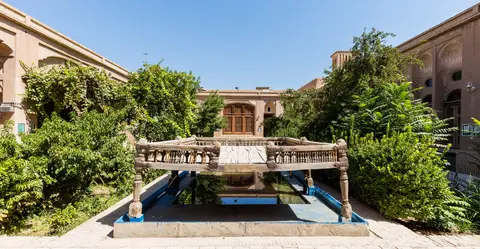
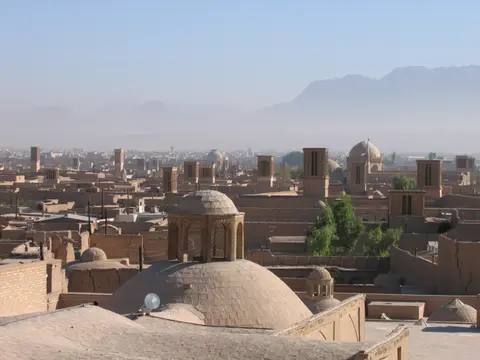
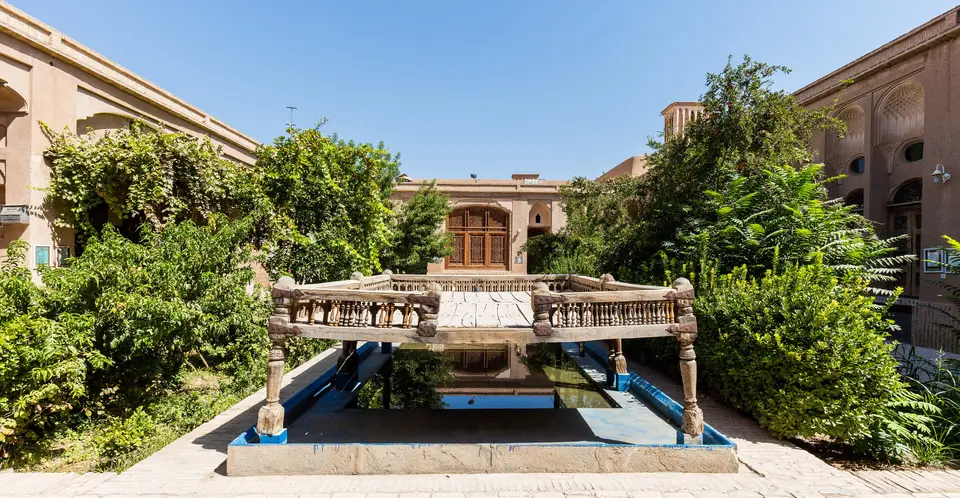
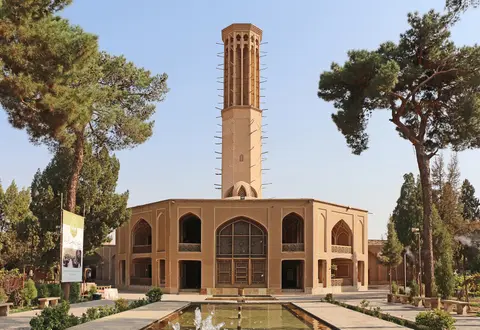
To cool dwellings naturally through scorching summer afternoons, builders constructed almost the entire old city out of sun-dried earth, domed brick vaults and thick adobe walls. Houses sink interior courtyards well below street grade to connect shaded underground living rooms with upper breezes directed downward by tall rooftop badgirs, giving Yazd its famous Persian title Shahr-e Badgirha, or City of Windcatchers. Outside, arched overhead roofs bridge narrow residential alleys to form sabats, shading walkers and bracing flanking mud-brick walls laterally, while tall conical yakhchals stored ice retrieved from mountain glaciers. Stepped dome-covered ab anbars tapped gravity-fed qanat flows underground, preserving cool drinking water across fierce summer heat. The Yazd Water Museum, opened in 2000, displays historic water storage vessels and traditional qanat engineering instruments.
Observing Yazd's earthen skyline from rooftop level reveals how cleanly wind, earth and underground water interlock across every residential district. Tall windcatchers rise above domed bazaar roofs, mosques and courtyard homes like a quiet skyline of ceramic and clay chimneys catching stray desert breezes in every season.
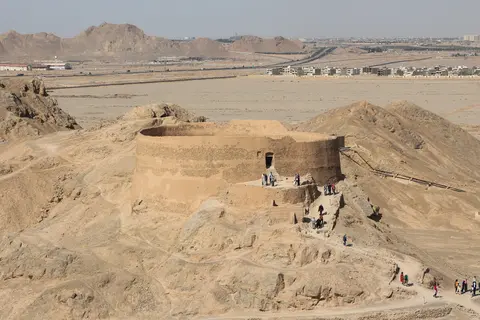
Together with desert architecture, historic Yazd preserves centuries of coexistence among three religious traditions. Following the Muslim conquest, Yazdis paid a special levy preserving Zoroastrian worship even as Shia Islam gradually became the majority faith. Today, Shia Muslims gather for large Azadari processions in monumental squares and tekiehs whose open plazas also serve visitors touring historic quarters. Meanwhile, a Zoroastrian minority of roughly 1,000 people out of 600,000 maintains an active fire temple (ateshkadeh) keeping a sacred flame lit continuously since 470 AD, an outer Tower of Silence and the Pir-e-Naraki shrine linked to the last pre-Islamic Persian prince. Yazd elected Iran's first Zoroastrian city councillor, Sepanta Niknam, in 2013, while historic synagogues commemorate a formerly sizable Jewish-Yazdi community before mid-20th-century emigration.
Everyday civic culture blends traditional crafts with modern Yazd's wider industrial economy. Residents speak Persian with a recognisable Yazdi accent, maintain family-centred households among Iran's three lowest divorce rates, and guard secret family confectionery recipes (khalifehs) producing baklava, ghotab and spun-sugar pashmak plus silk termeh brocade, carpets and gold jewellery. Outside the earthen core, modern Yazd expanded since the 1980s into three major industrial districts containing over 70 factories each across ceramics, textiles, metalwork, machine manufacturing and Iran's largest fibre-optic cable plants. Nineteenth-century contact with European visitors even sparked Iran's earliest cycling culture, earning Yazd a second title as the City of Bicycles.
Adobe Conservation, Urban Growth, and the Waqf Endowment System
Protecting 195.67 hectares of vulnerable earthen masonry relies on combining civic religious trusts with formal Iranian conservation law. Listed as a National Monument in 2005 under Iran's 1930 National Heritage Law and 1979 Cultural Heritage Law, Yazd operates through Steering and Technical Committees coordinated by a dedicated base office of Iran's Cultural Heritage, Handicrafts and Tourism Organisation (ICHHTO). Just as vital is the traditional Islamic Waqf endowment system, through which district trusts finance repairs on communal qanats, cisterns, mosques and bathhouses, preserving authentic social life across religious calendars.
When modernisation expanded wide commercial avenues from the 1930s onward, Yazd placed most new highways and modern apartments outside the adobe core, leaving narrow earthen districts intact. Today, branches of Yazd University and sympathetically restored courtyard hotels and restaurants reuse historic mansions while keeping traditional mud plaster and vault structures intact. Continuing ICHHTO work prioritises earthquake risk preparedness, staff conservation training, manuals helping private homeowners preserve delicate earthen interiors and analytical studies documenting links between intangible Waqf district traditions and physical qanat and cistern networks.
Maintaining harmony between daily residential life and visiting travellers remains central to Yazd's urban preservation. Local families living behind mud-brick walls rely on shaded sabat lanes, quiet public squares and traditional bakeries every morning just as their forebears did centuries ago. Architects studying sustainable desert design also inspect Yazd's sunken courtyards, minimal earthen building materials and natural cooling towers for low-energy climate lessons applicable today. Avoiding noisy vehicles in pedestrian quarters, respecting active mosques and fire temples, and supporting traditional craft workshops ensures preservation benefits local neighbourhoods directly.
Access Zones Across the Historic Quarters of Yazd, Iran
Navigating narrow earthen alleys around Yazd is easiest when grouping visits by historical quarter and public square. Check official site entry desks for seasonal museum hours and visitor attire rules before stepping inside active religious sanctuaries.
| Complex Zone | Key Highlights | Access & Ticket Rule |
|---|---|---|
| Jameh Mosque and Central Old Quarters | 12th-to-14th-century Friday Mosque, towering twin minarets, Sayyed Rukn ad-Din tomb and 11th-century Davāzdah Imām. | Open pedestrian sabat lanes; modest dress applies inside prayer sanctuaries and ticketed heritage houses. |
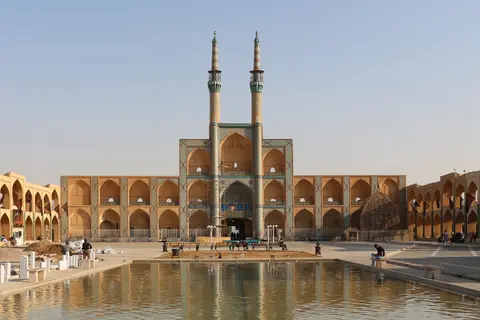
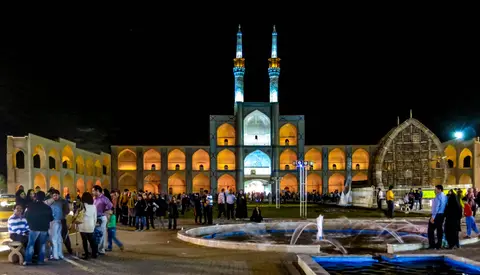
| Amir Chakhmaq and Bazaar District | Three-storey brick tekieh facade, historic covered bazaars, Water Museum and traditional confectionery shops. | Central urban square and active market corridors; museums maintain fixed public daytime entry desks. |
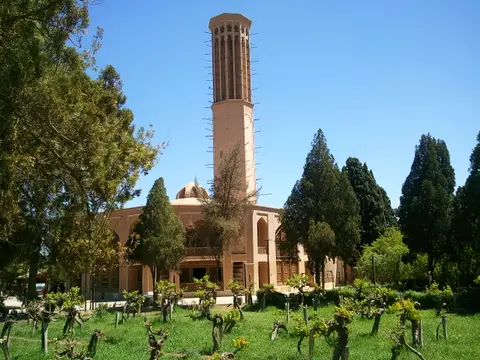
| Dolat Abad Garden Precinct | Historic Persian garden channels, tall octagonal windcatcher pavilion and shaded cypress grounds. | Located on the historic city edge; purchase official gate tickets at the walled garden entrance. |
| Zoroastrian Shrines and Outer Tower of Silence | Active Ateshkadeh fire temple (flame lit since 470 AD) and hillside stone Dakhma funerary complex on the outskirts. | Separate visitor access rules apply; observe quiet respect inside the fire temple viewing hall and desert slopes. |
Three Desert Engineering Details Across Yazd's Old City
- Multi-Directional Badgir Windcatchers Over Sunken Courtyards: Look up along morning rooftops to see tall vertical wind towers channelling breezes downward across cool basement rooms and interior water pools.
- Vaulted Mud-Brick Sabat Corridors: Walk beneath arched brick roofs spanning residential alleys; these overhead spans brace opposing earthen walls laterally while trapping shaded pocket air for walkers.
- Conical Mud-Brick Yakhchal Ice Coolers and Ab Anbars: Inspect deep stepped cistern entries dropping below street level to tap cold gravity-fed qanat water insulated inside dome-capped underground chambers.
Desert Seasons, Rail Connections, and Planning Your Stay
Travellers asking where historical Persia sits in Iran and whether Yazd warrants an overland stop quickly find its adobe labyrinth deeply rewarding. Spring and autumn moderate the central plateau's sharp swings between 40-degree summer afternoons and sub-zero winter mornings recorded across 24.3 cold days per year. Early morning and late-afternoon walks throw golden shadows across rooftop windcatchers before evening crowds gather around Amir Chakhmaq Square and covered bazaar lanes. Visitors pausing inside historic sweet shops or traditional courtyard tea houses can sample local pastries while watching desert dusk settle across mud domes.
Understanding traditional district geography helps visitors navigate winding lanes without confusion. Quarters historically orient around a central qanat square or mosque hub, with numbered street addresses branching into shaded alleys and vaulted sabats. Spending two or three nights in a restored courtyard guesthouse allows unhurried morning visits to the 11th-century Davāzdah Imām brick mausoleum and Jameh Mosque's Persian mosaics, afternoon strolls through Dolat Abad Garden and views toward the outer Tower of Silence.
Reaching Yazd is straightforward via Shahid Sadooghi Airport (AZD), located just eight kilometres from historic quarters, or along Iranian Railways express services linking major Iranian cities including Isfahan (270 kilometres northwest). Regional international connections also extend south across the Gulf toward Dubai (749 kilometres). Explore further earthen desert cities and Persian architectural achievements in our UNESCO World Heritage Atlas.