


























Basilica of the Holy Blood, Veneration Schedule & Jeruzalemkerk Guide
Visit Bruges's two most extraordinary sacred sites: the double-chapel Basilica of the Holy Blood on Burg Square and the 1429 Adornes Jeruzalemkerk in Sint-Anna.
Beyond its towering Gothic cathedrals, Bruges preserves two intimate medieval chapels linked directly to the Crusades and pilgrimage routes to Jerusalem. The 12th-century double-storey Basilica of the Holy Blood (Heilig-Bloedbasiliek) sits tucked into the corner of Burg Square, while the privately owned 15th-century Jeruzalemkerk stands in the quiet Sint-Anna quarter. Visiting both reveals how Bruges's feudal counts and Genoese merchant families recreated the sacred geography of the Holy Land in Flemish stone and brick.
| Sacred Monument | Entry & Museum Fee (Nov 2026) | Opening & Veneration Hours | Architectural & Historical Highlight |
|---|---|---|---|
| 1. Lower Chapel of St Basil (Burg Square). | Free entry. | Daily 10:00 to 17:15. | Unaltered 1134 to 1149 Romanesque dark stone crypt chapel with 12th-c. tympanum. |
| 2. Upper Chapel of the Holy Blood. | Free entry to chapel. | Daily 10:00 to 17:15; Veneration 14:00 to 16:00 (and Fri 10:15 to 11:00). | Polychrome neo-Gothic interior &. Crystal vial of the Holy Blood relic. |
| 3. Basilica Museum (Schatkamer Treasury). | €5.00 adult / €4.00 senior &. Student. | Daily 10:00 to 17:15. | 1617 Jan Crabbe gold-and-gemstone reliquary shrine weighing 30 kg. |
| 4. Adornes Domain & Jeruzalemkerk (Peperstraat 3). | €10.00 adult (includes museum, chapel &, Garden). | Mon to Sat 10:00 to 17:00 (Closed Sundays). | 1429 replica of Jerusalem's Holy Sepulchre, Golgotha altar &. Black marble tomb. |
Basilica of the Holy Blood: Two Chapels Stacked Across Eight Centuries
Tucked into the corner of Burg Square immediately to the right of the Gothic Town Hall, the Basilica of the Holy Blood is actually two completely distinct churches stacked one on top of the other. Before climbing the flamboyant 1530s Renaissance staircase (De Steegheere) adorned with gilded statues of the Counts of Flanders, duck through the low street-level doorway into the Lower Chapel of St Basil (Sint-Basiliuskapel).
Built between 1134 and 1149 by Count Thierry (Diederik) of Alsace as his private comital chapel, it is dedicated to St Basil the Great. Count Robert II had brought St Basil's relics back from Caesarea during the First Crusade. Today it remains the only completely preserved Romanesque church in West Flanders. Notice the heavy dark Tournai limestone piers, the bare rib vaults, and the 12th-century carved stone tympanum of the Baptism of St Basil. In the side aisle sits a revered 14th-century polychrome oak statue of the Sedes Sapientiae (Seated Madonna). The quiet, dim austerity of this lower stone room contrasts dramatically with the explosion of colour waiting directly upstairs.
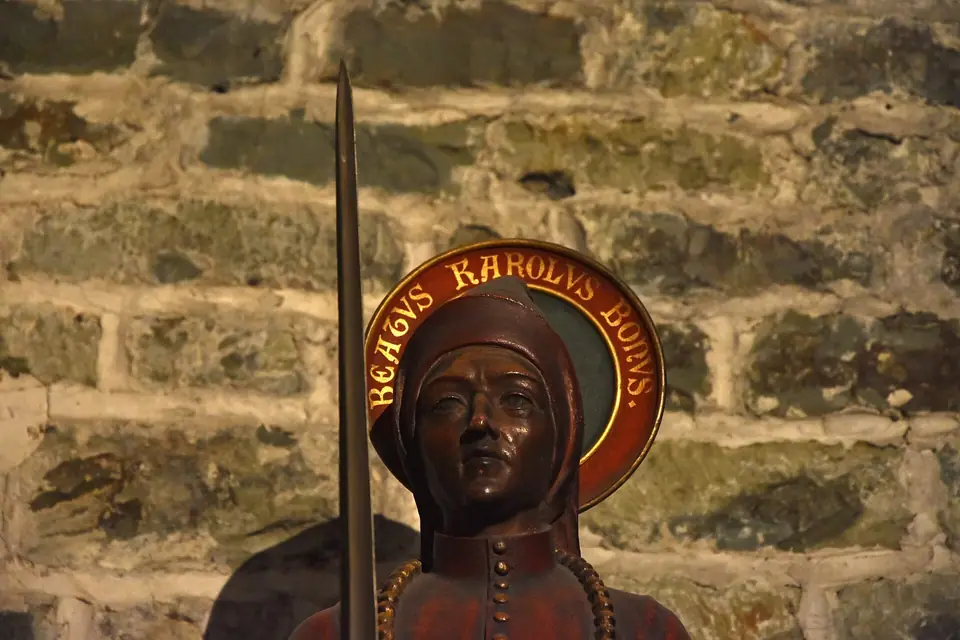
The Relic of the Holy Blood and Daily Veneration Schedule
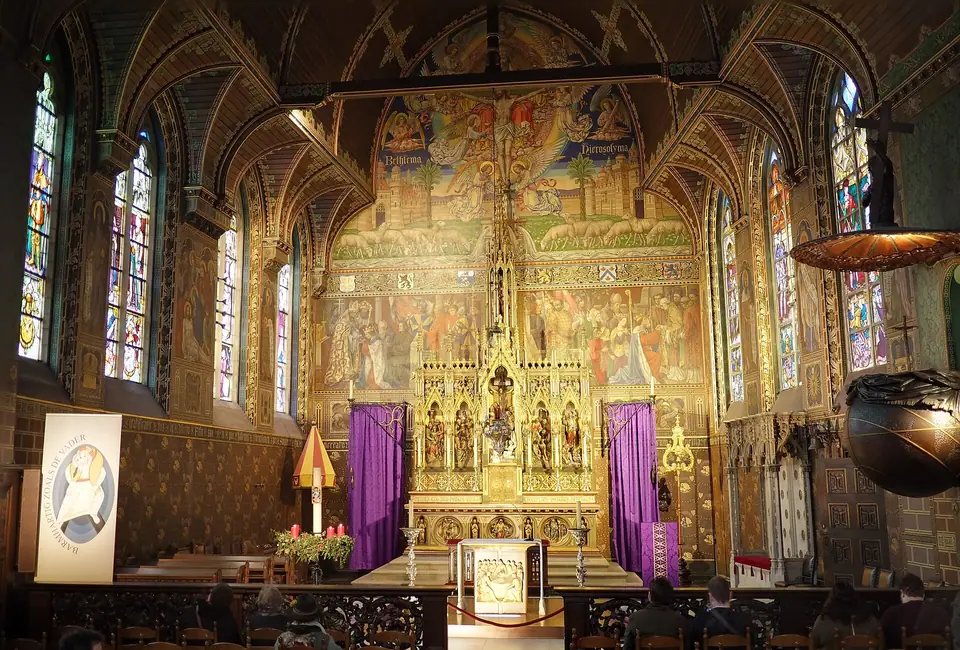
Climb the wide stone stairs to the Upper Chapel. Originally built in the 12th century and rebuilt in Gothic style in the late 15th century, the upper church was ransacked during the French Revolution. In the 19th century, William Curtis Brangwyn and Jean-Baptiste Bethune redecorated the hall in rich polychrome neo-Gothic style, adding stained-glass windows of the Burgundian rulers.
Inside the side tabernacle rests Bruges's most famous relic: a rock-crystal perfume phial of 11th-century Byzantine workmanship from Constantinople, sealed at the neck with gold thread and red wax. Inside the crystal bottle sits a piece of cloth stained with what tradition venerates as the blood of Jesus Christ. Medieval chronicler Abbot John of Ypres wrote that Count Thierry of Alsace received the phial from King Baldwin III of Jerusalem after the Second Crusade in 1150. Modern historians note that the earliest Bruges inventory dates to the 1250s, suggesting the Byzantine crystal phial arrived after the 1204 Fourth Crusade led by Count Baldwin IX of Flanders.
Admission to both the lower and upper chapels is free. To see the crystal vial up close, time your visit for the daily veneration hours between 14:00 and 16:00, or on Friday mornings between 10:15 and 11:00 before the 11:00 Mass. During veneration, a priest sits on a raised platform holding the silver cylinder while visitors file up the steps to view the relic. For €5.00 (as of November 2026), step into the adjacent Treasury Museum (Schatkamer). Its centrepiece is the dazzling 30-kilogram gold, silver, emerald, and diamond reliquary shrine crafted by Bruges goldsmith Jan Crabbe in 1617, carried through the city each May during the Procession of the Holy Blood.
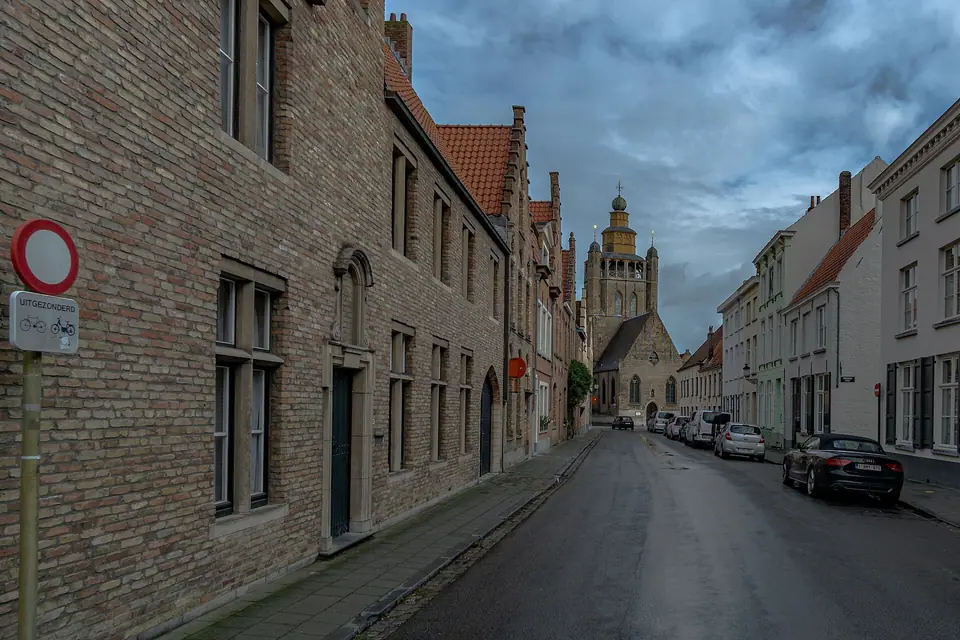
The Adornes Domain and the 1429 Jeruzalemkerk in Sint-Anna
Ten minutes northeast of Burg Square along Peperstraat 3 in the quiet Sint-Anna quarter stands the Adornes Domain (Adornesdomein) (€10.00 adult entry as of November 2026, open Monday to Saturday 10:00 to 17:00), one of Bruges's best-kept historical secrets. The noble Adorno (Adornes) family emigrated from Genoa to Bruges in the late 13th century to serve as bankers and diplomats to the Dukes of Burgundy. Remarkably, the estate is still privately owned by their direct 17th-generation descendants, the Count and Countess Limburg Stirum.
Brothers Pieter II and Jacob Adornes made an arduous pilgrimage to the Holy Land in 1427 and 1428. Upon returning, they obtained permission from Pope Martin V to build the Jeruzalemkerk (Jerusalem Chapel) modelled on the Church of the Holy Sepulchre. Stepping inside is unlike any other church in Belgium. Instead of a standard altar, a monumental stone Calvary (Golgotha) sculpted with skulls and the Instruments of the Passion rises before you, flanked by two stone staircases leading to an elevated octagon chapel. In the centre of the nave lies the black Tournai marble cenotaph of Anselm Adornes (1424 to 1483) and his wife Margareta van der Banck. Anselm was murdered in Scotland while serving King James III, so only his heart is buried here while his body rests in Linlithgow. Behind the altar, duck through a low crawl-door into a dim stone replica of Christ's Tomb.
Inside the Adornes Domain, your €10.00 admission ticket also includes entry to the restored 14th-century almshouse cottages lining the garden courtyard. Here an informative multimedia exhibition screens a short film on the life of Anselm Adornes, a Renaissance tournament champion, diplomat, pilgrim to Mount Sinai, and friend of King James III of Scotland.
Before leaving the Adornes estate, step into the cosy Scottish Lounge inside the historic carriage house. Included in the domain grounds, this quiet lounge serves Scottish shortbread, single malt whiskies, coffee, and local Bruges beers overlooking the private garden.
Directly across Peperstraat from the Jeruzalemkerk stands the Kantcentrum (Lace Museum, Balstraat 16; €10.00 entry as of November 2026). Housed in the former 18th-century lace school of the Apostoline Sisters, it hosts live demonstrations of traditional bobbin lacework every afternoon.
Where it is
- 1Basilica of the Holy Blood, Veneration Schedule & Jeruzalemkerk
- Ostend-Bruges International Airport (OST) · about 25 km from here in a straight line
- Directions in Google Maps
Traveller tips
Real advice from people who have been to Bruges. Every tip is read by our team before it goes live.
No tips yet. Been here? Yours could be the first.
Thank you! Your tip will appear here after a quick review.
More in Bruges
Continue exploring Bruges with related neighbourhood, food, and planning guides
Where to Stay in Bruges: Canal-Front Dijver vs Sint-Anna & 't Zand
Bruges, Belgium
3-Day Bruges Itinerary: Medieval Canals, Flemish Masters, Beer & Damme
Bruges, Belgium
Markt Square, Belfort Climb & Burg Square Town Hall Guide
Bruges, Belgium
Bruges Canal Boat Tours, Rozenhoedkaai & Secret Bridges Walk
Bruges, Belgium
