





















What to Wear in Bruges: Cobblestone Shoes, North Sea Wind Layers & Belfry Climb
Pack smart for Bruges with practical footwear advice for medieval porphyry cobblestones, windproof rain shells for sudden North Sea showers, and Belfort stair tips.
Because Bruges is a compact walking city sitting just fifteen kilometres from the open North Sea, what you wear on your feet and your outer layer matters far more than formal dress codes. Even a relaxed sightseeing day logs 13,000 to 18,000 steps across uneven medieval stone paving, while maritime winds can push a sunny 18°C morning into a brisk 13°C passing rain shower within twenty minutes. Pair this packing checklist with our Bruges seasonal weather guide and our Belfort climb guide.
| Terrain / Activity in Bruges | What You Encounter | Recommended Footwear & Gear | What to Avoid |
|---|---|---|---|
| 1. Medieval Cobblestone Lanes & Bridges. | Crowned Belgian porphyry stones (kasseien) that turn slick in damp drizzle. | Rubber-soled leather trainers, walking shoes, or ankle boots with thick EVA/lugged soles. | Stiletto heels, thin flat leather soles, or smooth-bottomed loafers. |
| 2. Climbing the 366 Belfort Steps. | Narrow spiral stone stairs (barely 50 cm wide at the top) with two-way traffic and rope handrails. | Closed-toe laced shoes and a compact crossbody bag or small daypack. | Flip-flops, long trailing skirts, or bulky 40-litre backpacks. |
| 3. Open-Top Canal Boat Cruises (30 min). | Uncovered wooden benches on the water; 3°C to 4°C cooler than sheltered streets. | Windproof hooded shell jacket (plus a scarf in spring, autumn, and winter). | Relying solely on a wide umbrella (umbrellas block views and are banned on boats when raining). |
| 4. Churches, Basilica & Fine Dining. | Unheated medieval brick church naves. Smart-casual Flemish bistros. | Neat dark jeans or chinos, a merino sweater, and a light scarf. | No strict religious dress code, though hats are removed inside the Basilica. |
Footwear for Belgian porphyry cobblestones (kasseien)
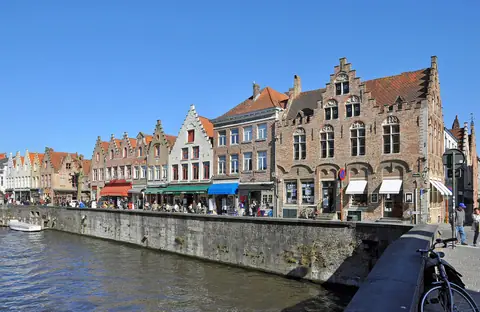
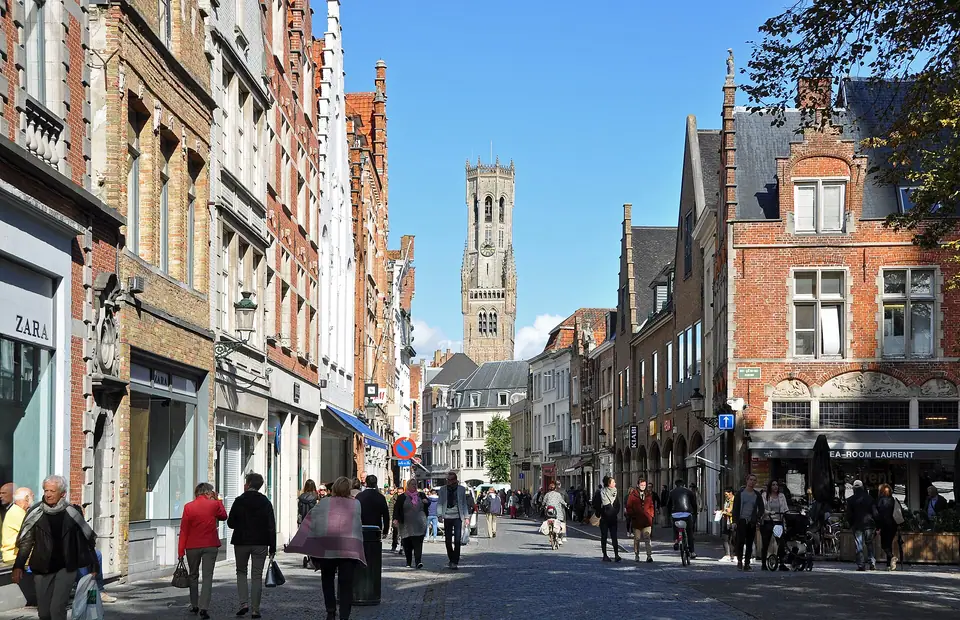
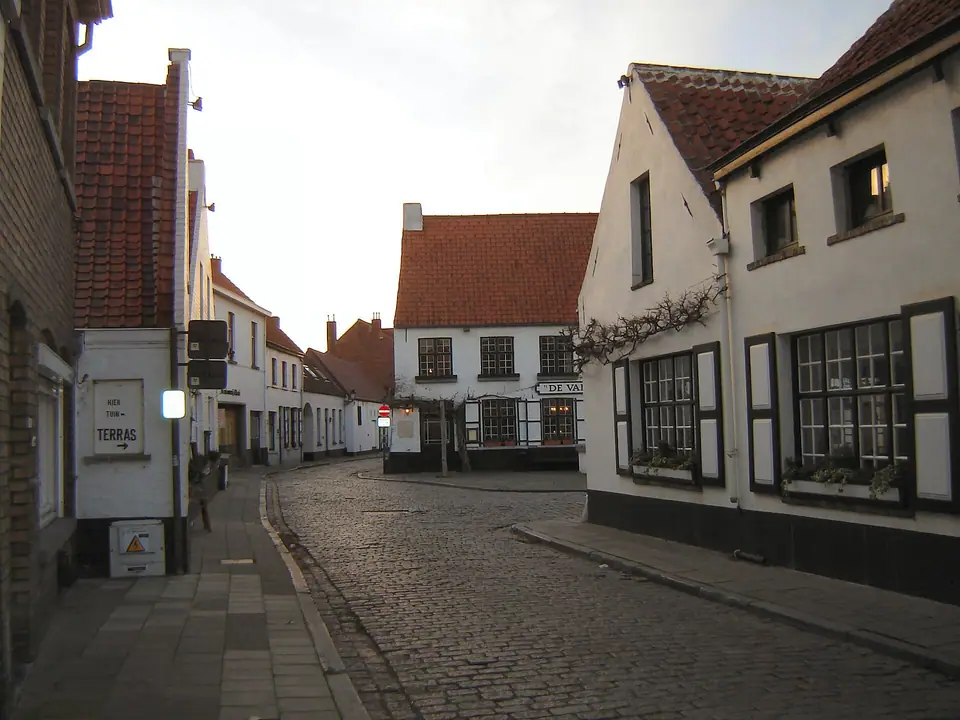
Almost every street, square, and bridge inside the Bruges canal ring is paved with square blocks of grey Belgian porphyry stone (kasseien). This is the same unforgiving stone made famous by the Tour of Flanders cycling race, which started on Markt Square for decades. Over centuries of horse-carriage and foot traffic, the tops of these stones have worn smooth and slightly rounded, with 1-to-2-centimetre gaps between blocks.
When a light North Sea drizzle wets the stones, smooth leather dress soles become slippery, and narrow heels wedge straight into the mortar gaps. Bring broken-in walking trainers, cushioned leather Chelsea boots with lugged rubber outsoles, or supportive walking sandals with ankle straps in summer. If there is a chance of rain in the forecast, water-resistant leather or Gore-Tex uppers keep your socks dry when stepping across puddled gutter stones on narrow side alleys like Stoofstraat.
Why a windproof hooded jacket beats an umbrella
Look at the climate table for West Flanders and you will notice an important number: every single month of the year averages 10 to 14 days with measurable precipitation. However, Bruges rarely suffers all-day torrential downpours. Instead, Atlantic maritime fronts bring brief 15-to-25-minute bursts of wind-driven drizzle followed immediately by bright blue sky and scudding white clouds.
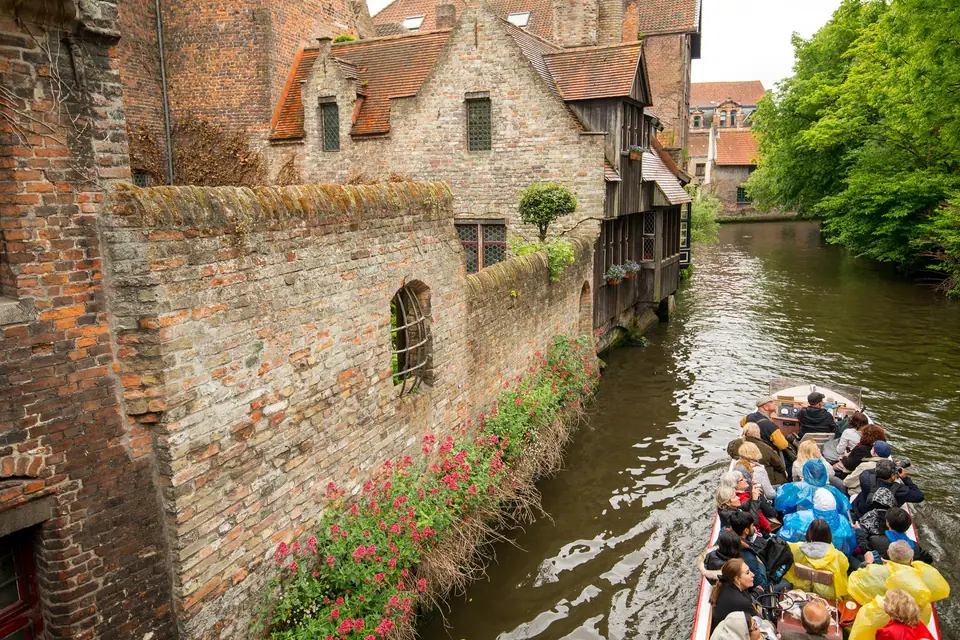
Because the canal corridors funnel coastal breezes and many medieval sidewalks are barely a metre wide, carrying a large golf umbrella is awkward in pedestrian crowds and useless if the wind gusts across Markt Square. Even more importantly, on the open-top canal boats, skippers ask passengers not to open umbrellas during light showers so everyone behind them can see the bridges (the boat companies hand out basic emergency umbrellas only if a heavy shower hits mid-cruise). Packing a breathable, waterproof hooded rain shell (such as Gore-Tex or coated nylon) over a warm mid-layer keeps your hands free for photography and keeps you warm on the water.
What to wear for the Belfort, De Halve Maan Brewery, and churches
- Climbing the Belfort and De Halve Maan Brewery stairs: Both of Bruges's most popular tower tours involve steep, narrow climbs: the Belfort rises 366 spiral stone steps where ascending and descending visitors squeeze past each other between intermediate chambers. Similarly, the historic brew-house tour at De Halve Maan climbs steep, almost ladder-like iron and wooden stairs up to the 360-degree rooftop terrace. Wear trousers, shorts, or a skirt with comfortable movement, lace-up shoes, and a layer you can unzip once you warm up on the climb.
- Churches and the Basilica of the Holy Blood. Unlike cathedrals in Italy or mosques in Central Asia, churches in Flanders do not enforce strict bare-shoulder or knee checks at the door in summer. This applies across Saint Salvator's Cathedral, the Church of Our Lady, and the Basilica of the Holy Blood. Still, respectful casual attire is expected, and men should remove baseball caps or wool beanies inside. Keep a light sweater handy as well, because thick 13th-century brick church naves stay a cool 14°C to 16°C even on a warm July day.
- Evening dining dress code. Flemish dining culture values understated smart-casual quality over flashiness. Neat jeans or chinos with a collared shirt, blouse, or fine-knit sweater fit in everywhere from historic timbered beer taverns like ’t Brugs Beertje to Michelin-starred kitchens like Zet'Joe or Sans Cravate.
Seasonal packing checklist for Bruges
- Spring (April to May) and Autumn (September to October). Pack the classic three-layer system: cotton or merino t-shirts, a warm fleece or wool jumper, a waterproof windbreaker, and a light scarf. Bringing two pairs of broken-in walking shoes also lets you alternate pairs if one gets damp.
- Summer (June to August). Daytime highs average 22°C, though occasional heatwaves reach 28°C to 30°C. Bring breathable linen or cotton shirts, sunglasses, a light cardigan or denim jacket for 14°C evenings by the canals, and a compact packable rain shell.
- Winter (November to March). Damp 4°C to 7°C coastal air feels colder than dry alpine air at the same temperature. Pack an insulated, water-resistant thigh-length coat, a thermal base layer, a wool hat, touchscreen gloves, a warm scarf, and wool socks with lug-soled leather boots for the Winter Glow light walk.
Photographers carrying mirrorless or DSLR cameras should pack a small microfibre lens cloth and a rain cover in an outer jacket pocket. Brief coastal mist or fine spray off the canal boat bow can spot front lens elements quickly on breezy afternoons.
If you forget a warm scarf, gloves, or a rain shell, Zuidzandstraat and Steenstraat between ’t Zand Square and Markt Square are lined with outdoor outfitters and department stores. You can easily pick up an affordable windproof jacket or merino knitwear within five minutes of your hotel.
During summer spells in July and August, bring a refillable water bottle and sunglasses with polarised lenses. Polarised lenses cut the surface glare on the canals and reveal the brickwork reflections clearly at midday.
Where it is
- 1Bruges
- Ostend-Bruges International Airport (OST) · about 24 km from Bruges in a straight line
- Directions in Google Maps
Traveller tips
Real advice from people who have been to Bruges. Every tip is read by our team before it goes live.
No tips yet. Been here? Yours could be the first.
Thank you! Your tip will appear here after a quick review.
More in Bruges
Continue exploring Bruges with related neighbourhood, food, and planning guides
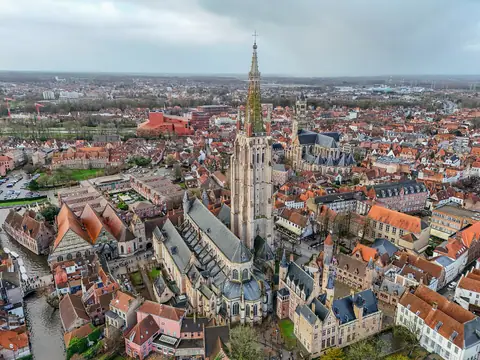
Flemish Primitives in Bruges: Groeningemuseum, Memling & Michelangelo
Bruges, Belgium
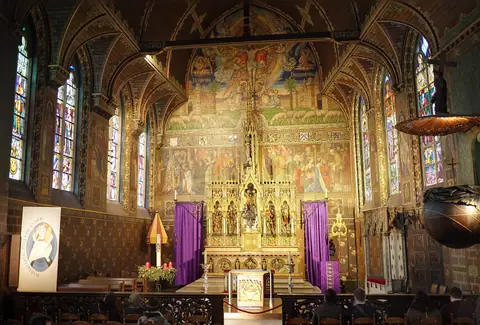
Basilica of the Holy Blood, Veneration Schedule & Jeruzalemkerk Guide
Bruges, Belgium
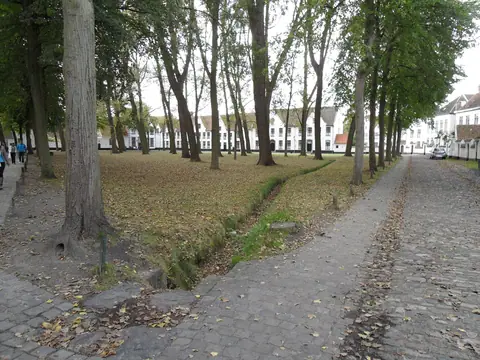
Begijnhof Beguinage, Minnewater Lake & Hidden Godshuizen Walk
Bruges, Belgium
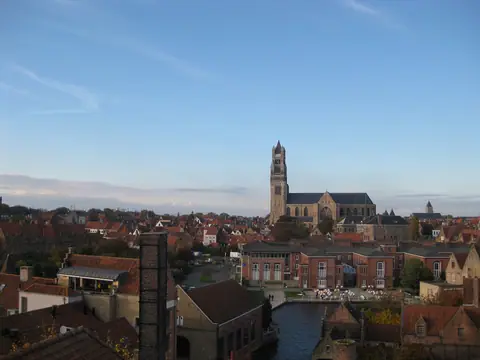
De Halve Maan Brewery, Underground Beer Pipeline & Historic Taverns
Bruges, Belgium
