



















Bruges: Medieval Egg Layout, Musea Brugge Card, Canal Etiquette & Tips
Master Bruges's oval canal layout, compare the 72-hour Musea Brugge Card against single tickets, and learn how to beat the 10:30 to 16:30 day-tripper rush.
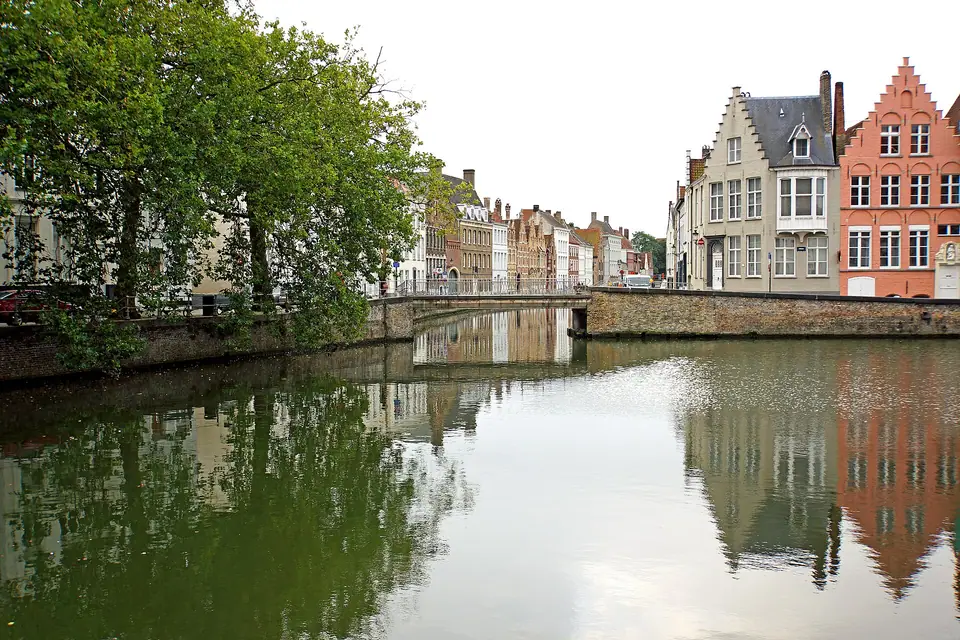
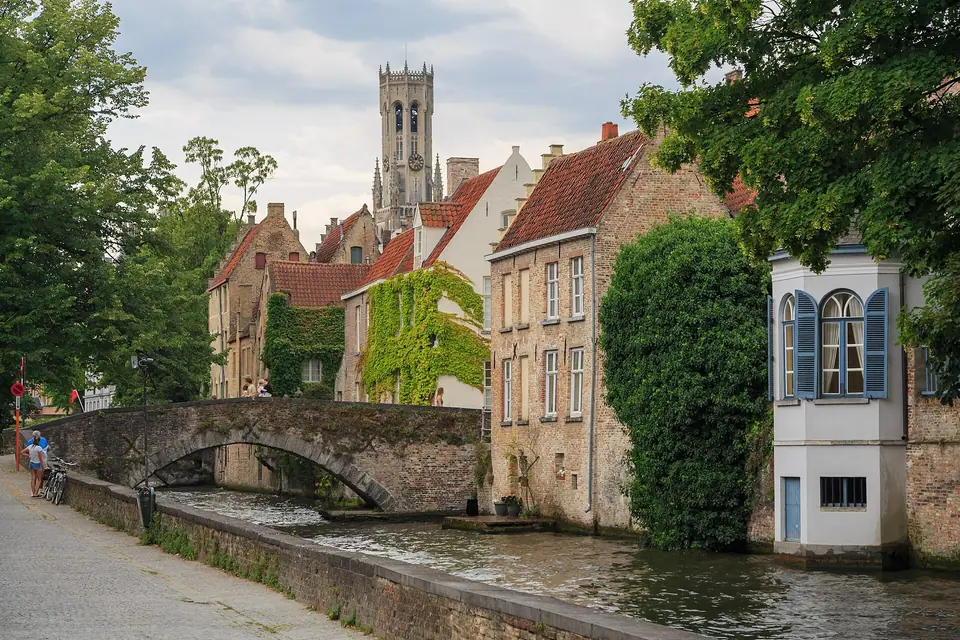
Shaped like a compact medieval egg measuring just 2.4 kilometres from north to south and 1.8 kilometres from west to east, the UNESCO-listed historic centre of Bruges (Brugge) is surrounded entirely by a green moat ring (the Vesting) planted with chestnut trees and crowned by four surviving wooden windmills. Within this water boundary, a network of inner waterways known locally as the Reien (named after the canalised medieval River Reie) winds beneath more than eighty brick and stone bridges. Pair this orientation guide with our Markt and Burg Square guide and our Bruges 3-day itinerary.
| Neighbourhood / Zone | Location Inside the Ring | Core Sights & Character | Crowd Level & Best Time |
|---|---|---|---|
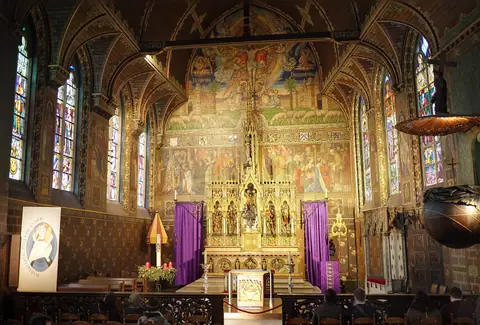
| 1. Markt, Burg & Dijver (The Golden Triangle). | Dead centre to southern canal bend. | Belfort, Gothic Town Hall, Basilica of the Holy Blood, Rozenhoedkaai, and Groeningemuseum. | High 10:30 to 16:30. Visit before 09:30 or after 17:30. |
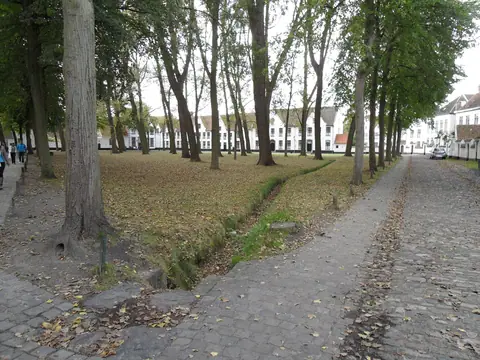
| 2. Minnewater & Begijnhof (Southern Gateway). | Between Brugge Station and Church of Our Lady. | Lake of Love (Minnewater), 1245 Beguinage, De Halve Maan Brewery, and St John's Hospital. | Busy on main path. Tranquil inside the Beguinage lawn at 08:30. |
| 3. Sint-Anna & Kruisvest (Northeast Quarter). | East of Spiegelrei to the outer ramparts. | Jeruzalemkerk, Kantcentrum (Lace Centre), Sint-Janshuismolen windmill, and quiet almshouses. | Low all day. Best area for quiet afternoon walks. |
| 4. Sint-Gillis & Spiegelrei (Hanseatic North). | North of Jan van Eyckplein along Golden Hand Canal. | Old Burgers' Lodge, medieval merchant warehouses, and quiet canal bridges. | Low all day. Ideal for sunset photography and local bistros. |
How to beat the 10:30 to 16:30 day-tripper wave
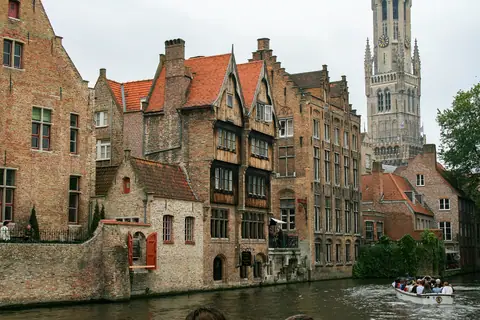
Bruges welcomes over eight million visitors a year, yet roughly seventy percent of them are day-trippers arriving on coaches from Brussels, Paris, and cruise ships at Zeebrugge. Almost every tour group follows the exact same 1.2-kilometre southern corridor between 10:30 and 16:30. Coaches drop passengers at Bargeplein to walk past Minnewater and the Begijnhof up Katelijnestraat, cross Bonifacius Bridge, board a boat at Rozenhoedkaai, and finish at Markt Square.
To experience Bruges at its best, invert that clock. Walk the Golden Triangle, Rozenhoedkaai, Bonifacius Bridge, the Begijnhof courtyard, and Burg Square, between 07:30 and 09:45 when only bakers' vans and swans are out. Between 10:30 and 15:30, step inside the timed-entry galleries of the Groeningemuseum or cross five minutes northeast of Burg Square into the silent residential cobbles of the Sint-Anna Quarter. Here you can visit the 15th-century Jeruzalemkerk, the Volkskundemuseum (Museum of Folk Life), and the Kruisvest windmills with virtually zero crowds. After 17:30, when the last coaches leave, the central canals empty out and floodlights turn the brick gables golden.
Is the 72-hour Musea Brugge Card worth buying in 2026?
Municipal museums and historic monuments in Bruges are operated by Musea Brugge, and individual adult admission tickets have risen in recent years. As of November 2026 (subject to municipal tariff updates), single adult tickets cost €15.00 each for the Belfort (Belfry), the Groeningemuseum, the Sint-Janshospitaal (Museum St John's Hospital), and the Gruuthusemuseum; €12.00 for the Stadhuis (Gothic Town Hall on Burg Square), and €8.00 each for the Church of Our Lady Museum (Michelangelo's Madonna), the O.L.V.-ter-Potterie, the Volkskundemuseum, and the Sint-Janshuismolen windmill.
The official Musea Brugge Card costs €33.00 for adults (€25.00 for ages 18 to 25, and €17.00 for ages 13 to 17 as of November 2026). It grants single entry to 11 major Musea Brugge museums and monuments over 72 consecutive hours. Visiting just the Belfort (€15), the Groeningemuseum (€15), and St John's Hospital (€15) individually totals €45.00. The €33.00 card therefore pays for itself on your third stop and makes the Town Hall, Gruuthusemuseum, and Church of Our Lady free. Note two important rules: the Musea Brugge Card does not include the private canal boat tour (€15.00), Choco-Story, or the Historium. In addition, you must still book a free €0.00 timed reservation slot online for the Belfort climb while selecting "Musea Brugge Card holder".
Language, currency, tipping, and cycling rules
- Dutch (Flemish) is the official language. Bruges is in Flanders, so local street signs and train boards read Brugge (pronounced roughly BRU-kheh) rather than the French Bruges. Nearly everyone working in hotels, museums, and restaurants speaks fluent English together with Dutch and French, and greeting shopkeepers with "Goeiedag" (Good day) or "Dank u wel" (Thank you) is warmly appreciated.
- Card-first payments with a few cash exceptions. Belgium runs overwhelmingly on contactless Visa, Mastercard, Apple Pay, and Bancontact cards, even for a €3.50 cone of fries or a €4.50 glass of Trappist beer. However, carry €15 to €20 in euro coins and small notes for public restrooms (€0.50 to €1.00 coin turnstiles) and church votive candles. A couple of traditional brown pubs also prefer cash for small bar tabs.
- Tipping etiquette in Flanders. By Belgian law, a 16% service charge and 21% VAT are already included in every printed menu price. You do not need to add a percentage tip. In casual cafés and brasseries, simply round up the bill by €1 to €3 for friendly table service, or leave 5% to 8% for a multi-course dinner.
- Watch for cyclists and horse-drawn carriages on shared cobbles. Many narrow streets inside the Bruges ring are one-way motor lanes where local cyclists are legally permitted to ride in both directions (marked Uitgezonderd fietsers). Always look both ways before stepping off the narrow pavement to frame a photograph, and listen for the hooves of the licensed horse-drawn carriages (koetsen) trotting between Markt Square and the Begijnhof.
Traveller tips
- Check Monday and Tuesday museum closing days. Unlike Paris or London, Bruges splits its weekly museum closures across two days: the Church of Our Lady Museum and Sint-Janshospitaal close on Mondays, whereas the Groeningemuseum and Gruuthusemuseum close on Tuesdays. The Belfort and Town Hall open seven days a week.
- Leave heavy suitcases at Brugge Station lockers if visiting for the day. Rolling four-wheel hard-shell suitcases over 14th-century Belgian porphyry cobblestones for twenty minutes can snap small plastic caster wheels. Automatic luggage lockers inside Brugge Railway Station cost €5.50 to €9.50 per 24 hours (payable by contactless card as of November 2026) and hold everything from cabin bags to large trunks.
- Avoid parking inside the historic ring. Curbside parking inside the medieval centre is strictly limited and expensive. If driving, park at the huge underground Interparking ’t Zand (Centrum-Zand) or Centrum-Station garage (where full-day rates run €6.10 at the Station garage or €15.80 at ’t Zand as of November 2026).
- Use free public drinking water fountains. Refillable water taps stand near ’t Zand, the Begijnhof entrance, and Burg Square, saving you from buying €3.50 plastic bottles at tourist cafés.
When planning your museum visits across Bruges, keep in mind that the central ticket office inside the Historium on Markt Square and the booth at the Groeningemuseum both sell the 72-hour Musea Brugge Card. You can also buy the digital pass on your phone at museabrugge.be and scan the QR code at each turnstile.
Public restrooms are located inside the lower courtyard of the Belfort on Markt Square, at the Bargeplein visitor pavilion near Minnewater, inside the Sint-Janshospitaal courtyard, and inside the ’t Zand underground parking concourse. Keeping a few €0.50 and €1.00 coins in your pocket is helpful where attendant turnstiles operate.
If you want to explore the outer ramparts and windmills without walking the entire 6.8-kilometre ring, rent a standard city bike near ’t Zand or the railway station for €12 to €15 per day. A dedicated asphalt cycle track circles the entire green moat beneath the chestnut trees.
Every neighbourhood inside the medieval canal ring sits within a fifteen-minute walk of Markt Square and Burg Square. Cyclists have right-of-way along shared quiet streets, so check both directions before stepping off the pavement to frame a photograph.
Most municipal museums and heritage monuments across Bruges open from 09:30 to 17:00 and offer digital audio guides through the free Musea Brugge app. Bring your own headphones so you can listen comfortably as you move between rooms.
Even in midsummer, coastal breezes from the North Sea fifteen kilometres away can bring a passing ten-minute shower across West Flanders. Keeping a compact windproof layer in your daypack ensures you stay comfortable on open-top canal boats and cobblestone lanes.
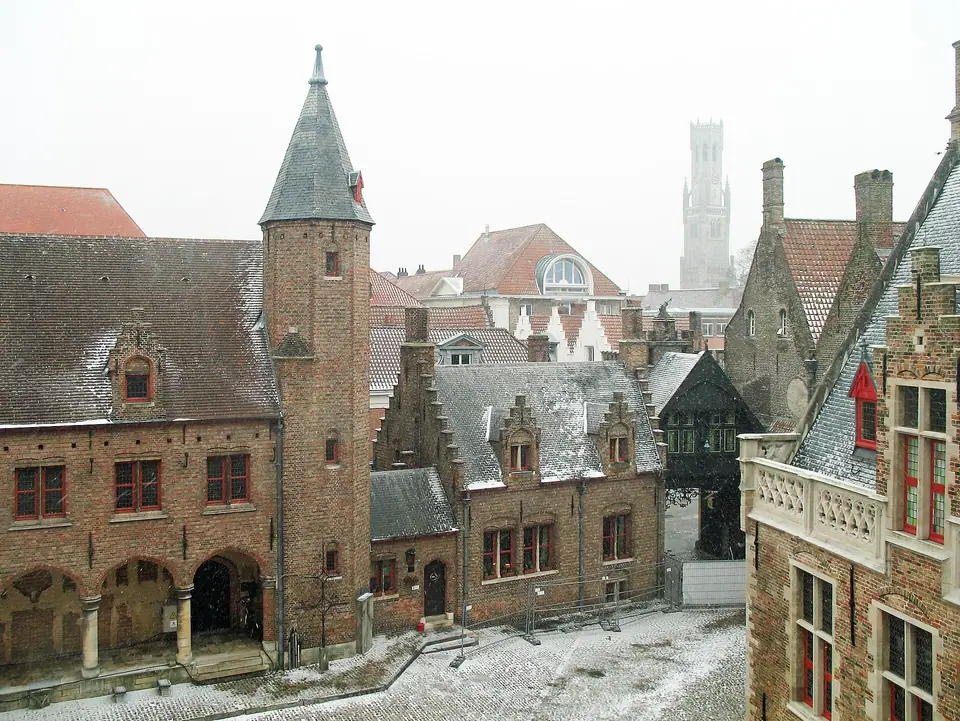
Architectural conservation rules in Bruges protect the brick step-gables, wrought-iron wall anchors, and stone bridges built between the 13th and 17th centuries. Look above modern shopfronts to spot carved stone plaques showing the construction year and original guild emblem of each house.
Where it is
- 1Bruges
- Ostend-Bruges International Airport (OST) · about 24 km from Bruges in a straight line
- Directions in Google Maps
Traveller tips
Real advice from people who have been to Bruges. Every tip is read by our team before it goes live.
No tips yet. Been here? Yours could be the first.
Thank you! Your tip will appear here after a quick review.
More in Bruges
Continue exploring Bruges with related neighbourhood, food, and planning guides
Bruges Canal Boat Tours, Rozenhoedkaai & Secret Bridges Walk
Bruges, Belgium
Flemish Primitives in Bruges: Groeningemuseum, Memling & Michelangelo
Bruges, Belgium
Basilica of the Holy Blood, Veneration Schedule & Jeruzalemkerk Guide
Bruges, Belgium
Begijnhof Beguinage, Minnewater Lake & Hidden Godshuizen Walk
Bruges, Belgium
