



















Best Things to Do in Bruges: Belfort, Canals, Flemish Primitives & Hidden Almshouses
Explore the 10 essential experiences in Bruges, from climbing the 83-metre Belfort and cruising the inner canals to Jan van Eyck paintings and 14th-century almshouses.
What sets Bruges apart from other preserved medieval towns in Europe is the density of world-changing art and civic history packed behind its brick facades. Within a fifteen-minute walk of Markt Square, you can stand before the original 1436 oil panel that defined the Northern Renaissance and see the only Michelangelo marble sculpture that left Italy during his lifetime. In the same afternoon, you can climb a 13th-century municipal belfry powered by a 47-bell brass carillon and step into quiet 14th-century charity courtyards where retired locals still live today. Pair this overview with our Bruges travel guide and our 3-day Bruges itinerary.
| Top Bruges Experience | Ticket Cost (Nov 2026) | Time Needed | Booking & Timing Advice |
|---|---|---|---|
| 1. Climb the 366 Steps of the Belfort (Belfry). | €15.00 adult (or Musea Brugge Card). | 60 minutes. | Book the 09:00 or 16:00 timed slot online at museabrugge.be. |
| 2. 30-Minute Open-Top Canal Boat Cruise. | €15.00 adult / €9.00 child (ages 4 to 11). | 30 to 40 minutes. | No advance booking. Board at 10:00 sharp when jetties open. |
| 3. Groeningemuseum & Sint-Janshospitaal Art. | €15.00 each (or Musea Brugge Card). | 75 to 90 minutes each. | Visit between 11:00 and 15:00 when outdoor streets are busiest. |
| 4. Church of Our Lady & Michelangelo Madonna. | €8.00 museum zone (nave free). | 45 minutes. | Closed Mondays. Combine with Bonifacius Bridge outside. |
| 5. Basilica of the Holy Blood & Burg Square. | Upper chapel free; Treasury €5.00. | 40 minutes. | Veneration daily 14:00 to 16:00 (and Fri 10:15 to 11:00). |
| 6. Begijnhof, Minnewater & Kruisvest Windmills. | Free exterior / €8.00 windmill museum. | 90 minutes. | Walk the Begijnhof at 08:30 and the windmills at sunset. |
Climb the Belfort (Belfry) and cross into Burg Square
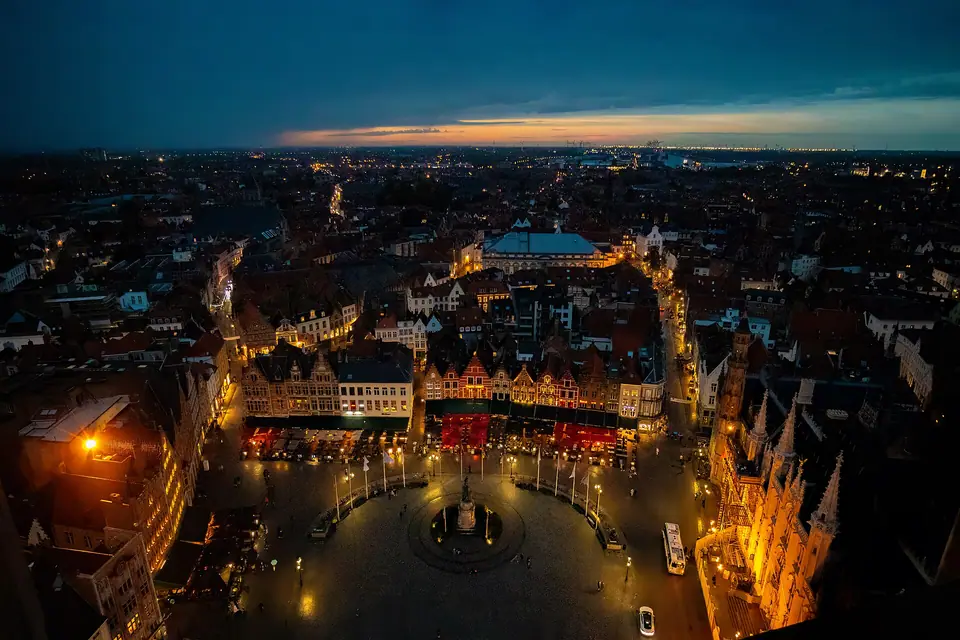
Rising 83 metres above the colourful neo-Gothic guild gables of Markt Square, the 13th-to-15th-century Belfort (Belfry of Bruges) was the secular symbol of the city's medieval liberties rather than a church spire. Inside its lower medieval Treasury vault, iron grilles once guarded the municipal charters beneath seven separate locks held by different guild leaders. Climbing its 366 spiral stone steps (€15.00 as of November 2026, timed slot required) brings you past the giant brass drum of the 1748 mechanical music box. Higher up hang the 47 bronze bells of the carillon (weighing 27.5 tonnes in total), which ring out across the rooftops every fifteen minutes.
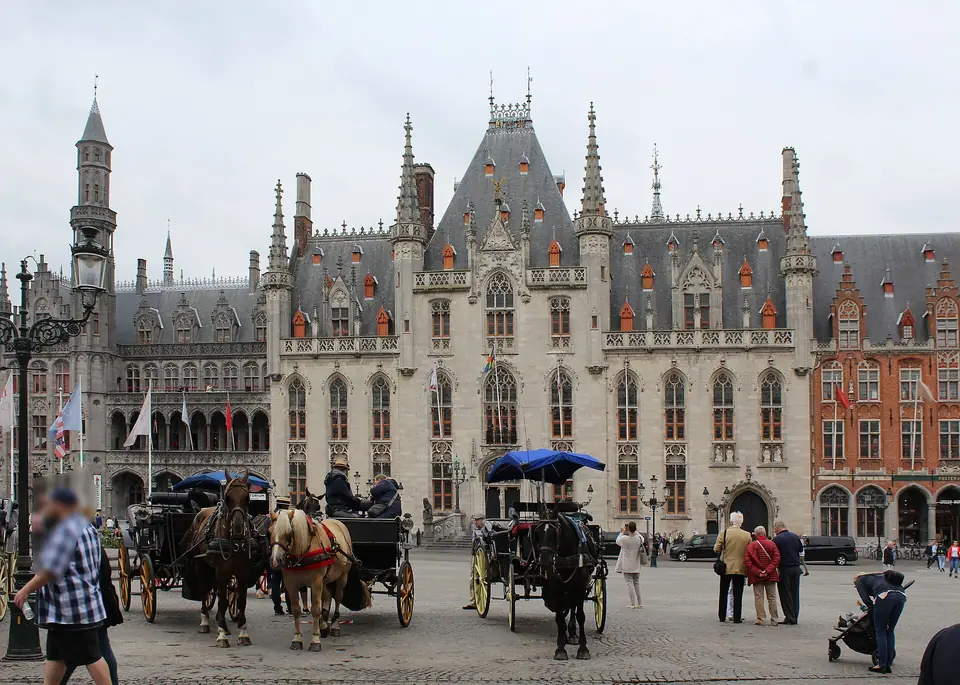
Immediately upon descending, walk through the vaulted passage of Breidelstraat into Burg Square, the political and religious heart of Bruges since Count Baldwin Iron Arm built his 9th-century fortress here against Viking raiders. On the southern side shines the 1376 Stadhuis (Town Hall), the oldest monumental Gothic town hall in the Low Countries. Its upstairs Gothic Hall features a 1402 polychrome oak-vaulted ceiling and murals depicting Bruges's medieval trade laws.
Cruise the inner canals from Rozenhoedkaai
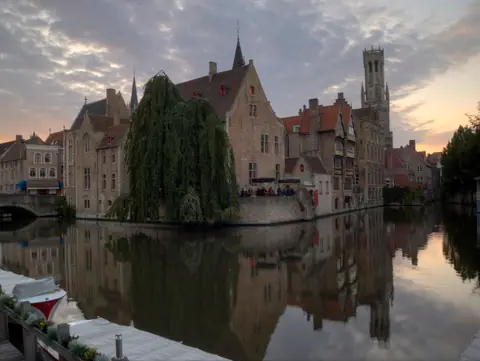
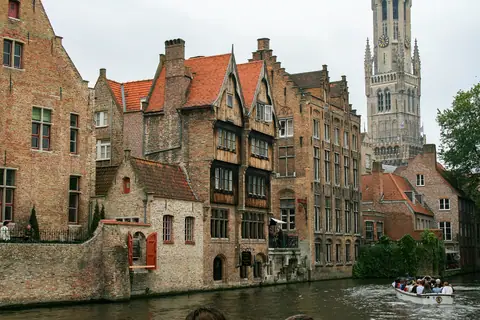
Two minutes south of Burg Square through the Blind Donkey Alley (Blinde-Ezelstraat) and the colonnaded Fish Market (Vismarkt) lies Rozenhoedkaai ("Rosary Quay"), the single most photographed corner in Flanders. Here the Dijver canal makes a ninety-degree bend around weeping willows and medieval brick warehouses, with the octagonal lantern of the Belfort framed overhead.
Bruges's five licensed canal boat families operate open-top electric motorboats daily from March to mid-November (€15.00 adult / €9.00 child for a 30-minute cruise as of November 2026). Boarding one gives you a water-level perspective of the medieval stonework that is impossible to see from the street. Your skipper steers beneath the low stone arches of Peerdenbrug and Meebrug and passes the 15th-century Jan van Eyckplein customs tollhouse. Along the way, you see medieval water gates that once allowed cargo barges to unload wool and Bordeaux wine barrels directly into merchant cellars.
Stand before Jan van Eyck, Hans Memling, and Michelangelo
Even travellers who rarely visit art museums in other cities should dedicate half a day to Bruges's trio of 15th- and 16th-century collections along the Dijver and Mariastraat museum corridor. At the Groeningemuseum, you stand inches from Jan van Eyck's 1436 Madonna with Canon Joris van der Paele. The panel is so microscopically detailed that you can see the reflection of the Virgin Mary in St George's polished steel helmet and the veins on the elderly canon's temple. Nearby hang Hieronymus Bosch's surreal Last Judgement triptych and Gerard David's harrowing Judgement of Cambyses.
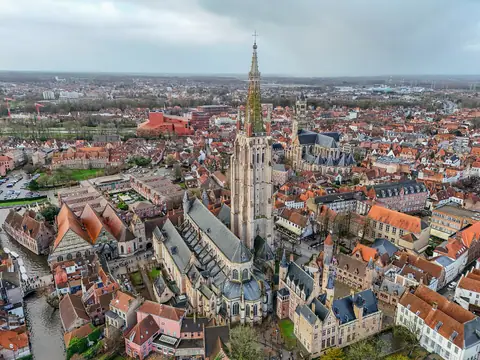
Five minutes west stands the 12th-century Sint-Janshospitaal, one of the oldest surviving medieval hospital wards in Europe, topped by soaring 13th-century oak roof trusses. Inside, six original masterpieces by Hans Memling remain in the very hospital that commissioned them in the 1470s and 1480s, crowned by the gilded wooden reliquary Shrine of St Ursula. Directly across the street rises the 115.6-metre brick spire of the Church of Our Lady (Onze-Lieve-Vrouwekerk), housing Michelangelo's white Carrara marble Madonna and Child (1501 to 1504), purchased in Italy by the Bruges cloth-merchant brothers Jan and Alexander Mouscron in 1506. In the high choir stand the gilded bronze-and-black-marble Renaissance tombs of Duke Charles the Bold and his daughter Mary of Burgundy.
Walk the Begijnhof, Godshuizen almshouses, and Kruisvest windmills
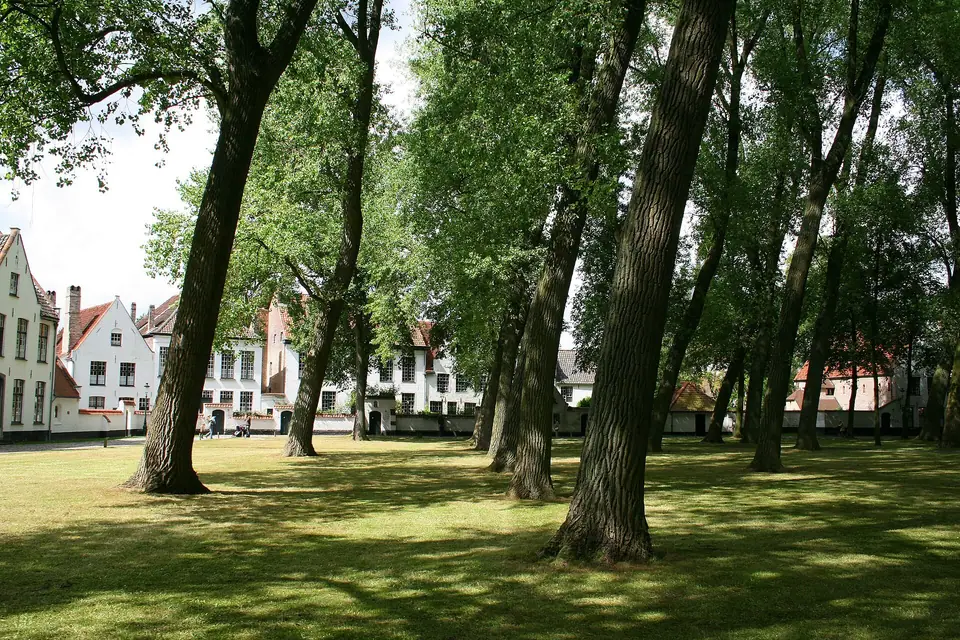
For quiet contemplation away from Steenstraat, cross the arched stone bridge into the Princely Beguinage Ten Wijngaerde (Begijnhof). Founded in 1245 by Countess Margaret of Constantinople for emancipated lay religious women (beguines), its whitewashed courtyard is inhabited today by Benedictine nuns and single Bruges women. Beyond the Begijnhof, seek out two or three of Bruges's forty-plus Godshuizen (almshouses), tiny, whitewashed 14th-to-17th-century courtyard cottages endowed by wealthy guilds for elderly widows and craftsmen. Peaceful examples include De Meulenaere and Sint-Jozef on Nieuwe Gentweg or De Pelikaan near Groenerei (free daytime access, remain quiet as elderly residents live inside). Finish the afternoon walking the elevated grassy ramparts of Kruisvest on the northeastern edge of the ring, where four wooden post windmills, including the working 1770 Sint-Janshuismolen, catch the North Sea breeze above the moat.
Traveller tips
- Step behind the Church of Our Lady to Bonifaciusbrug at dawn. Although the picturesque limestone footbridge of Bonifaciusbrug looks medieval, it was actually built in 1910 during Bruges's romantic neo-Gothic revival. Standing on its stone bench at 08:00 gives you an empty view of the half-timbered 16th-century house of Arentshuis and the Gruuthuse Palace overlooking the narrow canal.
- Listen to a free live carillon concert from the Belfort courtyard. Every Wednesday, Saturday, and Sunday from 11:00 to 12:00 year-round, the city carillonneur plays the 47 bells of the Belfort live from the keyboard cabin high in the tower. Additional evening concerts ring out on Monday and Wednesday nights at 21:00 during summer; stand inside the free ground-floor courtyard of the Belfort to hear the bells clearest.
- Visit the Adornes Domain and Jeruzalemkerk in Sint-Anna. Ten minutes northeast of Burg Square at Peperstraat 3 stands the private 15th-century estate of the Genoese-Flemish Adornes family (€10.00 entry as of November 2026, including the Scottish Lounge bar). Its remarkable Jeruzalemkerk (consecrated 1429) was modelled on the Church of the Holy Sepulchre in Jerusalem and contains a dramatic black marble skull-carved tomb and an upper Golgotha altar reached by stone ladders.
Quiet Cathedrals and Evening Quays
Beyond the headline monuments, take thirty minutes to step inside Saint Salvator's Cathedral (Sint-Salvatorskathedraal) on Steenstraat, which is free to enter daily. After the French demolished Saint Donatian's on Burg Square in 1799, this 12th-to-15th-century parish church became Bruges's cathedral. Inside, it preserves a magnificent 17th-century rood screen, Brussels tapestries, and painted coats of arms of the Knights of the Golden Fleece.
Another rewarding afternoon stop is the 15th-century Onze-Lieve-Vrouw ter Potterie along the northern Potterierei canal (€8.00 or free with the Musea Brugge Card). Far quieter than St John's Hospital, its medieval infirmary ward and Baroque chapel contain rare 13th-century silver reliquaries and miracle tapestries.
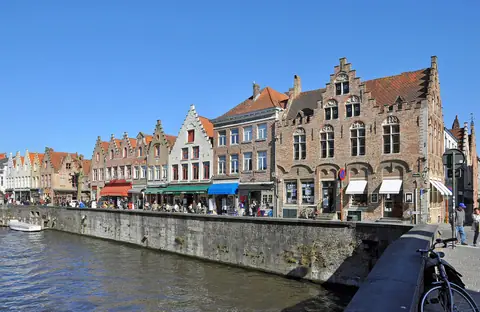
In the evening after 18:00, walk the quiet northern quays of Jan van Eyckplein, Spiegelrei, and Sint-Annarei. With the tour boats moored for the night, the illuminated step-gabled facades reflect like oil paintings in the dark canal water.
Where it is
- 1Bruges
- Ostend-Bruges International Airport (OST) · about 25 km from Bruges in a straight line
- Directions in Google Maps
Traveller tips
Real advice from people who have been to Bruges. Every tip is read by our team before it goes live.
No tips yet. Been here? Yours could be the first.
Thank you! Your tip will appear here after a quick review.
More in Bruges
Continue exploring Bruges with related neighbourhood, food, and planning guides
3-Day Bruges Itinerary: Medieval Canals, Flemish Masters, Beer & Damme
Bruges, Belgium
Markt Square, Belfort Climb & Burg Square Town Hall Guide
Bruges, Belgium
Bruges Canal Boat Tours, Rozenhoedkaai & Secret Bridges Walk
Bruges, Belgium
Flemish Primitives in Bruges: Groeningemuseum, Memling & Michelangelo
Bruges, Belgium
