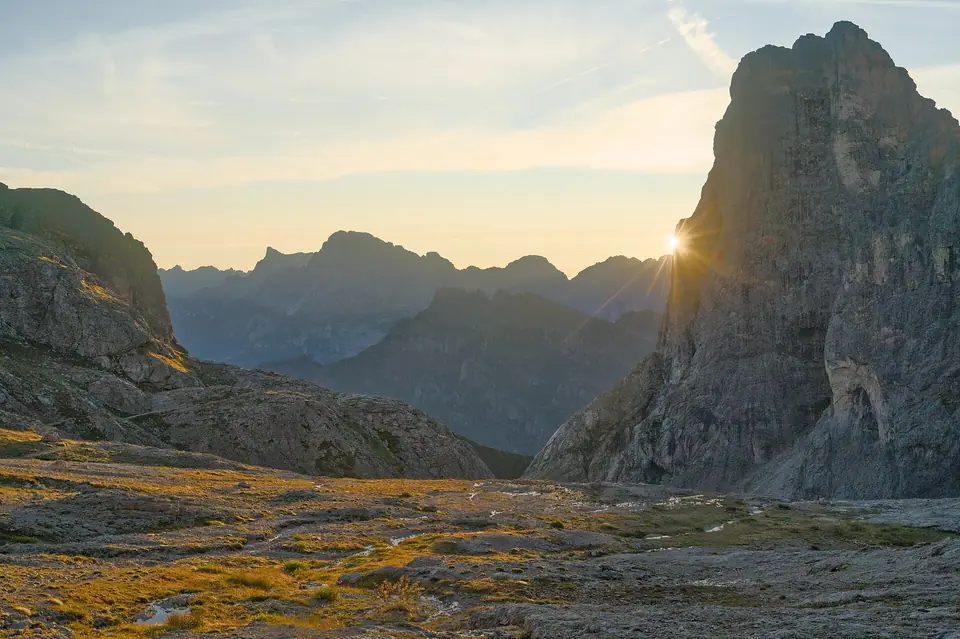
Photo: Dmitry Djouce · CC BY 4.0
Best Time to Visit the Dolomites
Season-by-season mountain calendar matching Open-Meteo temperatures, larch gold, lift maintenance gaps, and Olympic winter.
High-mountain access across the Dolomites runs strictly around dual winter-and-summer lift calendars split by quiet spring and autumn maintenance shutdowns. Visiting during inviting sunny lowlands weather in April or quiet wet November meets locked cable terminals while isolated mountain refuges sit dark beneath drifts.
Comparing 10-year Open-Meteo archives recorded across Cortina d'Ampezzo (1,224 metres) paired with regional lift timetables helps travellers target ideal dates matching alpine wildflowers, golden amber larches, or sunlit winter pistes.
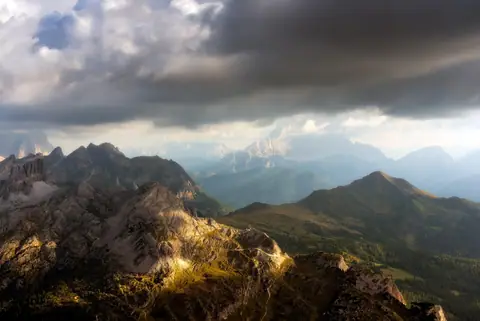
Mountain daylight shifts rapidly between clear crisp morning hours and tall convective cumulus gathering over pale pinnacles later each warm day. Starting higher climbs promptly at dawn clears rocky ridges safely before distant storm clouds darken western passes. Checking exact summer shutdown schedules valley by valley avoids surprising station closures around quiet transition weekends.
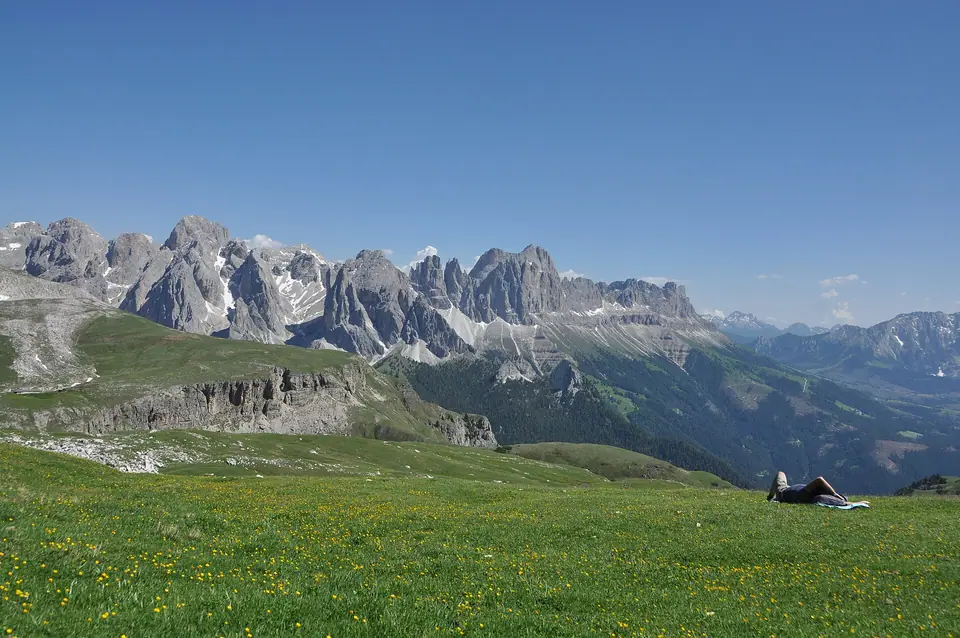
Early summer: June wildflowers before peak crowds
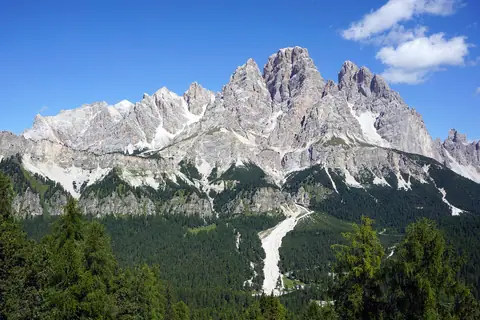
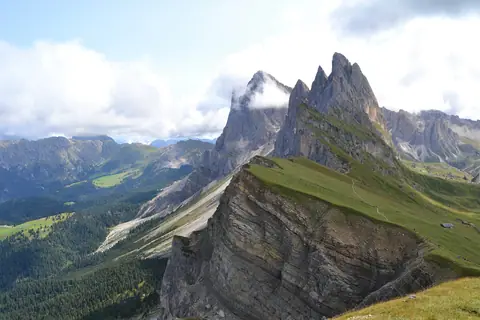
Major mountain gondolas resume daily runs around mid-June as broad green pastures across Alpe di Siusi open smoothly under blankets of buttercups and mountain gentians. Mid-June into early July brings calmer mountain lodges, manageable trail crowds, and open valley passes ahead of severe summer gate restrictions across eastern parking bays.
Keep realistic expectations above 2,400 metres through early June outings. Shaded northern cols around Forcella Lavaredo or lofty Alta Via 2 stages retain thick winter snowdrifts well into mid-to-late June. Meanwhile, Open-Meteo measures warm June valley highs near 19.7 °C (lows 9.6 °C) paired with 173 millimetres of rain spanning 22.6 wet days, demanding water-resistant jackets inside every pack.
Peak summer: July warmth and afternoon storms
High summer unlocks every refuge terrace, protected iron path, and swift high summit lift together under the warmest afternoon air of any month. Cortina averages 21.7 °C daily highs and 11.5 °C nights across July, tracked carefully by 21.3 °C daytime highs and 11.5 °C lows in August. Yet July delivers maximum yearly precipitation at 189 millimetres across 23.4 wet days as muggy valleys trigger sharp convective storms following clear blue mornings (August measures 157 millimetres over 21.1 wet days).
Plan steep high loops like Tre Cime and rocky Lago di Sorapis for sunrise starts so you clear high scree saddles well ahead of midday lightning. August Ferragosto fortnights pull large domestic holiday gatherings, busy cable queues, and strict timed access gates around Lago di Braies (1 July to 15 September).
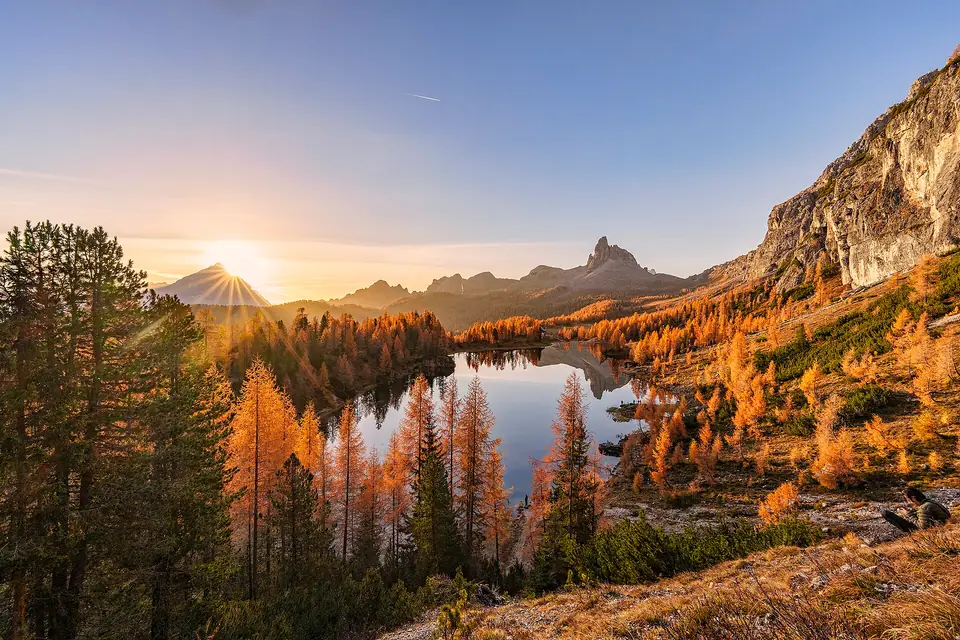
Autumn clarity: mid-September through October larches
Seasoned mountain hikers steadily rank mid-September into mid-October above summer months for crisp visibility. Cooler dry autumn winds sweep misty humid haze straight clear of distant crests, cutting Cortina rainfall downward toward 125 millimetres across 16.4 wet days (mean high 16.9 °C, low 7.8 °C). Bright sunset walls glow sharper and calm mornings linger longer before clouds build.
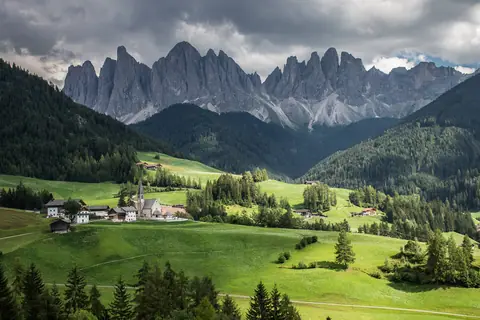
By October (mean high 13.1 °C, low 4.5 °C), rainfall measures 143 millimetres across just 12.1 wet days. Deciduous alpine larches blaze rich copper and harvest gold beside steep limestone walls lining Lago Federa, high Fanes meadows, and shaded Val di Funes pines. Always inspect official cableway closing calendars closely ahead because high lifts shut progressively across late September through mid-October once high huts drain winterised water pipes before November blizzards.
| Calendar Window | Cortina Climate (1,224 m) | Lift & Refuge Status | Ideal Mountain Plans |
|---|---|---|---|
| Winter Snow (late Dec to Mar) | Hi 1.8 to 6.0 °C, Lo -7.2 to -3.0 °C | Winter ski networks & cross-country groomed | Downhill pistes, snowshoeing, cleared winter paths |
| Spring Maintenance Gap (Apr to May) | Hi 9.1 to 13.8 °C, May 22.9 wet days | Cable cars shut; deep snow above 2,000 m | Bolzano wine roads & low valley cycling |
| Early Summer (mid Jun to early Jul) | Hi 19.7 °C, 173 mm June rain | Lifts open gradually through mid-to-late June | Meadow flowers, quieter trails before Braies gate peak |
| Peak Summer (mid Jul to Aug) | Hi 21.3 to 21.7 °C, 21.1 to 23.4 wet days | Every lift & hut operating; road passes mandatory | High passes, Lagazuoi tunnel & via ferrata circuits |
| Golden Larch Season (mid Sep to mid Oct) | Hi 13.1 to 16.9 °C, Lo 4.5 to 7.8 °C | Major gondolas into early Oct; huts close in steps | Crisp trail clarity & orange alpine larch foliage |
| Late Autumn Off-Season (late Oct to Nov) | Hi 7.1 °C in Nov, Lo -1.1 °C | Lifts chained off; winter tyre law starts Nov 15 | Quiet urban retreats down in Bolzano basin |
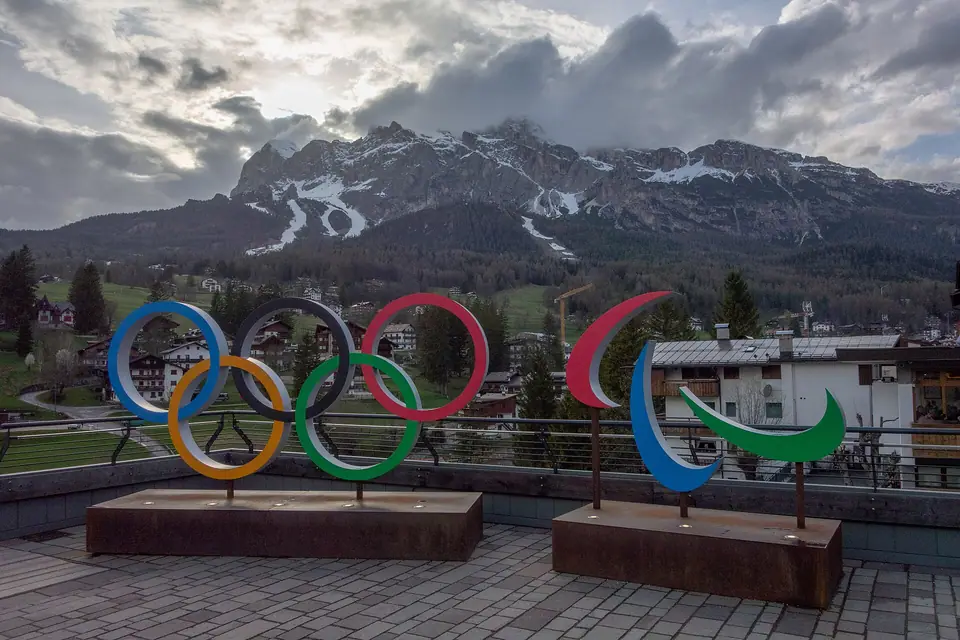
Off-season maintenance gaps and winter pistes
Calm spring months and chilly late autumn isolate quiet tourist towns between ski seasons and summer lifts. April averages 9.1 °C highs (-0.1 °C lows) with 118 millimetres over 12.8 wet days, while wet May climbs to 13.8 °C highs with 181 millimetres across 22.9 wet days. Late October fades into quiet chilly November (7.1 °C high, -1.1 °C low, 124 millimetres over 9.3 wet days) with frosted wood ladders and closed ridge huts. Drop happily downward into Bolzano (262 metres) for sunny wine arcades, ancient Ötzi exhibits, and year-round Renon cabins during quiet shoulder periods.
Deep winter transforms bright meadows from late December smoothly across late March into broad snowy ski corridors. Cortina averages winter daytime highs of 3.7 °C in December, 1.8 °C in January (-7.2 °C lows), 4.0 °C in February, and 6.0 °C in March with 55 to 85 millimetres monthly precipitation over 7.3 to 11.0 wet days. Interlinked Dolomiti Superski cables circle Sella valleys cleanly while walkers stroll packed winter snow paths across bright Prato Piazza and Alpe di Siusi plateaus. Honouring deep 1956 Olympic roots, Cortina co-hosted the Milano Cortina Winter Olympic and Paralympic Games across February and March 2026.
Three calendar checks before locking travel dates
- Verify individual lift timetables: Mid-June opening mornings and progressive late-September closing runs differ valley by valley every year across private consortia.
- Watch May and July rain peaks: May tracks 22.9 wet days at town altitude while humid July climbs toward 23.4 wet days driven by sudden afternoon downpours.
- Observe 15 November road rules: Mandatory winter tyres or stowed snow chains govern all Bolzano provincial highways regardless of sunny calm tarmac outside towns.
Where it is
- 1Central Dolomites
- Treviso Airport (TSF) · about 102 km from the central Dolomites in a straight line
- Directions in Google Maps
Stations and taxi ranks: OpenStreetMap. Airports: OurAirports. Distances are in a straight line.
Traveller tips
Real advice from people who have been to the Dolomites. Every tip is read by our team before it goes live.
No tips yet. Been here? Yours could be the first.
Thank you! Your tip will appear here after a quick review.
More in the Dolomites
Continue exploring the Dolomites with related neighbourhood, food, and planning guides