Photo: Kuebi · CC BY-SA 3.0
Where to Stay in the Dolomites
Base comparisons across Ortisei, Santa Cristina, Selva, Corvara, Cortina d’Ampezzo, Dobbiaco, Bolzano, and high mountain huts.
Choosing an intelligent sleeping village removes half the friction of planning alpine days. Winding mountain pass roads hold real driving speeds far below lowland motorway averages. Commuting daily across steep mountain saddles wastes early dawn trail hours inside slow queues before walking boots even touch mountain dirt.
Journeys lasting five to seven days flow naturally when you divide rooms neatly across two complementary valleys. Spend early nights west around Val Gardena or Bolzano, then shift rooms mid-week toward eastern Cortina or Val Pusteria. Shorter three-night stays run much smoother when guests focus firmly upon one chosen mountain half without repeatedly shifting heavy holiday luggage across lofty saddles.
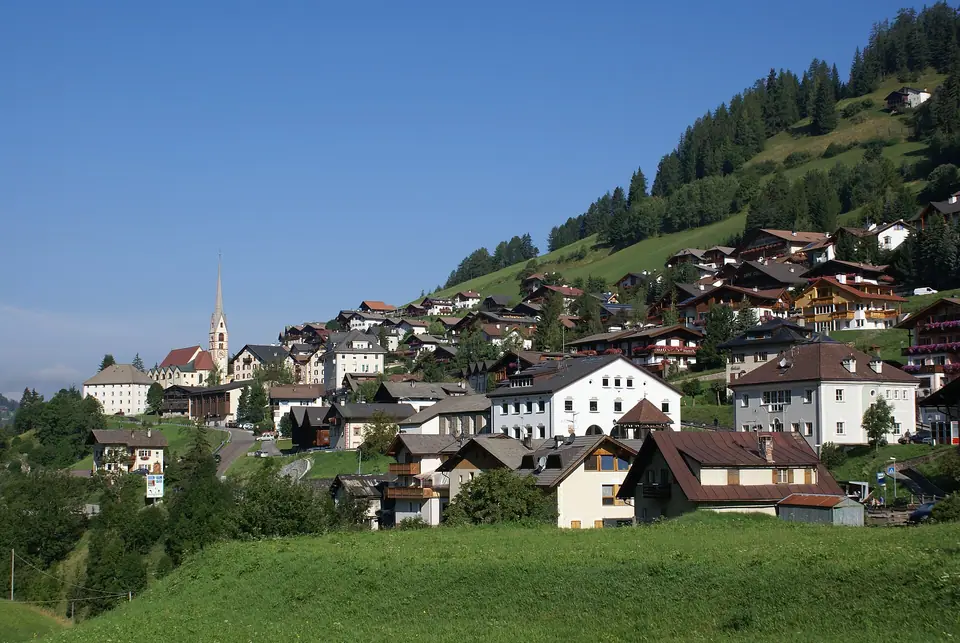
Val Gardena villages: Ortisei, Santa Cristina, and Selva
Val Gardena excels across South Tyrol for instant morning lift departures paired with comfortable Ladin timber inns. Three connected towns climb smoothly along valley corridor SS242 between forest ravines and towering grey rock walls.
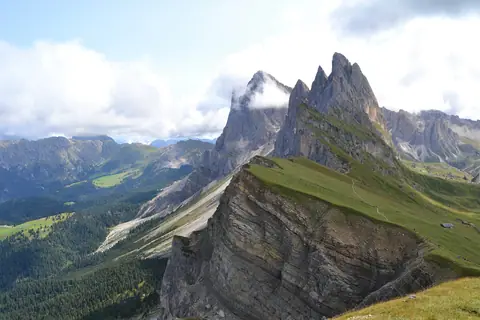
At the sunny lower valley entrance stands Ortisei (St. Ulrich or Urtijëi) at 1,236 metres, prized widely for effortless walkable car-free charm. Leaving village squares on foot guides walkers straight onto the Seceda cableway north of town and Mont Sëuc cabins rising toward Alpe di Siusi across covered river bridges. Regular Bus 350 coaches link downtown stops down toward Bolzano and Ponte Gardena stations reliably all week.
Quieter mid-valley Santa Cristina sits calmly at 1,428 metres directly below stark Sassolungo walls, swapping crowded squares for calm pine footpaths and direct rides upward on Col Raiser lifts. Uppermost sits Selva di Val Gardena (Wolkenstein) at 1,563 metres, placing road users and summer Bus 471 riders right beside lofty Passo Gardena and Passo Sella approaches.
Corvara in Alta Badia for a central hub
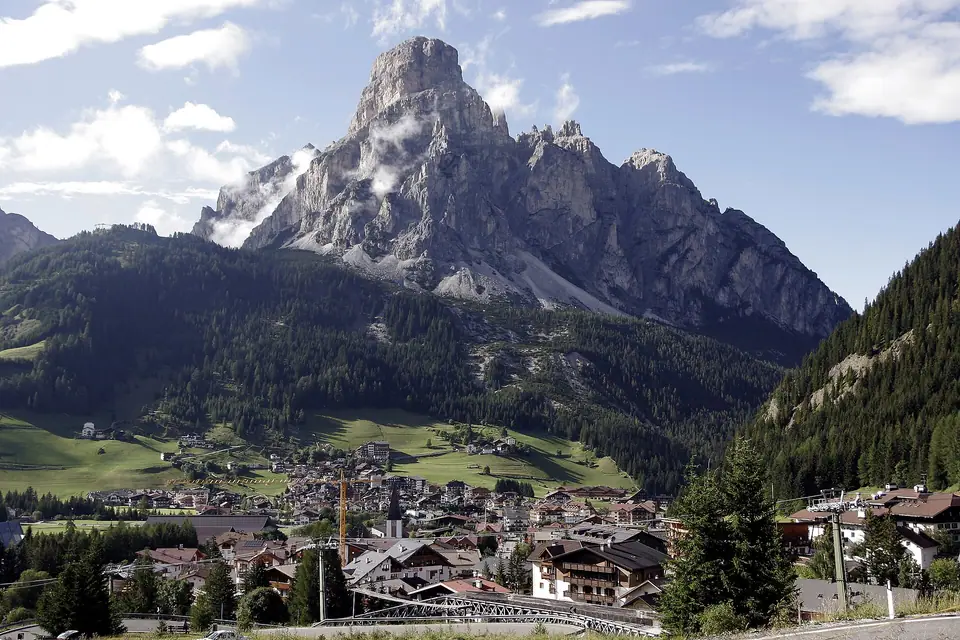
Dropping east past Passo Gardena reveals sunlit Corvara in Alta Badia at 1,568 metres, framed warmly by wide green pastures below vertical limestone towers. Visitors insistent upon checking in once without packing mid-trip make central Corvara a clever operational hinge. From calm village lanes, drivers loop swiftly round the Sella Ronda passes toward Val Gardena west or ascend Passo Falzarego east bound for Cortina.
Alta Badia kitchens champion gentle Ladin specialities inside friendly hotel dining rooms after active summit circuits, though rail-only travellers face longer winding coach changes back toward Val Pusteria station towns.
Evening atmosphere varies widely across valley bases once mountain lift gondolas close for afternoon servicing. Pedestrian town lanes in Ortisei fill pleasantly with bakery windows and late gelato counters, making car-free couples feel settled immediately. Meanwhile, quieter pastures around Santa Cristina or San Candido grant peaceful forest walks right from timber hotel doors ahead of early dawn starts.
Booking village stays within brief walks of rail halls or frequent coach stops spares tiring uphill backpack hauling after long connecting routes across Bolzano.
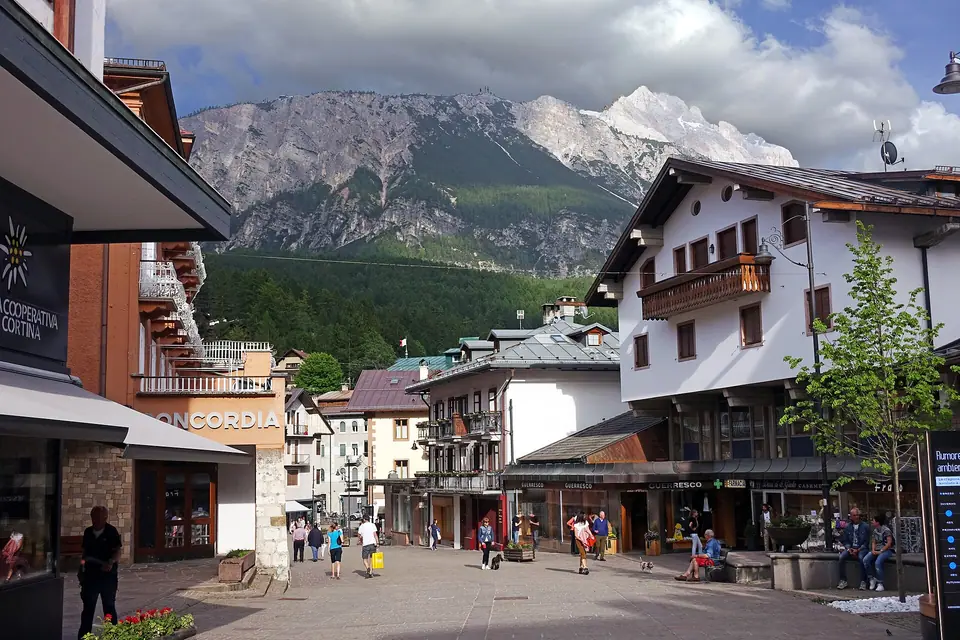
Cortina d’Ampezzo versus Alta Pusteria rail hubs
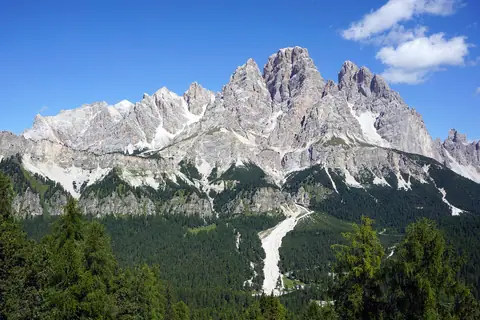
Eastern Belluno opens wide around radiant Cortina d'Ampezzo at 1,224 metres inside a broad meadow basin watched over by Cristallo, Faloria, and soaring Tofana faces. Cortina staged the historic 1956 Winter Olympics and co-hosted the February to March 2026 Winter Olympic and Paralympic Games. Strolling sunny Corso Italia pavements grants late mountain light, lively bellunese trattorias, direct Venice buses, and short transfers toward Cinque Torri and Lago di Sorapis.
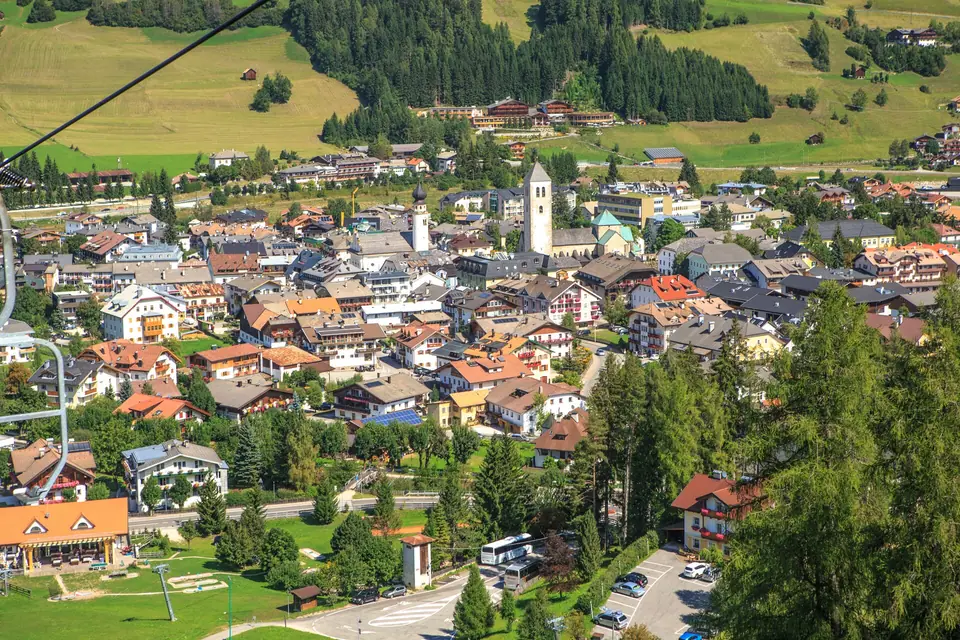
Train riders and budget mountain walkers often pick Val Pusteria villages sitting neatly across northern South Tyrol rail lines instead. Dobbiaco (Toblach) at 1,256 metres and neighbouring San Candido (Innichen) at 1,175 metres balance welcoming pedestrian bakeries right beside provincial train stops. Both calm hubs act as seamless boarding yards for prepaid summer shuttles heading out to Tre Cime (Bus 444) and Lago di Braies (Bus 442).
| Village or City Base | Elevation & Mood | Car-Free Mobility | Main Drawback |
|---|---|---|---|
| Ortisei (Val Gardena) | 1,236 m pedestrian craft town | Walkable lifts to Seceda & Alpe di Siusi + Bus 350 | Far drive from eastern Tre Cime & Sorapis |
| Selva / Santa Cristina | 1,428 to 1,563 m alpine villages | Bus 350 & summer Bus 471 pass links | Quieter evening dining compared with Ortisei |
| Corvara (Alta Badia) | 1,568 m broad Ladin valley | Buses toward Brunico & high mountain passes | Long bus legs across to eastern lakes |
| Cortina d'Ampezzo | 1,224 m historic Veneto hub | Cortina Express coaches directly from Venice | Seasonal rural buses thinner near minor passes |
| Dobbiaco & San Candido | 1,256 m / 1,175 m train towns | Val Pusteria trains + Braies & Tre Cime shuttles | Too far east for easy Val Gardena mornings |
| Bolzano (Bozen) | 262 m sunny urban capital | EuroCity rail, Renon cable car & regional buses | Uphill commute needed before reaching high ridges |
Bolzano for urban evenings and rainy weather
Down across sunny Adige vineyards at 262 metres, historic Bolzano replaces misty steep mountain slopes with sheltered medieval stonework arcades and late terrace dinners. Fast direct EuroCity expresses join urban Bolzano swiftly northward into Munich and southbound toward Florence. Book central rooms for relaxing arrival nights or descend gracefully whenever thick grey clouds shroud upper valleys.
Lodging styles from valley Garni to mountain huts
Picking accommodation styles suited to daily trekking plans spares sleepy early highway drives. It lets walkers catch clear sunrise rock walls straight outside stone hut doors.
- Valley Garni guesthouses: Welcoming family bed-and-breakfast stays supplying pine bedrooms, orchard breakfast cheese spreads, and complimentary regional Guest Passes upon registration.
- Working dairy Masi farmstays: Traditional timber farmhouse apartments tucked quietly across green grazing slopes far from speeding motorway corridors, often offering warm fresh farm milk and eggs morning by morning.
- Staffed alpine rifugi (Schutzhütten): High stone lodges guided by CAI, AVS, or local mountain families serving filling warm suppers under clear starry skies once last afternoon cabins halt below.
- Early Alta Via hut bookings: Summer bunks along long alpine corridors like 120-kilometre Alta Via 1 and rugged Alta Via 2 fill four to six months early across warm July and August seasons. Check official hut schedules ahead, respect communal quiet curfew hours after dinner, swap wet outer boots cleanly inside drying halls, and carry clean cotton or silk liners plus foam earplugs.
Where it is
- 1Central Dolomites
- Treviso Airport (TSF) · about 102 km from the central Dolomites in a straight line
- Directions in Google Maps
Stations and taxi ranks: OpenStreetMap. Airports: OurAirports. Distances are in a straight line.
Traveller tips
Real advice from people who have been to the Dolomites. Every tip is read by our team before it goes live.
No tips yet. Been here? Yours could be the first.
Thank you! Your tip will appear here after a quick review.
More in the Dolomites
Continue exploring the Dolomites with related neighbourhood, food, and planning guides