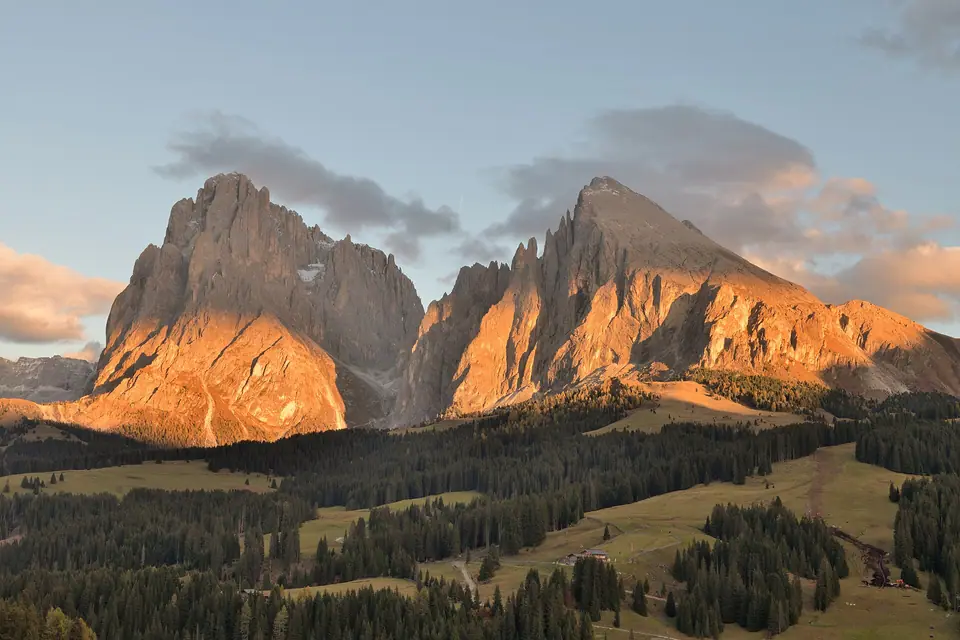
Photo: Own work · CC BY-SA 3.0
Dolomites
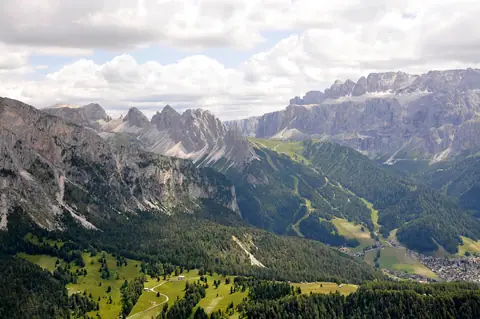
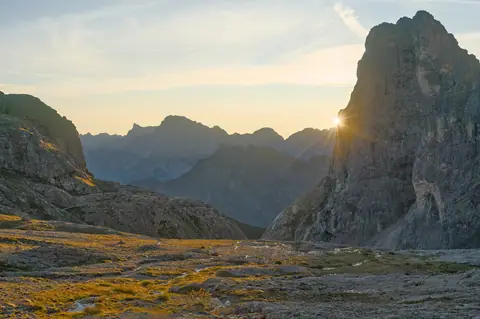
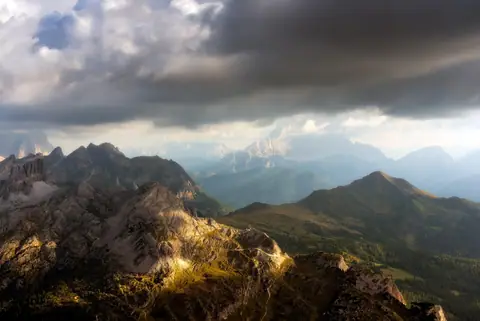
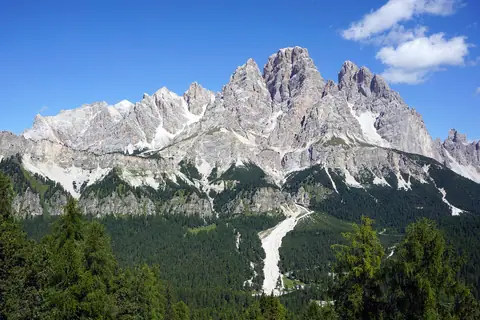
Pale limestone spires, high alpine meadows, three valley languages, and strict summer road reservations across northern Italy.
Quick decisions
How many days?
Five to seven days pairs western South Tyrol meadows cleanly with eastern Tre Cime trails. Three days works when you stay in one valley.
Where should I stay?
Split stays between Val Gardena or Bolzano in the west and Cortina or Dobbiaco in the east to cut pass driving.
Do I need a car?
Not for Val Gardena, Bolzano, or Val Pusteria stations and shuttles. A compact car helps mainly for dawn light at Passo Giau.
Best for
Ridge walks, high karst cableways, World War I rock tunnels, turquoise glacial lakes, and wood-framed mountain hut cooking.
Before you go
Reserve summer online permits early for Lago di Braies and Tre Cime. Always pack a waterproof shell.
Getting around
Regional Südtirolmobil trains and valley buses link stations across South Tyrol. Winter tyres or chains are mandatory from mid-November to mid-April.
Overview
The Dolomites span three northern Italian administrative regions: Veneto, Trentino-Alto Adige, and Friuli-Venezia Giulia. Nine separate mountain systems make up the UNESCO World Heritage serial property inscribed in 2009 for both towering scenery and Triassic marine reef geology. Moving 70 kilometres on a flat map between Seceda and Cortina d'Ampezzo still requires winding slowly across steep mountain switchbacks.
Three living languages share valley signs across this border region. Road markers combine German and Italian in South Tyrol, add native Alpine Ladin across Val Gardena and Alta Badia, and shift mainly to Italian around Belluno. Our Dolomites travel guide unpacks this layout before you commit to hotels or mountain lifts.
Getting there
Venice Marco Polo Airport connects eastbound visitors directly to Cortina d'Ampezzo Piazza Roma via Cortina Express coaches in about two hours. From the north, direct DB-ÖBB EuroCity trains cross the Brenner Pass from Munich into Bolzano in roughly four hours. Regional FLIRT trains continue onward to Ponte Gardena for Val Gardena buses and east up Val Pusteria toward Dobbiaco and San Candido.
Driving gives flexibility outside peak bottlenecks, provided you plan around seasonal gate controls. Online permits or shuttle bookings govern summer access at Lago di Braies, the Rifugio Auronzo toll road, and Alpe di Siusi above San Valentino. Full rail corridors and winter driving rules sit in getting to and around the Dolomites.
Where to stay
Holding one hotel for an entire week forces tiring commutes over high passes like Passo Gardena and Passo Falzarego. Western towns excel for Val di Funes meadows and Seceda morning lifts. Eastern hubs put hikers close to Tre Cime di Lavaredo, Sorapis, and Lago di Braies.
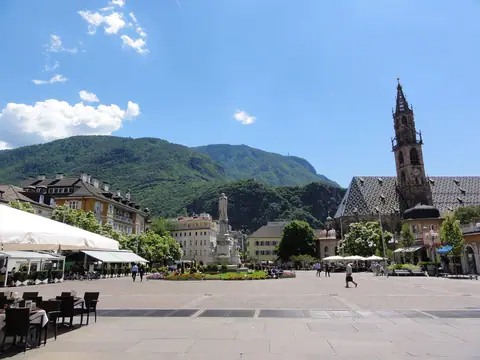
Car-free travellers do particularly well near Ortisei's pedestrian lifts, Bolzano's main rail platform, or Val Pusteria railway stops in Dobbiaco and San Candido. Compare towns and mountain hut reservations inside where to stay in the Dolomites.
Things to do
Aerial lifts deposit walkers directly onto high limestone plateaus past 2,000 metres without steep valley approaches. Marked trails connect Val di Funes, milky-turquoise Lago di Sorapis, and the Tre Cime circuit. History fans can tour restored World War I trenches at Cinque Torri or descend through rock galleries inside Mount Lagazuoi.
When storm clouds cover peaks, drop down to Bolzano for the Ötzi Archaeology Museum and the 12-minute Renon cableway. Organise these routes inside our things to do guide and 5-day Dolomites itinerary.
Food and drink
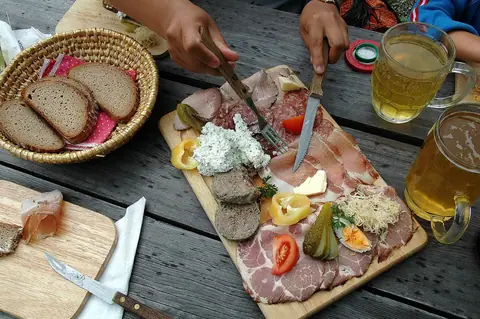
Alpine tables unite Tyrolean farmhouse comfort, Ladin valley kitchens, and Veneto bellunese flavour. Afternoon Marende boards pair cold-smoked Speck Alto Adige with crisp rye Schüttelbrot flatbread and aged pasture cheeses. Staffed mountain huts serve hot clear-broth Canederli dumplings and butter-drenched half-moon Schlutzkrapfen pasta plates.
Sweet plates revolve around shredded caramelized Kaiserschmarrn with berry compote and flaky orchard Apfelstrudel. Explore dish pronunciations and regional wine pairings in what to eat in the Dolomites.
Culture
Ladin communities have preserved their Rhaeto-Romance tongue across steep central valleys since ancient Roman roads met Alpine settlements. Ortisei woodcarving guilds and Badia farmsteads keep distinct timber traditions alive today. Throughout the high ridges, preserved 1915 to 1918 frontlines remind walkers how closely Italy's mountain topography shaped World War I campaigns.
Cortina d'Ampezzo's alpine heritage spans both the 1956 Winter Games and co-hosting the 2026 Winter Olympic and Paralympic Games. Read about farm fence etiquette and refuge stays inside our packing and etiquette guide.
Weather by month
The Dolomites are warmest in July, with average highs around 22°C, and coldest in January, when nights drop to about -7°C. July is the wettest month by rainfall (189 mm), with rain on about 23 days.
| Month | Low | Range | High | Rain | Rainy days |
|---|---|---|---|---|---|
| Jan | -7°C | 2°C | 55 mm | 8 d | |
| Feb | -5°C | 4°C | 76 mm | 9 d | |
| Mar | -3°C | 6°C | 85 mm | 11 d | |
| Apr | 0°C | 9°C | 118 mm | 13 d | |
| May | 5°C | 14°C | 181 mm | 23 d | |
| Jun | 10°C | 20°C | 173 mm | 23 d | |
| Jul | 12°C | 22°C | 189 mm | 23 d | |
| Aug | 12°C | 21°C | 157 mm | 21 d | |
| Sep | 8°C | 17°C | 125 mm | 16 d | |
| Oct | 5°C | 13°C | 143 mm | 12 d | |
| Nov | -1°C | 7°C | 124 mm | 9 d | |
| Dec | -5°C | 4°C | 91 mm | 7 d |
Averages of daily values from 2015 to 2024. Rainy days are days with at least 1 mm of rain. Source: Open-Meteo · Compare destinations by month.
The Dolomites on the map
Every place we cover in the Dolomites. Tap a category or pin to explore.
In-depth Dolomites guides
Browse the guides grouped by topic: sights, neighbourhoods, food, transport, day trips and trip planning.
Sights, Landmarks & Parks
Key monuments, viewpoints, museums and nature trails.
- Things to Do in the DolomitesRidge walks, alpine cableways, via ferrata iron routes, high-altitude World War I tunnels, and turquoise glacial tarns.
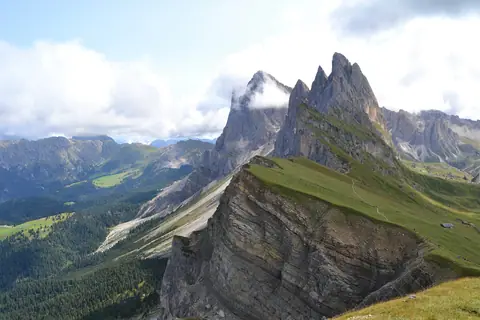
- Seceda, Alpe di Siusi and Val GardenaRiding Seceda lifts from Ortisei, crossing Europe’s largest high-altitude alpine plateau, and navigating Ladin valley transport.
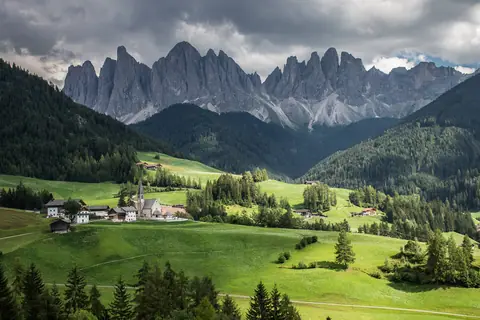
- Val di Funes, Santa Maddalena and Lago di CarezzaWalking the Adolf Munkel Trail at Zannes, respecting fenced Santa Maddalena meadows, and seeing Lago di Carezza post-Storm Vaia.
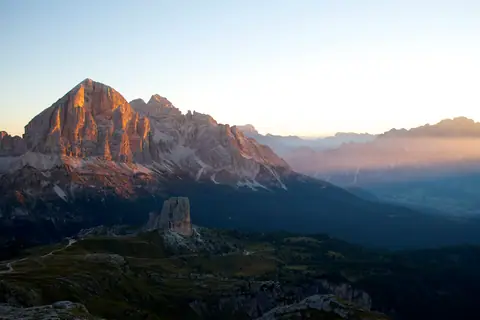
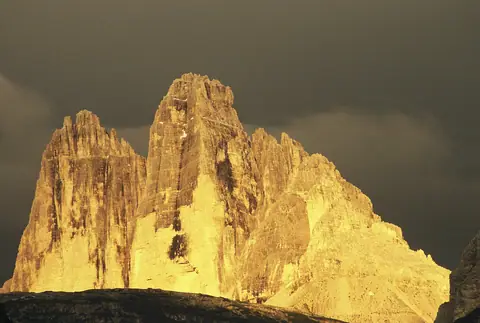
- Tre Cime di Lavaredo and Cadini di MisurinaMandatory toll-road plate bookings, Shuttle Bus 444 from Dobbiaco, Trail 101 counterclockwise circuit, and Cadini Trail 117.
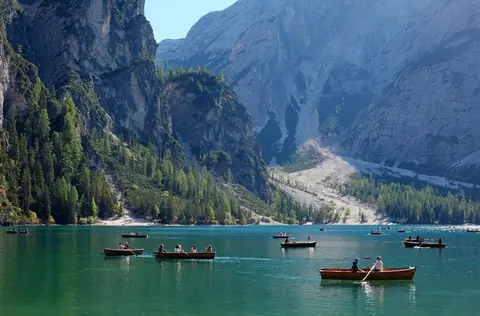
- Lago di Braies and Alta PusteriaStrict July to September Lago di Braies access rules, Shuttle Buses 442 and 439, Alta Via 1 terminus, Prato Piazza, and Drava cycling.
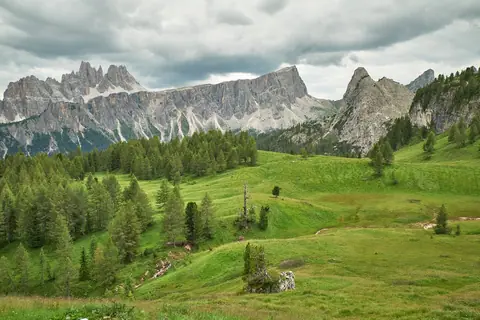
- Cortina d'Ampezzo, Cinque Torri and Passo GiauOlympic heritage in Cortina basin, Trail 215 to turquoise Lago di Sorapis, Cinque Torri trenches, Lagazuoi’s 1,100 m tunnel, and Passo Giau.
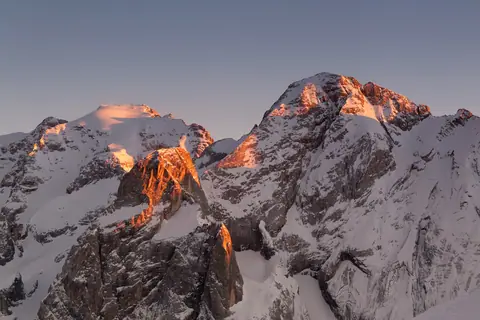
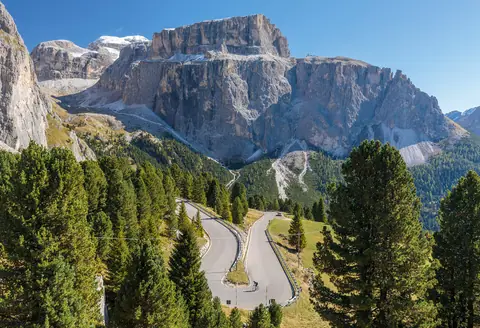
- Sella Ronda Mountain Passes and MarmoladaThe 1909 Great Dolomite Road, four Sella passes, June & September car-free cycling days, Sass Pordoi, and Marmolada at 3,343 m.
Neighbourhoods & Where to Stay
Districts, historic quarters and the best bases for your stay.
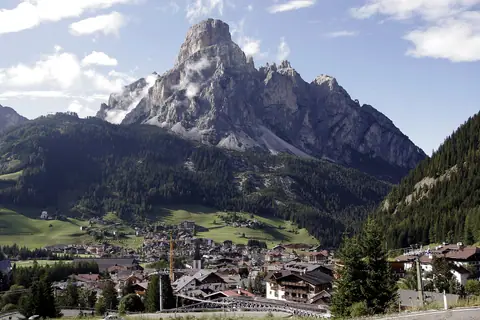
Food & Drink
Local dishes, markets, cafés and dining districts.
Getting Around & Arrival
Airport transfers, public transit, passes and driving rules.
Day Trips & Excursions
Easy half-day and full-day trips from the city.
Trip Planning & Itineraries
When to visit, what to pack and day-by-day routes.
- Dolomites: What to Know Before You GoUNESCO geology, three Italian regions, west-versus-east valley layout, and realistic pacing across Italy’s pale limestone range.
- Best Time to Visit the DolomitesSeason-by-season mountain calendar matching Open-Meteo temperatures, larch gold, lift maintenance gaps, and Olympic winter.
- What to Pack for the DolomitesAlpine layering, Category A/B scree boots, EN 958 via ferrata hardware, Lagazuoi headtorches, and rifugio liner rules.
- 5-Day Dolomites ItineraryLogically sequenced five-day loop moving west to east from Bolzano and Val Gardena through Sella Ronda into Cortina and Tre Cime.
Need your embassy or consulate in Italy? See embassies and consulates in Italy.
Reviews
Log in to write a review.
No reviews yet.