Photo: Jorge Láscar from Melbourne, Australia · CC BY 2.0
Across the Rhine to Gutenberg's Mainz
Easy half-day or full-day rail trip from Frankfurt to Mainz: S8 and RE2/RE3 trains, Roman Theatre ruins, Mainz Cathedral, Chagall windows and Gutenberg-Museum Moved.
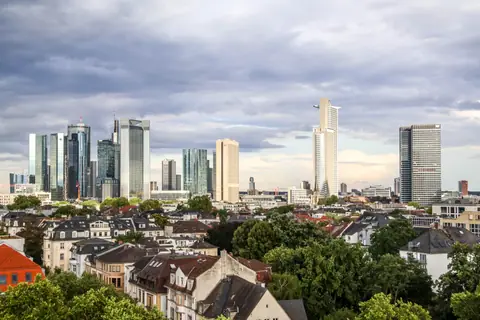
Whenever Frankfurt's glass towers start feeling relentlessly modern, cross the Rhine west into Mainz for a clean step back two millennia. Capital of Rhineland-Palatinate since 1946, Mainz anchors Germany's Rhenish Hesse wine country with around 223,000 residents. The university city lies roughly 38 to 42 kilometres west of central Frankfurt where the Main meets the broad Rhine. Red-sandstone cathedral spires, excavated Roman theatre tiers and cobbled wine lanes compress neatly into a relaxed half-day walk.
Frequent suburban and regional trains turn Mainz into Frankfurt's simplest outing. Its calm old-town core works nicely as an overflow base whenever Messe Frankfurt trade fairs fill rooms across town.
Getting There on S8, RE2 and RE3 Trains
Leave hire cars behind on this short Rhine corridor. Frequent rail services beat motorway delays and scarce city parking effortlessly. Regional express trains RE2 and RE3 speed from Frankfurt (Main) Hauptbahnhof to Mainz Hauptbahnhof in around 30 to 35 minutes. Suburban S-Bahn line S8 runs steadily along the southern river corridor past Frankfurt Airport Regionalbahnhof, reaching Mainz in roughly 40 minutes.
- Step off early at Mainz-Römisches Theater: Riding line S8 lets you step out one stop before Mainz Hauptbahnhof right beside the Roman amphitheatre ruins and southern lanes.
- Return via Mainz Hauptbahnhof: Walk north through cathedral market squares, climb up to St. Stephan and browse the interim Gutenberg exhibition. Fast RE2, RE3 and S8 trains run cleanly back to Frankfurt or straight to your airport gate.
Roman Mogontiacum and the Amphitheatre Steps
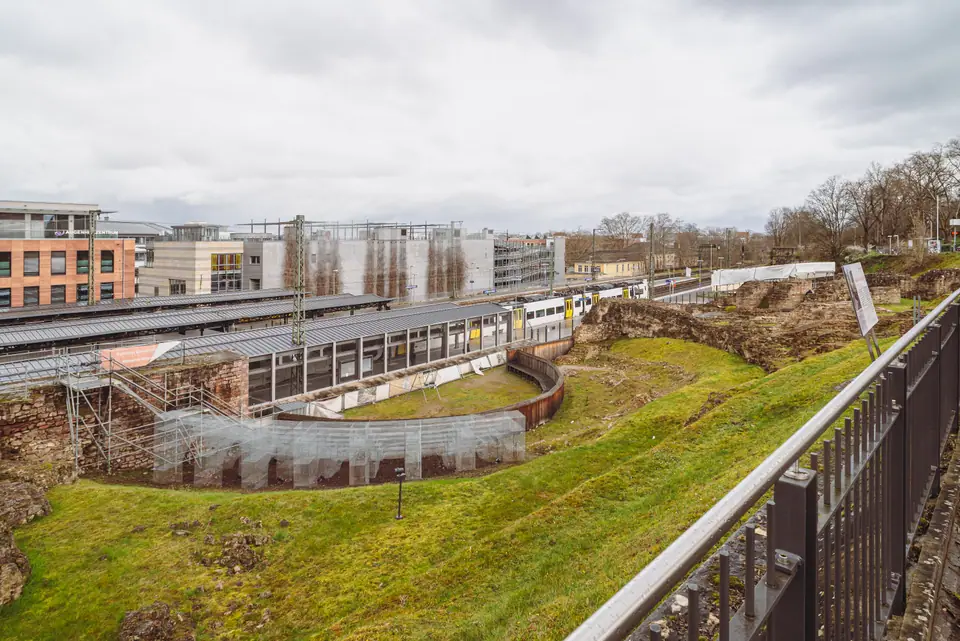
Stepping out at Mainz-Römisches Theater drops walkers directly onto stone foundations far older than medieval Frankfurt. Roman commander Drusus established the legionary fortress Mogontiacum above the Rhine-Main junction around 13 or 12 BC. By AD 80, the fortified river port governed the Roman province of Germania Superior.
Workers rediscovered the buried ruins during nineteenth- and early twentieth-century railway construction. Stretching roughly 116 metres in diameter with a 42-metre stage, the open-air Roman Theatre once held around 10,000 spectators. It stands today as the largest Roman theatre north of the Alps.
Mainz Cathedral and Marktplatz Squares
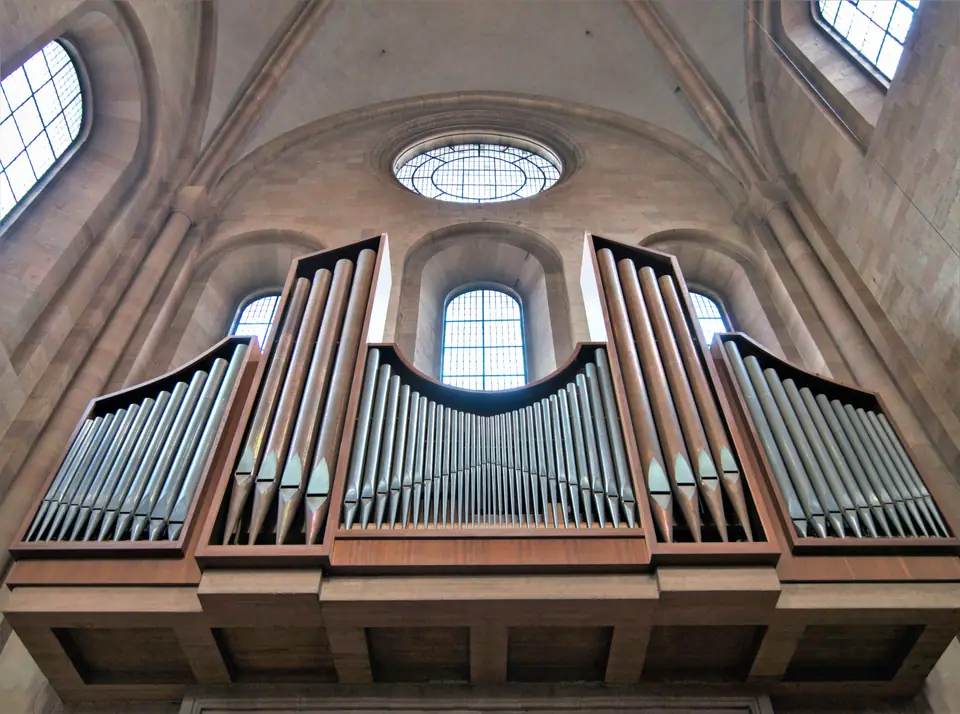
Stroll gently north into the red-sandstone shadow of Mainzer Dom, one of Germany's three monumental Rhenish Imperial Cathedrals. Archbishop Willigis began building around 975 or 976, ready for dedication on 29 August 1009. An inauguration-day blaze damaged that church ahead of a second fire in 1081. Subsequent royal rebuilds shaped the massive Romanesque giant still anchoring Marktplatz after more than 1,000 years.
Step inside to trace its lofty 28-metre vaulted nave against taller Speyer Cathedral (33 metres). Look out for carved prince-elector wall monuments and quiet cloister walks tucked away from market noise.
- Markt and Kirschgarten squares: Browse Saturday wine growers and flower stalls outside cathedral doors. Meander onward past crooked half-timbered cottages in tiny Kirschgarten lane.
- UNESCO ShUM heritage: Paired with sister cities Speyer and Worms, Mainz protects vital medieval Jewish ShUM heritage sites. These quarters preserve centuries of Rhineland scholarship prior to heavy 1944-1945 wartime bombing raids.
St. Stephan and Marc Chagall's Cobalt Windows
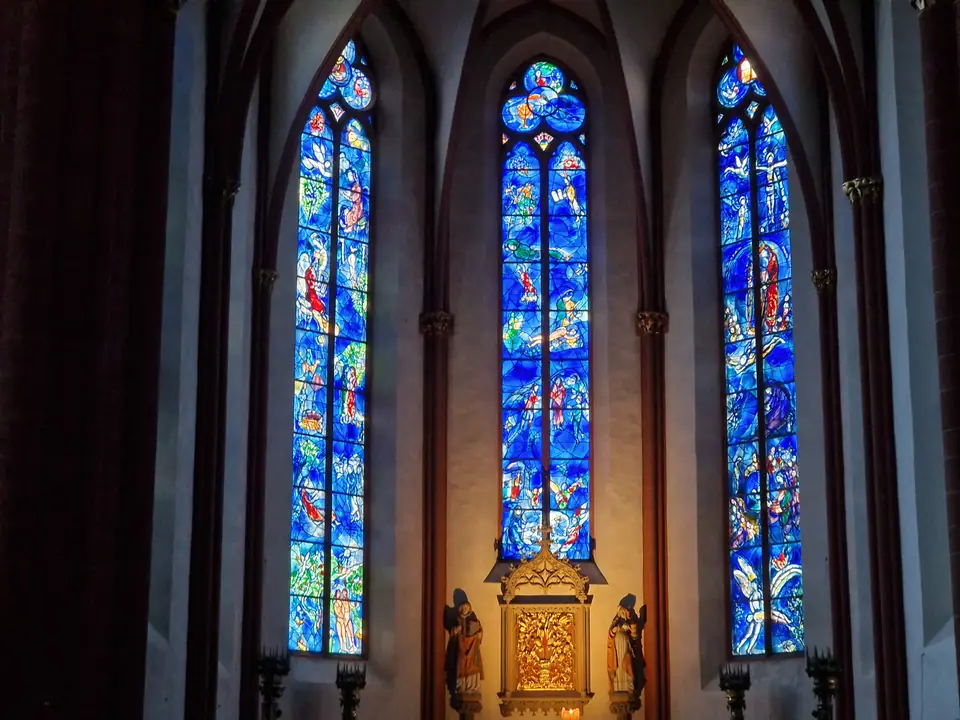
Follow quiet uphill streets above cathedral gables to hilltop Gothic St. Stephan, thoughtfully rebuilt after World War II damage. No other church in Germany holds stained-glass artwork conceived by Belarusian-French master Marc Chagall, making this the sole church in the country fitted with his windows. Parish priest Monsignor Klaus Mayer invited Chagall in 1973 as a post-war gesture of Jewish-Christian reconciliation.
Between 1978 and 1985, Chagall crafted nine luminous cobalt-blue choir and transept windows glowing warmly over pale stone walls. French glassmaker Charles Marq later completed flanking bays between 1989 and 2000. Give your eyes quiet minutes inside to watch afternoon sun turn the sanctuary glass deep ocean blue. Biblical scenes across the lofty eastern panes reward pausing silently away from busy tour groups. Surrounding hilltop lanes remain calm even when market stalls crowd the cathedral terrace downhill.
Gutenberg-Museum Moved: Checking the Interim Address
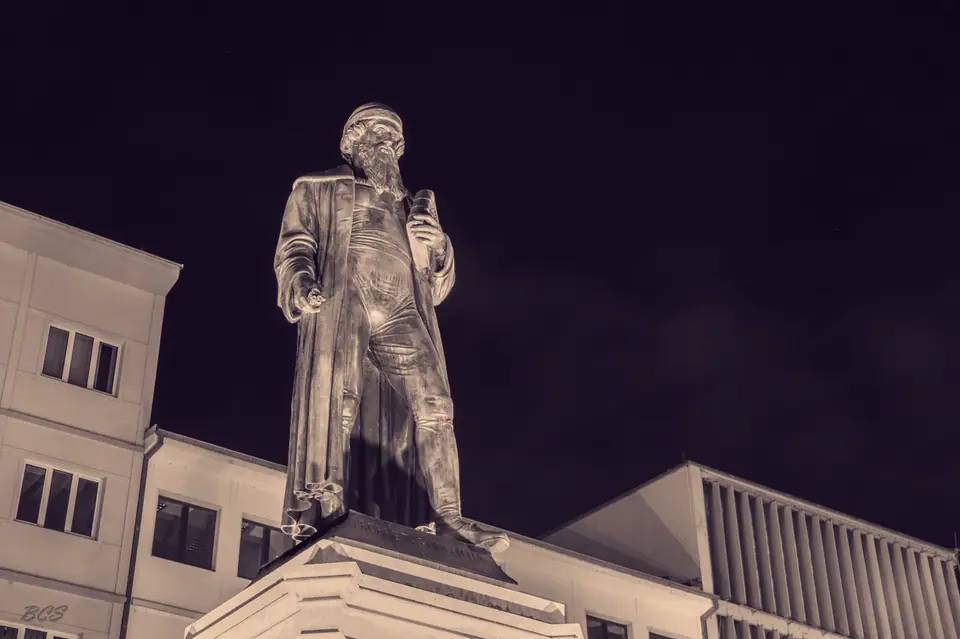
Mainz established the Gutenberg-Museum in 1900 to celebrate movable-type inventor Johannes Gutenberg beside Liebfrauenplatz. Older paper guidebooks still point visitors toward active construction hoarding behind the cathedral. While the permanent Liebfrauenplatz complex undergoes building replacement and modernisation, head north-west instead to Reichklarastraße 1. Core displays currently welcome visitors as "Gutenberg-Museum MOVED" inside the left wing (former Clarissan convent) of the Naturhistorisches Museum Mainz.
These interim halls gather printing tools, illuminated manuscripts and early metal letterpress models inside bright, compact galleries. Interactive type tables clarify how mechanical metal casting transformed European literacy and civic newsbooks across the Renaissance. Easy-to-follow room layouts let guests browse every display comfortably inside one relaxed afternoon window. Leave calm afternoon time to walk through Mainz's riverside wine quarter before turning back toward the station. Short cobbled lanes link local wine taverns straight back toward main rail platforms without awkward bus rides.
- Inside Gutenberg-Museum MOVED: Guests can still step into the darkened treasure vault preserving rare original Gutenberg Bibles. Live movable-type hand-press demonstrations operate on site for visiting groups and day-trippers.
- Rhine promenade finish: End the afternoon over crisp local Silvaner or Riesling along the shaded Rhine embankment. Broad stone walkways trace the riverfront comfortably past moored pleasure boats and chestnut trees. Frequent rails link smoothly back upstream toward Sachsenhausen taverns, Frankfurt city sights or north down the Rhine to Cologne.
Where it is
- 1Across the Rhine to Gutenberg's Mainz
- Frankfurt Main Airport (FRA) · about 21 km from here in a straight line
- Directions in Google Maps
Stations and taxi ranks: OpenStreetMap. Airports: OurAirports. Distances are in a straight line.
Traveller tips
Real advice from people who have been to Frankfurt. Every tip is read by our team before it goes live.
No tips yet. Been here? Yours could be the first.
Thank you! Your tip will appear here after a quick review.
More in Frankfurt
Continue exploring Frankfurt with related neighbourhood, food, and planning guides