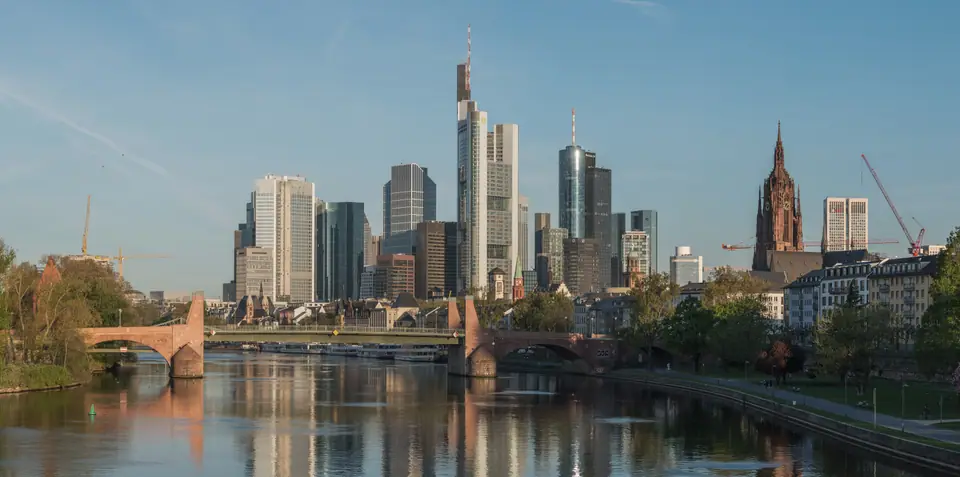
Photo: DXR · CC BY-SA 4.0
Frankfurt
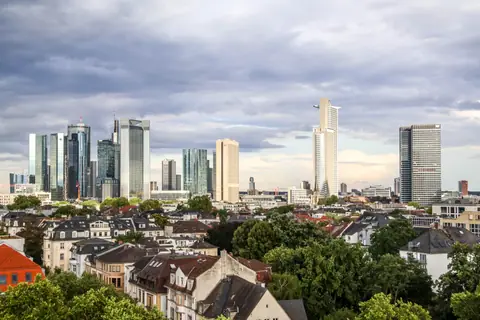
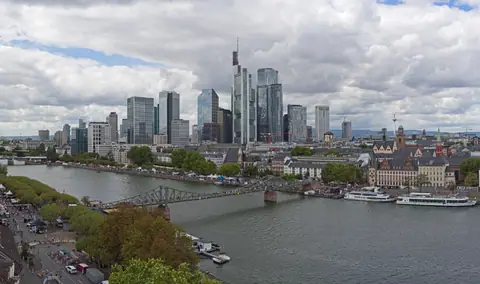
Germany's financial capital pairs high-rise bank towers with a reconstructed timber-framed old town, world-class riverfront art collections, and traditional apple-wine taverns.
Quick decisions
How many days?
Plan two full days for central Frankfurt to explore the Dom-Römer quarter, Museumsufer galleries, and Sachsenhausen cider halls. Add a third day for a regional rail day trip to historic Mainz.
Where should we stay?
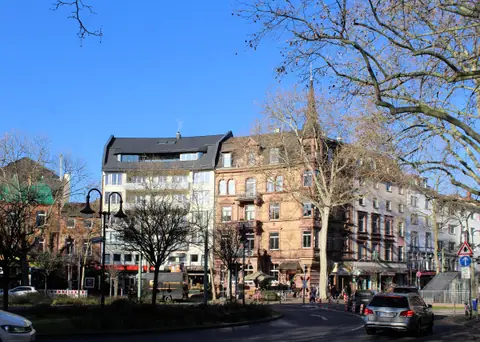
Choose Sachsenhausen for tree-lined streets, local dining, and quick river walks. Base in Nordend or Westend for quiet residential blocks, or pick Bahnhofsviertel if fast mainline train access is your top priority.
Do we need a car?
Leave the car behind entirely. Central Frankfurt enforces a strict low-emission Umweltzone requiring a green windscreen sticker. S-Bahn lines, U-Bahn routes, and trams connect every sight rapidly without parking headaches.
Best for
Travellers who appreciate world-class European art, high-rise architectural observation decks, modern constitutional history, and unhurried evenings enjoying tart Hessian cider at communal wooden benches.
Before you go
Check Schengen entry rules allowing ninety days of travel within any rolling 180-day window. Review the annual trade-fair calendar at Messe Frankfurt, as global conventions trigger steep surges in hotel rates citywide.
Getting around
Purchase RMV transit tickets before boarding trains. Central Frankfurt sits in Zone 50, whereas Frankfurt Airport requires a ticket covering Zone 5090. Central sights between Römerberg and Museumsufer connect easily on foot.
Continue your trip
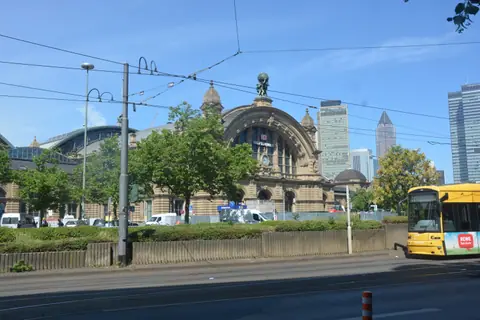
Board S-Bahn line S8 or regional express trains RE2 and RE3 from Frankfurt Hauptbahnhof for a direct 35-minute ride across the Rhine to explore the Gutenberg Museum and cathedral in Mainz.
Overview
Frankfurt am Main anchors the Rhine-Main metropolitan region in west-central Germany. The River Main divides the city, separating the northern commercial core from the southern residential districts. Historical roots date to Charlemagne in 794, evolving through centuries of Holy Roman imperial elections into Germany's premier banking centre. High-rise office towers stand within short walking distance of pedestrianised historic squares. Plan your trip with our best time to visit guide. Late spring and early autumn provide comfortable weather for sightseeing, with daily highs reaching 20°C in May and 21°C in September. Summer brings highs of 26°C with occasional showers, while winter temperatures average between 0°C and 5°C.
Getting there
Frankfurt Airport sits twelve kilometres south-west of the city centre. S-Bahn lines S8 and S9 run from the underground Regionalbahnhof beneath Terminal 1 directly to Frankfurt Hauptbahnhof in about twelve minutes. Mainline ICE trains use the adjacent Fernbahnhof for national rail connections. Drivers must display a green environmental badge to enter the central Umweltzone, where narrow streets and scarce street spaces make public park-and-ride garages on the city perimeter the sensible option. Consult our how to get there guide for terminal transfers and regional transit advice.
Where to stay
Choosing where to sleep shapes your daily transit routine. Altstadt and Innenstadt offer the shortest walks to the cathedral and pedestrian shopping streets. Sachsenhausen provides relaxed residential blocks near the riverbank, combining leafy avenues with traditional cider taverns. Nordend and Westend offer handsome nineteenth-century apartments and quiet bistros linked by frequent U-Bahn lines. Bahnhofsviertel stands immediately beside the central railway station, offering fast airport connections beside busy city grit. Review our curated neighbourhood recommendations in where to stay before booking, especially during large international trade exhibitions.
Things to do
Start your walking route at the Römerberg and the New Old Town, where the reconstructed Dom-Römer quarter re-creates historic laneways between the town hall and St Bartholomew Cathedral. Walk a few paces west to the Paulskirche and the Parliament of 1848 to examine Germany's democratic foundations. Cross the pedestrian Eiserner Steg bridge to reach the Museumsufer, where the Städel Museum and Liebieghaus display major European fine art and sculpture collections. Secure timed tickets for the outdoor observation deck at the Main Tower, then explore our full list of sights in things to do.
Food and drink
Hessian dining centres on regional comfort food and tart fermented apple wine, known locally as Apfelwein. Traditional taverns serve the drink from grey salt-glazed stoneware jugs called Bembel into ribbed glasses called Geripptes. Order Frankfurter Grüne Soße, a cold herb sauce made with seven specific green herbs, served over boiled potatoes and hard-boiled eggs. Handkäs mit Musik presents sour-milk cheese marinated in vinegar, oil, and diced raw onions, eaten with dark rye bread and butter. Visit Kleinmarkthalle to sample regional butcher specialties, or consult our culinary field notes in what to eat.
Culture
Frankfurt balances serious financial business with relaxed neighbourhood habits. In traditional cider taverns, staff seat guests together at communal wooden tables. Placing your cardboard coaster on top of your cider glass signals that you have finished drinking. Retail shops, supermarkets, and pharmacies close on Sundays, though restaurants, museum galleries, and bakeries remain open. Always stand on the right on station escalators and avoid walking in dedicated red cycling lanes. Read our comprehensive travel guide for everyday customs, public transport etiquette, and safety recommendations.
Weather by month
Frankfurt is warmest in July, with average highs around 26°C, and coldest in January, when nights drop to about -1°C. July is the wettest month by rainfall (63 mm), with rain on about 9 days. For mild weather with fewer rainy days, aim for September.
| Month | Low | Range | High | Rain | Rainy days |
|---|---|---|---|---|---|
| Jan | -1°C | 5°C | 44 mm | 10 d | |
| Feb | 0°C | 7°C | 39 mm | 8 d | |
| Mar | 2°C | 11°C | 39 mm | 8 d | |
| Apr | 5°C | 16°C | 37 mm | 8 d | |
| May | 9°C | 20°C | 60 mm | 9 d | |
| Jun | 13°C | 24°C | 55 mm | 9 d | |
| Jul | 15°C | 26°C | 63 mm | 9 d | |
| Aug | 14°C | 26°C | 61 mm | 9 d | |
| Sep | 11°C | 21°C | 48 mm | 8 d | |
| Oct | 7°C | 15°C | 50 mm | 9 d | |
| Nov | 3°C | 9°C | 47 mm | 9 d | |
| Dec | 0°C | 5°C | 55 mm | 11 d |
Averages of daily values from 2015 to 2024. Rainy days are days with at least 1 mm of rain. Source: Open-Meteo · Compare destinations by month.
Frankfurt on the map
Every place we cover in Frankfurt. Tap a category or pin to explore.
In-depth Frankfurt guides
Browse the guides grouped by topic: sights, neighbourhoods, food, transport, day trips and trip planning.
Sights, Landmarks & Parks
Key monuments, viewpoints, museums and nature trails.
- Museumsufer to Sachsenhausen: Crossing the MainExplore Frankfurt's Museumsufer on Schaumainkai, check Schirn Kunsthalle's temporary Bockenheim venue, and walk Eiserner Steg into Sachsenhausen.
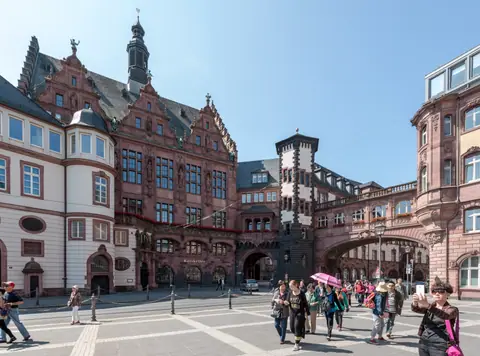
- Dom-Römer Quarter: Reconstruction Behind the RömerbergUrban history essay tracing Frankfurt's Römer city hall, imperial coronations, March 1944 destruction, Brutalist demolition and 2018 Dom-Römer quarter.
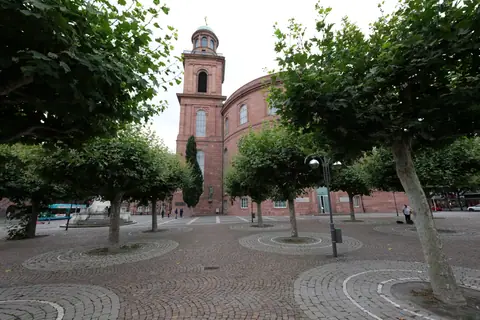
- St Paul's Church and Germany's First ParliamentPolitical and architectural essay on St Paul's Church in Frankfurt: 1848 National Assembly, black-red-gold flag roots, 1948 rebuild and 2025-2026 access.
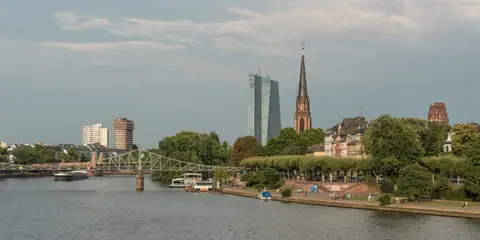
- Bankenviertel Towers and the ECB in OstendArchitecture and access ledger for Frankfurt's Bankenviertel towers, Main Tower viewing deck, FOUR, Kaiserdom spire and the European Central Bank in Ostend.
Neighbourhoods & Where to Stay
Districts, historic quarters and the best bases for your stay.
Food & Drink
Local dishes, markets, cafés and dining districts.

Getting Around & Arrival
Airport transfers, public transit, passes and driving rules.
Day Trips & Excursions
Easy half-day and full-day trips from the city.
Trip Planning & Itineraries
When to visit, what to pack and day-by-day routes.
- Frankfurt am Main: Trade Fairs, Apple Wine and TowersOrientation guide to Frankfurt am Main covering river geography, imperial history, RMV zones, safety notes and ICE connections.
- Trade Fair Surges, Dippemess and River EveningsSeasonal weather and festival guide for Frankfurt am Main using DWD 1991-2020 normals, Messe Frankfurt peak dates, Dippemess, Museumsuferfest and packing notes.
Need your embassy or consulate in Germany? See embassies and consulates in Germany.
Reviews
Log in to write a review.
No reviews yet.