Photo: Benreis · CC BY-SA 4.0
Apfelwein, Grüne Soße and Handkäs mit Musik
Eat and drink like a Frankfurter: Ebbelwoi ordering steps in Sachsenhausen, EU-protected seven-herb Grüne Soße, Handkäs, Kleinmarkthalle and classic bakes.
Frankfurt's dining culture beats loudest inside clattering oak-tabled taverns rather than hush-hush tasting rooms. Across the River Main and inside busy indoor market halls, kitchens draw on orchard cider, wild river-valley herbs and honest Hessian staples. Learning a few simple table habits turns supper into an unhurried local evening from your opening pour.
Walk past tourist terraces fronting Römerberg whenever hunting authentic Hessian plates. Cross the river bridges into Sachsenhausen or step north into the indoor market beside Kaiserdom.
Apfelwein Tavern Etiquette in Sachsenhausen
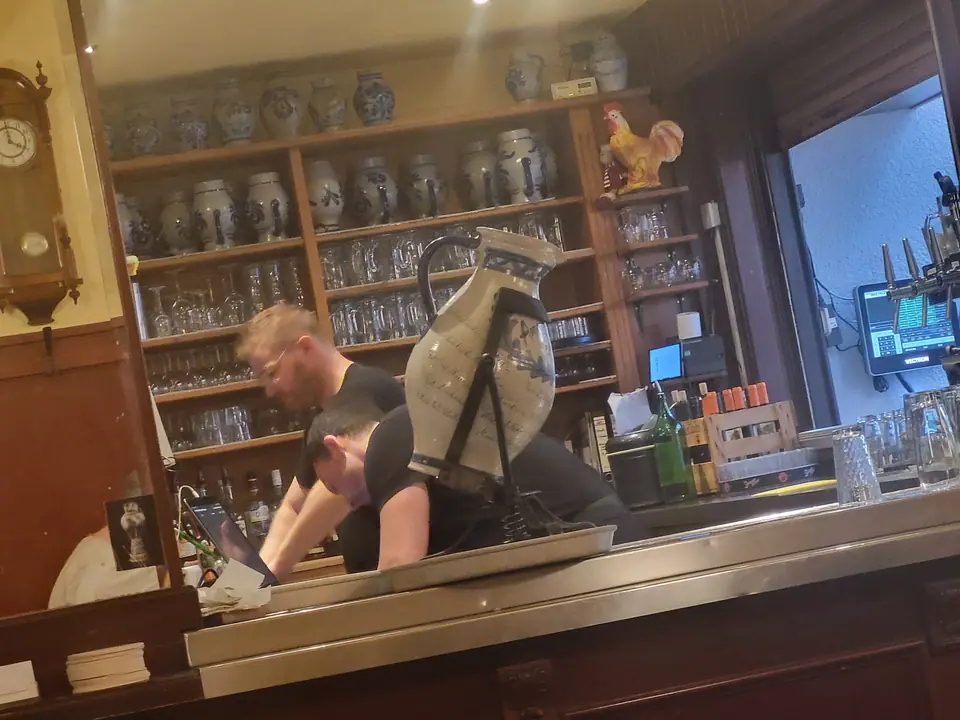
In historic Sachsenhausen, wooden cider houses serve unfiltered apple wine called Apfelwein or local dialect Ebbelwoi (usually 5.5 to 7% ABV). Far sharper and drier than sweet British or Normandy ciders, the amber pour arrives inside grey-and-blue salt-glazed stoneware jugs called Bembel. Waiters splash it into diamond-cut Geripptes glasses ribbed to catch tavern light and stop slippery hands from losing grip while eating.
- Share communal wooden benches politely: Private two-tops stay rare in busy cider rooms. Greet seated locals with "Ist hier noch frei?" before sliding onto an open space.
- Pick your mixing style clearly: Order "Pur" for straight dry cider, or ask for "Sauergespritzter" topped with sparkling water. Choose "Süßgespritzter" cut with sweet lemonade if crisp acidity feels too tart.
- Let servers track refills in pencil: Ordering a shared Bembel pitcher keeps rounds steady while staff tally individual glasses on your cardboard Deckel coaster.
- Place your Deckel on top to stop: Setting the cardboard coaster flat over an empty Geripptes tells servers cleanly that you are done and ready to settle the bill.
Handkäs mit Musik and Frankfurter Würstchen
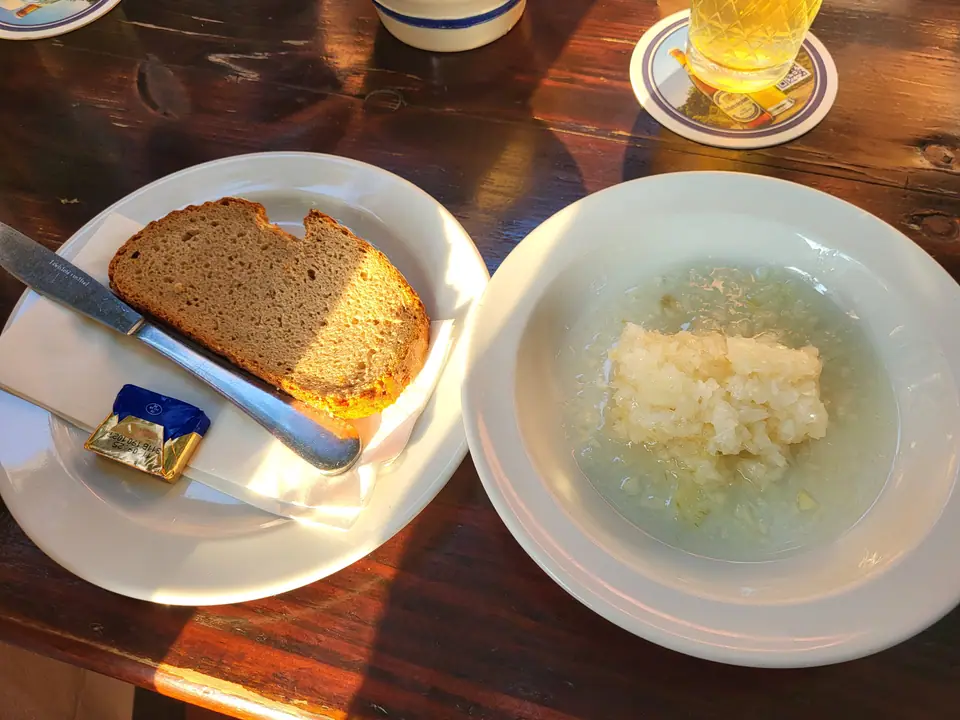
Two tangy staples display Hessian tavern economy at its finest. Handkäs mit Musik uses translucent, low-fat sour-milk cheese rounds marinated in vinegar, oil, salt, pepper and raw chopped white onions. Locals nicknamed the dish "with music" in dry Frankfurt humour over the onions' lively digestive aftermath. The plate arrives with butter and dark rye bread rather than a fork. Cut tidy bites onto buttered bread with your table knife between sips of cool cider.
For crisp daytime lunches or warm counter snacks, pick authentic Frankfurter Würstchen. These thin, beechwood-smoked pork sausages warm gently in hot water rather than blistering over fierce grills, keeping their casings snappy. Protected under regional designation safeguards stretching back to 1860, true Frankfurters arrive in pairs beside sharp yellow mustard and a crusty bread roll.
Frankfurter Grüne Soße: Seven Protected Herbs
Warm-weather menus across Frankfurt centre proudly on Frankfurter Grüne Soße, literally green sauce. Granted EU Protected Geographical Indication (PGI) standing in 2016, genuine green-sauce herb packs follow strict origin rules. All herbs must be grown and harvested inside Frankfurt and neighbouring Hesse municipalities rather than trucked from distant farms.
Inside the Seven-Herb Formula
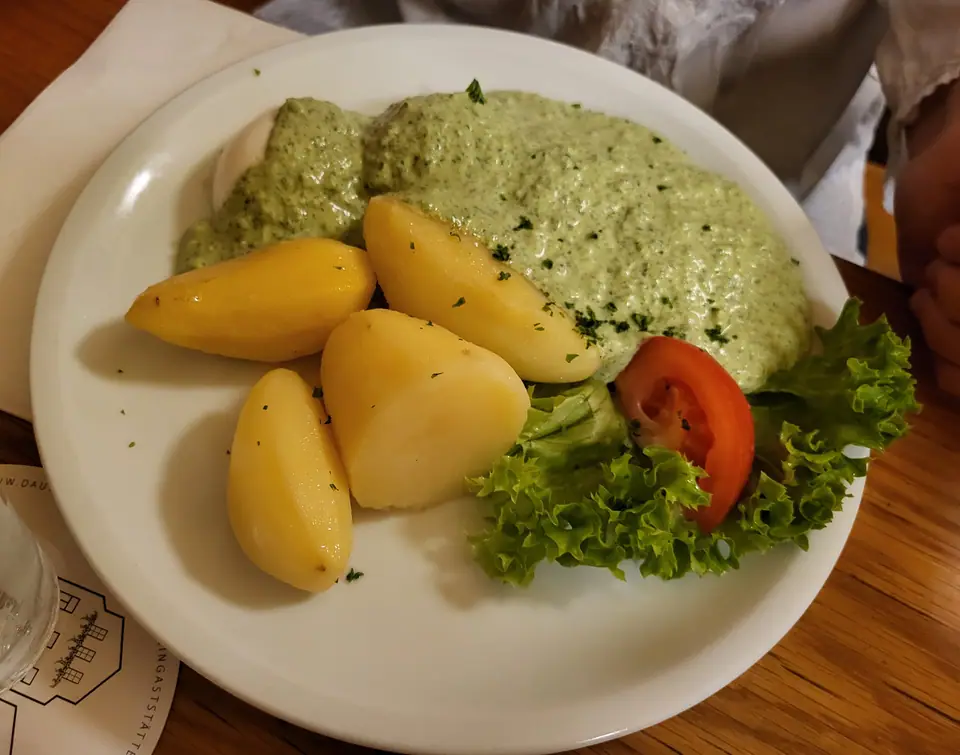
Classic recipes forbid basil or mint substitutes inside the cool, speckled emerald blend. Authentic bundles combine strictly seven fresh herbs: borage (Borretsch), chervil (Kerbel), cress (Kresse), parsley (Petersilie), burnet (Pimpinelle), sorrel (Sauerampfer) and chives (Schnittlauch). Kitchens chop the herbs fine into sour cream, yoghurt, oil and vinegar. Servers spoon the chilled sauce generously over boiled potatoes and halved hard-boiled eggs, or plate it beside tender boiled beef (Tafelspitz) and crisp schnitzel. Many locals debate each tavern's exact creamy texture just as earnestly as wine harvests.
Kleinmarkthalle: Daytime Stalls Between Cathedral and Zeil
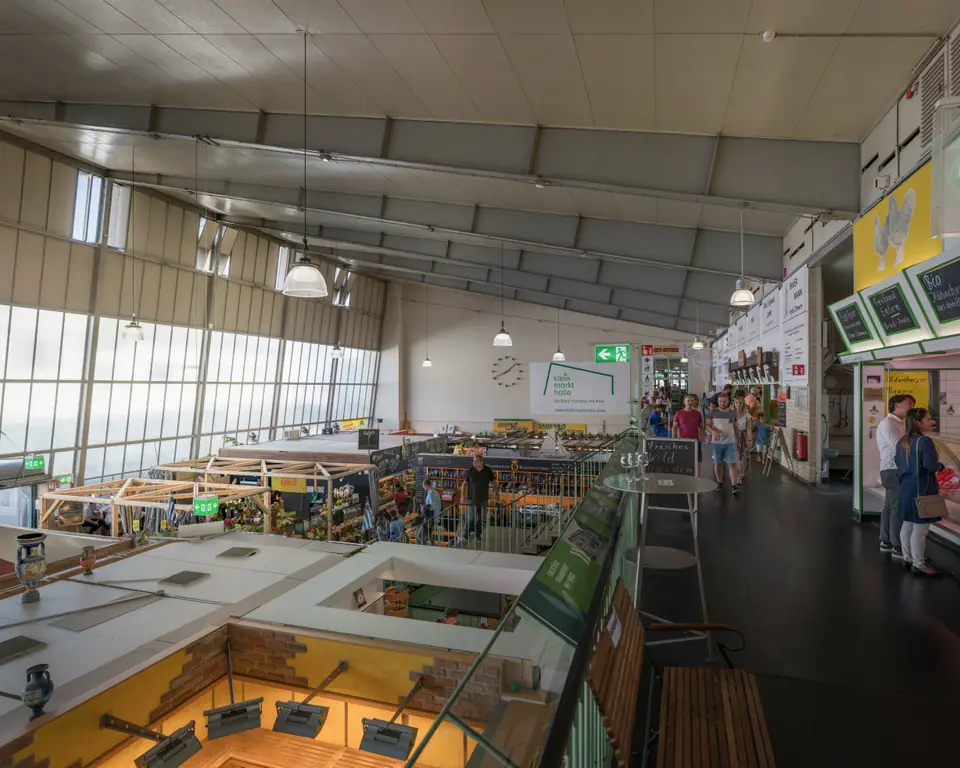
Steps north of Kaiserdom at Hasengasse 5-7 hums Kleinmarkthalle, Frankfurt's historic indoor food hall. Wrecked during 1944 bombing raids and rebuilt into a bright glazed market in 1954, the floor covers more than 1,500 square metres. Between 60 and over 150 multi-generational vendor stalls trade Monday through Saturday under one roof.
What to Sample Inside Hasengasse
Stop by family herb stands wrapping fresh seven-herb bouquets in paper cones. Sample aged Hessian Handkäse wedges or join brisk weekday queues for hot poached Würstchen and mustard. Friendly stallholders routinely slice tastes of regional cheese or smoked ham across wooden counters. Shoppers gather fresh salads, cheeses and crusty bread for picnics down on Mainkai. Upstairs balcony counters serve chilled Rheingau Riesling overlooking the lively aisles below. Plan visits earlier in the afternoon before market vendors pack down crisp seasonal produce.
Pastries for Coffee Breaks and Winter Stalls
Round out afternoon walks with two traditional bakes carried by family pastry counters. Frankfurter Kranz mimics an imperial coronation crown out of tall sponge rings. Bakers layer the sponge with buttercream and tart red fruit jam, roll it in golden nut brittle (Krokant) and crown it with candied cherries. Coffee shops slice generous wedges with steaming pot coffee during cool autumn afternoons. Sharing a rich slice restores energy nicely after hours spent strolling along river embankments.
Bite-sized Bethmännchen preserve a nineteenth-century Frankfurt marzipan tradition. Pastry makers blend ground almonds, icing sugar, rose water and egg white, studding each small marzipan sphere with blanched almond halves before stacking trays at winter market booths and neighbourhood bakery windows. Boxed bags travel neatly inside hand luggage as light sweet gifts from Hesse. Traditional family bakeries guard their almond paste textures and baking temperatures carefully from generation to generation. Contrast these hearty Hessian cider tables later on a rail journey toward Swabian dining rooms in Stuttgart, Saxon bakeries in Leipzig, or historic Rhine beer halls downriver in Cologne.
Where it is
- 1Frankfurt
- Frankfurt Main Airport (FRA) · about 13 km from Frankfurt in a straight line
- Directions in Google Maps
Stations and taxi ranks: OpenStreetMap. Airports: OurAirports. Distances are in a straight line.
Traveller tips
Real advice from people who have been to Frankfurt. Every tip is read by our team before it goes live.
No tips yet. Been here? Yours could be the first.
Thank you! Your tip will appear here after a quick review.
More in Frankfurt
Continue exploring Frankfurt with related neighbourhood, food, and planning guides