Photo: Jörg Braukmann · CC BY-SA 4.0
Frankfurt am Main: Trade Fairs, Apple Wine and Towers
Orientation guide to Frankfurt am Main covering river geography, imperial history, RMV zones, safety notes and ICE connections.
Most visitors meet Frankfurt through glass airport concourses or main-line rail platforms, then wonder where the historic town sits. Give the lower River Main two unhurried days and the layout makes complete sense. A compact civic spine links imperial coronation halls, high-rise banking streets and leafy south-bank cider gardens in short walking loops.
Unlike sprawling capitals laid out over wide royal boulevards, central Frankfurt groups almost every headline sight within a short walk. Seeing how north-bank commerce meets south-bank tradition turns a quick stopover into an easy German base. Pedestrian river paths tie both banks together cleanly without needing taxis between central sights.
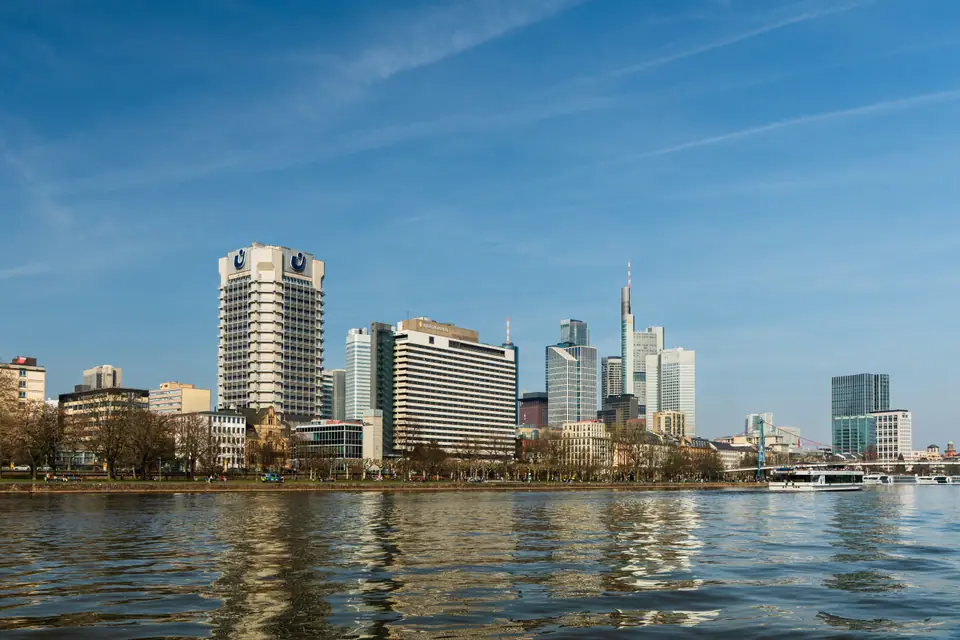
Why does Frankfurt puzzle travellers on a short stopover?
Mentioned in a document issued under Charlemagne in 794, Frankfurt built its standing on fairs and imperial politics rather than royal courts. Emperor Charles IV's 1356 Golden Bull fixed the city as the permanent election site for future Holy Roman Emperors. Frankfurt held Imperial Free City status from 1372 until 1806, regained Free City sovereignty in 1815, and stayed self-governing until Prussian annexation in 1866.
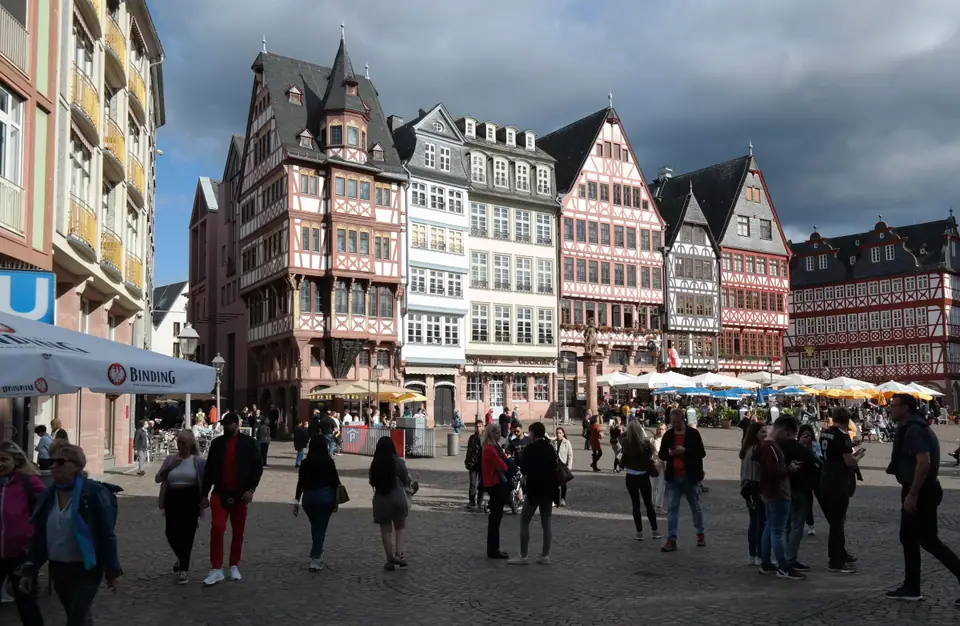
Between 1562 and 1792, newly elected emperors entered Kaiserdom Sankt Bartholomäus beneath its 95-metre Gothic spire for coronation ceremonies. State banquets followed right across the plaza inside the Römer town hall. Centuries of tight half-timbered lanes once framed that ceremonial path along the riverbank.
Allied bombing raids between 1939 and 1945, especially in March and December 1944, killed roughly 5,500 residents and levelled most of the medieval centre. Postwar planners favoured commercial office blocks over wholesale street-by-street replicas. Banks, stock trading floors and exhibition halls raised Germany's densest skyline, while Frankfurt grew to roughly 760,000 to 778,500 residents across 248.31 square kilometres as Hesse's largest city and Germany's fifth-largest municipality inside a 2.7-million urban area and a 5.8-million Rhine-Main metro region.
How do historic Sachsenhausen and the banking district fit together?
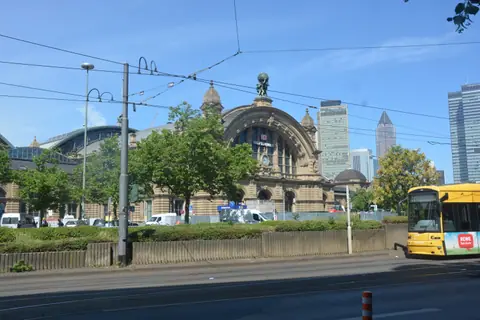
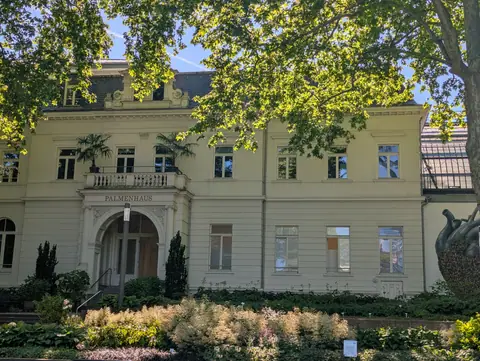
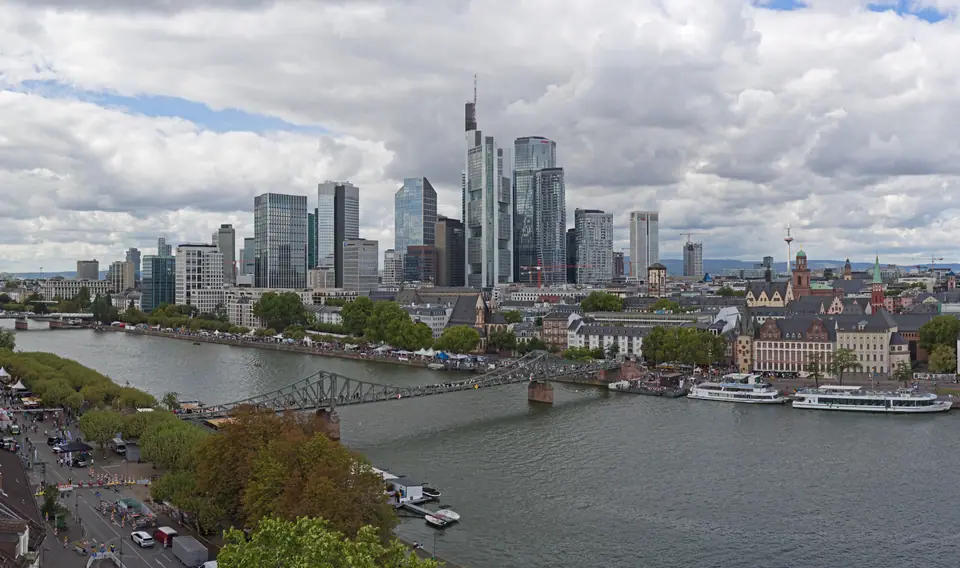
Walk north to south across the river and local boundaries grow clear. The north bank holds the Bankenviertel towers, led by Commerzbank Tower at 259 metres and Main Tower at 200 metres. Directly east stand the reconstructed Römerberg and Dom-Römer quarter, Paulskirche and the Zeil shopping promenade. Further out on the northern side sit Palmengarten's 22-hectare gardens opened in 1871 and the 1888 Hauptbahnhof.
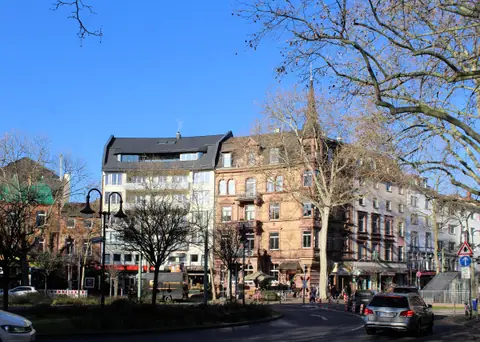
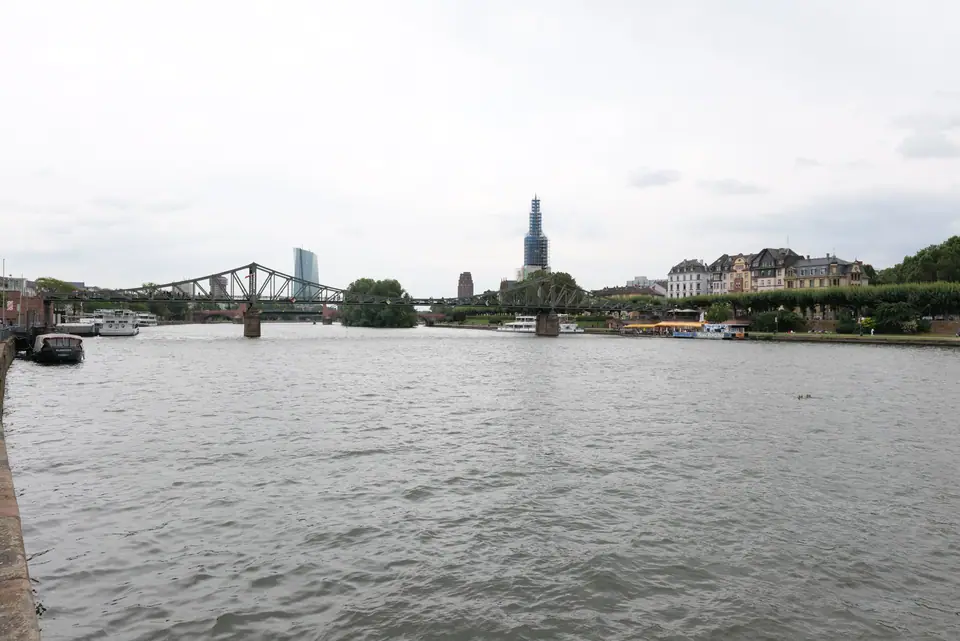
East along the water in Ostend sits the European Central Bank, established in Frankfurt in 1998 and housed since November 2014 in twin towers over the 1928 Großmarkthalle. Cross south via the 1869 Eiserner Steg footbridge or Alte Brücke and the pace shifts noticeably. Sachsenhausen lines shaded Schaumainkai with nineteenth-century Museumsufer villas anchored by the 1815 Städel Museum. A short walk inland around Schweizer Straße and cobbled Alt-Sachsenhausen, oak-tabled taverns pour dry Apfelwein into ribbed glasses.
Frankfurt rewards walkers who cross the Eiserner Steg at dusk: imperial cathedral spires and banking towers frame the skyline behind you, while lively apple-wine courtyards open right ahead.
Which cards and rail zones save wasted fares?
Regional authority Rhein-Main-Verkehrsverbund (RMV) joins S-Bahn trains, U-Bahn metro lines, trams and city buses in one network. One boundary trips up newcomers straight off the plane. Central Frankfurt sits inside RMV Zone 50 (fare code 5000), whereas Frankfurt Airport roughly 12 kilometres south-west belongs to separate Zone 5090.
Standard city single tickets do not cover the 10 to 12 minute ride on S-Bahn lines S8 or S9 between the airport and Frankfurt Hauptbahnhof. Select an Airport-to-City Zone 5000/5090 ticket on platform kiosks before boarding. If pairing arrival transfers with museum rounds, check the 1-day or 2-day Frankfurt Card, which includes Zone 50 transit, Zone 5090 airport trains and reduced venue entry. Track and terminal instructions sit in our Frankfurt airport and rail guide.
What practical entry rules and daily rhythms apply?
Standard German Schengen border rules apply to visa-exempt arrivals. Carry a passport issued less than 10 years prior to travel and valid for at least 3 months beyond your planned departure date. Visa-exempt stays remain limited to 90 days in any rolling 180-day period, and border officers can ask for return tickets, lodging confirmations and proof of funds.
Germany uses the euro, and contactless cards work reliably across rail machines and museums. Keeping small cash notes helps at market bakeries or traditional Sachsenhausen cider houses. Municipal tap water across Frankfurt is clean and safe to drink. Street-safety caution centres tightly on the blocks east of Hauptbahnhof: keep luggage close in station halls, and note that side streets around Taunusstraße and Moselstraße hold an open street-drug scene. Check our neighbourhood stay guide for quieter streets.
Where does Frankfurt sit on a wider European rail route?
Brief business trips expand easily into broader rail journeys thanks to Hauptbahnhof and Airport Fernbahnhof. High-speed ICE routes run north-west to Cologne and south-east toward Stuttgart and Munich. Long-distance tracks also connect across Germany toward Berlin, Hamburg, Dresden and Leipzig.
International trains continue west into Paris and Brussels or south to Zurich without changing airports. Closer to town, regional expresses RE2 and RE3 cross the Rhine into historic Mainz in 30 to 35 minutes. Check Messe Frankfurt trade-fair dates ahead of booking so flagship expos do not catch your budget by surprise.
Leaving heavy luggage inside station lockers frees up awkward departure days between hotel check-out and evening flights. Both banks stay compact enough to cross comfortably on foot before catching S8 or S9 back out to the terminal.
Where it is
- 1Frankfurt
- Frankfurt Main Airport (FRA) · about 13 km from Frankfurt in a straight line
- Directions in Google Maps
Stations and taxi ranks: OpenStreetMap. Airports: OurAirports. Distances are in a straight line.
Traveller tips
Real advice from people who have been to Frankfurt. Every tip is read by our team before it goes live.
No tips yet. Been here? Yours could be the first.
Thank you! Your tip will appear here after a quick review.
More in Frankfurt
Continue exploring Frankfurt with related neighbourhood, food, and planning guides