Photo: DXR · CC BY-SA 4.0
Museumsufer to Sachsenhausen: Crossing the Main
Explore Frankfurt's Museumsufer on Schaumainkai, check Schirn Kunsthalle's temporary Bockenheim venue, and walk Eiserner Steg into Sachsenhausen.
Few European cities cluster Old Masters, marble sculpture, cinema history and towering dinosaur skeletons along one tree-lined riverbank. Rather than crossing town randomly between suburbs, link Frankfurt's north-bank square on foot to the Museumsufer on Schaumainkai. This gentle route blends European art history with lively south-bank taverns while respecting Monday closures and current gallery moves.
Checking weekly opening patterns and temporary relocations keeps afternoon plans running cleanly. Pair this walking loop with our orientation overview before choosing a museum pass.
Museumsufer and North-Bank Exhibitions
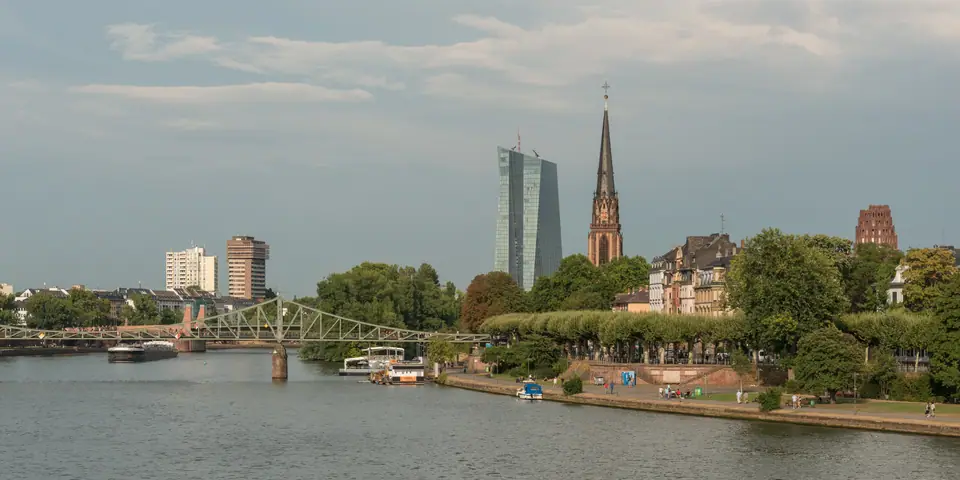
During the late 1970s and 1980s, culture councillor Hilmar Hoffmann shaped the Museumsufer by pairing nineteenth-century villas with modern gallery wings. Today the shaded avenue between Untermainbrücke and Holbeinsteg holds major collections along Sachsenhausen's southern quay. Across the water, university streets and central squares add natural history, literary landmarks and touring shows.
Avoid planning heavy indoor sightseeing on Mondays without checking calendars ahead. Many municipal and state museums across Frankfurt shut every Monday for weekly upkeep. Reserve Mondays for botanical paths in Westend, riverside walks, or a regional train trip to Mainz. The Frankfurt Card cuts entry prices when pairing several Museumsufer stops in one day. Pace museum afternoons calmly rather than trying to pack every wing into a single run.
Comparing Frankfurt's Leading Galleries and Science Halls
Compare locations, founding years and gallery highlights across these major Frankfurt institutions before organising your afternoons.
| Institution | Bank & Quarter | Core Focus | Signature Highlight |
|---|---|---|---|
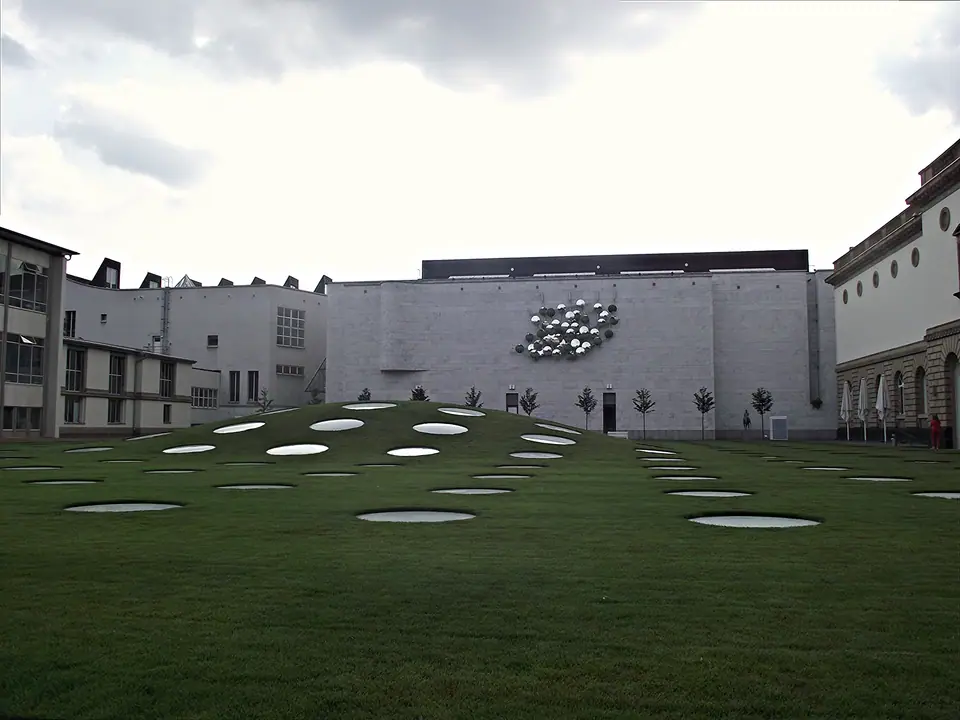
| Städel Museum | South bank (Schaumainkai 63) | 700 years of European art | 1815 foundation; 2012 underground garden wing lit by circular lawn skylights |
| Liebieghaus | South bank (Schaumainkai 71) | 5,000 years of sculpture | 1896 villa famed for ancient polychromy research on painted statues |
| Deutsches Filmmuseum (DFF) | South bank (Schaumainkai 41) | Pre-cinema, film craft & cinema | Interactive optical displays, editing exhibits and evening repertory cinema |
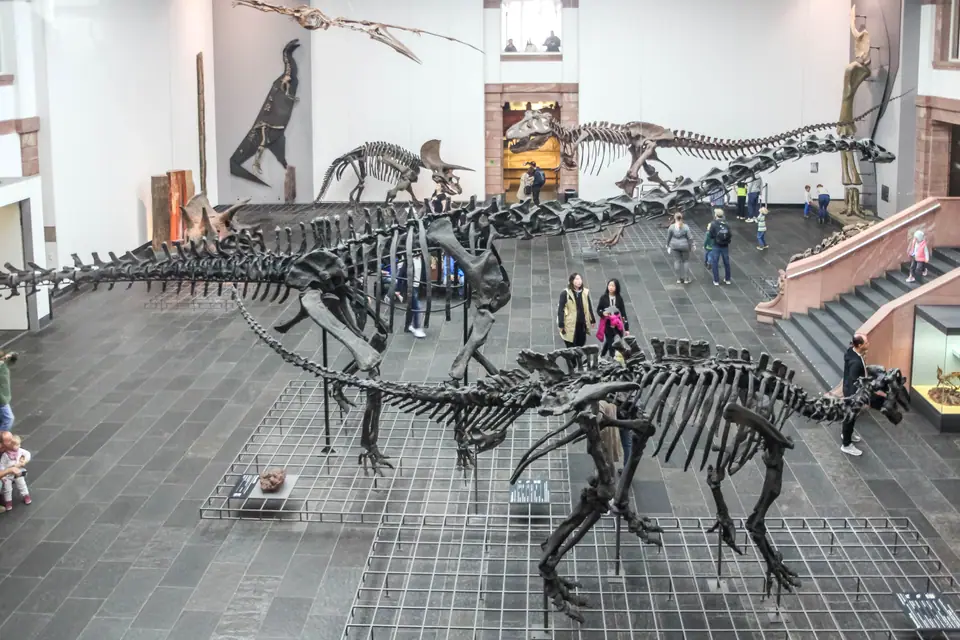
| Senckenberg Naturmuseum | North bank, Westend-Süd (Senckenberganlage 25) | Natural history & fossils | 1907 Neo-Baroque hall holding Diplodocus, Tyrannosaurus rex and fossil skin |
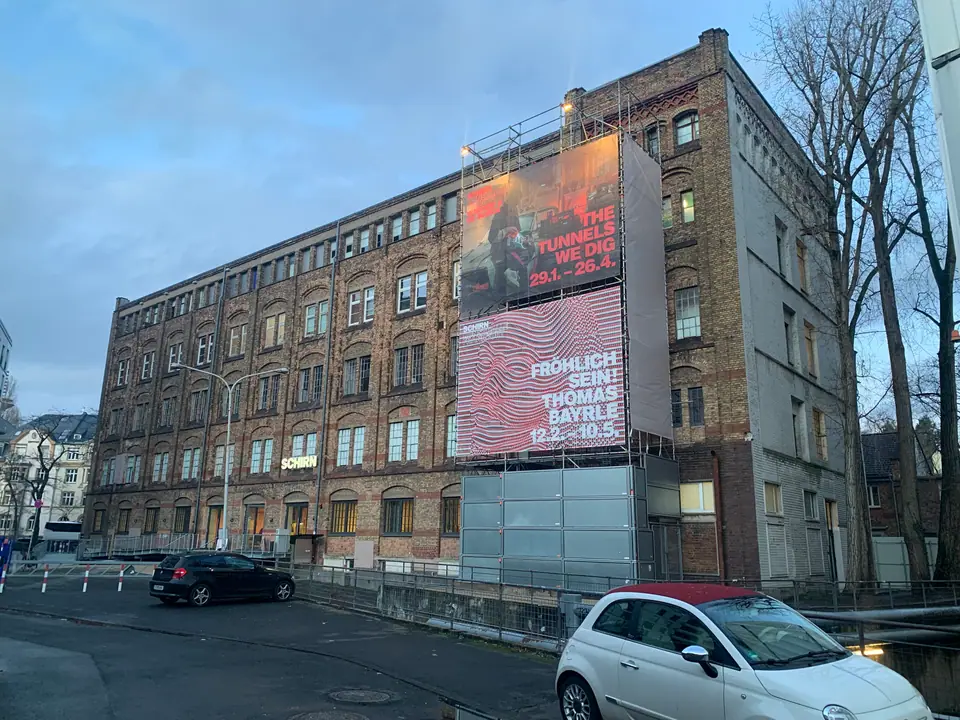
| Schirn Kunsthalle | North bank, Bockenheim interim site | Modern & contemporary art | Full exhibition programme inside the 1890 red-brick former Dondorf printing house |
Germany's oldest museum foundation began at Städel Museum in 1815 through banker Johann Friedrich Städel's bequest. Its rooms trace European painting from fourteenth-century altarpieces through Impressionists to modern art beneath lawn skylights. Two villas west, Liebieghaus opened in 1909 inside an 1896 mansion, showing how Egyptian, Greek and Roman statues once gleamed with bright mineral pigments rather than plain white stone.
East along Schaumainkai, the Deutsches Filmmuseum traces its institute origins to 1949 before opening on the riverbank in 1984 and merging into DFF in 2006. Interactive optical displays and early camera mechanisms appeal to all ages, while evening repertory films play downstairs. North in Westend-Süd, Senckenberg Naturmuseum dates to an 1817 scientific society and fills its 13 October 1907 Neo-Baroque hall with fossil skeletons including Diplodocus, Tyrannosaurus rex and rare mummified dinosaur skin.
Note a key venue shift when planning contemporary exhibition stops across 2026. Schirn Kunsthalle closed its Altstadt rotunda between Kaiserdom and Römerberg for deep structural, climate and energy renovation, with return projected around 2027 to 2028. Since September 2025, Schirn stages its full schedule in Bockenheim inside the restored 1890 red-brick Dondorf printing house (Dondorf-Druckerei). Find it at Gabriel-Riesser-Weg 3 near Bockenheimer Warte U-Bahn, a building rescue awarded the Hessian State Prize for Architecture and Urbanism.
Crossing Eiserner Steg into Alt-Sachsenhausen
Follow this easy walking route to join Frankfurt's historic square, river bridge and south-bank life without needing trams.
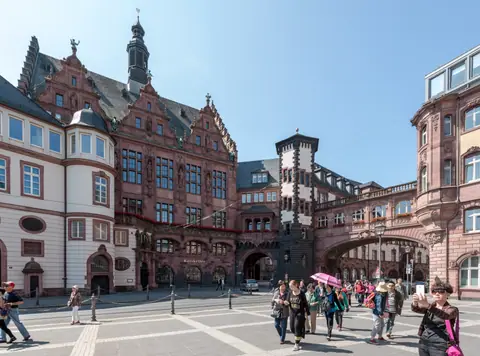
- Start on Römerberg and Dom-Römer: Thread through the 35 buildings and 15 historical reconstructions of the 2018 Neue Altstadt around Hühnermarkt. Look up at Kaiserdom's 95-metre Gothic tower (328 steps inside) and visit Paulskirche nearby.
- Walk down to Mainkai and cross Eiserner Steg: Built in 1869 as a pedestrian iron footbridge, the span was rebuilt in 1912 and restored in 1946 after wartime damage. Pause mid-river for clear skyline photography.
- Stroll west under Schaumainkai plane trees: Step straight off the south ramp onto the Museumsufer pavement. Choose among DFF film displays, Städel Old Masters and quiet Liebieghaus villa gardens.
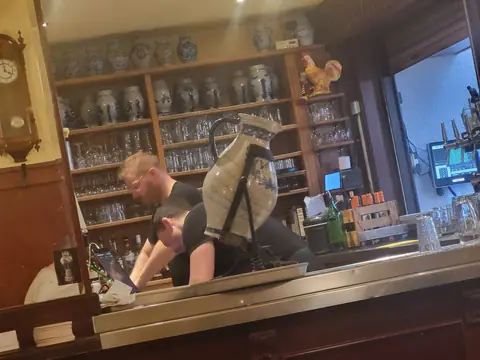
- Turn inland to Schweizer Straße and Alt-Sachsenhausen: Finish the afternoon browsing Schweizer Straße bookshops or settling into traditional apple-wine taverns along Große Rittergasse and Klappergasse.
Greenhouses, Goethe's Birthplace and Botanical Walks
Longer visits make room for two pleasant north-bank stops near Innenstadt and Westend. West of Römerberg on Großer Hirschgraben stands the Goethe-Haus, the 1749 birthplace of Johann Wolfgang von Goethe. Destroyed during 1944 bombing raids and carefully rebuilt by 1947 next to the German Romanticism Museum, its study and reception rooms bring eighteenth-century burgher life into sharp focus.
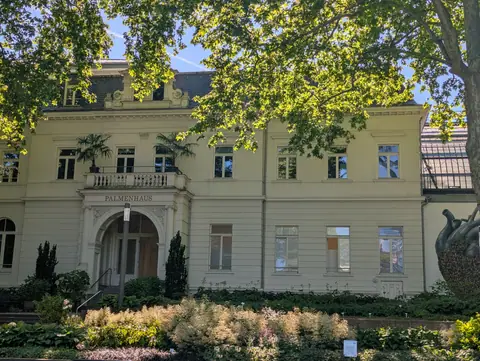
North in Westend, the 22-hectare Palmengarten has welcomed visitors into Victorian glass palm houses and outdoor beds since 1871. Pair a bright morning inside its warm botanical pavilions with Senckenberg fossil rooms just south down the street. Both North-Bank stops contrast peacefully against crowded Old Town lanes around midday. Walk back through leafy residential avenues or board the U-Bahn cleanly toward central plazas. Finish later atop Main Tower or catch fast ICE trains from Hauptbahnhof to Munich and Berlin.
Even short gallery loops reward leaving margin for riverside benches between stops. Watching cargo barges pass beneath iron bridges resets tired eyes far better than rushing straight to the next ticket queue.
Where it is
- 1Frankfurt
- Frankfurt Main Airport (FRA) · about 13 km from Frankfurt in a straight line
- Directions in Google Maps
Stations and taxi ranks: OpenStreetMap. Airports: OurAirports. Distances are in a straight line.
Traveller tips
Real advice from people who have been to Frankfurt. Every tip is read by our team before it goes live.
No tips yet. Been here? Yours could be the first.
Thank you! Your tip will appear here after a quick review.
More in Frankfurt
Continue exploring Frankfurt with related neighbourhood, food, and planning guides