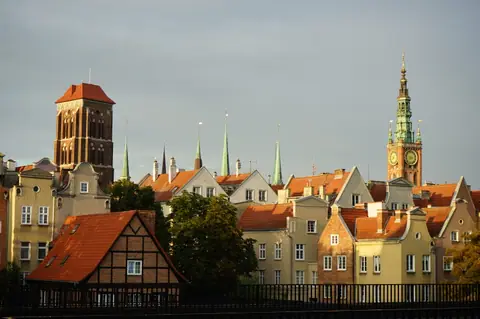
Photo: Andrzej Otrębski · CC BY-SA 4.0
The Main Town, St. Mary's Church & the Crane
Inside St. Mary's Basilica (105.5 m, 1470 astronomical clock, 405 tower steps), St. Nicholas' intact interior, the Royal Way gates and the restored 1444 Crane.
Short answer: build your Main Town heritage walk around two monumental brick landmarks, St. Mary's Basilica and the medieval river Crane (Żuraw), threaded together by the Royal Way gates and St. Nicholas' Basilica. Together they display colossal whitewashed Gothic vaults, a fifteenth-century astronomical clock and the newly restored six-metre wooden treadwheels that once powered Gdańsk's Hanseatic harbour.
Inside St. Mary's Basilica
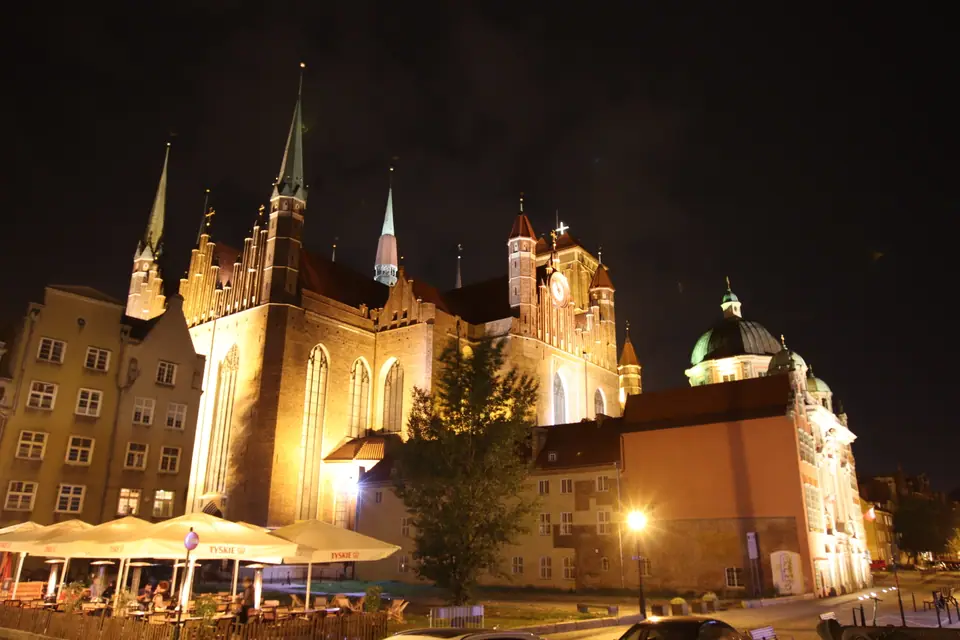
Started in 1343 and expanded across stages until the early sixteenth century, the Basilica of the Assumption of the Blessed Virgin Mary ranks among the largest brick churches anywhere in the world. Its massive hall measures 105.5 metres in length and 66 metres across the transept, enclosing an interior volume near 155,000 cubic metres under star and crystal vaults rising roughly 29 metres high. Historically the nave could accommodate 25,000 to 30,000 worshippers.
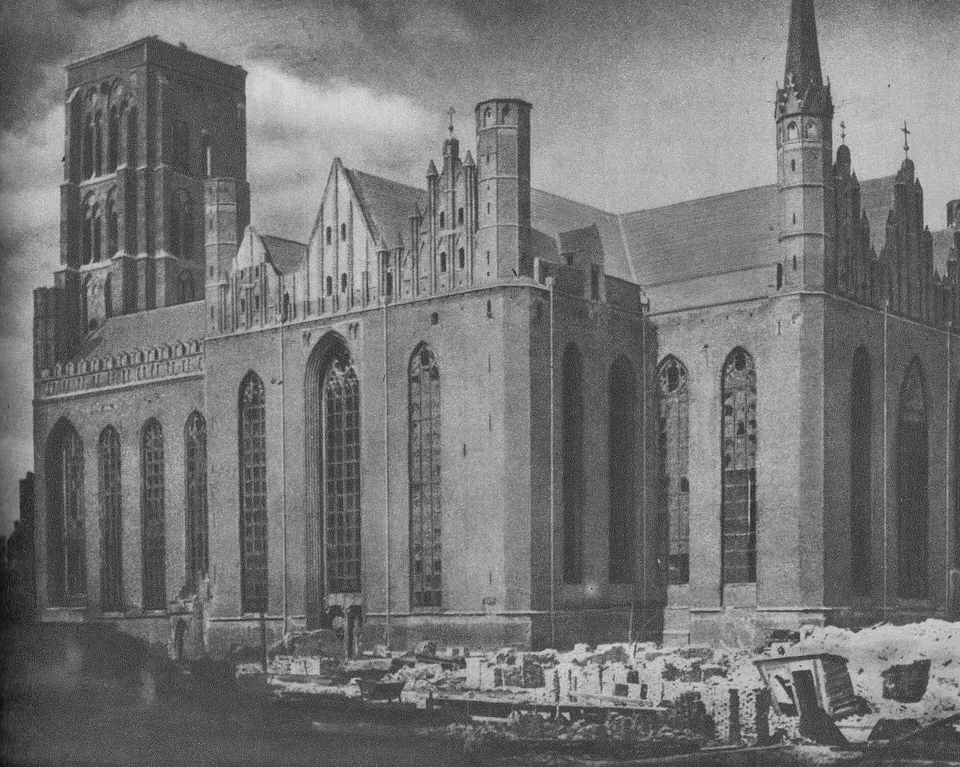
Artillery shelling in March 1945 burned away the roof timber and collapsed 14 vaults across the nave. Careful post-war reconstruction allowed the church to be reconsecrated on 17 November 1955. Entering the main nave outside Mass services requires no admission ticket, leaving quiet morning hours ideal for studying medieval stone chapels.
Pause by the full-scale copy of Hans Memling's The Last Judgment triptych displayed inside the aisle. Captured at sea by Gdańsk privateer Paul Beneke in the fifteenth century, the genuine 1467 to 1471 Netherlandish painting hangs safely today inside the National Museum's Department of Ancient Art at Toruńska 1. That collection occupies a late-Gothic former Franciscan monastery in the Old Suburb south of the Main Town.
| Monument detail | Verified figure or date | Visitor note |
|---|---|---|
| St. Mary's Basilica size | 105.5 m long; 29 m interior vaults | Brick Gothic hall church begun 1343 |
| Bell tower climb | Roughly 405 steps to ~78 to 82 m deck | Separate ticket; narrow spiral stairs |
| Astronomical clock | Built 1464 to 1470 by Hans Düringer | Tracks solar, lunar and zodiac cycles |
| The Crane (Żuraw) | Built 1442 to 1444; reopened 30 April 2024 | 6 m double treadwheels inside south bay |
The 1470 clock and 405-step climb
Against the northern transept wall stands Hans Düringer's towering 14-metre wooden astronomical clock, carved between 1464 and 1470 across three distinct visual zones. The lower dial maps liturgical calendar dates, the middle tracks lunar phases and zodiac cycles, and the upper theatre frames carved saints and evangelists. Check parish noticeboards beside the south door for daily midday chime timing before standing near the timber rail.
Inside the main tower base, a separate ticket desk unlocks access to roughly 405 stone spiral and steep timber steps climbing nearly 80 metres to the rooftop viewing platform. Narrow upper stonework squeezes passing climbers into single file in spots, so climbing right after morning opening keeps the ascent comfortable. Up top, the terrace frames Długa rooftops, Granary Island across the Motława and distant shipyard cranes.
St. Nicholas and the Royal Way gates
Two minutes north of the Main Town sits Dominican St. Nicholas' Basilica (Bazylika św. Mikołaja), treasured locally because it was the only central medieval church in Gdańsk to escape wartime burning and roof collapse in 1945 intact. Darkened baroque choir stalls and seventeenth-century altars offer an authentic historic contrast to reconstructed neighbours nearby.
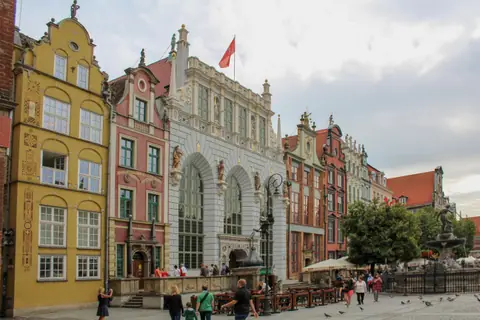
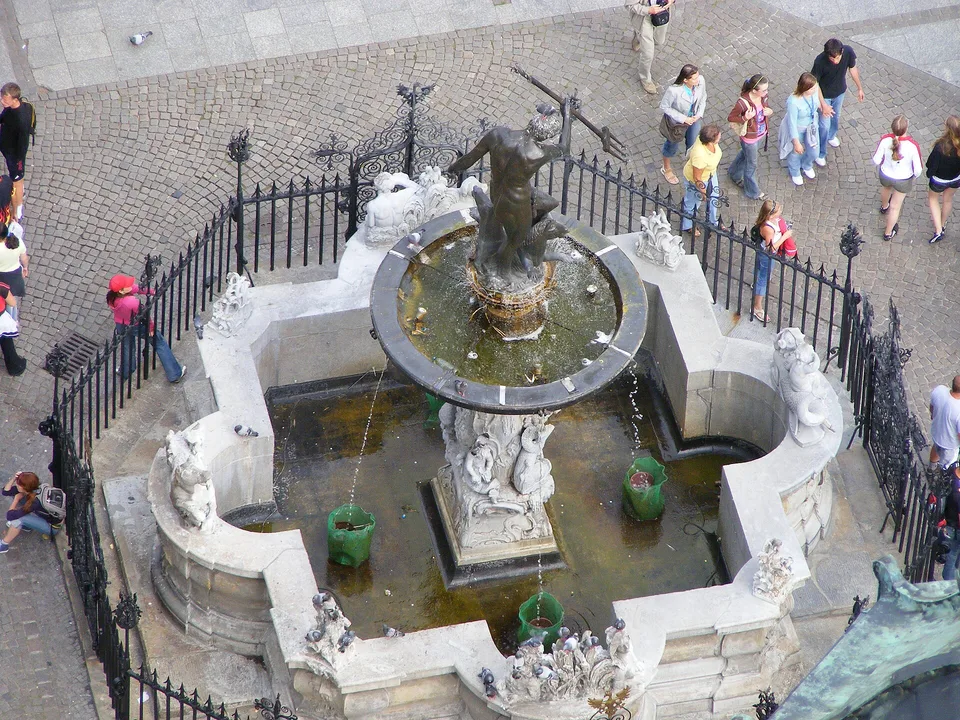
Connecting straight back to our central Royal Way walk, follow Gdańsk's triple ceremonial gate chain from west to east. Begin at the 1588 Upland Gate (Brama Wyżynna) and walk straight through the 1612 to 1614 Golden Gate sculpted by Abraham van den Blocke. Finish past Neptune's Fountain at the 1564 to 1568 Green Gate built by Regnier of Amsterdam and Hans Kramer, which opens onto the river bridges.
Conservation at the 1444 port Crane
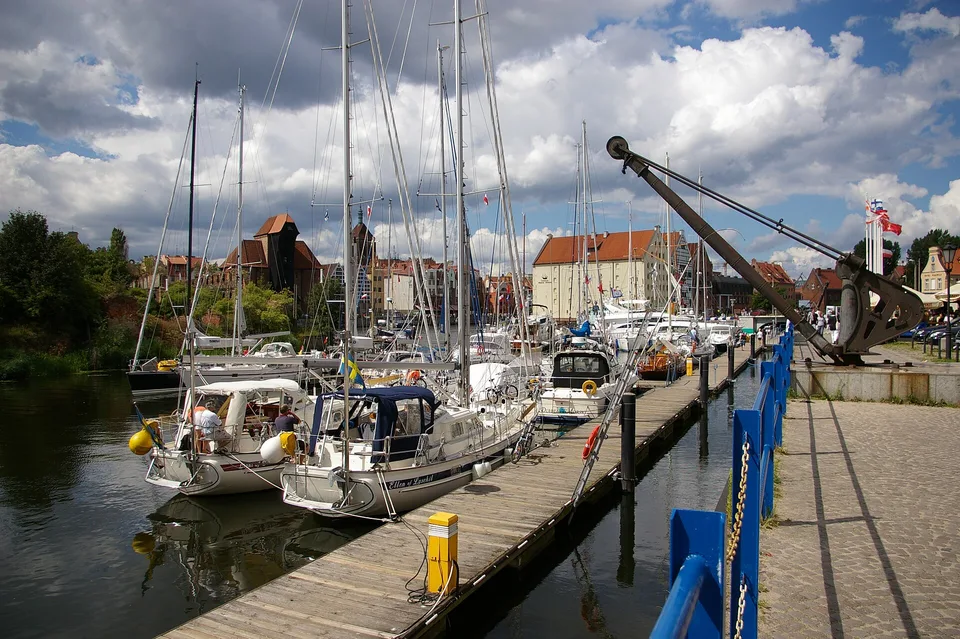
Built between 1442 and 1444 as both a fortified port gate and towering wooden harbour hoist, the Crane burned during 1945 fighting before structural rebuilding from 1956 to 1959 and mechanism reconstruction in 1966. Between 2020 and 2024, the National Maritime Museum carried out a thorough conservation project on both stonework and timber frame. Craftsmen fitted lighter historic oak boards onto the protruding bay, repointed the twin brick towers and uncovered a previously hidden seventeenth-century sundial on the south wall.
Reopened to visitors on 30 April 2024, the new permanent exhibition guides you past recreated seventeenth-century merchant counting rooms straight into the timber housing containing six-metre double wooden treadwheels. Seeing those twin oak cages explains vividly how harbour workers walked upward like human engines to lift heavy wine casks and ships' masts off barges below. Check seasonal ticketed hours on the National Maritime Museum website before climbing inside, since the open riverside walkway beneath the brick arch remains passable at any hour.
Sequencing the walk without crowds
Follow this calm half-day loop before peak tour coaches arrive:
- Enter St. Mary's Basilica right after breakfast for quiet vaults and a morning tower climb before queues build in the spiral stairs.
- Step out down cobbled Ulica Mariacka, admiring sculpted stone drainpipes, gargoyles and elevated porches (przedproża) all the way through fifteenth-century Mariacka Gate onto Długie Pobrzeże river quay.
- Tour the conserved rooms and wooden treadwheels inside the Crane, then cross the swing footbridge onto Ołowianka Island past SS Sołdek before winding back over the Green Bridge towards Long Market.
Keep Monday and Tuesday municipal branch closures in mind using our orientation guide, and pair morning steps with traditional lunch stops in our Gdańsk food guide.
Where it is
- 1The Main Town, St. Mary's Church & the Crane
- Gdańsk Lech Wałęsa Airport (GDN) · about 13 km from here in a straight line
- Directions in Google Maps
Stations and taxi ranks: OpenStreetMap. Airports: OurAirports. Distances are in a straight line.
Traveller tips
Real advice from people who have been to Gdańsk. Every tip is read by our team before it goes live.
No tips yet. Been here? Yours could be the first.
Thank you! Your tip will appear here after a quick review.
More in Gdańsk
Continue exploring Gdańsk with related neighbourhood, food, and planning guides