Photo: Maciej Poltorak / Vanupied · CC BY 4.0
Gdańsk Orientation: Main Town, Shipyard & Baltic Coast
How the historic Main Town, the Old Town Great Mill, the Shipyard and Westerplatte connect, plus Schengen passport rules, passes and planning days.
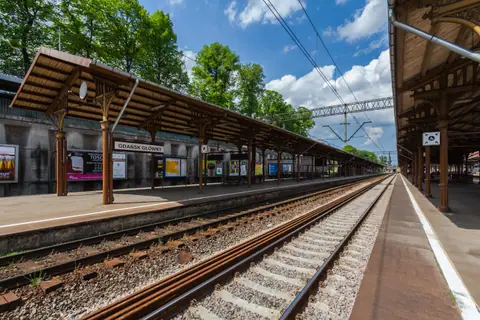
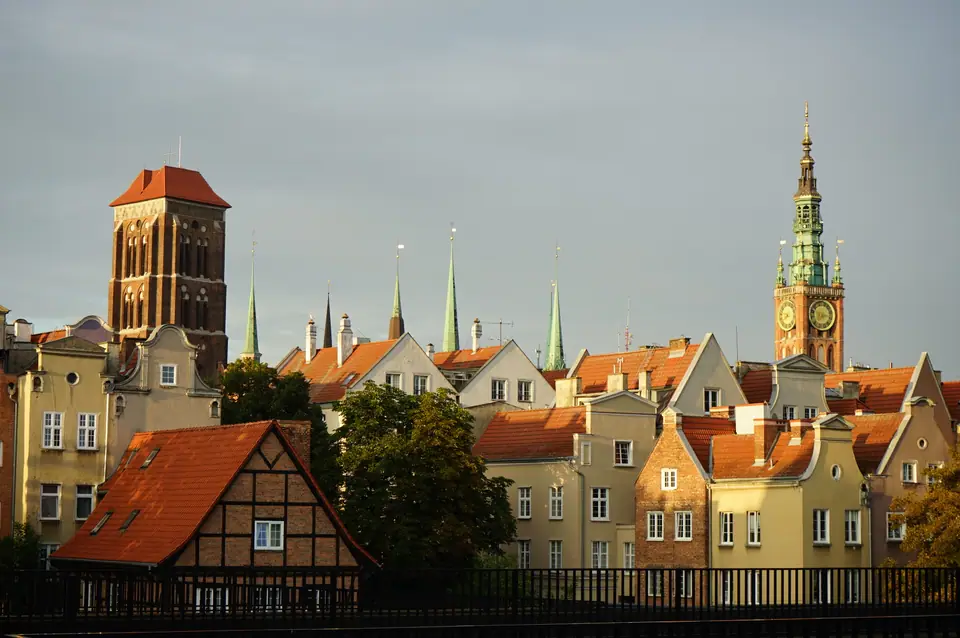
Short answer: Gdańsk divides neatly into three walkable central quarters plus a coastal railway spine. South of the tracks lies the reconstructed Main Town (Główne Miasto) around Długa Street, Long Market and the Motława quay. North of the moat line sit the Old Town around the 1350 Great Mill, the Museum of the Second World War and the post-industrial Gdańsk Shipyard. Commuter trains then carry travellers north through Oliwa to Sopot and Gdynia.
Port geography and Tricity scale
Sitting on Gdańsk Bay in northern Poland where the Motława River enters the Baltic Sea, Gdańsk serves as the capital of Pomeranian Voivodeship. City population stands around 486,492 within a wider Tricity metropolitan corridor shared with Sopot and Gdynia. Depending on statistical boundaries, that combined urban zone holds roughly 920,000 to more than 1.1 million residents.
Official tourism counts recorded around 4.5 million visitors to the city in 2024. That heavy seasonal inflow concentrates inside the pedestrian Main Town during warm afternoons, before spreading out along harbour cruises, dockyard halls and Tricity beaches.
Main Town versus Old Town
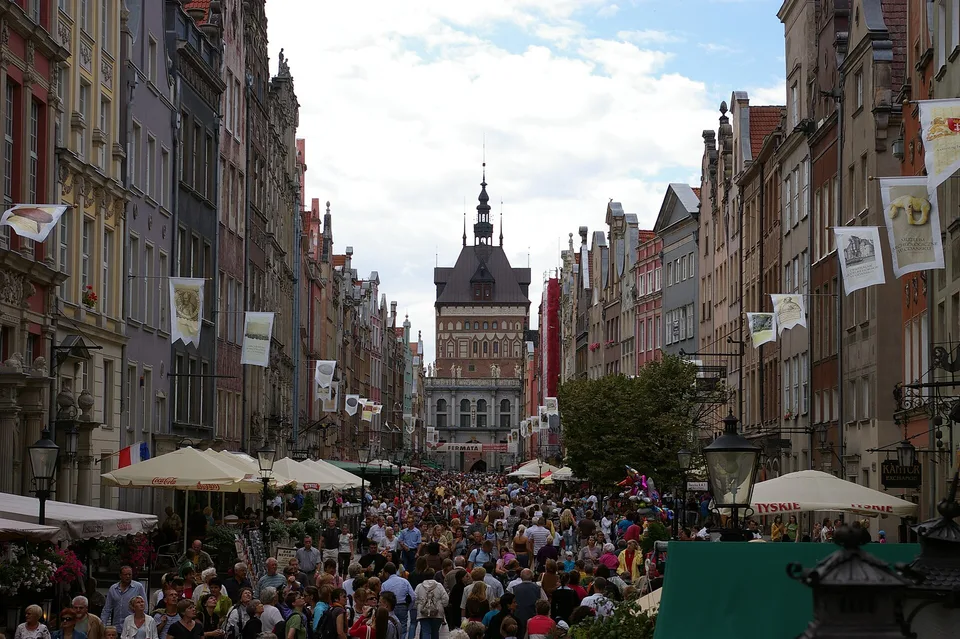
New arrivals frequently mix up Gdańsk's historic districts because the medieval core carries two separate historical names. The postcard spine around Długa Street, St. Mary's Basilica and Neptune's Fountain is properly the Main Town. By contrast, the older settlement quarter known as the Old Town (Stare Miasto) stands slightly further north near Gdańsk Główny station and the Radunia Canal.
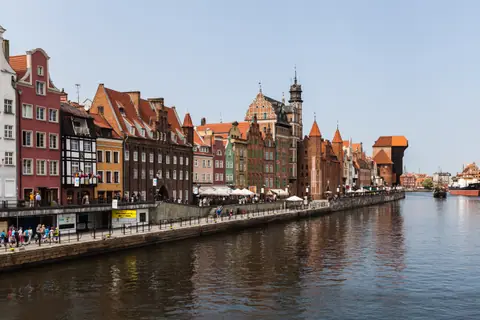
- Main Town (Główne Miasto): Pedestrian axis from the Golden Gate to the Green Gate, flanked by guild facades, Artus Court and the waterfront Crane.
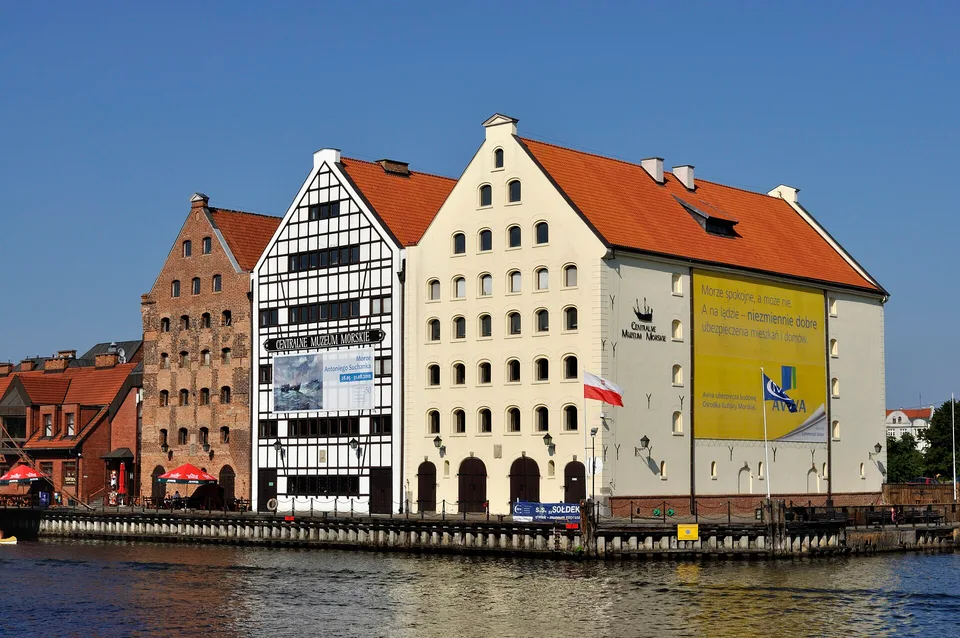
- Granary Island and Ołowianka: River islands linked by pedestrian footbridges, holding contemporary hotels, maritime halls and the museum freighter SS Sołdek.
- Old Town (Stare Miasto): Medieval brick landmarks including St. Catherine's Church, the Great Mill Amber Museum and intact St. Nicholas' Basilica.
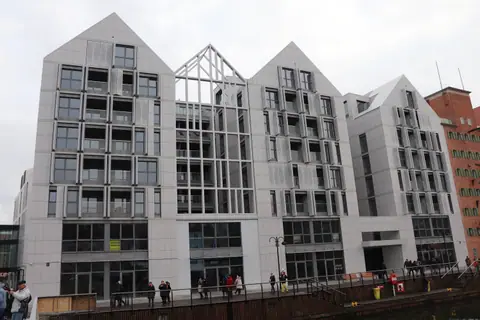
- Young City and Shipyard: Post-industrial shore north of the station enclosing Gate No. 2, the European Solidarity Centre and towering shipyard cranes.
Past the Green Gate, built between 1564 and 1568 by Regnier of Amsterdam and Hans Kramer, bridges carry walkers straight onto the river islands. Knowing this layout before arrival keeps daily steps compact when picking hotels in our neighbourhood guide.
Nine centuries of borderland history
Documented in 997 in the biography of St. Adalbert as urbs Gyddannyzc, the settlement expanded under Pomeranian dukes before Teutonic forces seized the town in 1308. Gdańsk entered the Hanseatic League between 1358 and 1361 and prospered under Polish royal autonomy from 1454 until the late eighteenth century. After the First World War, it operated as the Free City of Danzig under League of Nations supervision from 1920 to 1939.
Fighting opened the Second World War on the Westerplatte headland on 1 September 1939. By March 1945, roughly 90 per cent of central Gdańsk lay in ruins. Post-war Polish architects reconstructed the Main Town around civic pride rather than clearing everything for concrete blocks.
Vaults inside St. Mary's Basilica were reconsecrated in November 1955, and the medieval port Crane was rebuilt between 1956 and 1959. Treating those gabled facades as a monumental twentieth-century reconstruction makes sense of every stone plaque along our Main Town church and Crane circuit.
Baltic amber heritage at the Great Mill
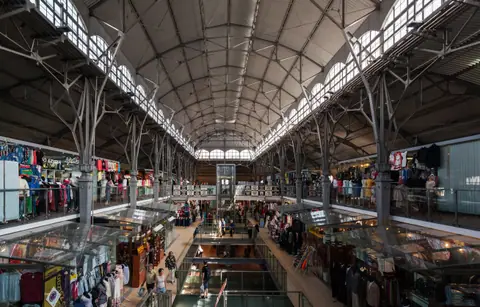
Fossilised Baltic resin has driven local craft workshops for centuries, still visible today along narrow Ulica Mariacka. For deep natural history rather than souvenir shopping, visit the dedicated Amber Museum inside the Great Mill (Wielki Młyn). The Museum of Gdańsk moved the collection here in July 2021, adapting a massive brick watermill built around 1350 by the Teutonic Order across the Radunia Canal.
Inside, timber-framed floors showcase raw white and yellow resin lumps, preserved insect inclusions and carved baroque caskets. You reach the mill in under 10 minutes on foot from St. Mary's Basilica or Gdańsk Główny railway station.
Schengen entry, cards and city passes
Poland belongs to the Schengen area, allowing visa-exempt travellers from eligible countries to stay up to 90 days within any 180-day period. According to UK government travel advice, passports must be issued less than 10 years before arrival and remain valid for at least three months after planned departure. Always check current European ETIAS requirements on official portals before flying.
Card and mobile payments work almost universally across restaurants, museums and rail kiosks. Always choose local Polish currency rather than home-currency conversion when a card terminal prompts you, and carry a small cash reserve for open-air market stalls, bakeries and attended cloakrooms. Stay alert for pickpockets around busy train concourses and crowded Długa terraces, and verify licensed taxi markings outside station exits.
Visitors planning several state museums within a tight stay can check Visit Gdańsk's Karta Turysty (Tourist Card). Digital and physical cards come in 24-hour, 48-hour or 72-hour packages, with an optional Tricity metropolitan transport add-on. Check whether Monday or Tuesday weekly closures clash with your dates before activating any timed museum pass.
Planning days and coastal pace
Three full days cover the Main Town, the Solidarity shipyard quarter, the Museum of the Second World War and a boat or bus ride out to Westerplatte without hurrying. Pack supportive walking shoes because uneven historical cobbles run through Długa Street, Ulica Mariacka and the older dockyard paths. Adding a fourth day gives room for Malbork Castle, Oliwa Cathedral or Sopot Pier using regional rail options set out in our transport guide. Start with core routes in things to do in Gdańsk.
Where it is
- 1Gdańsk
- Gdańsk Lech Wałęsa Airport (GDN) · about 12 km from Gdańsk in a straight line
- Directions in Google Maps
Stations and taxi ranks: OpenStreetMap. Airports: OurAirports. Distances are in a straight line.
Traveller tips
Real advice from people who have been to Gdańsk. Every tip is read by our team before it goes live.
No tips yet. Been here? Yours could be the first.
Thank you! Your tip will appear here after a quick review.
More in Gdańsk
Continue exploring Gdańsk with related neighbourhood, food, and planning guides