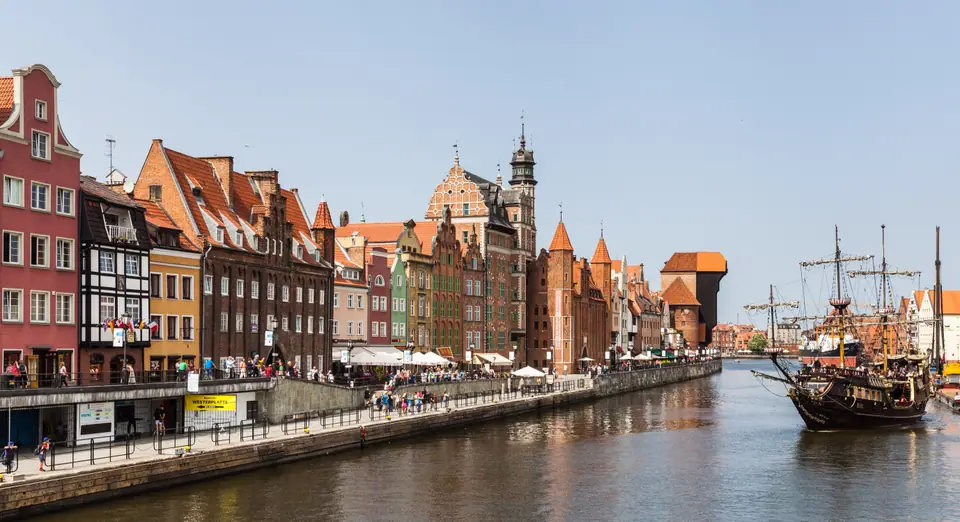
Photo: Diego Delso · CC BY-SA 3.0
Gdańsk
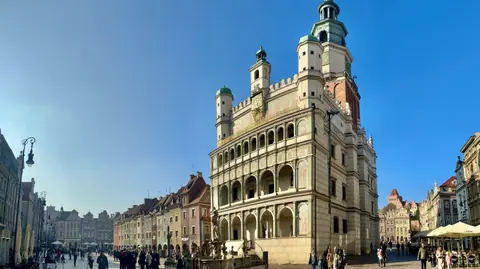
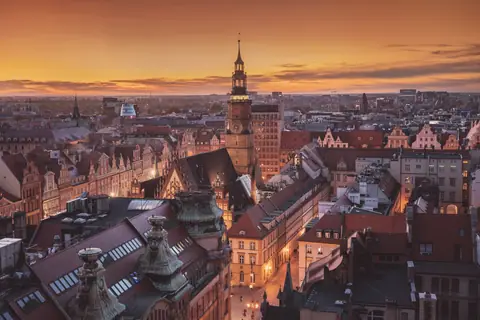
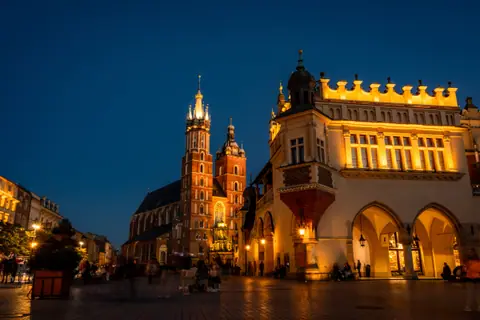
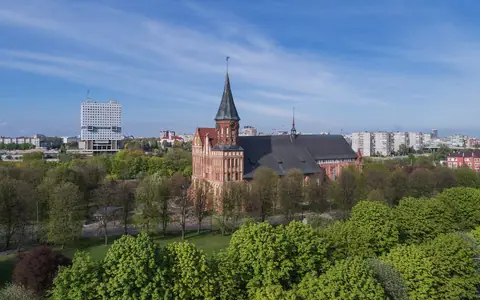
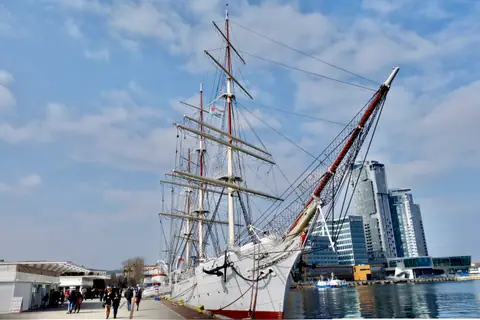
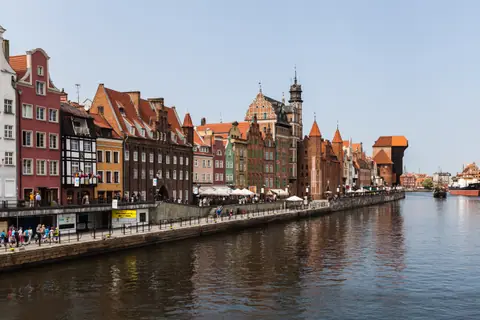
Hanseatic brick gables along the Motława River, the Baltic port where the Second World War opened, the 1980 shipyard birthplace of Solidarity, and day trips across the Tricity coast.
Quick decisions
How many days?
3 to 4 days: one for the Main Town and Crane, one for the European Solidarity Centre and WWII Museum, and one or two for Westerplatte, Oliwa, Sopot or Malbork Castle. Start with our orientation guide.
Where should I stay?
Main Town or Granary Island: walk everywhere around Długi Targ and the riverfront. Gdańsk Główny edge: quick early trains. Sopot: sandy beaches by commuter rail. Compare areas in our neighbourhood guide.
Do I need a car?
No. Central Gdańsk is compact and mostly pedestrianised, while PKM and SKM trains link the airport, Sopot, Oliwa, Gdynia and Malbork directly.
Best for
Modern history: the Solidarity Shipyard and WWII Museum. Brick Gothic landmarks: St. Mary's Basilica, the 1444 Crane and nearby Malbork Castle. Coastal food: Baltic herring, pierogi and milk bars.
Before you go
Entry rules: Poland sits in the Schengen zone, requiring a passport issued under ten years ago and valid three months past departure. Check museum closing days in our practical briefing.
Getting around
From the airport: PKM rail reaches Gdańsk Wrzeszcz in around 21 to 23 minutes for SKM transfers to Gdańsk Główny, or Bus 210 runs direct. Details in our transport guide.
Overview
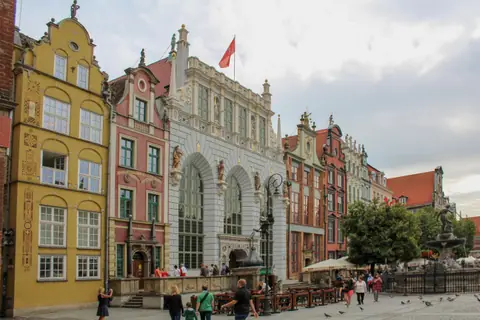
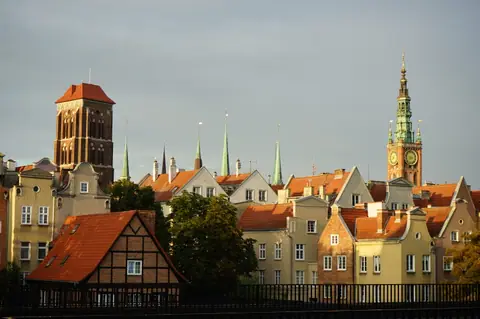
Gdańsk sits on the Baltic coast where the Motława River meets Gdańsk Bay, forming the southern anchor of the Tricity with Sopot and Gdynia. Rebuilt after severe 1945 devastation, the pedestrian Main Town gathers gabled merchant houses, the Main Town Hall and Artus Court along Długa Street and Long Market, leading straight to the medieval brick Crane on the riverfront.
Two major chapters of twentieth-century European history lie just north of the old gates: the 1939 headland at Westerplatte and the Museum of the Second World War, and the Gdańsk Shipyard and European Solidarity Centre where the 1980 strike began. Begin with our orientation guide and top things to do in Gdańsk.
Getting there
Gdańsk Lech Wałęsa Airport lies 12 kilometres north-west of the centre and handled nearly 7.4 million passengers in 2025. PKM commuter trains connect the terminal to Gdańsk Wrzeszcz for quick SKM rail links to Gdańsk Główny, while ZTM Bus 210 reaches the main station directly. Long-distance trains link Kraków and Berlin, and Baltic ferries sail to Sweden. See how to get to Gdańsk.
Where to stay
New arrivals favour the pedestrian Main Town for immediate access to Długi Targ, or newly built hotels across the Motława footbridges on Granary Island and Ołowianka. Travellers using early regional trains choose the blocks near Gdańsk Główny, while beach stays point north to Sopot. Compare every district in where to stay in Gdańsk.
Things to do
Walk the Royal Way from the Golden Gate to Long Market, climb the 405 steps of St. Mary's Basilica, step inside the newly restored medieval Crane, trace the 1980 strike at the European Solidarity Centre and take the harbour road out to Westerplatte. Full details sit in the things to do guide and day trips from Gdańsk.
Food and drink
Coastal menus mix Polish classics with Baltic seafood: marinated or oiled Kashubian herring, steaming pierogi ruskie, sour rye żurek served in hollowed bread loaves, traditional milk bars such as Bar Mleczny Neptun on Długa Street, the 1896 Hala Targowa market hall and spiced Goldwasser liqueur speckled with gold flakes. See what to order in our Gdańsk food guide.
Culture
Documented in 997 and later a wealthy Hanseatic port under Polish royal autonomy from 1454, Gdańsk operated as the Free City of Danzig between 1920 and 1939 before becoming both the flashpoint of September 1939 and the cradle of the 1980 Solidarity union. That layered coastal identity runs from brick Gothic churches to the rust-steel shipyard memorial plaza.
Weather by month
Gdańsk is warmest in July, with average highs around 23°C, and coldest in January, when nights drop to about -3°C. July is the wettest month by rainfall (79 mm), with rain on about 13 days. For mild weather with fewer rainy days, aim for May and September.
| Month | Low | Range | High | Rain | Rainy days |
|---|---|---|---|---|---|
| Jan | -3°C | 2°C | 29 mm | 17 d | |
| Feb | -3°C | 3°C | 24 mm | 14 d | |
| Mar | 0°C | 7°C | 28 mm | 14 d | |
| Apr | 4°C | 12°C | 32 mm | 11 d | |
| May | 8°C | 17°C | 53 mm | 13 d | |
| Jun | 12°C | 20°C | 59 mm | 14 d | |
| Jul | 14°C | 23°C | 79 mm | 13 d | |
| Aug | 14°C | 23°C | 70 mm | 14 d | |
| Sep | 10°C | 19°C | 65 mm | 12 d | |
| Oct | 6°C | 13°C | 55 mm | 15 d | |
| Nov | 2°C | 7°C | 43 mm | 16 d | |
| Dec | -2°C | 3°C | 36 mm | 18 d |
Averages of daily values from 2015 to 2024. Rainy days are days with at least 1 mm of rain. Source: Open-Meteo · Compare destinations by month.
Gdańsk on the map
Every place we cover in Gdańsk. Tap a category or pin to explore.
In-depth Gdańsk guides
Browse the guides grouped by topic: sights, neighbourhoods, food, transport, day trips and trip planning.
Sights, Landmarks & Parks
Key monuments, viewpoints, museums and nature trails.
- Things to Do in GdańskThe core Gdańsk sights: Long Market, Artus Court, St. Mary's tower climb, the restored Crane, Mariacka Street, the Shipyard and Westerplatte.
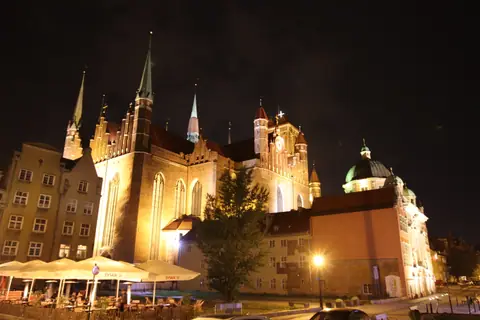
- The Main Town, St. Mary's Church & the CraneInside St. Mary's Basilica (105.5 m, 1470 astronomical clock, 405 tower steps), St. Nicholas' intact interior, the Royal Way gates and the restored 1444 Crane.
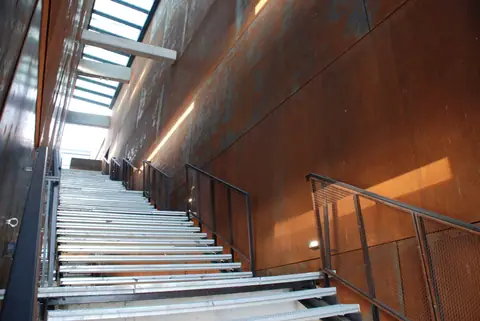
- Solidarity, the Shipyard & European Solidarity CentreAugust 1980 strike heritage at Gate No. 2 and Sala BHP, the 1970 Three Crosses Monument, the 2014 Corten-steel ECS museum and Young City cranes.
- Westerplatte & the Museum of the Second World War1 September 1939 coastal battlefield at Westerplatte, Guardhouse No. 1, ZTM Bus 106 access and the subterranean Museum of the Second World War.
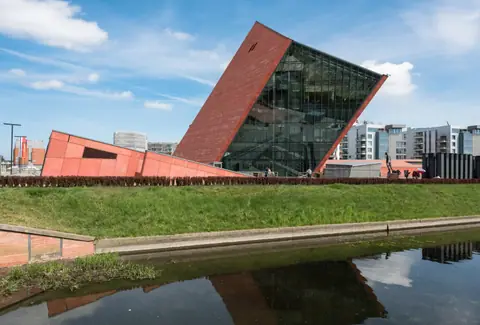
Neighbourhoods & Where to Stay
Districts, historic quarters and the best bases for your stay.
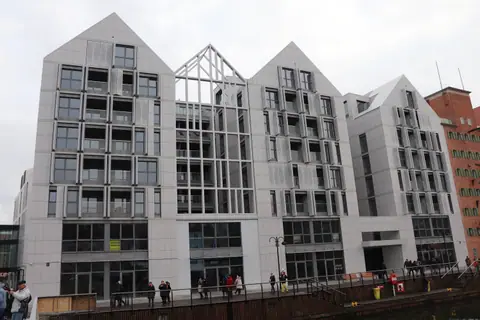
Food & Drink
Local dishes, markets, cafés and dining districts.
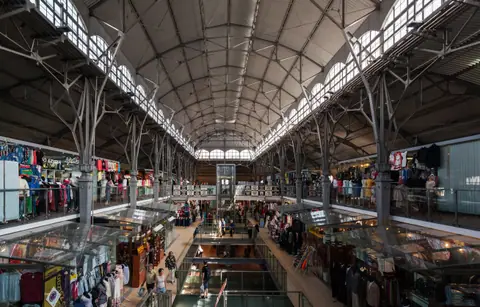
Getting Around & Arrival
Airport transfers, public transit, passes and driving rules.
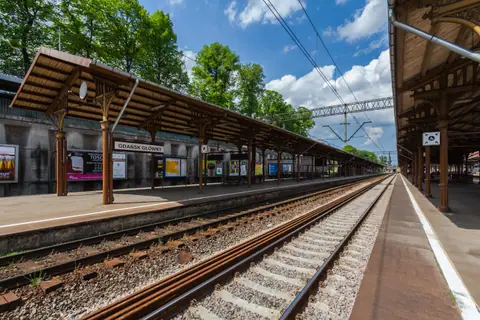
Day Trips & Excursions
Easy half-day and full-day trips from the city.
Trip Planning & Itineraries
When to visit, what to pack and day-by-day routes.
- Gdańsk Orientation: Main Town, Shipyard & Baltic CoastHow the historic Main Town, the Old Town Great Mill, the Shipyard and Westerplatte connect, plus Schengen passport rules, passes and planning days.
- Best Time to Visit GdańskIMGW 1991 to 2020 Gdańsk weather normals by month, peak St. Dominic's Fair crowds in August, shoulder-season light and crisp Baltic winters.
Need your embassy or consulate in Poland? See embassies and consulates in Poland.
Reviews
Log in to write a review.
No reviews yet.