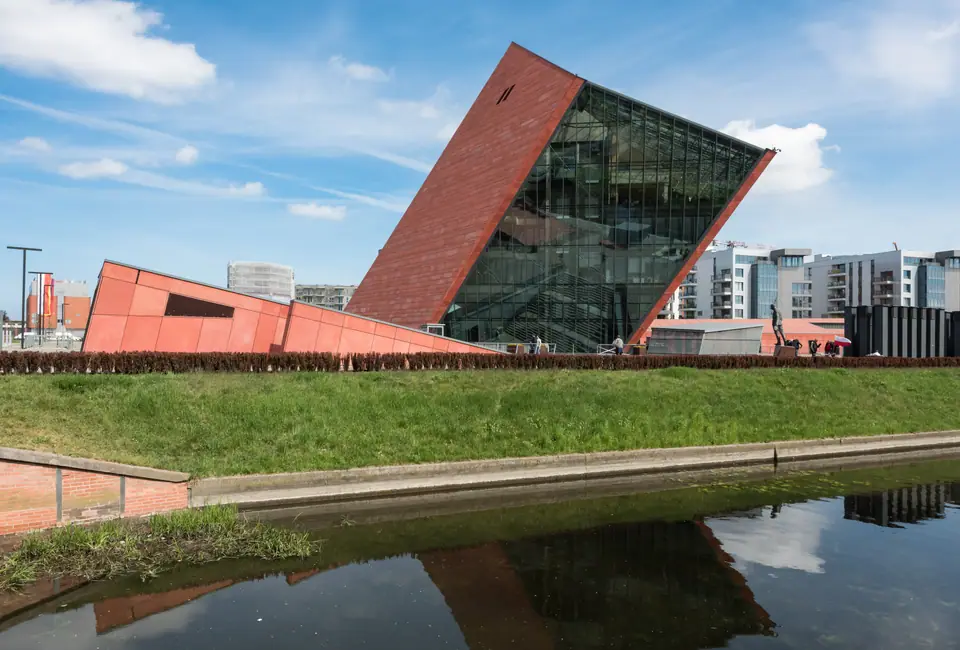
Photo: Adrian Grycuk · CC BY 3.0 pl
Westerplatte & the Museum of the Second World War
1 September 1939 coastal battlefield at Westerplatte, Guardhouse No. 1, ZTM Bus 106 access and the subterranean Museum of the Second World War.
Short answer: pair central Gdańsk's Museum of the Second World War with an outdoor trip out to Westerplatte, roughly 10 to 12.5 kilometres north-west along the port channel. One guides you for three or four hours through deep subterranean galleries. The wooded headland marks the exact harbour bend where naval gunfire opened the Second World War just before five in the morning on 1 September 1939.
Westerplatte and 1 September 1939
Under League of Nations supervision during the Free City of Danzig era, Poland gained rights in 1924 to keep a modest Military Transit Depot on the sandy spit of Westerplatte. Just before five in the morning on 1 September 1939, the German battleship SMS Schleswig-Holstein opened cannon fire. Anchored directly across the narrow harbour canal on a supposed courtesy call, the warship shelled the brick depot perimeter at point-blank range.
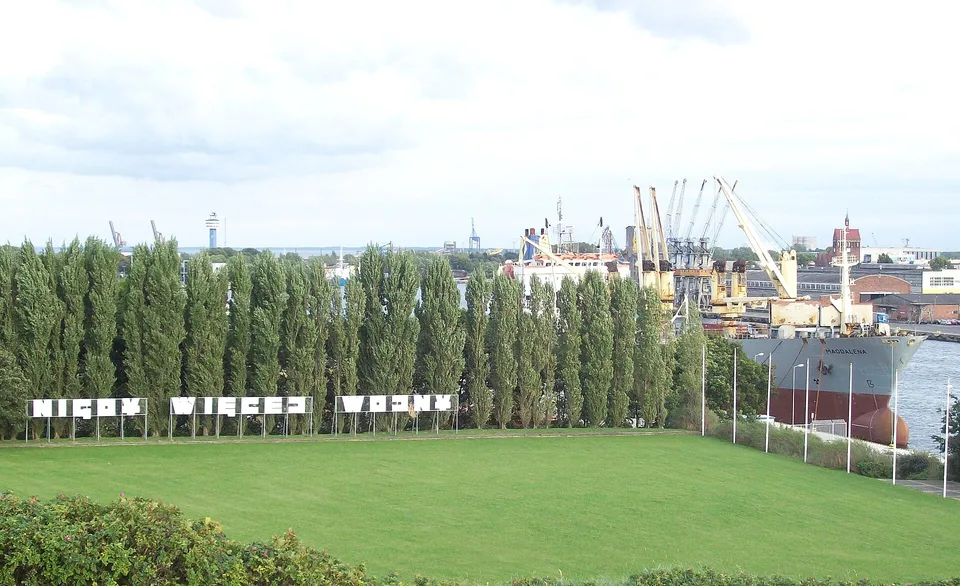
Led by Major Henryk Sucharski and deputy Captain Franciszek Dąbrowski, roughly 180 to 210 Polish troops manned six scattered concrete outposts, barracks and wooded earthworks against heavy naval, artillery and air bombardment. Their outnumbered garrison held the spit for seven days until 7 September 1939. Standing on the tree-lined shore beside passing freighters today makes the cramped geography of that narrow headland immediately stark.
Guardhouse No. 1 and the headland trail
Follow the paved footpath weaving past shattered concrete ruins of the old Polish barracks (Koszary), devastated by heavy shells and aerial dive-bombers, towards Guardhouse No. 1 (Wartownia nr 1). Relocated slightly and preserved intact, the brick-and-concrete bunker still displays thick interwar walls and firing slits built between 1925 and 1939. Ongoing archaeological excavations directed by the Museum of the Second World War since 2016 continue uncovering perimeter relics and identifying fallen defenders buried in the peninsula's dedicated military cemetery. Clear open-air panels along the trail map defensive field outposts like Fort and Prom without cluttering the coastal pines.
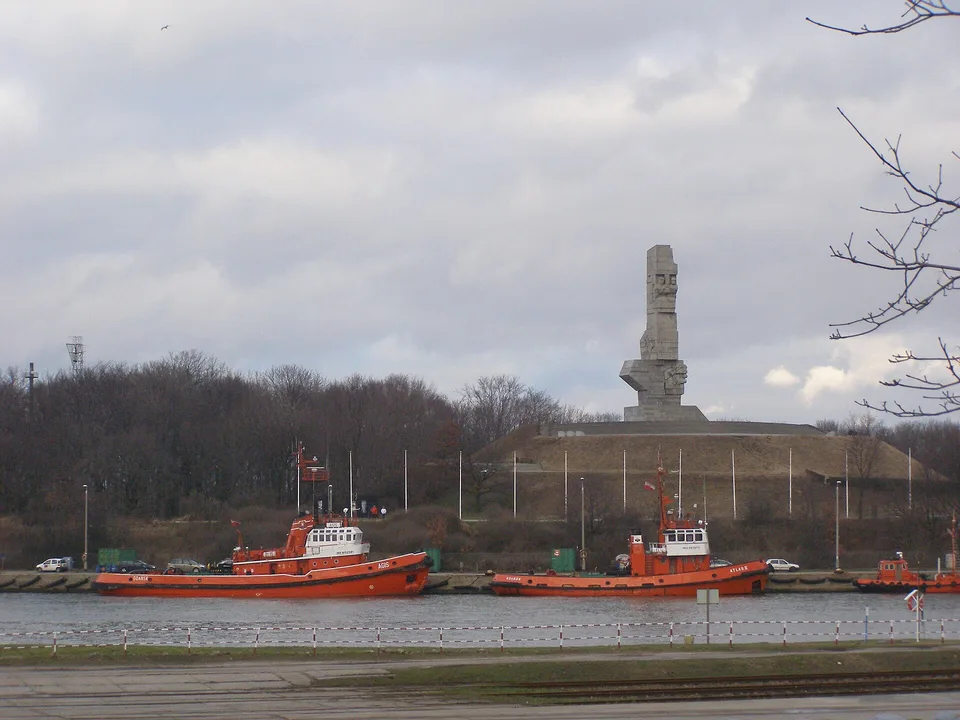
Climbing the landscaped grassy mound above the port channel leads up to the 25-metre granite Coast Defenders Monument dedicated in 1966. Carved stone reliefs around its podium trace Polish campaigns from September 1939 to Monte Cassino and Berlin. Expect stiff Baltic winds straight off Gdańsk Bay, so bring a warm windproof jacket outside midsummer as advised in our seasons guide.
Reaching Westerplatte by bus or boat
Year-round city ZTM Bus 106 runs straight from Gdańsk Główny station onto the peninsula road, stopping near the memorial trail in roughly 30 to 40 minutes. Supplementary Bus 138 connections and seasonal Bus 606 express runs boost frequency during busy summer months. Check return bus departure times posted at the terminal pole carefully before walking out towards the outer harbour breakwater, while noting historic Wisłoujście Fortress sitting just across the Martwa Wisła water channel.
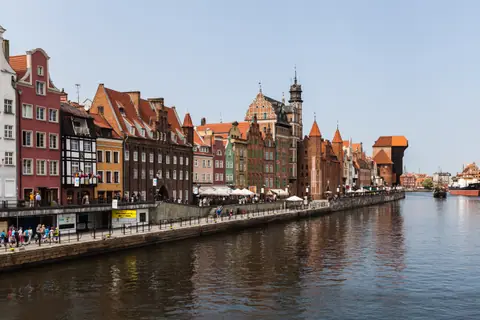
From late spring into early autumn, sightseeing boats and replica galleons cruise north down the working shipyard canal from Długie Pobrzeże near the Crane. Sailing out passes the Gdańsk Shipyard cranes and harbour fortifications cleanly, though returning by ZTM Bus 106 stays dependable whenever coastal weather turns choppy.
Architectural symbolism at Brabank
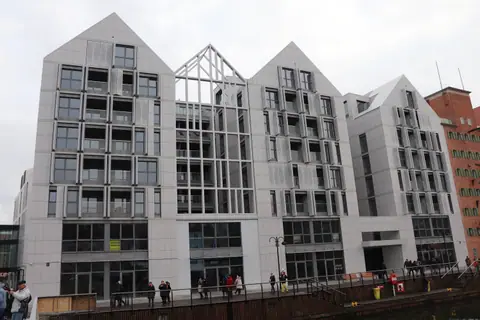
Where the Radunia Canal joins the Motława at Władysław Bartoszewski Square 1, the Museum of the Second World War occupies roughly 23,000 square metres across a 2.5-acre plot. Designed by Gdynia architectural studio Kwadrat and opened on 23 March 2017, its spatial plan separates past, present and future visually across three distinct architectural levels. Almost every exhibition gallery hides deep underground, leaving a stark public plaza dominated by a 40-metre leaning red concrete prism pointing upward.
Inside the Museum of the Second World War
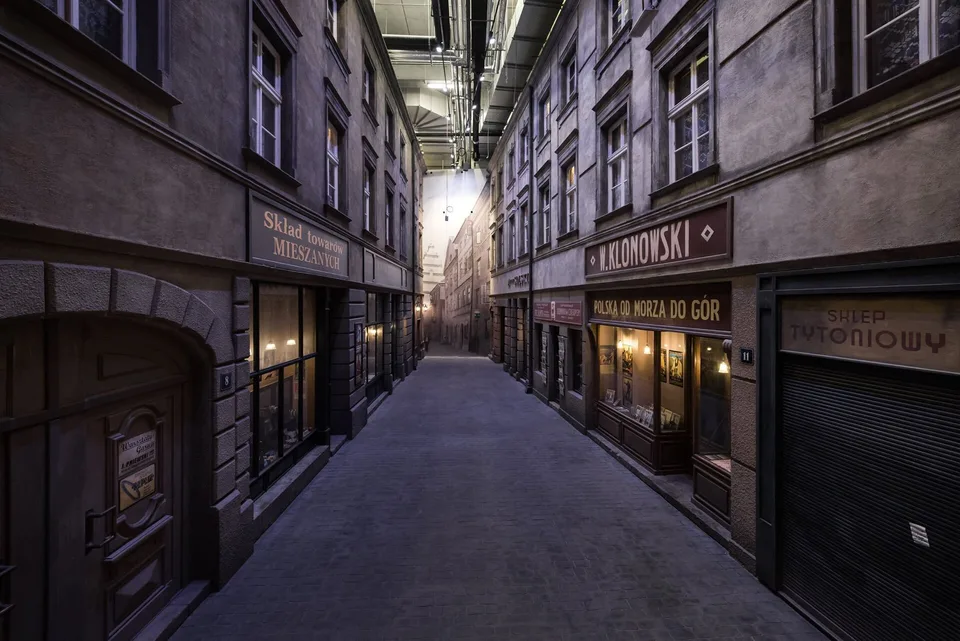
Welcoming around 601,000 visitors in 2024, the permanent exhibition examines European and global wartime history rather than focusing purely on battlefield tactics. Visitors descend from pre-war European cities into a reconstructed 1930s Polish street, tracing totalitarian dictatorships, German and Soviet occupations, resistance networks and daily civilian endurance under blockade. Families visiting with younger children can steer towards the separate Time Travel children's exhibition instead of taking primary-school children through confronting adult galleries.
Original armoured vehicles, personal family suitcases, documentary film and sobering rooms on civilians in wartime trace the arc all the way to post-war Yalta borders. Give yourself three to four steady hours underground so fatigue never rushes the final European sections.
| WWII site | Distance from Main Town | Essential context | Allow at least |
|---|---|---|---|
| Museum of the Second World War | 10 min walk north-east of the Crane | Subterranean galleries under 40 m leaning tower | 3 to 4 hours |
| Westerplatte Peninsula | 10 to 12.5 km by Bus 106 or boat | 1939 headland, Guardhouse No. 1, 1966 monument | 1.5 to 2 hours |
Ticketing and museum pacing
Timed admission slots for the Museum of the Second World War sell out frequently on sunny weekends, Polish holidays and busy summer afternoons. Reserve an early morning slot directly on the official museum website ahead of arrival, drop heavy coats or backpacks in the ground-floor cloakroom lockers, and collect an audio guide before taking the long escalator underground.
Combining both sites across your trip
Putting Westerplatte on a breezy morning and the underground museum on a quieter afternoon balances coastal walking along paved harbour paths with deep exhibition reading. Confirm live ZTM bus schedules in our transport guide and verify Monday municipal closure patterns in our practical briefing before locking your plans.
Where it is
- 1Westerplatte & the Museum of the Second World War
- Gdańsk Lech Wałęsa Airport (GDN) · about 13 km from here in a straight line
- Directions in Google Maps
Stations and taxi ranks: OpenStreetMap. Airports: OurAirports. Distances are in a straight line.
Traveller tips
Real advice from people who have been to Gdańsk. Every tip is read by our team before it goes live.
No tips yet. Been here? Yours could be the first.
Thank you! Your tip will appear here after a quick review.
More in Gdańsk
Continue exploring Gdańsk with related neighbourhood, food, and planning guides