


























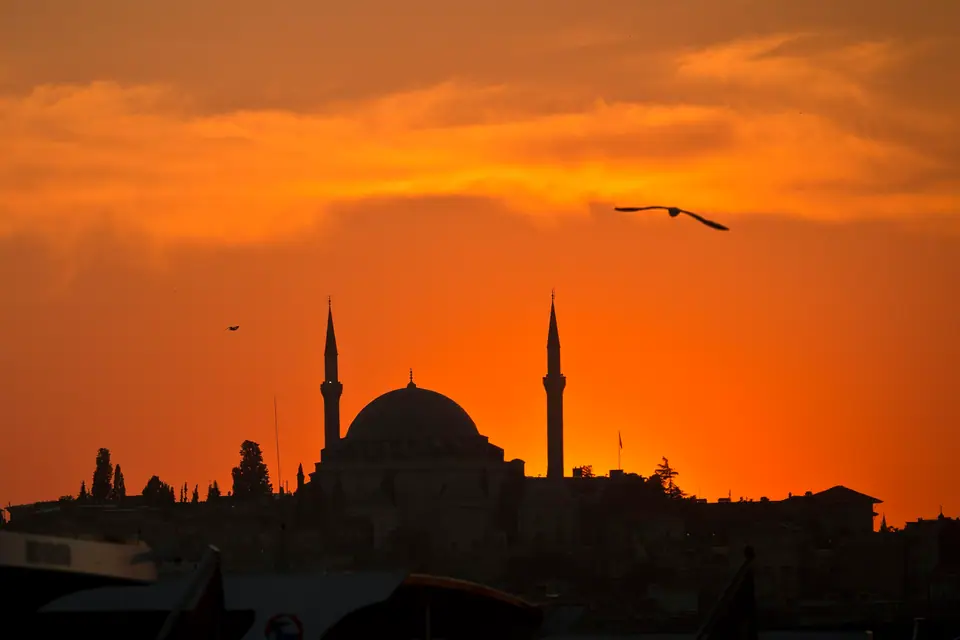
Photo by Simon Infanger on Unsplash
What to Wear in Istanbul: Mosque Dress Code, Shoes & Seasonal Packing
How to dress for active mosques without overheating in summer, choosing slip-on shoes that grip polished marble cobbles, and packing for Bosphorus winds.
Walk from the waterfront cafés of Kadıköy or Karaköy across the Galata Bridge to the historic quarters of Fatih. Along that single walk you will see every wardrobe style in Europe and the Middle East sharing the same pavement. Istanbul has no street dress code. Locals wear everything from sleeveless summer dresses, shorts, and tailored linen to smart business attire and traditional floor-length coats with headscarves. What shapes a traveller's packing list is not street conformity. Instead, three practical realities govern your daily outfit: entering active mosques several times a day, walking up steep hills paved with slick stone, and crossing windy open water on commuter ferries.
Mosque dress code for men and women at Hagia Sophia, the Blue Mosque & Süleymaniye
Unlike European cathedrals where you remain shod and step straight off the square, Istanbul's imperial mosques are active houses of prayer carpeted from wall to wall. Every visitor, including foreign ticket-holders entering the upper gallery of Hagia Sophia, must follow clear modesty and cleanliness rules at the entrance:
- Women's Mosque Attire (Headscarf + Covered Shoulders & Knees) / Men's Mosque Attire (Covered Shoulders & Knees): Women must cover their hair, shoulders, upper arms, cleavage, and legs to below the knee. Ankle-length trousers or a loose maxi skirt work best. Men must wear a sleeved shirt or T-shirt and trousers or long shorts that fully cover the kneecap when standing and sitting. Sheer garments or skin-tight activewear leggings without a long tunic over them will be turned back at the Blue Mosque and Hagia Sophia checkpoints.
- Packing Your Own Light Scarf vs Borrowing Doorway Wraps: Major tourist mosques such as the Blue Mosque and Süleymaniye lend complimentary headscarves and wrap-around skirts at the courtyard entrance. Hagia Sophia sells disposable head coverings and wraps near the ticket booths. Bringing your own lightweight cotton, modal, or silk scarf (eşarp, eh-SHARP, or şal) in your daypack is far more comfortable, breathable, and hygienic. It also lets you step spontaneously into smaller neighbourhood gems such as Rüstem Pasha Mosque or Sokollu Mehmed Pasha Mosque where loaner wraps are scarce.
- Removing Shoes & Wearing Socks on Mosque Carpets: Inside every ground-floor prayer hall, visitors remove their shoes before stepping onto the woven carpets. Carry the small plastic bag provided at the door so you can keep your shoes with you rather than searching among hundreds of pairs on exterior wooden shelves. Always pack a pair of thin cotton socks in your bag during sandal season so you do not walk barefoot on shared carpets.
Footwear strategy: slip-on convenience meets steep, polished stone hills
If there is one item that makes or breaks a three-day visit, it is the sole of your shoe. Istanbul is built across seven historic hills on the peninsula alone, plus the 60-metre climb from Karaköy up to Galata and Beyoğlu. Centuries of footsteps have worn the limestone kerb stones around Sultanahmet and the porphyry and basalt cobbles (Arnavut kaldırımı, ahr-nah-VOOT kahl-duh-ruh-MUH) of Galata, Cihangir, and Balat to a mirror-like polish. When an afternoon rain shower hits or street washers hose down the restaurant lanes around Eminönü, smooth leather soles and hard plastic fashion sandals slide like ice skates.
Choose broken-in leather trainers, low-profile trail walkers, or cushioned walking sandals with a lugged rubber tread and firm ankle support. Visiting three or four mosques in a single day along our things to do route means taking shoes off repeatedly. Slip-on trainers or shoes with elastic laces save endless kneeling on crowded stone steps while tour groups press behind you.
Season-by-season layering and the Bosphorus wind chill
Because you will spend part of almost every day out on the water aboard a Bosphorus ferry, always dress for a temperature five degrees cooler than the sheltered courtyard reading in Sultanahmet:
- Spring (April to May) & Autumn (September to October). Pack breathable cotton shirts, loose linen or chino trousers, a light cardigan or denim jacket for evening ferry crossings, and a compact folding umbrella for April or October showers.
- Summer (June to August). Leave heavy denim and non-breathable polyester at home. Loose-fitting linen or cotton trousers and a light short-sleeved button-down shirt or midi dress satisfy mosque rules all day without needing to change in public washrooms. They also shield your shoulders from strong UV glare on open ferry decks. Pack polarized sunglasses and a wide-brimmed sun hat for the unshaded courtyards of Topkapı Palace.
- Winter (November to March). The damp north wind (poyraz) off the Black Sea cuts right through thin fashion coats. Pack a hooded waterproof and windproof outer jacket, a merino wool jumper or fleece mid-layer, thermal base layers for January and February, a warm scarf and hat, and water-resistant leather boots with deep rubber grip.
What to wear in a traditional Turkish hamam
At historic bathhouses such as Çemberlitaş, Haseki Hürrem Sultan, or Kılıç Ali Paşa, attendants provide every guest with a traditional handwoven cotton wrap towel called a peştemal (pesh-teh-MAHL). They also supply single-use bikini bottoms or briefs for the scrub, a coarse exfoliating mitt (kese), and non-slip clogs or slippers. You do not need to bring a swimsuit unless you prefer wearing your own bikini top or swim trunks underneath the cotton wrap. Pack a small zip pouch for your jewellery and watch before locking your main bag in your private changing cabin (camekân).
Evening dining attire and your daypack security checklist
For evening dinners at rooftop restaurants in Karaköy, Beyoğlu, or along the Bosphorus in Arnavutköy and Bebek, locals dress in smart-casual attire. Clean dark jeans or tailored trousers with a collared shirt, blouse, or dress fit right in everywhere. Carry a zipped crossbody bag or small daypack that rests in front of your torso when riding the crowded T1 tram or walking through the Grand Bazaar. Pack a reusable water bottle and lip balm for breezy days on the water. Detailed monthly temperatures and rainfall averages are listed in our best time to visit guide.
Where it is
- 1Istanbul
- Istanbul Sabiha Gökçen International Airport (SAW) · about 30 km from Istanbul in a straight line
- Directions in Google Maps
Stations and taxi ranks: OpenStreetMap. Airports: OurAirports. Distances are in a straight line.
Traveller tips
Real advice from people who have been to Istanbul. Every tip is read by our team before it goes live.
No tips yet. Been here? Yours could be the first.
Thank you! Your tip will appear here after a quick review.
More in Istanbul
Continue exploring Istanbul with related neighbourhood, food, and planning guides
Grand Bazaar Istanbul Guide: Walking Route, Gates & Bargaining
Istanbul, Turkey

Bosphorus Cruise Guide: Şehir Hatları Ferries, Routes & Palaces
Istanbul, Turkey
Where to Stay in Istanbul: Sultanahmet, Karaköy, Beyoğlu & Kadıköy
Istanbul, Turkey

Istanbul 3-Day Itinerary: Sultanahmet, Bazaars, Galata & Bosphorus
Istanbul, Turkey
