


























Lake Titicaca (Copacabana & Isla del Sol) and the North Yungas Road Day Trips
Plan two iconic excursions from La Paz: crossing the Strait of Tiquina to Copacabana and Isla del Sol on 3,812-metre Lake Titicaca, or mountain biking 3,500 vertical metres down the North Yungas Road.
Highways from La Paz lead northwest across the Altiplano to Lake Titicaca, Copacabana, and Isla del Sol, or northeast over the 4,650-metre La Cumbre pass down the North Yungas Road. Both excursions connect with our La Paz transport guide and 3-day itinerary.
Northwest to Lake Titicaca, Copacabana and Isla del Sol (3,812 Metres)
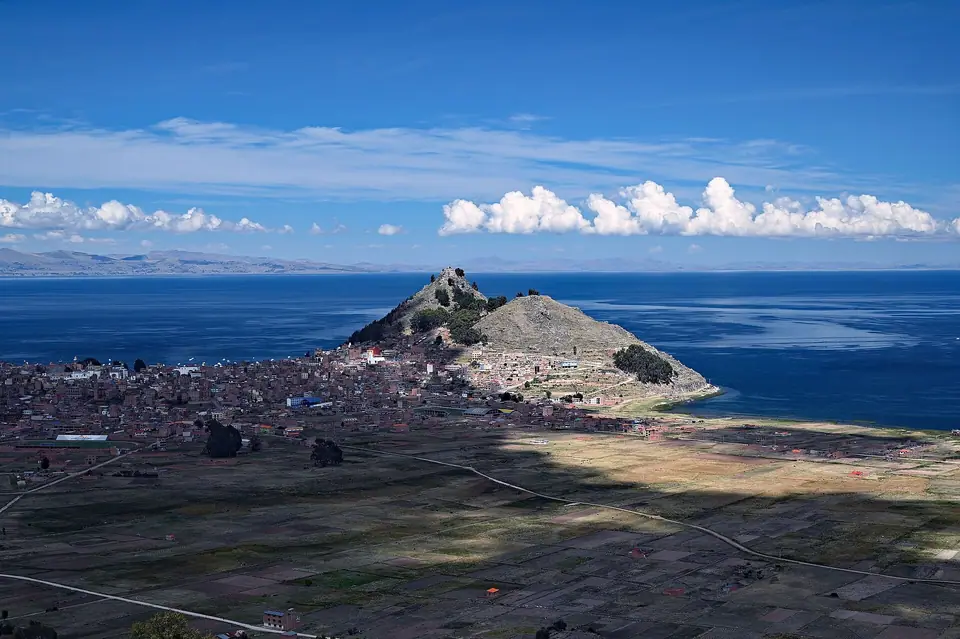
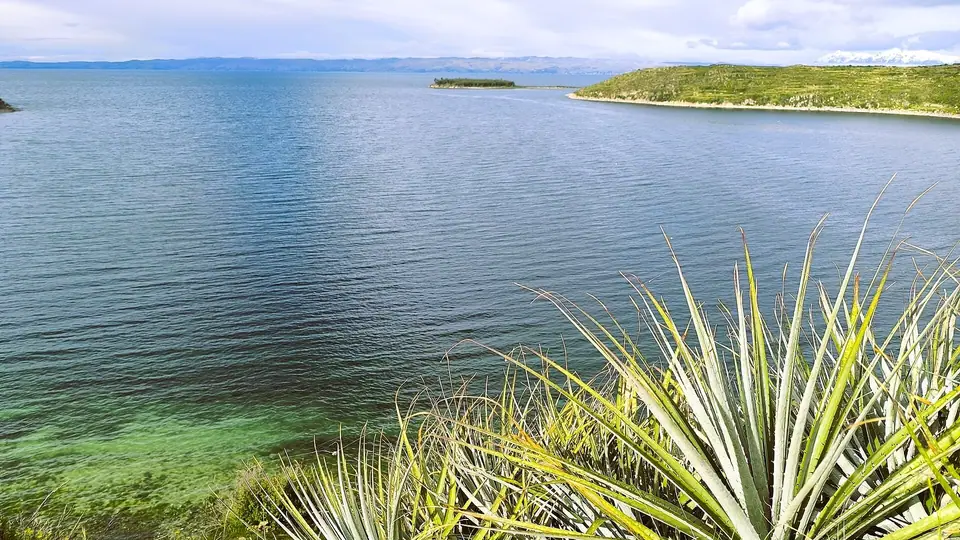
Resting at an elevation of 3,812 metres (12,507 feet) above sea level on the border of Bolivia and Peru, Lake Titicaca is the highest navigable lake in the world and the largest lake in South America by both surface area (8,372 square kilometres) and water volume. Travelling from La Paz, vehicles cross the 800-metre-wide Strait of Tiquina (which links the smaller southern basin of Winaymarka with the main northern basin of Lago Grande) on flat wooden barges before skirting the lakeshore hills into Copacabana (3,841 metres).
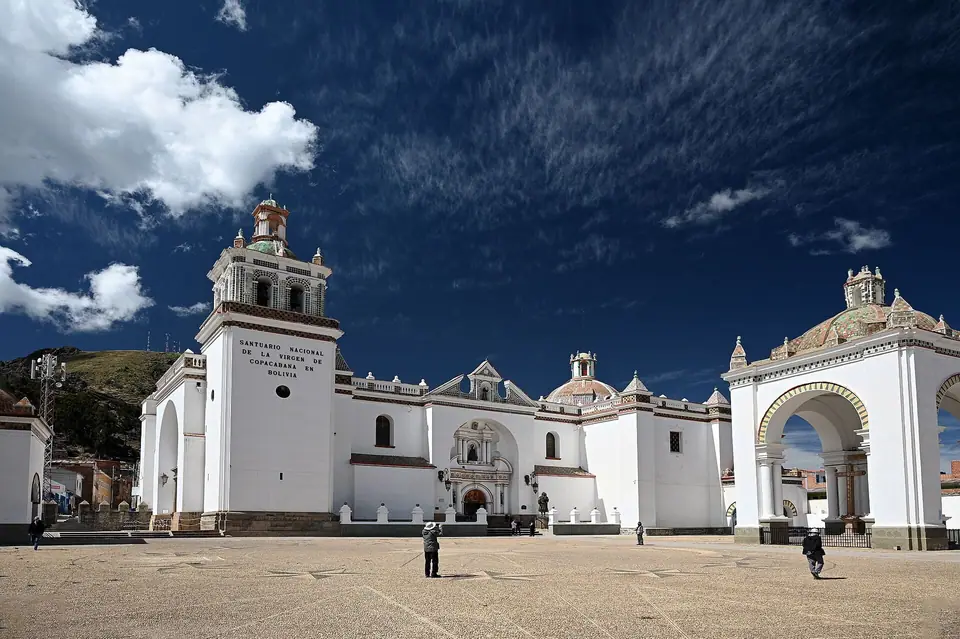
- Basilica of Our Lady of Copacabana and Cerro Calvario: Constructed between 1610 and 1651 in gleaming whitewashed Moorish-Renaissance style with glazed ceramic domes and an open outdoor chapel (capilla abierta), the basilica houses the venerated 1582 dark-wood sculpture of the Virgen de la Candelaria de Copacabana (Patroness of Bolivia), carved by Inca nobleman Francisco Tito Yupanqui. Every morning outside the gates, Aymara priests and friars bless flower-draped cars and buses with holy water and sparkling cider (ch'alla) for safe mountain travel, while a rocky path climbs past the 14 Stations of the Cross to the 3,966-metre summit of Cerro Calvario.
- Boats to Isla del Sol: From Copacabana beach, motor launches cross in 90 minutes to Isla del Sol, revered in Inca and Aymara cosmology as the birthplace of the sun god Inti and the first Inca founders Manco Capac and Mama Ocllo. Footpaths link the southern Yumani Inca Steps and three-spouted sacred fountain with the lakeside stone ruins of the Pilkokaina Inca Palace.
Northeast Down the 64-Kilometre North Yungas Road to Coroico
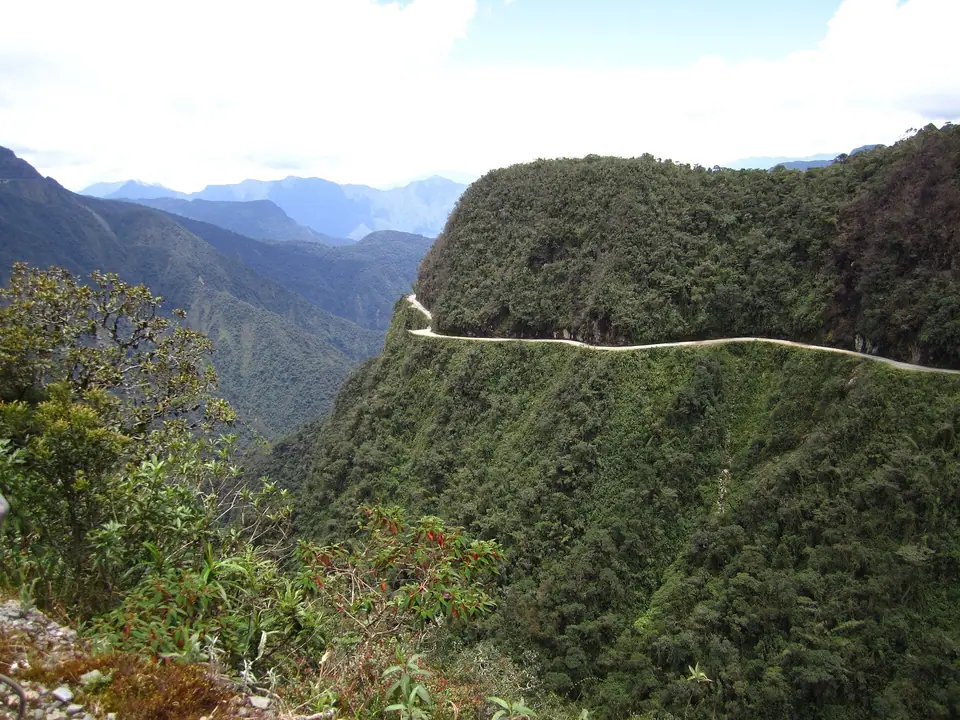
Carved into the sheer cliffs of the Cordillera Oriental in the 1930s (partly by Paraguayan prisoners of war during the Chaco War) to link La Paz with the Amazonian valleys of the Yungas, the 64-kilometre North Yungas Road (Camino a los Yungas) is one of the most dramatic vertical descents on the planet. Since a modern two-lane paved highway (Route 3) bypassed the cliffside ledges in 2006, the single-lane gravel track between Unduavi/Chusquipata and Yolosa, narrowing to 3.2 metres above 600-metre drops and cascading waterfalls, is ridden almost exclusively by guided mountain-bike groups.
Tours transfer by van to La Cumbre at 4,650 metres (15,260 feet) before cyclists drop 3,500 vertical metres (11,500 feet) through cloud forest and waterfalls to Yolosa (1,200 metres) and Coroico. Book only with operators providing full-suspension hydraulic-disc-brake bikes and support vans.
Traveller tips
Real advice from people who have been to Lake Titicaca (Copacabana & Isla del Sol) and the North Yungas Road Day Trips. Every tip is read by our team before it goes live.
No tips yet. Been here? Yours could be the first.
Thank you! Your tip will appear here after a quick review.
More in La Paz
Continue exploring La Paz with related neighbourhood, food, and planning guides
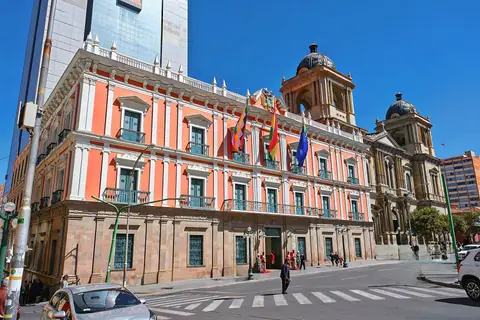
Plaza Murillo: The Cathedral Basilica, Palacio Quemado and Clock of the South
La Paz, Bolivia
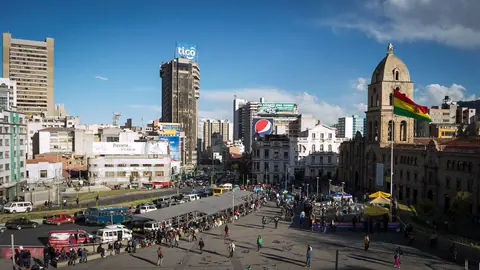
Basilica of San Francisco and the Witches' Market (El Mercado de las Brujas)
La Paz, Bolivia
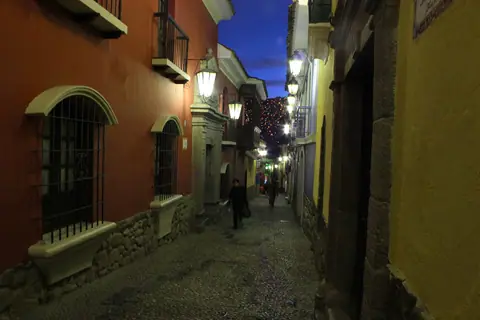
Calle Jaen Museums, Casa de Murillo and MUSEF in the Casco Viejo
La Paz, Bolivia
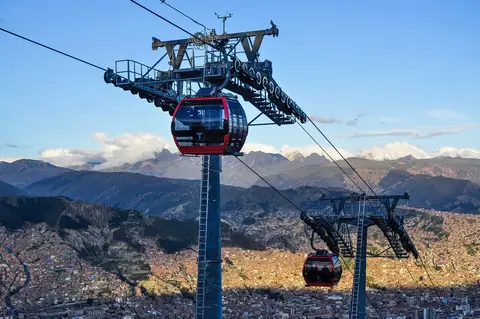
Mi Teleferico Cable Car Lines and Mirador Killi Killi Viewpoint
La Paz, Bolivia
