


























What to Eat in La Paz: Saltenas, Anticuchos, Plato Paceno and Singani
Taste the highland flavours of La Paz, from mid-morning broth-filled saltenas and flame-seared beef-heart anticuchos with peanut sauce to plato paceno, sopa de mani, api morado, and Singani.
Sitting at the crossroads of the high-altitude Altiplano (home to hundreds of native potato varieties, freeze-dried chuno, quinoa, giant choclo corn, and llama meat) and the lush subtropical valleys of the Yungas just 60 kilometres northeast (yielding citrus, avocados, coca, and high-grown Arabica coffee), La Paz has experienced a culinary renaissance alongside its treasured street-food traditions. Pair these dishes with visits to the markets around San Francisco and the restaurants of Sopocachi and Zona Sur.
Morning Rituals: Saltenas, Api con Pastel and Marraqueta
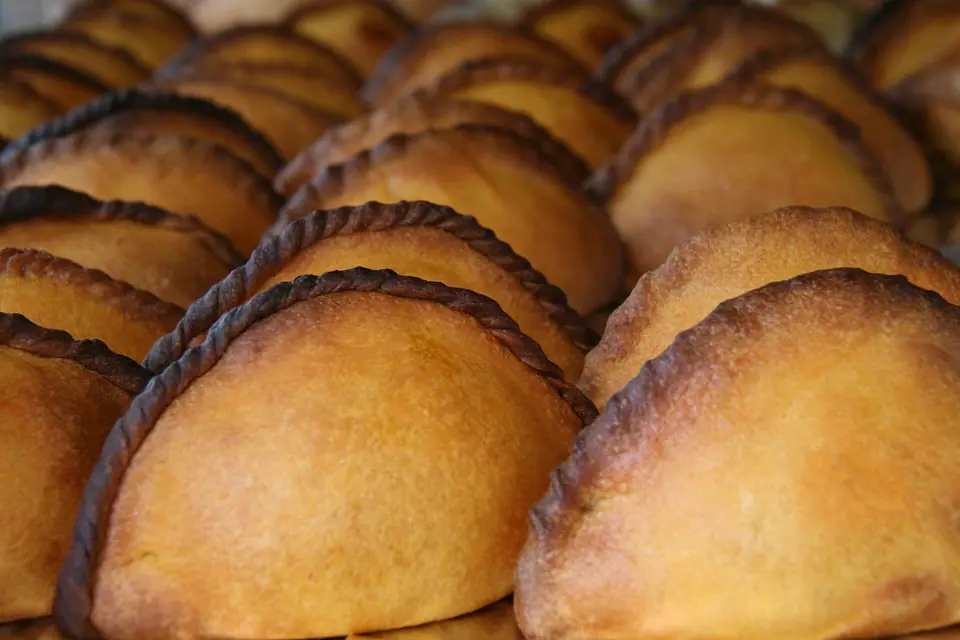
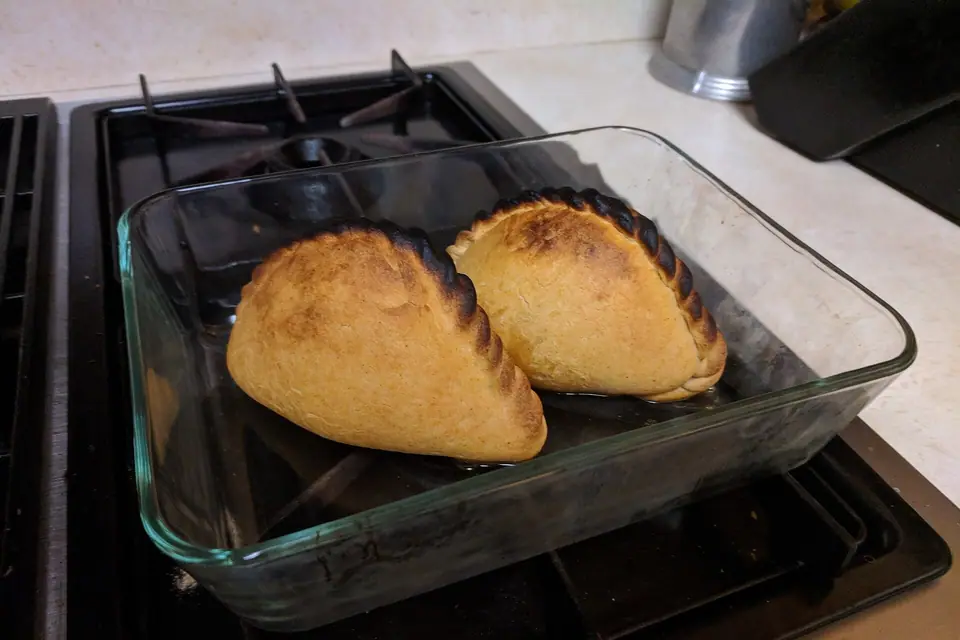
- The mid-morning Saltena (08:00 to noon): Unlike fried empanadas elsewhere in South America, the Bolivian saltena is a plump, braided, slightly sweet baked pastry filled with diced beef, pork, or chicken, potatoes, peas, green olives, raisins, hard-boiled egg, and a spiced aji sauce thickened with chilled gelatin. As the pastry bakes in a high-heat oven, the gelatin melts into piping-hot savoury broth inside the sealed crust. Hold the saltena vertically, bite off the top corner, and sip the broth as you eat so it never spills.
- Api con Pastel and Marraqueta Pacena: On chilly mornings in central markets, order a mug of steaming api (a thick, ruby-purple drink simmered from ground Andean purple corn, cinnamon, cloves, sugar, and orange zest, often served swirled with white corn api blanco) accompanied by a pastel, an airy, pillow-sized fried pastry puff filled with melted salty cheese and dusted with icing sugar. At bakeries, look for the crisp, crusted oblong bread roll known as the marraqueta pacena, officially declared Cultural Heritage of La Paz.
Evening Street Stalls and Almuerzo Classics: Anticuchos, Plato Paceno and Sopa de Mani
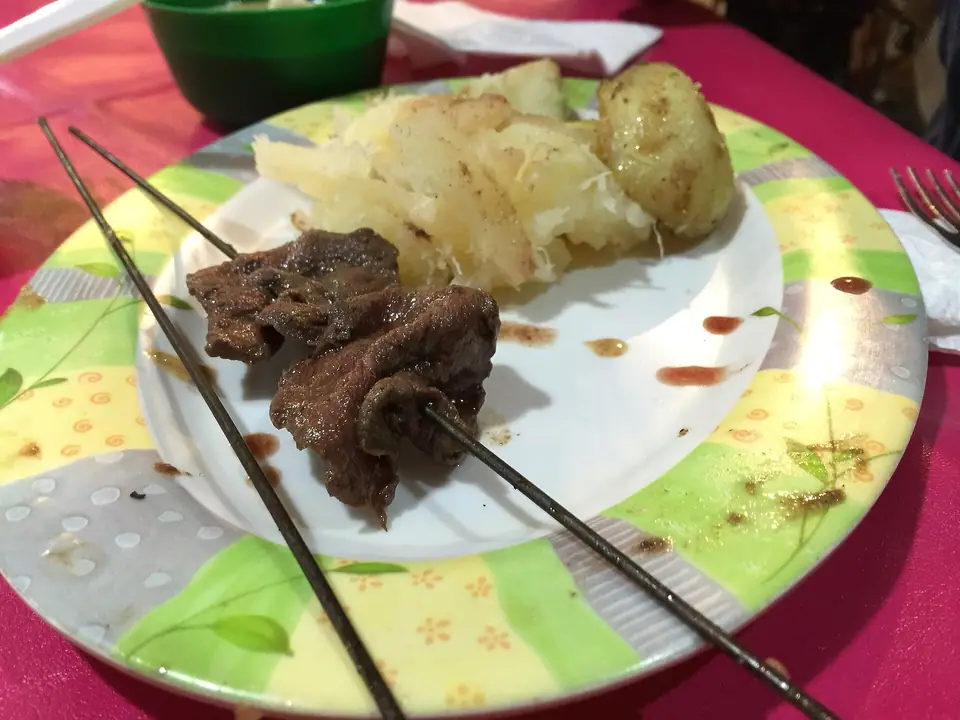
As dusk falls around Plaza Abaroa in Sopocachi and along Avenida Arce, charcoal braziers flare up at pavement stalls manned by anticucheras. Bolivian anticuchos de corazon thread paper-thin ribbons of marinated beef heart onto metal skewers capped with a small boiled Andean potato; seared over open flames until smoky and tender, they are served on small plates drenched in warm, fiery spicy peanut sauce (aji de mani).
Plato Paceno, Fricase, Llajwa and Singani Chuflay
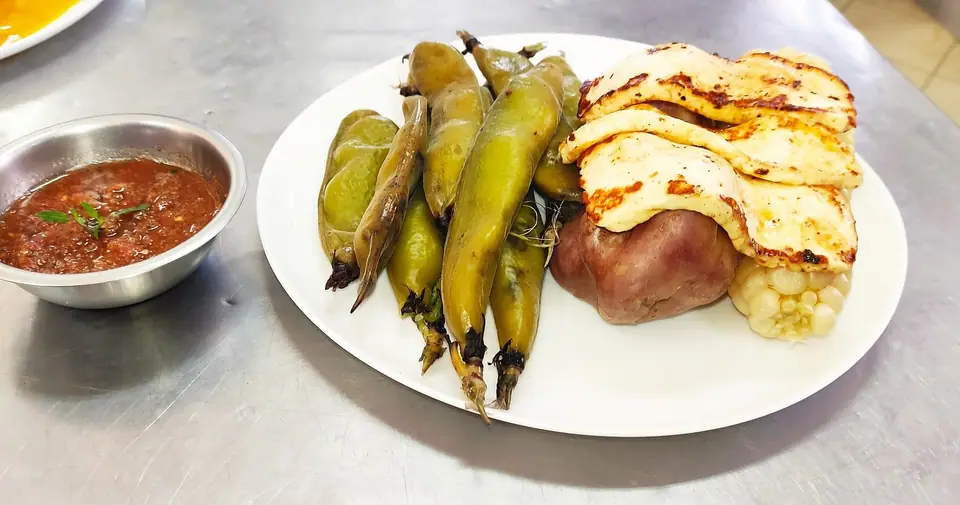
At midday almuerzo restaurants, two highland staples lead the menu: plato paceno (born as a meatless sustainment dish during the 1781 indigenous siege of La Paz and combining giant boiled kernels of sweet choclo corn, steamed broad fava beans in their pods, unpeeled Andean potatoes, a thick slab of pan-fried queso criollo sheep's cheese, and optionally a seared beef steak) and sopa de mani (a velvety soup of ground raw peanuts simmered with beef ribs, peas, and carrots and crowned with crisp shoestring potato fries). Every table sets out a bowl of llajwa, a fresh stone-ground salsa of hot locoto chilies, tomatoes, and aromatic quirquina leaves. Toast the meal with a Chuflay, Bolivia's signature highball mixing ginger ale, fresh lime, and Singani, a floral grape brandy distilled exclusively from Muscat of Alexandria grapes grown at elevations above 1,600 metres in the southern Bolivian valleys.
Traveller tips
Real advice from people who have been to What to Eat in La Paz: Saltenas, Anticuchos, Plato Paceno and Singani. Every tip is read by our team before it goes live.
No tips yet. Been here? Yours could be the first.
Thank you! Your tip will appear here after a quick review.
More in La Paz
Continue exploring La Paz with related neighbourhood, food, and planning guides

Best Time to Visit La Paz: Dry Andean Winter Skies, Gran Poder and Climate Normals
La Paz, Bolivia
Where to Stay in La Paz: Sopocachi, the Historic Centre and Lower-Altitude Zona Sur
La Paz, Bolivia

3-Day La Paz Itinerary: Historic Canyon, Mi Teleferico, El Alto and Tiwanaku
La Paz, Bolivia
Plaza Murillo: The Cathedral Basilica, Palacio Quemado and Clock of the South
La Paz, Bolivia
