


























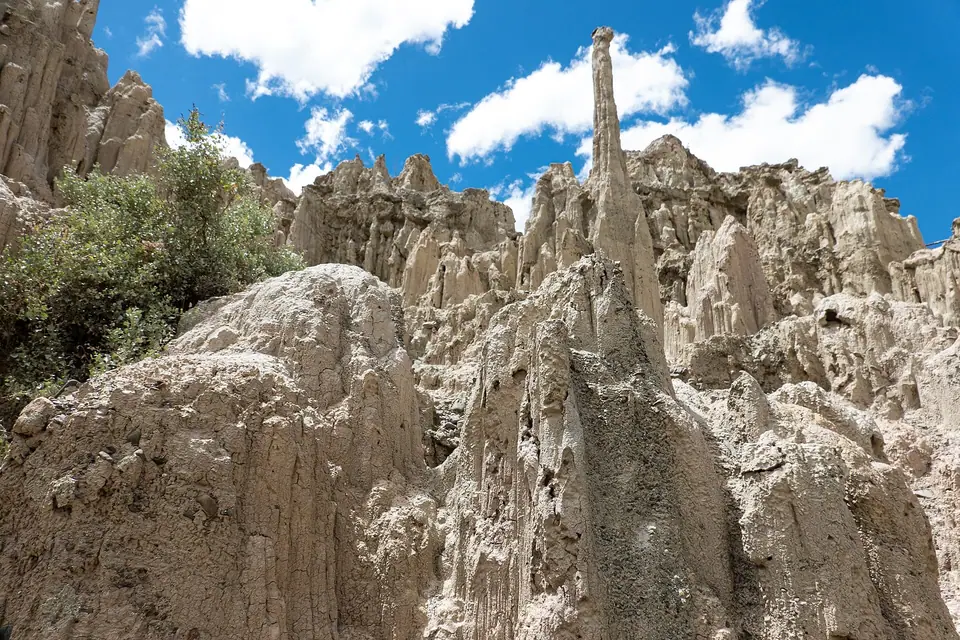
Valle de la Luna (Moon Valley) and Mount Chacaltaya (5,395 m)
Pair two dramatic geological landscapes on the edges of La Paz: the eroded clay spires of Valle de la Luna at 3,400 metres and the 5,395-metre Andean ridge of Mount Chacaltaya.
Within thirty to ninety minutes of downtown La Paz lie two contrasting geological worlds separated by nearly 2,000 vertical metres of elevation: the sun-baked clay badlands of Valle de la Luna in the warm southern canyon at 3,400 metres, and the glaciated granite and slate peaks of the Cordillera Real at Mount Chacaltaya (5,395 metres) in the north. Many guided tours pair both landscapes in a single day, or you can visit Valle de la Luna independently via the Green Line of Mi Teleferico on Day 2 of our 3-day La Paz itinerary.
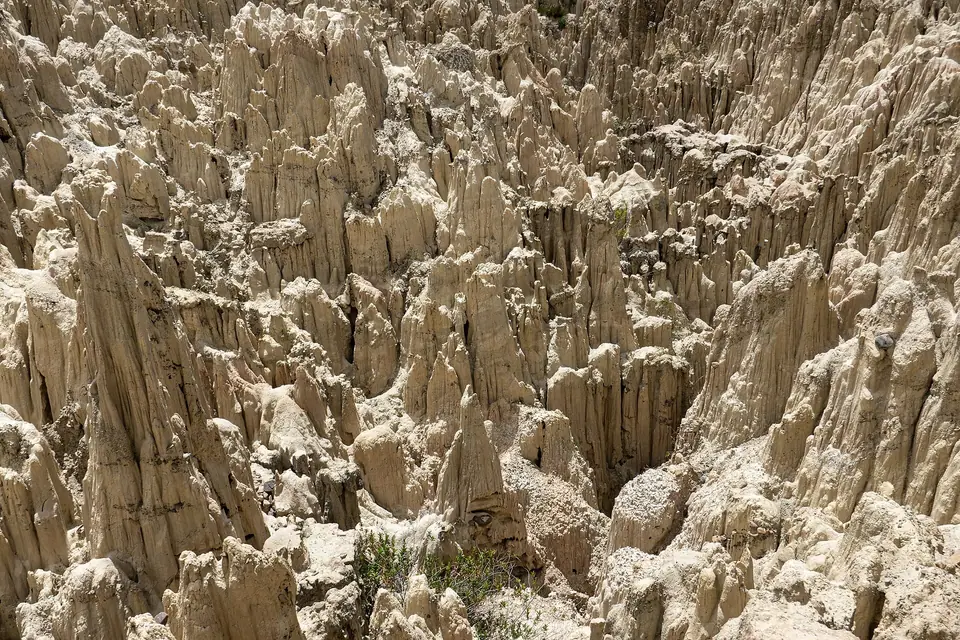
Valle de la Luna (Killa Qhichwa) in Mallasa (3,400 Metres)
Located 10 kilometres southeast of central La Paz just beyond Zona Sur in the district of Mallasa, Valle de la Luna (known in Quechua and Aymara as Killa Qhichwa) is a 15-hectare municipal reserve where ancient mountains of clay and friable sandstone rather than solid rock have been carved by wind and summer cloudbursts into a dense forest of tall stalagmite-like spires (huayracas), narrow slot chasms, and natural bridges. Mineral shifts of iron, quartz, and aluminium tint the pinnacles cream, ochre, terracotta, and violet.
The reserve received its name in 1969 after Apollo 11 commander Neil Armstrong visited La Paz shortly after walking on the moon and remarked that the eroded canyon floor reminded him of the lunar landscape. Two well-marked walking trails, the 15-minute Sendero del Lagarto and the 45-minute El Punto del Diablo (Devil's Point) loop, wind past native achuma (San Pedro) cacti and viscacha burrows; nearby to the east rises the 3,825-metre volcanic plug of the Muela del Diablo (Devil's Tooth) and the towering cathedral walls of the Valle de las Animas.
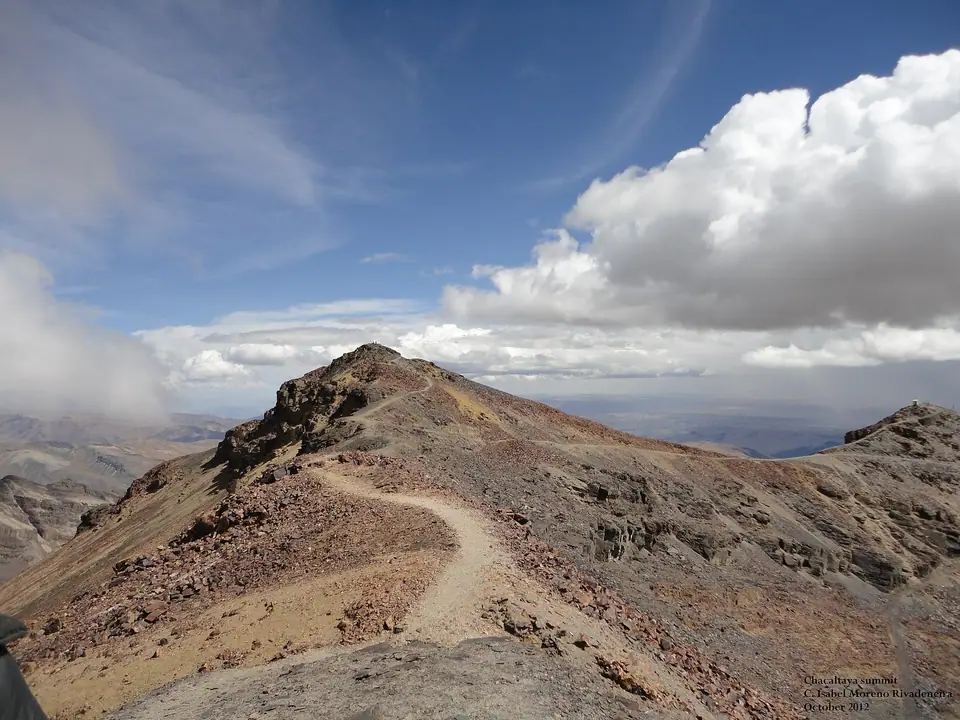
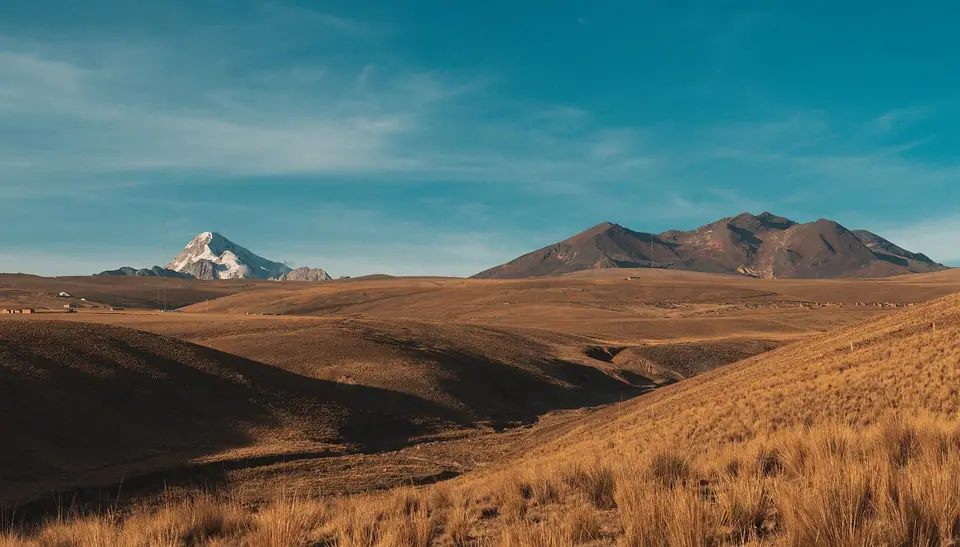
Mount Chacaltaya (5,395 Metres) and Views of Huayna Potosi
- The world's highest former ski resort (1939 to 2009): Thirty kilometres north of La Paz in the Cordillera Real rises Mount Chacaltaya (5,395 metres / 17,700 feet; meaning "Bridge of Winds" in the pre-Inca Mollo language and "Cold Road" in Aymara). In 1939, members of the Club Andino Boliviano rigged South America's first surface ski tow on its 18,000-year-old glacier using a repurposed Ford automobile engine, making Chacaltaya the highest lift-served ski area on earth until climate warming caused the glacier to vanish completely in 2009.
- The 5,240-metre Cosmic-Ray Observatory and Summit Ridge: A winding 1930s mountain road climbs past multicolored mineral lagoons to the Chacaltaya Astrophysical Observatory at 5,240 metres (established in 1942 and famous in physics history as the site where Cecil Powell's team discovered the subatomic pion meson in cosmic rays in 1947, earning the 1950 Nobel Prize in Physics) and stops at the historic clapboard ski refuge at 5,220 metres. From the refuge, a slow 30-minute walk up a 175-vertical-metre shale path reaches the 5,395-metre summit ridge, revealing an unforgettable close-up view of the 6,088-metre ice pyramid of Huayna Potosi, Mount Illimani, and the distant shimmer of Lake Titicaca. Only attempt Chacaltaya after spending at least two nights acclimatising above 3,500 metres.
Traveller tips
Real advice from people who have been to Valle de la Luna (Moon Valley) and Mount Chacaltaya (5,395 m). Every tip is read by our team before it goes live.
No tips yet. Been here? Yours could be the first.
Thank you! Your tip will appear here after a quick review.
More in La Paz
Continue exploring La Paz with related neighbourhood, food, and planning guides

Plaza Murillo: The Cathedral Basilica, Palacio Quemado and Clock of the South
La Paz, Bolivia
Basilica of San Francisco and the Witches' Market (El Mercado de las Brujas)
La Paz, Bolivia
Calle Jaen Museums, Casa de Murillo and MUSEF in the Casco Viejo
La Paz, Bolivia
Mi Teleferico Cable Car Lines and Mirador Killi Killi Viewpoint
La Paz, Bolivia
