




Alfama Walking Guide
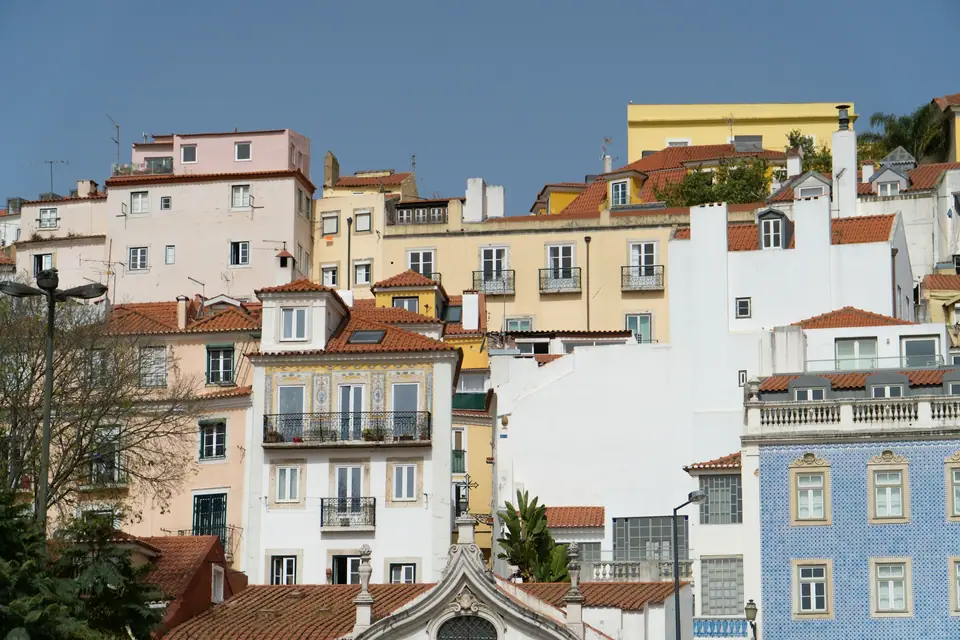
Alfama survived the 1755 earthquake better than the rest of the city because it sits on solid rock, which is why its layout is still the tangle of lanes the Moors left behind. The name comes from the Arabic al-hamma, the baths or springs. Streets become stairways, stairways become someone's front step, and maps are only a rough guide. This route mostly goes downhill and takes about two and a half hours with stops.
- Miradouro da Senhora do Monte. Start high, in Graça, at the city's highest viewpoint. You see the castle, the Baixa and the river laid out in front of you. The Graça funicular, back in service since April 2026, saves the climb from Martim Moniz.
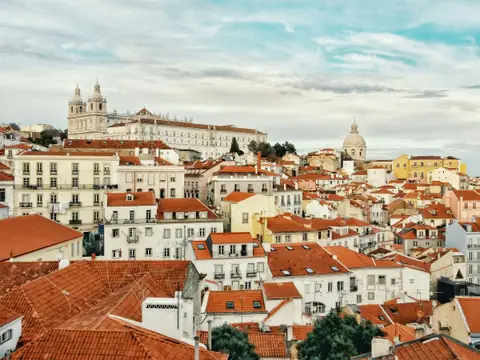
- Igreja de São Vicente de Fora. Walk downhill to this white church and monastery. The cloisters are lined with blue and white tile panels, including a series of La Fontaine's fables, and the roof terrace looks straight over Alfama to the river.
- Feira da Ladra. On Tuesday and Saturday mornings, the "thieves' market" spreads over Campo de Santa Clara: old tiles, vinyl, army jackets, broken clocks. Behind it stands the white dome of the National Pantheon.
- Largo das Portas do Sol. Cut across to this terrace, one of the two classic Alfama viewpoints, with the roofs and the dome of São Vicente below you.
- São Jorge Castle (optional). From here it's a short climb up to the castle gate. Allow an hour or more if you go in, and expect a queue.
- Miradouro de Santa Luzia. Just below Portas do Sol, a small garden with tiled walls, a pergola of bougainvillea and a tile panel of Praça do Comércio before the earthquake.
- The lanes below. Now drop down through the heart of Alfama by Beco do Carneiro, Rua de São Miguel and Largo de São Rafael, where part of a Moorish wall still stands. Look for the small tiled images of Saint Anthony above doorways, and grilled sardine smoke from the doorway kitchens in summer.
- The Sé. Lisbon's cathedral, a fortress-like Romanesque church begun in the 12th century. Tram 28 squeals past its front door.
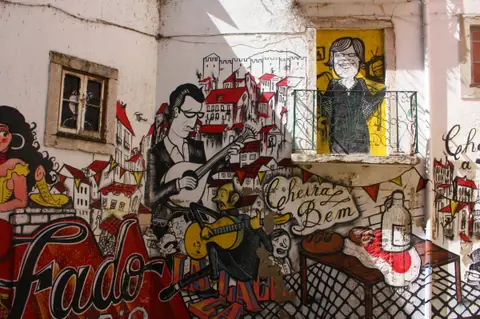
- Museu do Fado. Finish at the bottom on Largo do Chafariz de Dentro, where the fado museum explains the music, its guitars and its great singer, Amália Rodrigues.
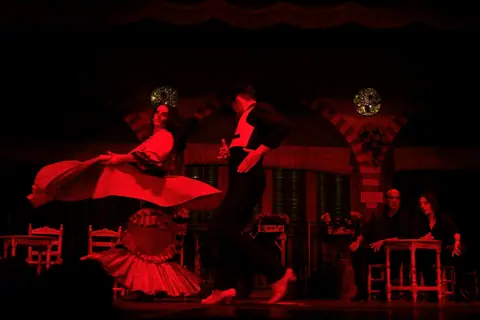
Then stay for dinner. Fado houses open their doors in the evening, and in the smaller ones the room goes silent and the lights dim when a singer starts. You're expected to stop talking, and to order a proper meal. In June, during the Santo António festival in our best time to visit guide, the same streets become one long party. If you'd like to sleep here, our where to stay guide explains the trade-off with the stairs.