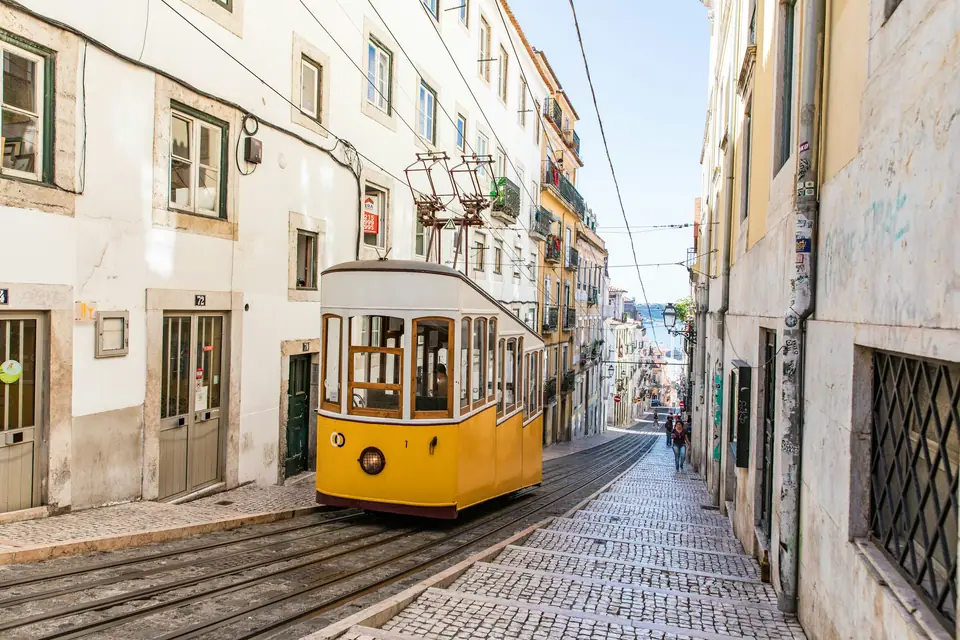
Photo by André Lergier on Unsplash
12 Best Things to Do in Lisbon: Monuments, Miradouros & Tascas
Our ranked guide to Lisbon's essential monuments, five-century tile collections, sunset viewpoints, river ferries, and custard tart bakeries.
Lisbon does not overwhelm you with a single cavernous megamuseum that takes an entire day to cross. Instead, its magic lies in how seamlessly grand sixteenth-century architecture blends into open-air viewpoints, tiled convent cloisters, and riverside pastry counters. In a single day you can stand beneath limestone vaults funded by Vasco da Gama's spice voyages and ride a commuter ferry across the wide Tagus estuary. By late afternoon you can watch the sun sink behind the 25 de Abril Bridge with a glass of wine from a wooden park kiosk (quiosque). Below are the twelve best experiences in the capital, ranked for a first visit.
The Top 4 Monumental & Historic Sights
Start your trip with these four architectural and historic landmarks along the northern shore of the Tagus.
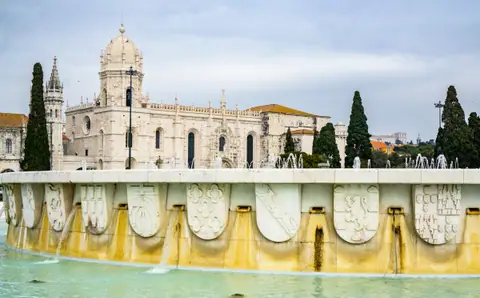
- The Jerónimos Monastery, Belém Tower & Pastéis de Belém (1400). Set along the breezy riverfront six kilometres west of the Baixa, Belém preserves the finest monuments of Portugal's Age of Discovery. Built beginning in 1501 under King Manuel I, the UNESCO-listed Mosteiro dos Jerónimos (zheh-ROH-nee-moosh) features a two-storey limestone cloister carved like delicate sea lace. Next door, the adjacent Church of Santa Maria de Belém is free to enter and holds the marble tombs of Vasco da Gama and poet Luís de Camões. Down by the water stands the 1514 to 1519 Torre de Belém, reopened in May 2026 under timed half-hourly entry slots. Three minutes away sits the 1837 Pastéis de Belém bakery, where warm custard tarts are served with cinnamon shakers in tiled back rooms.
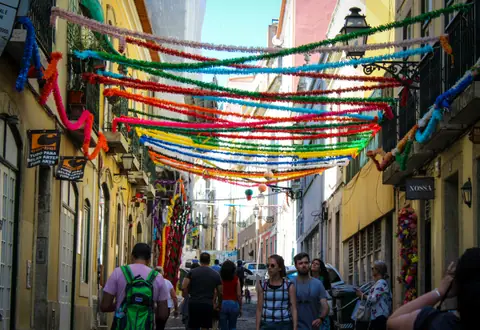
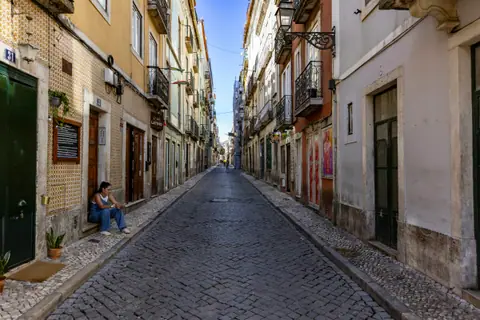
- Getting Lost in Moorish Alfama & the Sé Cathedral (1100). Because its foundations rest on dense Miocene bedrock, Alfama withstood the 1755 earthquake that flattened downtown Lisbon. Its stepped alleys, wrought-iron balconies hung with drying laundry, and tiny plazas follow the medieval Moorish street plan. Start high at Graça and wind downhill past the tile-lined terraces of Portas do Sol and Santa Luzia. At the bottom rises the twin-towered 1147 Sé de Lisboa (Lisbon Cathedral), where vintage yellow trams curve past the Romanesque rose window.
- Castelo de São Jorge (Saint George's Castle, 1100-129). Crowning Lisbon's highest historic hill at 110 metres above the Tagus, these eleven crenellated towers were fortified by the Moors in the tenth and eleventh centuries. King Afonso Henriques captured the citadel during the Reconquista in 1147. The interior ruins are modest, yet walking the stone ramparts beneath umbrella pines where wild peacocks roost offers a commanding 360-degree panorama over the Baixa and the river. Arrive near opening time or two hours before sunset to beat mid-morning ticket queues.
- Museu Nacional do Azulejo (National Tile Museum, 1900-221). Housed inside the 1509 Convent of Madre de Deus (founded by Queen Leonor 2.5 kilometres east of Santa Apolónia), this is our single favourite museum in Lisbon. Its quiet cloisters trace five hundred years of Portuguese ceramic tiles (azulejos, ah-zoo-LEH-zhoosh) from sixteenth-century Moorish geometric patterns to baroque blue-and-white panels and a gilded Rococo chapel. Upstairs hangs the 23-metre-long Grande Panorama de Lisboa (circa 1700). That 1,300-tile mural depicts fourteen kilometres of the Lisbon skyline before the 1755 earthquake destroyed it.
Squares, Museums, Miradouros & Fado (5 to 8)
Balance the headline monuments with grand Pombaline plazas, world-class art collections, and evening music.
- The Baixa Grid, Rua Augusta Arch & Praça do Comércio (1100). Stroll south from wave-patterned Rossio Square down pedestrian Rua Augusta and pass beneath the nineteenth-century stone triumphal arch. A lift inside the arch carries visitors up to the rooftop viewpoint beside the statues of Vasco da Gama and the Marquis of Pombal. Beyond the arch opens sunlit Praça do Comércio, framed on three sides by saffron-yellow Pombaline ministries and the marble river steps of Cais das Colunas.
- Museu Calouste Gulbenkian & Modern Collection (1069-078). Set inside a tranquil modernist park near Praça de Espanha (Metro: São Sebastião), Armenian oil philanthropist Calouste Gulbenkian's 6,000-piece private bequest spans Egyptian alabaster, Islamic ceramics, Rembrandt, Rubens, and Art Nouveau René Lalique jewellery. While the 1969 main founders' building undergoes phased renewal, the newly reopened Centro de Arte Moderna (CAM) pavilion redesigned by Japanese architect Kengo Kuma and the shaded gardens remain a highlight. Check current gallery access on gulbenkian.pt before visiting.
- Golden Hour at the Miradouros (Senhora do Monte & Santa Luzia). Every late afternoon, Lisbon gathers on its hilltop terraces. Miradouro da Senhora do Monte in Graça sits highest and looks straight across the castle to the river. Santa Luzia in Alfama frames the Tagus with blue tile panels and purple bougainvillea. Across the valley between Bairro Alto and Príncipe Real, two-tiered São Pedro de Alcântara looks back east toward the illuminated castle walls.
- Hearing Live Acoustic Fado in Alfama or Bairro Alto. Recognised by UNESCO as Intangible Cultural Heritage, Fado expresses saudade (longing and fate) through a solo voice accompanied by the pear-shaped twelve-string Portuguese guitar and a classical six-string viola de fado. Visit the Museu do Fado at the foot of Alfama by day, then book an evening table at a traditional casa de fado in Alfama or Bairro Alto.
Creative Hubs, River Ferries & Markets (9 to 12)
Round out your itinerary with converted industrial spaces, a short river crossing, and lively food halls.
- LX Factory & Ler Devagar Bookshop in Alcântara (1300-501). Directly beneath the towering steel pillars of the 25 de Abril Bridge, an 1846 Companhia de Fiação e Tecidos Lisbonense textile complex now operates as a cobbled street of independent design studios, rooftop bars, and street murals. Step inside Ler Devagar ("Read Slowly"), a multi-level bookshop built around a giant three-storey rotary printing press with a flying sculpture bicycle overhead.
- A Commuter Ferry from Cais do Sodré to Cacilhas (Almada). Use your Navegante card to board the green-and-orange Transtejo commuter ferry at Cais do Sodré for the ten-minute crossing of the Tagus to Cacilhas. Walk ten minutes south along the abandoned brick warehouses of the Cais do Ginjal to the riverside seafood tables at Ponto Final for grilled sea bass facing Lisbon.
- Feira da Ladra Flea Market & the National Pantheon. Every Tuesday and Saturday from morning until mid-afternoon, Lisbon's oldest flea market (dating to the thirteenth century) fills Campo de Santa Clara behind the soaring white marble dome of the Panteão Nacional.
- Time Out Market vs Traditional Neighbourhood Tascas. Inside the 1882 iron-domed Mercado da Ribeira at Cais do Sodré, the food hall gathers two dozen kiosks run by some of Portugal's top Michelin-starred chefs under one roof. Go outside peak lunch and dinner rushes to find a seat, and balance it with slow lunches at family-run tascas in Mouraria or Campo de Ourique.
With a third day in the capital, take the morning Rossio train to the Romantic hilltop palaces of Sintra, as mapped out in our 3-day Lisbon itinerary.
Where it is
- 1Lisbon
- Lisbon Humberto Delgado Airport (LIS) · about 7 km from Lisbon in a straight line
- Directions in Google Maps
Stations and taxi ranks: OpenStreetMap. Airports: OurAirports. Distances are in a straight line.
Traveller tips
Real advice from people who have been to Lisbon. Every tip is read by our team before it goes live.
No tips yet. Been here? Yours could be the first.
Thank you! Your tip will appear here after a quick review.
More in Lisbon
Continue exploring Lisbon with related neighbourhood, food, and planning guides