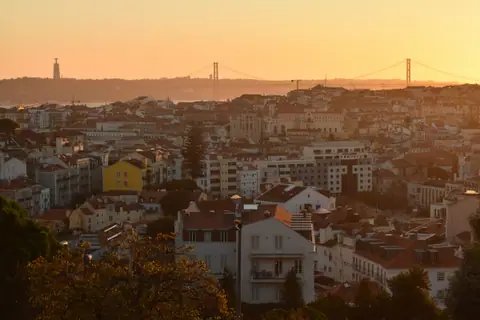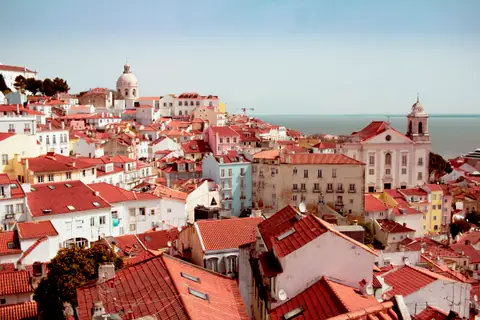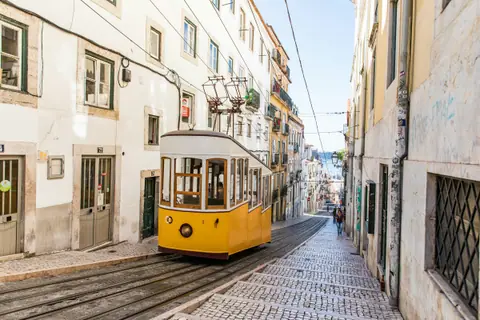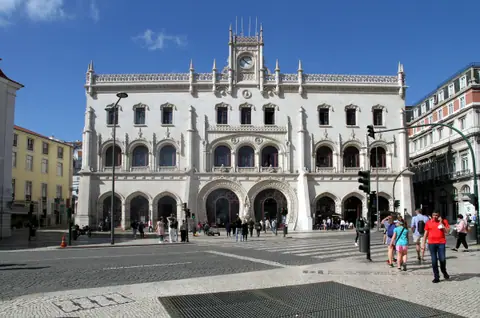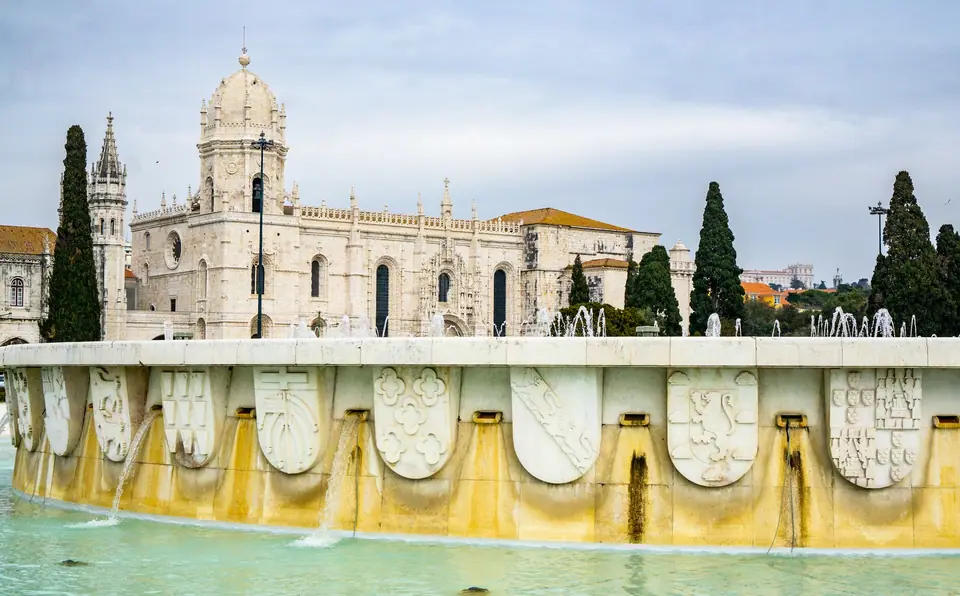
Photo by VINCENZO INZONE on Unsplash
Belém Guide: Jerónimos Monastery, Belém Tower & Custard Tarts
Everything you need for a morning in Belém: beating the Jerónimos cloister queue, the 2026 Belém Tower timed-entry rules, and eating warm tarts inside.
Six kilometres west of downtown Rossio along the northern shore of the Tagus estuary lies Belém (beh-LEHM, the Portuguese name for Bethlehem, postcode 1400). During the fifteenth and sixteenth centuries, this sheltered beach of Restelo served as the royal shipyard and embarkation port for the caravels of the Portuguese Age of Discovery. From here Vasco da Gama set sail for India in July 1497, and Pedro Álvares Cabral departed for Brazil in 1500. To celebrate these voyages, King Manuel I funded the waterfront monuments using the Vintena da Pimenta, a five-percent royal tax on Eastern spices and gold. Masons carved the golden local limestone in the exuberant Manueline (Portuguese Late Gothic) style. Because Belém also escaped the 1755 earthquake unscathed, it deserves at least four to five hours of your trip.
Getting to Belém: Train vs Tram 15E
Two public transport routes run west along the Tagus riverfront from central Lisbon to Belém.
- CP Cascais Line Train (7 Minutes) / Tram 15E (30 Minutes): Most guidebooks tell visitors to board Tram 15E at Praça da Figueira or Praça do Comércio. While modern articulated Articulado trams and buses run frequently along the riverfront, Tram 15E gets jammed with tourists and targeted by pickpockets after 09:00. A faster, calmer, and more spacious alternative is the CP suburban train on the Cascais Line departing from Cais do Sodré Station (terminus of the Metro Green Line). Trains depart every 15 to 20 minutes and take just 7 minutes along the water to Belém Station. They accept the exact same Navegante Zapping card or Lisboa Card (see our getting around Lisbon guide). From Belém Station, walk over the pedestrian footbridge by the MAAT straight to the monastery gardens.
Mosteiro dos Jerónimos: Church vs Cloister
King Manuel I founded the UNESCO-listed Jerónimos Monastery (Mosteiro dos Jerónimos, zheh-ROH-nee-moosh) in 1501. It stands on the site of the small Ermida do Restelo chapel where Vasco da Gama and his crew prayed before sailing around Africa. Master architects Diogo de Boitaca and João de Castilho spent a century building it in local lioz limestone. Know before you arrive that the monument has two separate entrances and queues along its 300-metre southern facade.
- Two-Storey Cloister (Ticketed) / Church of Santa Maria (Free): The eastern door leads into the Church of Santa Maria de Belém, which is free to enter (closed on Mondays). Pause outside to admire João de Castilho's 32-metre-tall sculpted South Portal. Then step inside the cavernous hall church. Six slender octagonal stone columns fan out like palm trees into a single ribbed vault that survived the 1755 earthquake without a crack. Just inside the western nave sit the neo-Manueline stone tombs of Vasco da Gama and national epic poet Luís de Camões (author of Os Lusíadas). A separate western gate leads into the ticketed Two-Storey Cloister, a 55-by-55-metre square of lace-like limestone arches. Its columns are carved with twisted nautical ropes, sea monsters, coral, the cross of the Order of Christ, and King Manuel's armillary sphere. Purchase your ticket online in advance via the official state portal at museusemonumentos.pt (or carry an activated Lisboa Card) and arrive at opening time. Note that free Sunday admission applies solely to legal residents of Portugal.
Torre de Belém: 2026 Restoration & Quotas
Eight hundred metres west along the Tagus esplanade stands the UNESCO-listed Belém Tower (Torre de Belém). King Manuel I commissioned military architect Francisco de Arruda between 1514 and 1519 to build it to guard the mouth of the Tagus River. Built originally on a small basalt outcrop mid-stream, the four-storey rectangular keep and polygonal bastion blend Venetian loggias and Moorish domed watchtowers (guaritas). Look closely beneath the western turret to spot the earliest stone carving of an Indian rhinoceros in Western European art. Masons sculpted it after a live rhino arrived for King Manuel I from Gujarat in 1515.
Following a comprehensive year-long structural and stone-cleaning restoration, the Belém Tower reopened on 27 May 2026 under a strict new visitor management system. Entry inside the fortress is now capped at roughly 900 visitors per day across mandatory half-hourly timed slots. That cap prevents bottlenecks on the narrow one-way spiral staircase. Red and green traffic lights regulate the flow between the Governor's Hall, King's Chamber, Chapel, and top terrace. Book your half-hour slot ahead at museusemonumentos.pt. If interior slots are sold out on your day, walk the exterior boardwalk around the moat at high tide for free photographs.
Pastéis de Belém (1837): Takeaway vs Salons
Three minutes' walk east of the monastery along Rua de Belém stands the blue-awninged storefront of Pastéis de Belém (Antiga Confeitaria de Belém). After the Liberal Revolution of 1834 dissolved Portugal's religious orders and closed the Jerónimos Monastery, bakers from the monastery began selling warm egg-custard tarts next to a sugar refinery in 1837. They used the secret monastic receita secreta passed down to only a handful of master pastry chefs in the Oficina do Segredo today.
Do not be intimidated by the 40-person queue on the pavement outside: that line is solely for takeaway boxes. Instead, walk straight through the side door into the vast labyrinth of blue-and-white tiled dining salons seating over 400 guests at the back. Table service is remarkably fast. You eat your pastéis de Belém fresh from the oven while the puff pastry is crisp and the custard is warm. Dust them at the table with Ceylon cinnamon and icing sugar, and order a sharp espresso (bica).
Padrão dos Descobrimentos, MAAT & Coaches
Complete your riverfront walk with these three nearby sights between the monastery and the train station.
- Padrão dos Descobrimentos (Monument to the Discoveries, 1960). Rising 56 metres like the stone prow of a caravel directly across the marina, this monument features thirty-three sculpted historical figures led by Prince Henry the Navigator. Before the entrance lies a 50-metre-wide marble compass rose (Rosa dos Ventos) gifted by South Africa in 1960, mapping Portuguese oceanic voyages.
- MAAT (Museum of Art, Architecture and Technology). Designed by British architect Amanda Levete in 2016 beside the 1908 red-brick Tejo Power Station, this undulating white building is clad in nearly 15,000 three-dimensional crackle-glaze ceramic tiles. You can climb onto its sweeping walkable roof free of charge for sunset views toward the 25 de Abril Bridge.
- Museu Nacional dos Coches (National Coach Museum). Located beside Belém train station, this collection houses seventy ornate seventeenth- to nineteenth-century royal ceremonial carriages, including the gilded baroque coaches built in Rome for King João V's 1716 papal embassy. Pair your morning in Belém with lunch at nearby LX Factory as structured in Day 2 of our 3-day Lisbon itinerary, and bring a sun hat from our what to wear guide.
Where it is
- 1Belém
- Lisbon Humberto Delgado Airport (LIS) · about 11 km from here in a straight line
- Directions in Google Maps
Stations and taxi ranks: OpenStreetMap. Airports: OurAirports. Distances are in a straight line.
Traveller tips
Real advice from people who have been to Lisbon. Every tip is read by our team before it goes live.
No tips yet. Been here? Yours could be the first.
Thank you! Your tip will appear here after a quick review.
More in Lisbon
Continue exploring Lisbon with related neighbourhood, food, and planning guides