


























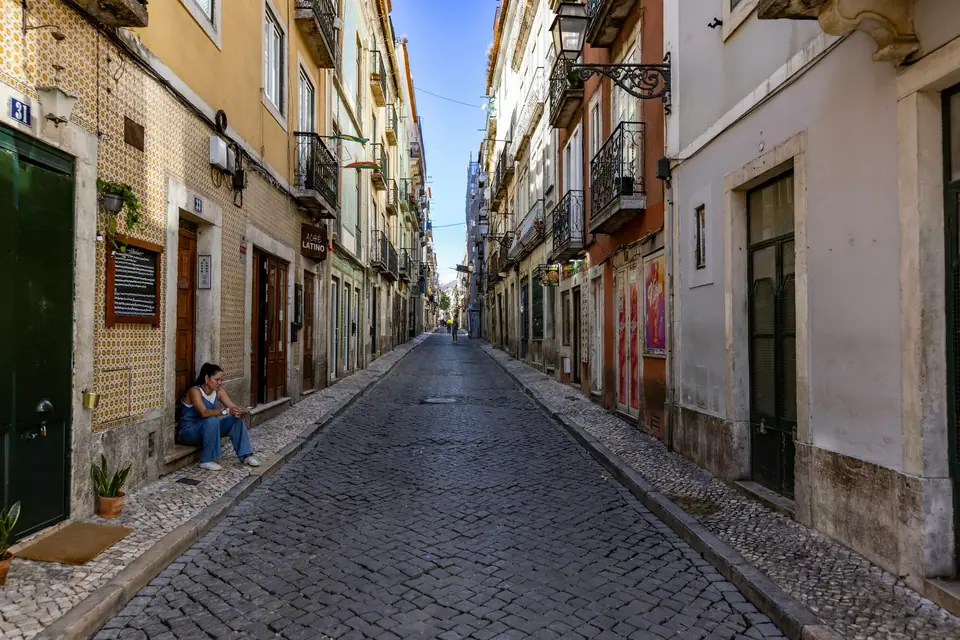
Photo by Mick Haupt on Unsplash
What to Wear in Lisbon: Calçada Shoes, Wind Layers & Packing List
Why lugged rubber soles are essential on Lisbon's hand-laid limestone cobbles, how to layer for Atlantic miradouro breezes, and what extra layer Sintra needs.
Before you pack a single outfit for Lisbon, turn your shoes upside down and inspect the tread. Almost every pavement, plaza, and hillside stairway in historic Lisbon is paved with calçada portuguesa (kal-SAH-dah por-too-GEH-zah). Master pavers (calceteiros) lay these hand-cut cubes of white Jurassic limestone and black basalt in geometric waves and rosettes. They are a UNESCO-recognised national art form, and after centuries of footsteps the white limestone cubes are polished to a mirror-smooth finish. On a 12-percent downhill slope in Alfama or Bairro Alto, flat leather soles, hard plastic heels, and smooth sandals slide like ice skates even on a dry afternoon. After an autumn rain shower or morning ocean mist, the limestone cubes become slick. Your footwear is the single most important packing decision of your trip.
Footwear: Lugged Rubber Soles vs Smooth Soles
Choosing the right outsole keeps your knees and ankles comfortable across steep stairways and riverfront walks.
- Grippy Rubber-Soled Trainers / Smooth Leather Soles & Stilettos: Pack broken-in running trainers, low-profile trail walkers, or cushioned lifestyle sneakers with a soft, deeply grooved rubber outsole. If you prefer sandals in summer, choose sports or leather walking sandals with an ankle strap and a textured rubber outsole. Avoid loose flip-flops that twist on uneven cobbles. Leave stiletto heels at home completely. Thin heels sink between the gaps of the limestone cubes and snap on the steep staircases of Chiado and Alfama. For smarter evening dinners in Príncipe Real or a fado house, bring rubber-soled Chelsea boots, wedge espadrilles with vulcanised rubber bottoms, or clean leather trainers.
Atlantic Winds & the Sintra Microclimate
Lisbon sits on the wide tidal estuary of the Tagus just fifteen kilometres from the open Atlantic. Temperatures shift noticeably between a sheltered sunny square at 14:00 and an exposed hilltop viewpoint at 19:30.
- Sunny Valleys / Breezy Evening Miradouros: At midday between May and October, the sun reflects strongly off the white limestone pavements of the Baixa and Belém. By late afternoon, however, the northern Atlantic wind (the Nortada) picks up across the river and hilltop terraces. Even in July and August, carry a light denim jacket, linen overshirt, or fine cotton cardigan in your daypack. You will want it for sunset drinks at Miradouro da Senhora do Monte or the ten-minute ferry crossing to Cacilhas.
- Central Lisbon / The Sintra Microclimate: Never dress for a Sintra day trip based solely on the morning sky over downtown Lisbon. The forested granite ridge of the Serra de Sintra rises to 528 metres right against the Atlantic coast. It traps moist ocean air into morning fog and brisk winds around Pena Palace and the Moorish Castle. Sintra regularly runs 3°C to 5°C cooler than central Lisbon. Even on a warm 26°C summer morning in the Baixa, pack a windproof shell or light fleece jumper. Wear trainers with strong grip for the damp mossy paths of Quinta da Regaleira.
Seasonal Wardrobe: Summer Sun vs Winter Rain
Match your layers to the month of your flight so you are ready for both Atlantic sunshine and passing showers.
- Late Spring & Summer (May to September). Pack breathable linen and lightweight cotton shirts, shorts, chinos, and midi dresses. The riverfront walk between the Jerónimos Monastery, the Padrão dos Descobrimentos, and the Belém Tower has almost zero tree shade. Bring a snug sun hat that will not blow off in the river breeze, UV sunglasses, and high-SPF sunscreen. Add swimwear and a lightweight microfibre towel if you plan a coastal train afternoon to the beaches of Carcavelos or Cascais.
- Autumn & Early Spring (October, November, March & April). Expect warm sunny spells mixed with passing Atlantic rain fronts (see our seasonal weather guide). Dress in three light layers: a breathable cotton T-shirt, a merino jumper or sweatshirt, and a packable waterproof hooded rain jacket. A wind-resistant compact umbrella helps in the flat Baixa, though a hooded rain shell works far better on windy hilltop viewpoints and narrow Alfama alleys.
- Winter (December to February). Daytime temperatures stay mild at 14°C to 16°C, so you do not need heavy sub-zero parkas. However, many eighteenth- and nineteenth-century Lisbon townhouses have tall single-glazed windows, stone walls, and limited indoor heating. Pack warm indoor layers, wool socks, and cosy loungewear for your hotel or apartment in the evening.
Church Modesty, Evening Style, and Daypacks
Lisbon locals (Alfacinhas) dress in neat, understated European smart-casual style. Tailored shorts and clean trainers are completely normal for daytime sightseeing. Swimwear and bare chests belong strictly on the suburban beaches of Cascais and Costa da Caparica, never on city trams or streets. In the evening, a collared linen shirt, blouse, or casual dress feels right at home for dinner in Chiado or a performance at a traditional fado house. Keep a small pack of blister plasters and a folded cotton tote in your pocket for pastry and market stops.
Essential 7-Item Lisbon Packing Checklist
Use this final checklist before zipping your suitcase for Portugal.
- Lugged rubber-soled walking shoes: essential for wet or dry calçada portuguesa cobbles.
- Windproof outer layer or light jumper: for evening miradouros, Tagus ferries, and misty mornings at Pena Palace.
- Light scarf or shawl: covers bare shoulders inside the Sé Cathedral, the Church of Santa Maria de Belém, or the Church of São Roque.
- Zipped crossbody bag or compact daypack: worn on your front when boarding crowded Tram 28E, Tram 15E, or the Rossio train.
- Snug sun hat, polarized sunglasses, and SPF 50 sunscreen: for the bright limestone glare along the Belém waterfront and castle ramparts.
- European Type C / Type F plug adapter & power bank: Portugal runs on 230V / 50Hz sockets. Digital maps and QR tickets drain phone batteries quickly across our 3-day Lisbon itinerary.
- Refillable water bottle: Lisbon tap water (supplied by EPAL) is clean, soft, and completely safe to drink. Public drinking fountains operate across the main squares and castle gardens, saving you from buying single-use plastic bottles during your walks.
Where it is
- 1Lisbon
- Lisbon Humberto Delgado Airport (LIS) · about 7 km from Lisbon in a straight line
- Directions in Google Maps
Stations and taxi ranks: OpenStreetMap. Airports: OurAirports. Distances are in a straight line.
Traveller tips
Real advice from people who have been to Lisbon. Every tip is read by our team before it goes live.
No tips yet. Been here? Yours could be the first.
Thank you! Your tip will appear here after a quick review.
More in Lisbon
Continue exploring Lisbon with related neighbourhood, food, and planning guides
Alfama & Graça Walking Guide: 9-Stop Downhill Route
Lisbon, Portugal

Sintra Day Trip from Lisbon: Rossio Train, Pena Palace & Regaleira
Lisbon, Portugal
Where to Stay in Lisbon: Baixa, Chiado, Alfama & Príncipe Real
Lisbon, Portugal

Lisbon 3-Day Itinerary: Alfama, Belém, LX Factory & Sintra
Lisbon, Portugal
