
Machu Picchu
The Inca citadel on a ridge high above the Urubamba River, reached by train through the Sacred Valley or on foot along the Inca Trail.
Quick decisions
How many days?
1 day: possible from Ollantaytambo, but it's a long day spent mostly on trains. 2 days: what we recommend, with a night in Aguas Calientes and an early entry slot. 5 to 7 days in the region: add Cusco and the Sacred Valley, which also gives your body time to adjust to the altitude.
Where should I stay?
Aguas Calientes: the night before your visit. Ollantaytambo or Urubamba: lower than Cusco and easier on the lungs for your first nights. Cusco: for the city itself, ideally once you've acclimatised. More in our where to stay guide.
Do I need a car?
No. No public road reaches Aguas Calientes, the town below the ruins. You arrive by train or on foot. In the Sacred Valley, taxis, colectivos (shared minivans) and hired drivers cover the gaps.
Best for
History lovers: an easy yes. Hikers: the Inca Trail and the mountain routes are the reason many people come. Families: the standard circuits suit children, but some hikes have a minimum age. Budget travellers: tickets, trains and buses add up fast, so this is rarely a cheap trip.
Before you go
Tickets: daily numbers are capped and each ticket is tied to one circuit and one entry hour. Passport: bring the original you booked with. Altitude: plan two easy days in the region before anything strenuous.
Getting around
Arriving: fly into Cusco. To the ruins: train to Aguas Calientes, then a shuttle bus up the switchbacks, or an hour and a half of stone steps on foot. Full details in our getting there guide.
Continue your trip
Cusco is the obvious next stop. From there, Lake Titicaca at Puno is a long day by bus or scenic train, and Lima is a short flight away.
Overview
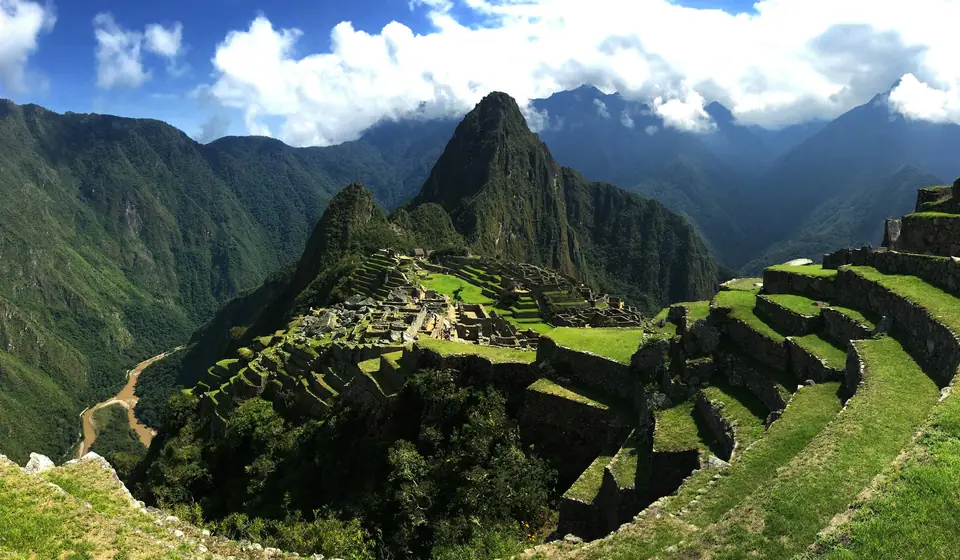
Machu Picchu sits on a saddle between two peaks, about 2,430 metres up, with the Urubamba River curling around three sides far below. The Inca built it in the 15th century, most likely as a royal estate for the emperor Pachacuti, and the Spanish never found it. What you walk through today is a complete small city: temples, houses, fountains, and terraces stepping down the slope so steeply that you wonder how anyone farmed them.
The photos don't prepare you for the setting. Clouds pour over the ridges in the morning and the green mountains close in on every side. Getting here takes planning, though, because entry is by timed ticket and fixed route. Start with our Machu Picchu travel guide.
Getting there
Everyone flies into Cusco first. From there the train runs down the Urubamba valley to Aguas Calientes, usually boarding at Ollantaytambo, and a shuttle bus climbs the last stretch to the gate. Our getting there guide compares PeruRail and Inca Rail, the budget route and walking up.
Where to stay
Most itineraries mix three bases: the Sacred Valley for acclimatising, Aguas Calientes for the night before your visit, and Cusco for the city itself. Only one hotel sits beside the ruins. Our where to stay guide explains which base suits which kind of trip.
Things to do
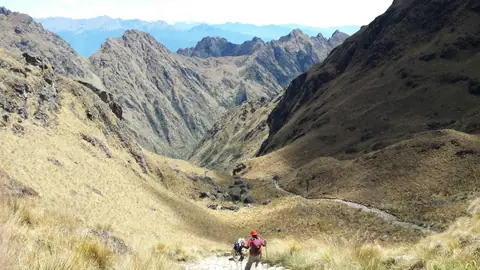
The citadel is only part of it. There are mountain hikes to Huayna Picchu and Machu Picchu Mountain, the Sun Gate, the Inca Bridge, and the classic four-day trek. Start with our things to do list, then read the tickets guide before you pick a circuit, and the Inca Trail guide if you want to arrive on foot.
Food and drink
You can't eat inside the site, so breakfast properly in Aguas Calientes. The town's restaurants are pricey and uneven, but trucha (river trout), lomo saltado (beef stir-fried with onions, tomato and chips) and a cup of mate de coca, tea made from coca leaves, are safe orders. Save the more adventurous cooking, cuy (roast guinea pig) included, for Cusco.
Culture
Machu Picchu was abandoned around the time of the Spanish conquest and stayed off the colonial maps. Local farmers always knew it was there. The American explorer Hiram Bingham was led up in 1911 and made it famous abroad. Today it's a UNESCO World Heritage Site and a national symbol, and Quechua, the Inca language, is still spoken in the valley below.
In-depth Machu Picchu guides
Practical guides for planning your visit.
- Machu Picchu Travel Guide: What to Know Before You Go
- Best Things to Do at Machu Picchu
- How to Get to Machu Picchu
- Best Time to Visit Machu Picchu
- What to Wear to Machu Picchu
- Inca Trail Guide: Permits, Routes and What to Expect
- Machu Picchu Tickets Guide: Circuits, Routes and How to Book
- Where to Stay for Machu Picchu
- Machu Picchu 2-Day Itinerary
Reviews
Log in to write a review.
No reviews yet.