Cusco
Set at 3,400 metres in the Huatanay River valley of southeastern Peru, the former capital of the Inca Empire pairs mortarless polygonal stone palaces and the megalithic bastions of Sacsayhuamán with Andean Baroque churches, highland markets, and direct rail routes to the Sacred Valley and Machu Picchu.
Quick decisions
- How many days? Plan three to four full days in Cusco and the Sacred Valley before or after visiting Machu Picchu, allowing at least one gentle day for altitude acclimatisation.
- Where should I stay? Stay around Plaza de Armas or Plazoleta Regocijo for flat walking on arrival, or up in terraced San Blas for artisan workshops and rooftop views.
- Do I need a car? No. The historic core is compact and walkable, licensed taxis handle uphill hops to Sacsayhuamán, and trains or shared colectivos link the Sacred Valley.
- Best for: Inca masonry, Andean Baroque churches, highland food markets, pre-Columbian museums, and day trips into the Urubamba valley.
- Before you go: Purchase the Boleto Turístico del Cusco (BTC) in person with cash soles for the 16 municipal archaeological sites and museums; the Cathedral and Qorikancha require separate tickets.
- Getting around: Walk the cobbled centre slowly, use official radio taxis with a phone number on the roof sign after dark, and board PeruRail or Inca Rail trains from San Pedro, Poroy, or Ollantaytambo.
- Continue your trip: Pair Cusco with the Inca citadel of Machu Picchu down the Urubamba gorge, or fly across the Andes to Buenos Aires.
Overview
Set at approximately 3,400 metres in the Huatanay River valley of southeastern Peru, Cusco was the imperial capital of Tawantinsuyu (the Inca Empire) before Spanish conquistadors refounded the city on 23 March 1534. Rather than clearing the Inca capital completely, colonial builders raised Renaissance and Andean Baroque churches, convents, and courtyard mansions directly on top of mortarless polygonal andesite and diorite walls. Designated a UNESCO World Heritage Site in 1983 and recognised by the 1993 Peruvian Constitution as the Historical Capital of Peru, Cusco had a census population of 428,450 in 2017.
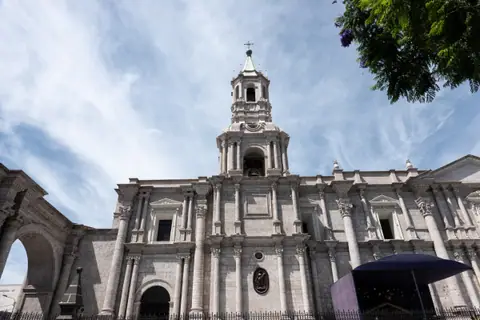
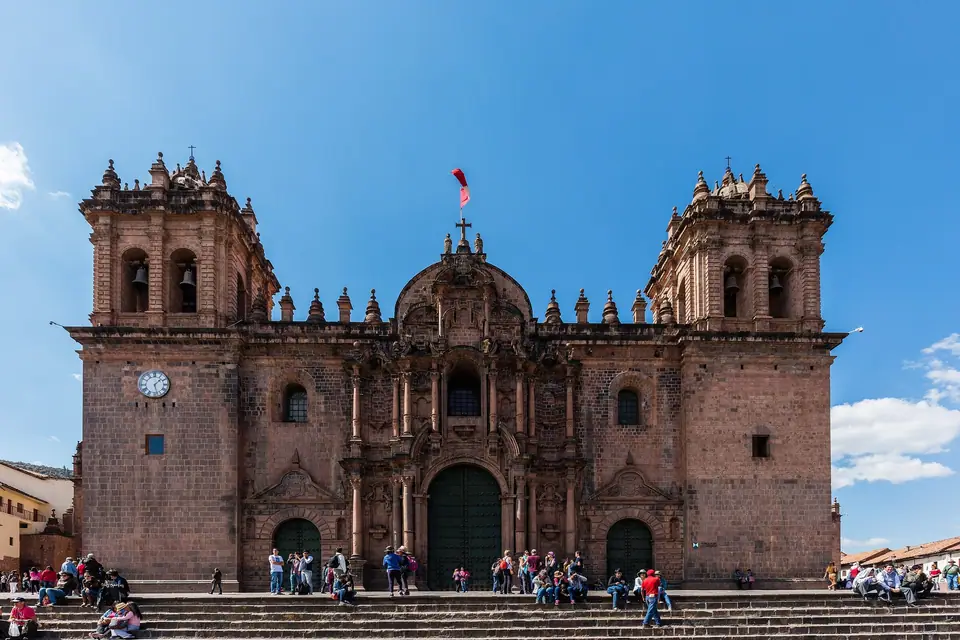
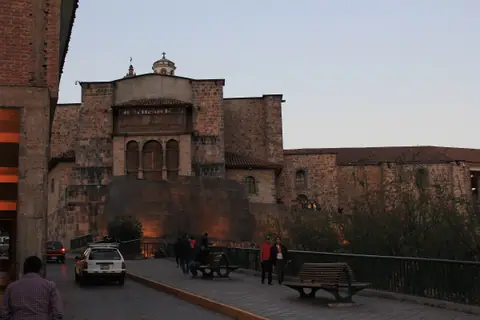
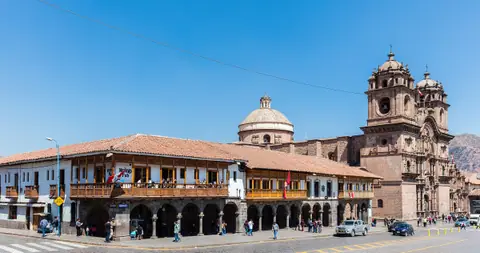
The historic core radiates from Plaza de Armas, Cusco Cathedral, and La Compañía, built over the great Inca ceremonial square of Huacaypata. Four blocks southeast along Calle Loreto stands Qorikancha and the Convent of Santo Domingo, where curved dark-andesite chambers from the Inca Temple of the Sun survive inside a 17th-century Dominican cloister. Northeast of the Cathedral, Hatun Rumiyoc displays the interlocking Twelve-Angled Stone on the climb into San Blas and Cristo Blanco.
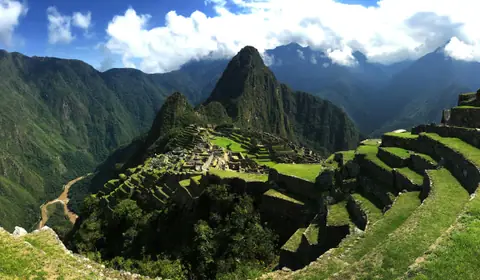
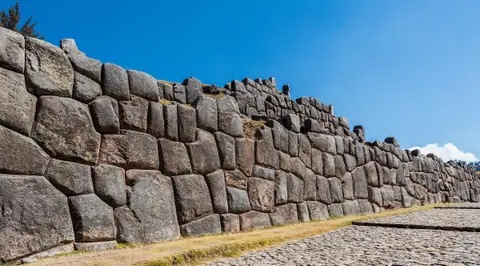
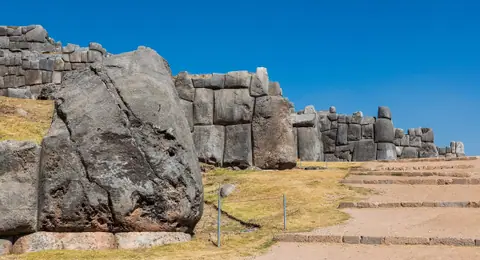
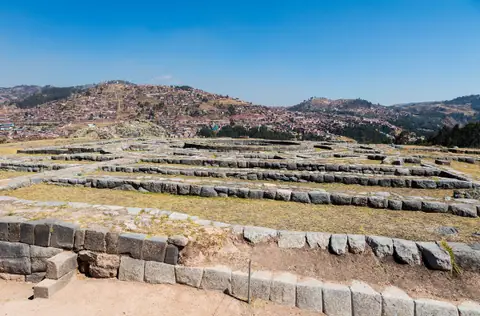
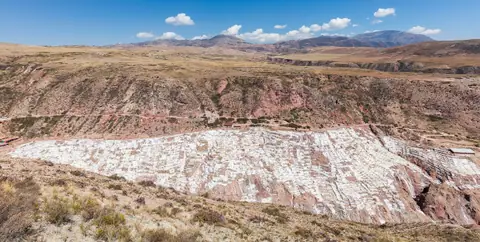
High on the limestone plateau two kilometres north of the centre, Sacsayhuamán, Q’enqo, Puka Pukara, and Tambomachay guard the upper approaches at 3,701 metres. Beyond the basin, Cusco serves as the primary base for Pisac and Ollantaytambo in the Sacred Valley, the terraced salt pans of Maras, Moray, and Chinchero, and narrow-gauge trains to Machu Picchu.
Getting there
Direct domestic flights from Lima land in around 80 minutes at Alejandro Velasco Astete International Airport (CUZ), located 5 kilometres southeast of Plaza de Armas at 3,249 metres elevation. According to CORPAC statistics, the terminal handled over 3 million passengers in 2023, making it Peru's second-busiest airport. Because the historic centre sits at 3,399 metres, we recommend spending your first 24 to 48 hours walking gently around the flat streets near Plaza de Armas or descending immediately into the lower Sacred Valley (Urubamba at 2,870 metres or Ollantaytambo at 2,792 metres) to acclimatise.
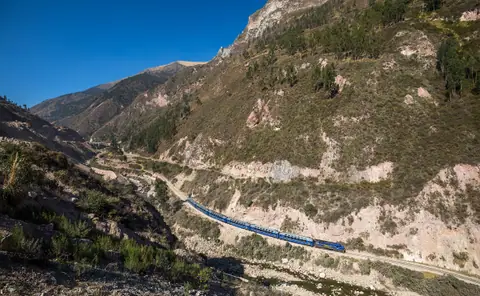
Narrow-gauge passenger trains operated by PeruRail and Inca Rail connect Cusco (San Pedro and Poroy stations) and Ollantaytambo with Aguas Calientes at the foot of Machu Picchu, while PeruRail also runs the Titicaca Train southeast across the 4,313-metre La Raya pass to Puno on Lake Titicaca. Full arrival details are covered in How to Get to Cusco.
Where to stay
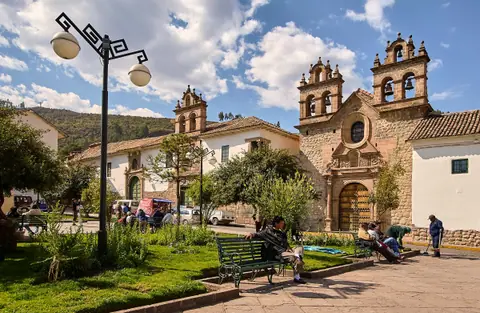
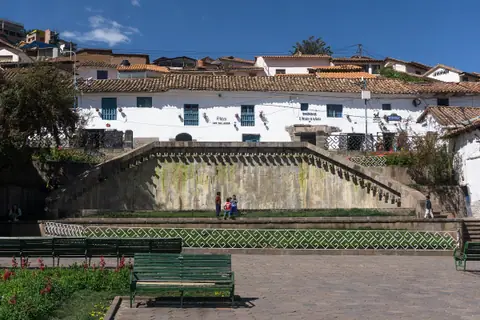
Where you sleep in Cusco shapes how easily you adjust to the 3,400-metre elevation. The flat valley floor around Plaza de Armas, Plazoleta Regocijo, and Plazoleta de las Nazarenas places you in restored 16th- and 17th-century colonial mansions (casonas) built around colonnaded stone courtyards, with level walking to museums, churches, and cafés.
Northeast of the main square, hillside San Blas appeals to travellers looking for car-free cobbled steps, family folk-art studios, and sunny garden terraces overlooking the red-tiled city, while lower-altitude towns in the Sacred Valley offer a gentler first two nights right off the plane. Compare each district in Where to Stay in Cusco.
Things to do
Start on Plaza de Armas inside the 3,920-square-metre Cusco Cathedral Basilica and the twin-towered Jesuit Church of La Compañía de Jesús, then step into Museo Inka, MAP, and Casa Concha to examine carved wooden keros, gold jewellery, and artefacts excavated at Machu Picchu. Walk down Inca-walled Calle Loreto to the curved solar masonry of Qorikancha and pass the Twelve-Angled Stone along Hatun Rumiyoc on your way into San Blas.
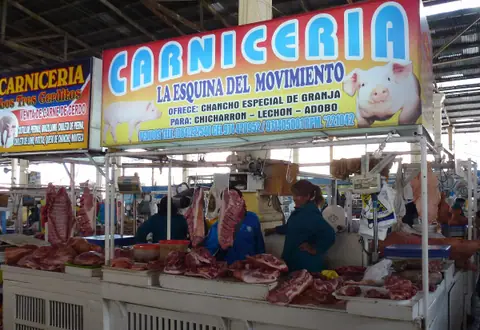
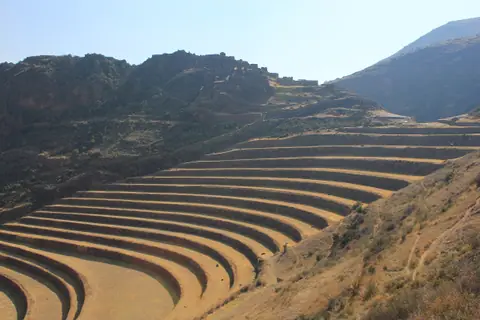
On the western market spine, walk through Plaza San Francisco and the 1835 Santa Clara Arch to browse the 1925 iron hall of San Pedro Market. Dedicate your second and third days to the three-tiered zigzag walls of Sacsayhuamán and the agricultural terraces of Pisac, Moray, Maras, and Ollantaytambo. See our complete breakdown in Things to Do in Cusco.
Food and drink
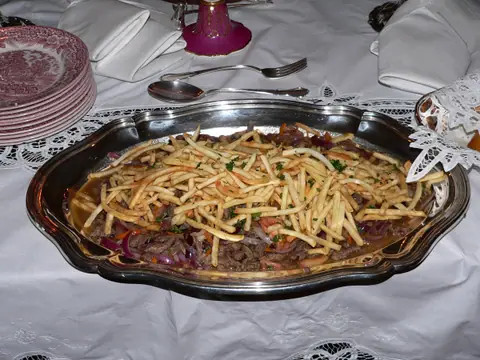
Highland Cusqueño cooking celebrates native Andean tubers, giant-kernel Sacred Valley maize (choclo), quinoa, kiwicha, and aromatic mountain herbs such as huacatay (black mint). Traditional picanterías and modern bistros sear lomo saltado (beef or lean alpaca tenderloin wok-tossed with red onions, tomatoes, and yellow chilli) and roast whole cuy al horno (guinea pig seasoned with huacatay) in wood-fired clay ovens.
During the June Corpus Christi festivities, locals gather for chiri uchu, a cold ceremonial platter combining highland meats, toasted cancha corn, Andean cheese, and cochayuyo seaweed. On cold evenings, warm up with quinoa soup, choclo con queso, and cups of purple-corn chicha morada or mate de coca. Explore our dish-by-dish guide in What to Eat in Cusco.
Culture
Cusco's cultural calendar blends Inca solar observances with centuries-old Catholic processions. On Easter Monday, thousands fill Plaza de Armas as the dark-wood Crucifix of the Señor de los Temblores (Lord of the Earthquakes, credited with halting the 1650 tremor) is carried from the Cathedral under a shower of crimson ñucchu blossoms.
In June, the movable feast of Corpus Christi brings fifteen ornate silver and gilt saints' litters from parish churches across the valley to the Cathedral, followed on 24 June by Inti Raymi (the Inca Festival of the Sun), staged in Quechua at Qorikancha, Plaza de Armas, and the esplanade of Sacsayhuamán.
Weather by month
Cusco is warmest in November, with average highs around 22°C, and coldest in July, when nights drop to about 1°C. January is the wettest month, with rain on about 20 days. For mild weather with fewer rainy days, aim for April, May, June, July, August and September.
| Month | Low | Range | High | Rain | Rainy days |
|---|---|---|---|---|---|
| Jan | 8°C | 21°C | 140 mm | 20 d | |
| Feb | 8°C | 20°C | 119 mm | 17 d | |
| Mar | 8°C | 21°C | 112 mm | 16 d | |
| Apr | 6°C | 21°C | 49 mm | 7 d | |
| May | 4°C | 21°C | 14 mm | 2 d | |
| Jun | 2°C | 21°C | 7 mm | 1 d | |
| Jul | 1°C | 21°C | 7 mm | 1 d | |
| Aug | 3°C | 22°C | 14 mm | 2 d | |
| Sep | 5°C | 22°C | 28 mm | 4 d | |
| Oct | 7°C | 22°C | 63 mm | 9 d | |
| Nov | 8°C | 22°C | 70 mm | 10 d | |
| Dec | 8°C | 21°C | 119 mm | 17 d |
Averages of daily values from 2015 to 2024. Rainy days are days with at least 1 mm of rain. Source: Open-Meteo · Compare destinations by month.
Cusco on the map
Every place we cover in Cusco. Tap a category or pin to explore.
In-depth Cusco guides
Browse the guides grouped by topic: sights, neighbourhoods, food, transport, day trips and trip planning.
Sights, Landmarks & Parks
Key monuments, viewpoints, museums and nature trails.
- Things to Do in Cusco: Inca Walls, Colonial Plazas and Andean CitadelsExplore the top sights in Cusco, from the curved stonework of Qorikancha and the Twelve-Angled Stone to Sacsayhuamán and San Pedro Market.
- Best Time to Visit Cusco: Dry Andean Winters, Inti Raymi and Rainy MonthsCompare Cusco’s sunny dry season (May to September), shoulder months, and green rainy summer using WMO 1991 to 2020 climate normals.
- Cusco 3-Day Itinerary: Historic Core, Sacsayhuamán and the Sacred ValleyFollow a balanced 3-day Cusco itinerary designed around gradual altitude acclimatisation, linking Inca walls, northern ruins, and Sacred Valley terraces.
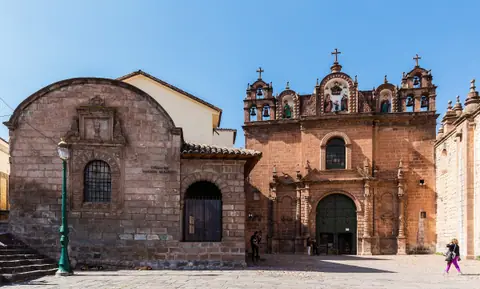
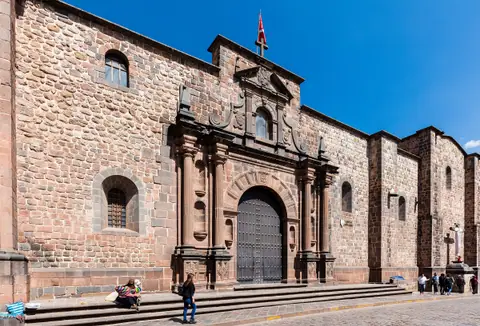
- Plaza de Armas, Cusco Cathedral and Iglesia de la Compañía de JesúsExplore Cusco’s monumental heart at Plaza de Armas, built over the Inca square of Huacaypata and framed by the Cathedral Basilica and Jesuit Church.
- Qorikancha, Convent of Santo Domingo and Hatun Rumiyoc’s Twelve-Angled StoneExamine Cusco’s finest Inca masonry at the Temple of Qorikancha, the Convent of Santo Domingo, Calle Loreto, and the Twelve-Angled Stone.
- Sacsayhuamán, Q’enqo, Puka Pukara and Tambomachay RuinsVisit the four Inca archaeological sites on the hills north of Cusco, Sacsayhuamán, Q’enqo, Puka Pukara, and Tambomachay, covered on Circuit I of the BTC.
- Museo Inka, Museo de Arte Precolombino and Casa ConchaVisit Cusco’s three major archaeological museums, Museo Inka, the Pre-Columbian Art Museum (MAP), and Casa Concha, housed in colonial mansions.
Neighbourhoods & Where to Stay
Districts, historic quarters and the best bases for your stay.
- Cusco: Altitude, Inca Foundations and City LayoutPlan your visit to Cusco at 3,400 metres with advice on altitude acclimatisation, the Boleto Turístico pass, and navigating the UNESCO historic centre.
- Where to Stay in Cusco: Historic Centre, San Blas and San CristóbalCompare Cusco’s best neighbourhoods for travellers, from flat colonial courtyards near Plaza de Armas to hillside San Blas and the Sacred Valley.
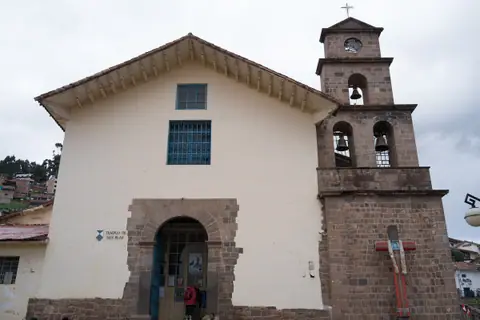
- San Blas Artisan Quarter, Hatun Rumiyoc and Cristo Blanco ViewpointClimb the cobbled steps of San Blas to visit Cusco’s traditional folk-art studios, San Blas wooden pulpit, Sapantiana Aqueduct, and Cristo Blanco.
Food & Drink
Local dishes, markets, cafés and dining districts.
- What to Eat in Cusco: Lomo Saltado, Cuy al Horno, Chiri Uchu and San Pedro MarketTaste Cusco’s highland cuisine, from giant Urubamba corn, quinoa soup, and lomo saltado to traditional roasted cuy, chiri uchu, and San Pedro Market stalls.
- San Pedro Market, Santa Clara Arch and Plaza San FranciscoWalk Cusco’s western market axis from Plaza Regocijo and Plaza San Francisco through the 1835 Santa Clara Arch to Mercado Central de San Pedro.
Getting Around & Arrival
Airport transfers, public transit, passes and driving rules.
Day Trips & Excursions
Easy half-day and full-day trips from the city.
- Sacred Valley Day Trip: Pisac Terraces and Ollantaytambo FortressPlan a full day in the Sacred Valley of the Incas (Willka Qhichwa), exploring the cliffside agricultural terraces of Pisac and the fortress of Ollantaytambo.
- Salineras de Maras, Moray Terraces and Chinchero Weaving TownCombine the high plateau northwest of Cusco in one trip: Chinchero’s Inca terraces and textile studios, Moray’s circular bowls, and the Maras salt pans.
Need your embassy or consulate in Peru? See embassies and consulates in Peru.
Reviews
Log in to write a review.
No reviews yet.