Photo: Zairon · CC BY-SA 4.0
Marseille on the Mediterranean: Massalia, Old Port and Limestone Hills
France's oldest city blends Phocaean roots, Fernand Pouillon's rebuilt quays, deepwater trade, and seaside hills from Le Panier to Le Corbusier.
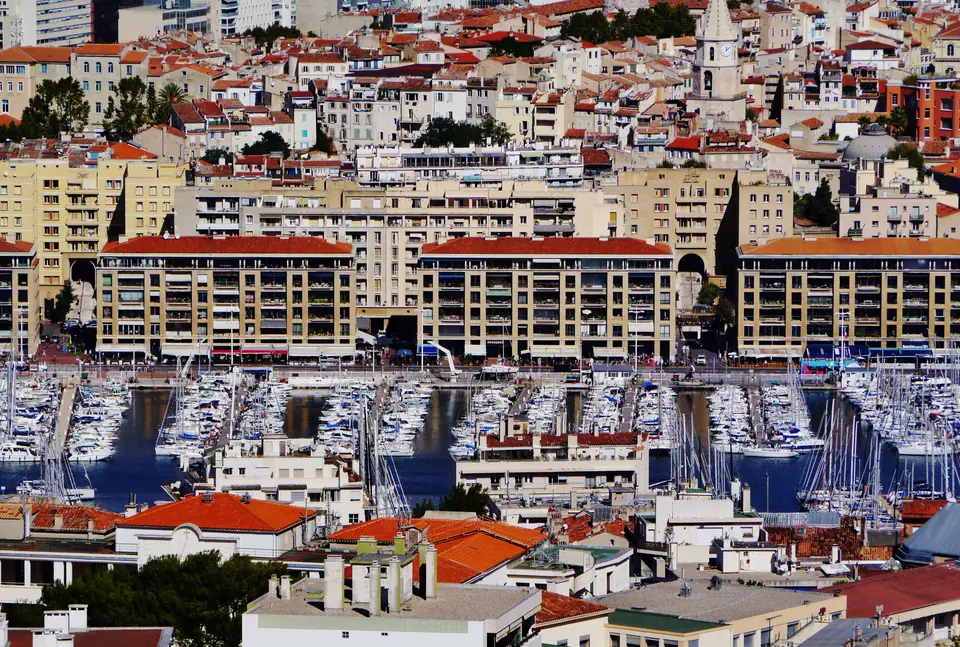
Marseille opens like a natural limestone amphitheatre tilted toward the Gulf of Lion. White peaks of the Étoile, Garlaban, and Calanques massifs pin busy stone quarters straight onto the Mediterranean shoreline. Unlike inland French river cities such as Lyon or Bordeaux, daily life here pivots continuously on saltwater arrivals. Official 2023 INSEE census tables count 886,040 residents across the 240.62-square-kilometre commune. That tally places Marseille as France's second-largest city after Paris within a 1.94-million-strong Aix-Marseille-Provence Metropolis.
Walking across those 16 municipal arrondissements reveals a far rawer city than polished Riviera resorts further east. The city divides into 8 administrative sectors carrying five-digit postcodes from 13001 out to 13016. Steep residential staircases tumble directly down from working hill ridges into yacht marinas, museum terraces, and lively produce markets. Seeing how ancient Greek docks, wartime demolition, and contemporary seafront renewal shaped each bank makes daily walks clear. Pair this overview with our three-day harbour and ridge sequence once you unpack downtown.
Phocaean Massalia and the Lacydon Harbour
Phocaean Greek mariners sailing from Anatolia grounded their galleys inside the sheltered Lacydon creek around 600 BC. Naming that colony Massalia made Marseille the oldest city in France. That deep natural inlet survives as the calm horseshoe basin called the Vieux-Port today. Above its southern rocky rim rise fifth-century Christian crypts preserved inside Abbaye Saint-Victor. Meanwhile, the sunny northern slope steadily grew into the city's historic hill quarters.
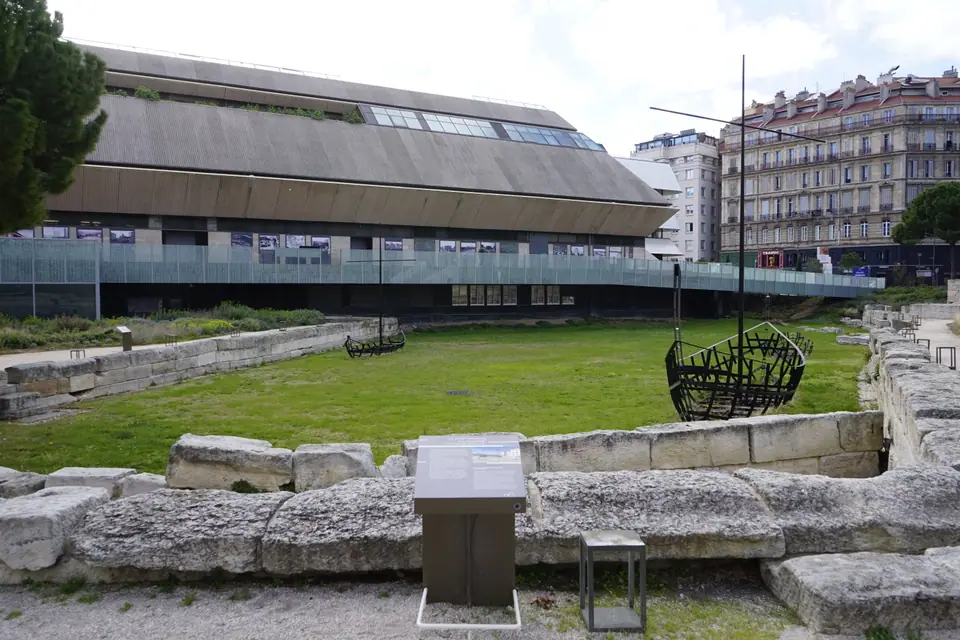
Walk five minutes east of Quai des Belges behind Centre Bourse to examine authentic Greek and Roman stone ruins. Inside the Jardin des Vestiges, excavated rampart blocks, ancient freshwater basins, and skeletal Roman boat frames sit directly beside the Marseille History Museum. Together they show how maritime docks anchored western Mediterranean shipping centuries before medieval counts built stone quays.
From the 1720 Plague to La Marseillaise
Open sea trade brought regular civic wealth while exposing waterfront houses to Mediterranean crises and royal control. King Louis XIV built Fort Saint-Nicolas in 1660 beside the narrow harbour channel. Crown cannons aimed inward to keep rebellious townsfolk in check as much as to deter foreign navies. Across the northern ridge inside Le Panier, sculptor Pierre Puget shaped the Baroque courtyard of La Vieille Charité between 1671 and 1745 as an almshouse for the city's destitute.
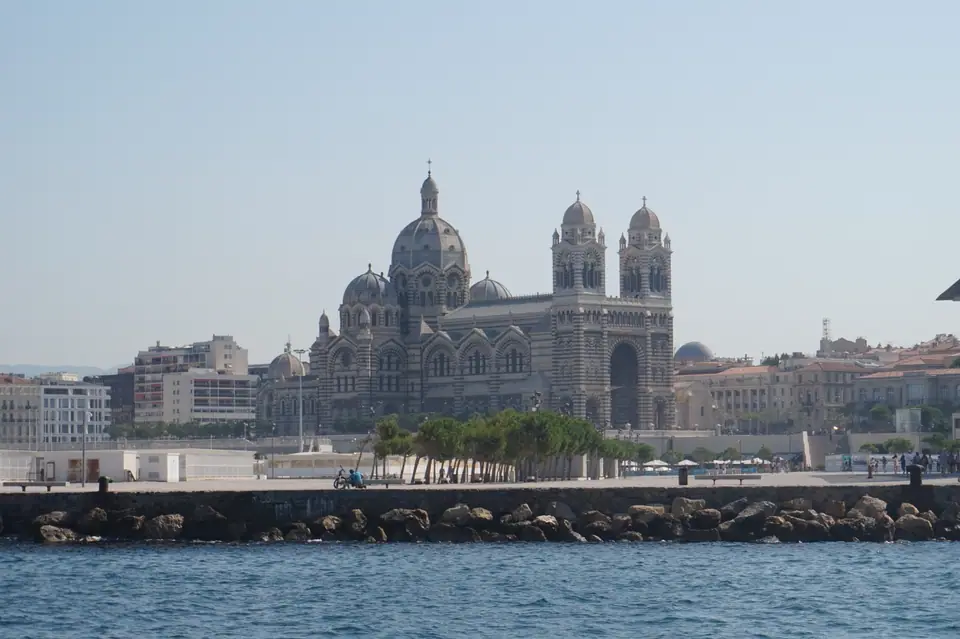
Disaster struck in 1720 when the Great Plague arrived aboard a Levant merchant ship. Quarantine walls halted coastal commerce across Provence for years. In July 1792, revolutionary Marseille volunteers marched north to Paris singing a fierce Rhineland battle hymn. Parisians soon named that tune La Marseillaise, locking the southern port forever into France's national anthem. Architects Léon Vaudoyer and Henri-Jacques Espérandieu built striped Cathédrale La Major from 1852 to 1893. Nearby, Espérandieu completed the 1869 Palais Longchamp water palace celebrating the 85-kilometre Canal de Marseille feeding Alpine water into dry city quarters.
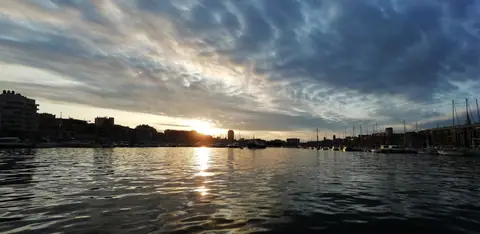
Read Marseille's skyline from water level: royal forts pin down the creek mouth, post-war blocks line the north quay, and public seawalks return commercial piers to residents.
January 1943 Demolitions and Fernand Pouillon
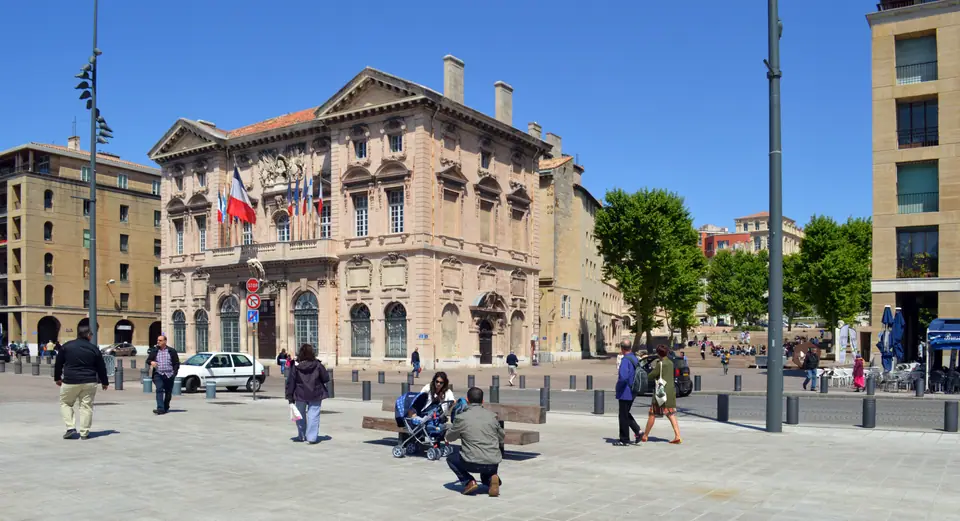
Sunny strolls past the 17th-century Hôtel de Ville easily disguise how completely wartime blasts redrew the north quay. German occupying forces entered Marseille in November 1942 and targeted the dense alleys behind Fort Saint-Jean. Across January and February 1943, troops evacuated residents and dynamited roughly 1,500 buildings between the fort and Town Hall. Very little stood left along that blast belt except the municipal hall and older churches. Allied and French Liberation forces freed Marseille on 28 August 1944 after street battles climbing up to Notre-Dame de la Garde.
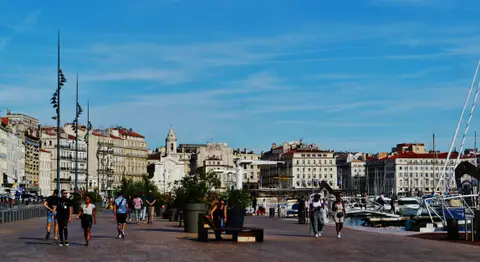
Post-war architect Fernand Pouillon directed clean limestone reconstruction along Quai du Port during the early 1950s. His warm ochre arcades give the north embankment its steady sunlit roofline today. Further south along Boulevard Michelet in postcode 13008, Le Corbusier unveiled his bold modernist apartment block completed in 1952. His concrete Unité d'Habitation (Cité Radieuse) contains 337 apartments, an internal shop corridor, and a sculpted public roof deck. UNESCO inscribed that vertical neighbourhood on the World Heritage List in 2016 under reference 1321.
Shipping Tonnage, Cultural Capitals and Olympic Waters
Pleasure yachts fill the inner harbour basin today because heavy container vessels shifted north to Joliette and the deepwater Port of Marseille Fos. Recent port reports tally roughly 70 to 75 million tonnes of annual freight, hitting 75 million tonnes and 1.45 million TEU containers in 2025. Maritime passenger crossings add roughly 4 million travellers yearly, including over 2.6 million cruise passengers in 2025. Serving as European Capital of Culture in 2013 reconnected residents to old piers via Norman Foster's 46-by-22-metre Ombrière mirror canopy and Rudy Ricciotti's Mucem.
Waterfront momentum continued during the Paris 2024 Olympic Games. Olympic sailing launched out of Roucas-Blanc Marina while packed football matches filled Stade Vélodrome. That same year saw May 2024 reopenings inside the upper Citadelle de Marseille atop Fort Saint-Nicolas. Choose an easy harbour base through our postcode accommodation guide and check coastal Calanques access rules early. Direct regional rail connects cleanly onward to Nice, Genoa, Turin, or Barcelona.
Where it is
- 1Marseille
- Marseille Provence Airport (MRS) · about 20 km from Marseille in a straight line
- Directions in Google Maps
Stations and taxi ranks: OpenStreetMap. Airports: OurAirports. Distances are in a straight line.
Traveller tips
Real advice from people who have been to Marseille. Every tip is read by our team before it goes live.
No tips yet. Been here? Yours could be the first.
Thank you! Your tip will appear here after a quick review.
More in Marseille
Continue exploring Marseille with related neighbourhood, food, and planning guides