


























Chkalov Stairs and Upper Volga Embankment: Mansions and River Views
Linking the Upper and Lower Volga embankments via two intersecting rings, the 1949 staircase opens onto a clifftop promenade of nineteenth-century mansions.
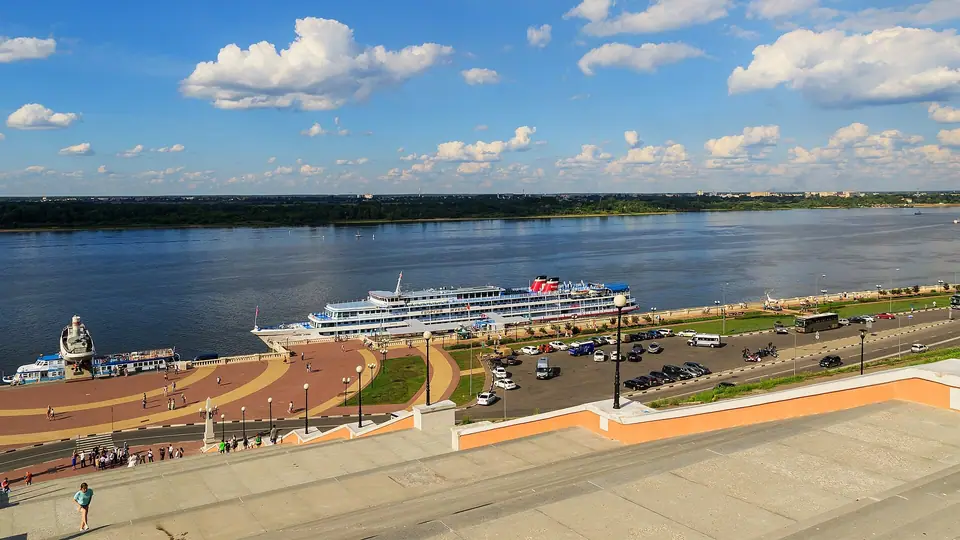
Starting beside St. George's (Georgievskaya) Tower of the Nizhny Novgorod Kremlin, the Chkalov Stairs and the Upper Volga Embankment form the classic cliff-top promenade of the Upper Town. During his 1834 visit to Nizhny Novgorod, Emperor Nicholas I ordered that the dilapidated wooden hillside houses and rubbish heaps blocking the view of the Volga be cleared and replaced with a landscaped boulevard and public garden, known as the Alexandrovsky Garden. Laid out and paved in 1836, the Upper Volga Embankment runs 1.75 kilometres east along the high bluff from Minin and Pozharsky Square to Sennaya Square, looking across the wide Volga floodplains toward the town of Bor.
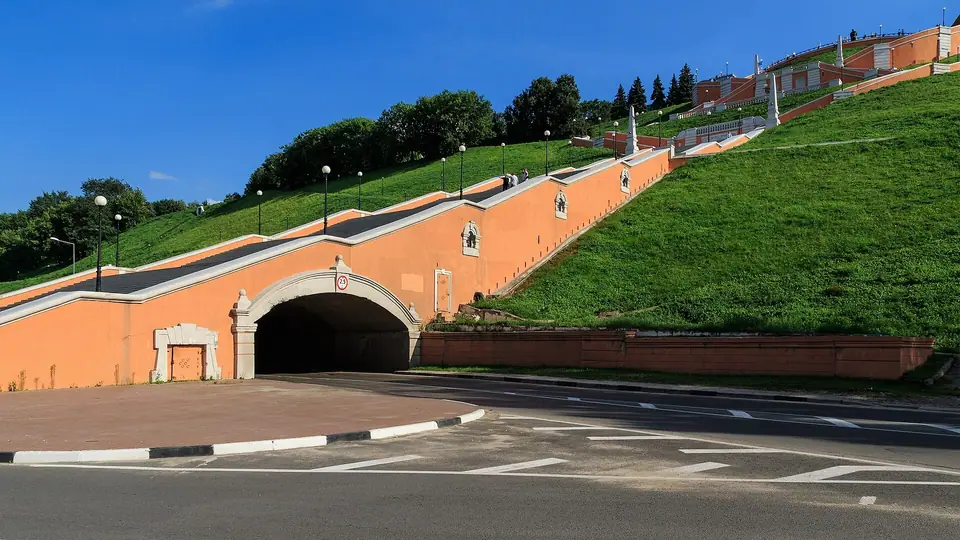
The Figure-Eight Chkalov Stairs
Descending the steep green slope of the Alexandrovsky Garden between the Upper and Lower Volga embankments is the monumental Chkalov Stairs (originally conceived as the Stalingrad Stairs to mark the 1943 Soviet victory at Stalingrad). Designed in 1943 by architects Alexander Yakovlev, Lev Rudnev, and Vladimir Munts and built between 1944 and 1949, the staircase cascades down the hillside in two intersecting circular rings shaped like a figure eight, with two intermediate observation platforms where the side flights meet. Counting from bottom to top along the right-hand side gives 442 steps, or 560 steps in total when both sides of the two rings are included. At the upper terrace stands the 1940 bronze monument by sculptor Isaac Mendelevich to Soviet test pilot Valery Chkalov, who made the first non-stop flight from Moscow over the North Pole to Vancouver, Washington, in 1937; at the foot on the over 3-kilometre Lower Volga Embankment rests the Volga Military Flotilla boat Hero (Kater Geroy), placed on its riverside pedestal in 1985.
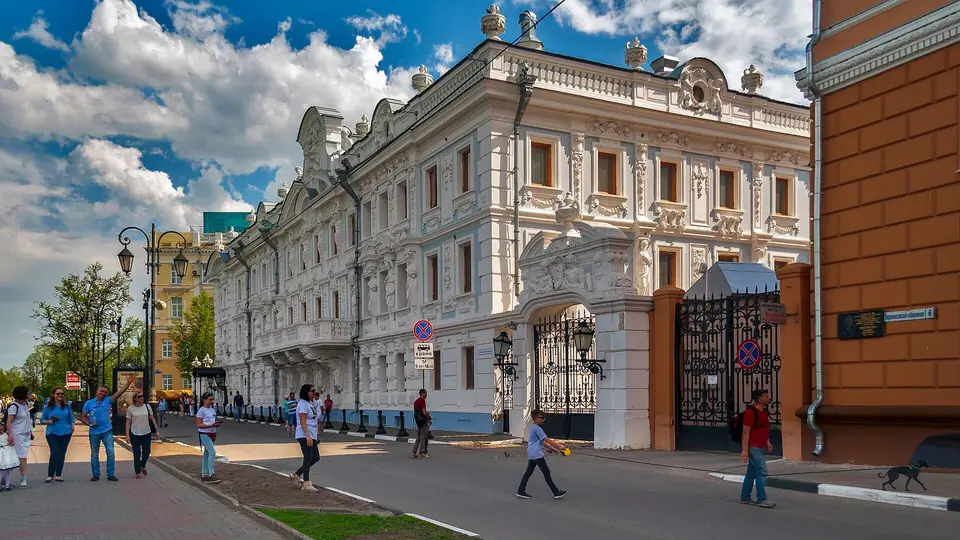
Rukavishnikov Mansion, Sirotkin House and Embankment Architecture
- Rukavishnikov House (Upper Volga Embankment 7): Built between 1875 and 1877 for merchant and philanthropist Sergei Mikhailovich Rukavishnikov to designs by Moscow architect Petr Boitsov, architect Robert Kilevain, and sculptor Mikhail Mikeshin, this three-storey turquoise-and-white Italian palazzo features caryatids, wrought-iron gates, and a grand marble staircase, and serves as the main exhibition building of the Nizhny Novgorod State Historical and Architectural Museum-Reserve.
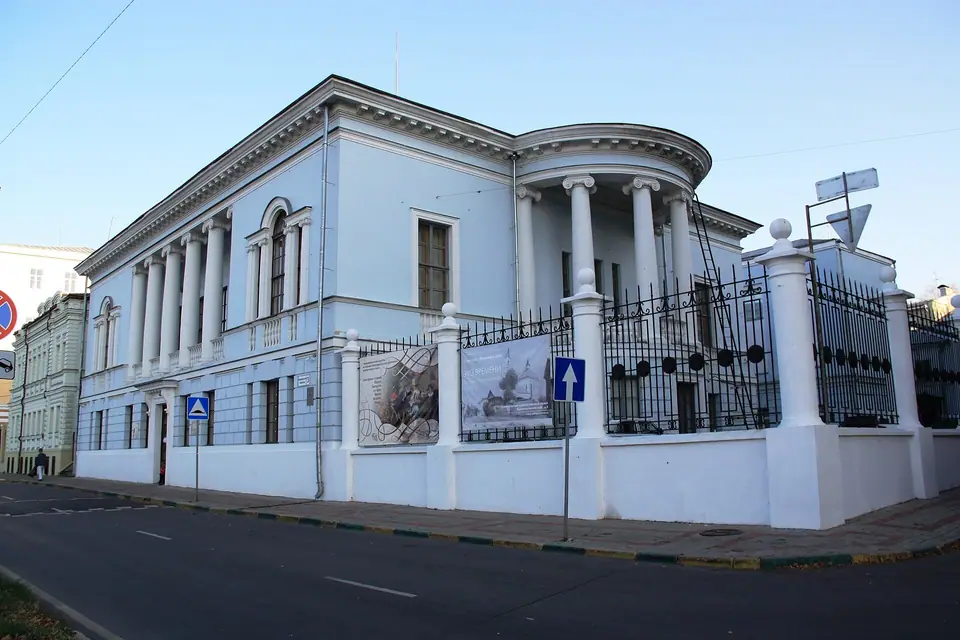
- Sirotkin House (Upper Volga Embankment 3): Built from 1913 to 1916 by the Vesnin brothers (Leonid, Viktor, and Alexander Vesnin) for shipowner and mayor Dmitry Sirotkin, this neoclassical villa with a semicircular columned portico displays the Western European paintings of the Nizhny Novgorod State Art Museum (founded in 1896). Continue east along the embankment to Sennaya Square for the Volga aerial cable car, or turn inland to Bolshaya Pokrovskaya Street.
Traveller tips
Real advice from people who have been to Chkalov Stairs and Upper Volga Embankment: Mansions and River Views. Every tip is read by our team before it goes live.
No tips yet. Been here? Yours could be the first.
Thank you! Your tip will appear here after a quick review.
More in Nizhny Novgorod
Continue exploring Nizhny Novgorod with related neighbourhood, food, and planning guides
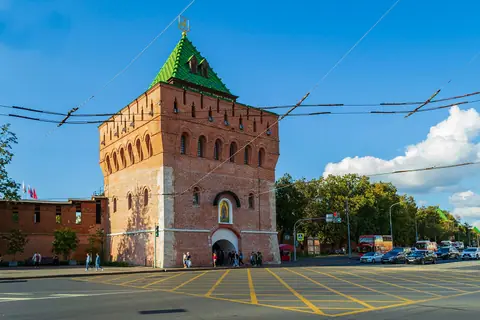
Things to Do in Nizhny Novgorod: Kremlin Wall Walk, Strelka and Rivers
Nizhny Novgorod, Russia
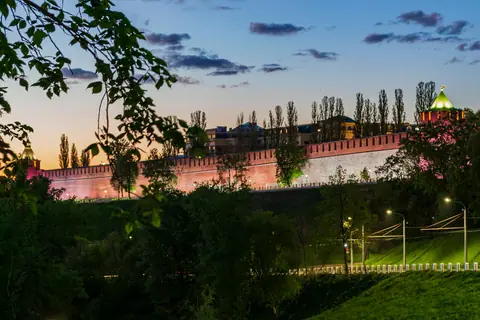
Nizhny Novgorod Kremlin: 13 Brick Towers and Archangel Cathedral
Nizhny Novgorod, Russia
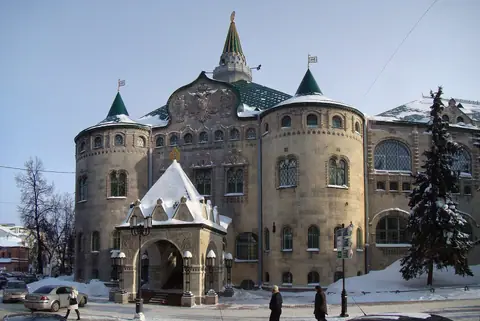
Bolshaya Pokrovskaya Street and the 1913 Neo-Russian State Bank
Nizhny Novgorod, Russia
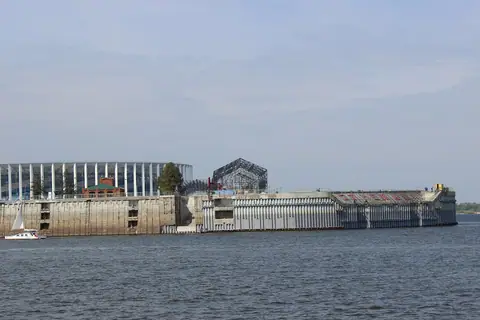
Strelka Spit: Alexander Nevsky Cathedral, Pakgauzy and Fairgrounds
Nizhny Novgorod, Russia
