


























Volga Aerial Cable Car to Bor and Pechersky Ascension Monastery
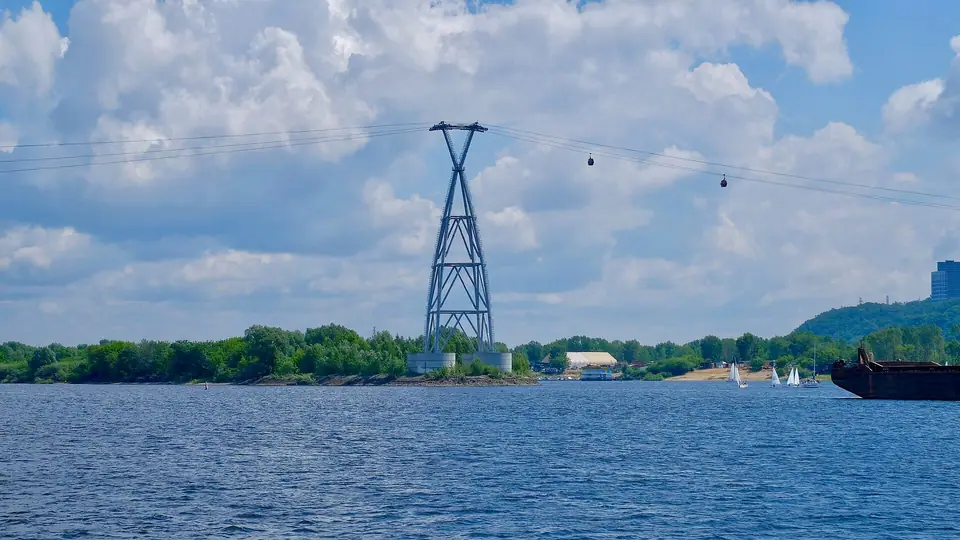
Crossing the Volga on two 82-metre steel towers, the 3,660-metre gondola line starts above the white walls of the Pechersky Ascension Monastery.
At the eastern end of the 1.75-kilometre Upper Volga Embankment near Sennaya Square, two contrasting landmarks share the high right-bank bluff above the Volga River: the 2012 Nizhny Novgorod to Bor aerial cableway on the upper terrace and the white-walled Pechersky Ascension Monastery on the wooded slope below. Together they make an easy two- to three-hour half-day outing from Minin and Pozharsky Square.
Riding the 3,660-Metre Volga Aerial Cable Car to Bor
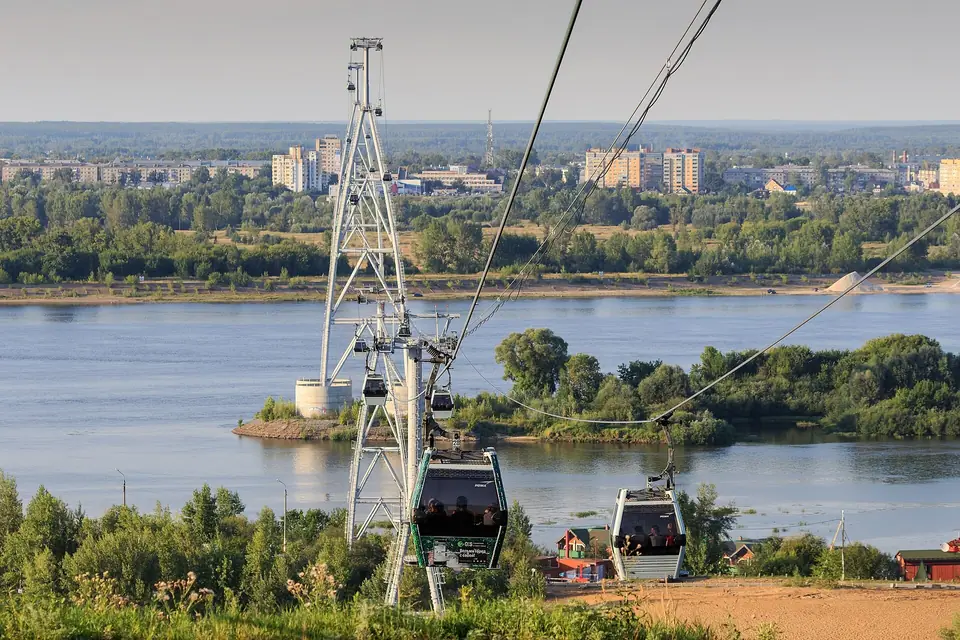
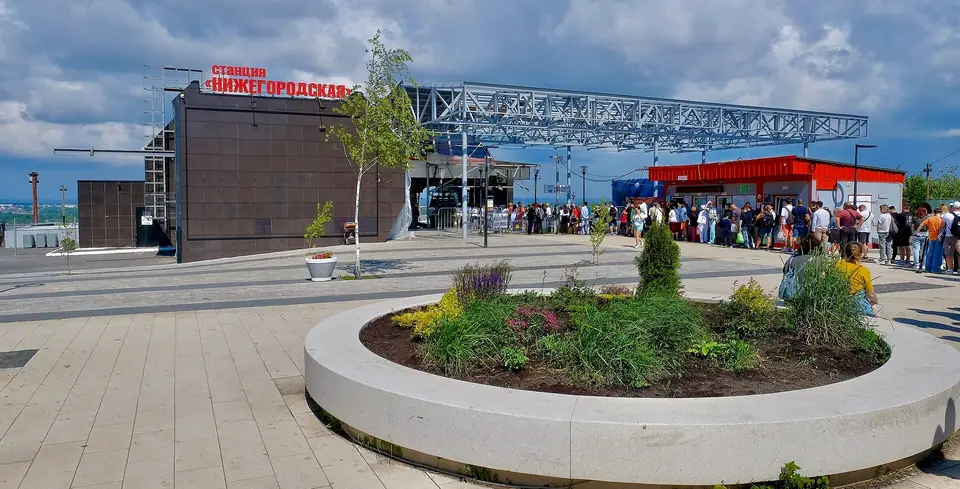
Opened on 9 February 2012 as both an intercity public transit link for daily commuters and a panoramic river crossing, the detachable gondola lift engineered by the French company Poma connects Nizhegorodskaya Station on Kazanskaya Embankment (near Sennaya Square) with Borskaya Station in the left-bank town of Bor. The aerial line stretches about 3,660 metres in total length. Its engineering highlight is the pair of 82-metre towers standing on opposite banks of the navigable channel, which hold an unsupported span of about 861 metres directly over the open water of the Volga. The one-way crossing takes about 13 minutes, gliding high above the Grebnoy (Rowing) Canal, river barges and the wide Volga floodplains. Because commuters use the line during morning and evening rush hours on weekdays, midday or early afternoon offers the shortest queues; check current fares and accepted payment cards before you ride.
Pechersky Ascension Monastery and the 1377 Laurentian Chronicle
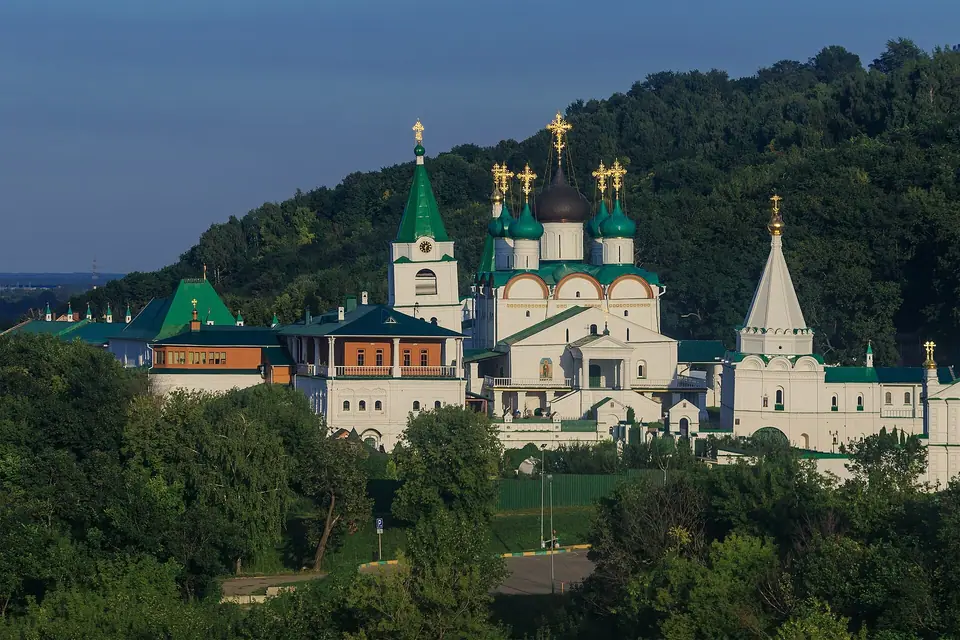
Before or after riding the cable car, follow the stepped footpath descending the ravine from Sennaya Square to the Pechersky Ascension (Voznesensky Pechersky) Monastery on the river terrace. Founded between 1328 and 1330 by Saint Dionysius of Suzdal (who arrived from the Kiev Pechersk Lavra and dug early hillside monastic caves further downstream), the monastery became the spiritual and literary centre of the Suzdal-Nizhny Novgorod Principality. Here in 1377 the monk Laurentius copied the Laurentian Chronicle (Lavrentyevskaya Letopis) for Prince Dmitry Konstantinovich, preserving the oldest surviving manuscript of the Old Russian Primary Chronicle. In 1597 a massive hillside landslide destroyed the original monastery buildings without a single loss of life, and the monks rebuilt the stone ensemble 1 kilometre upstream on its present terrace. Its seventeenth-century architecture by master builder Antipa Konstantinov includes the five-domed 1630 to 1632 Ascension Cathedral, the tent-roofed Assumption (Uspenskaya) Refectory Church, the Gate Church of St. Euthymius of Suzdal, and a leaning hipped-roof bell tower. Check our transport guide for buses and Tram 2 to Sennaya Square.
Traveller tips
Real advice from people who have been to Volga Aerial Cable Car to Bor and Pechersky Ascension Monastery. Every tip is read by our team before it goes live.
No tips yet. Been here? Yours could be the first.
Thank you! Your tip will appear here after a quick review.
More in Nizhny Novgorod
Continue exploring Nizhny Novgorod with related neighbourhood, food, and planning guides
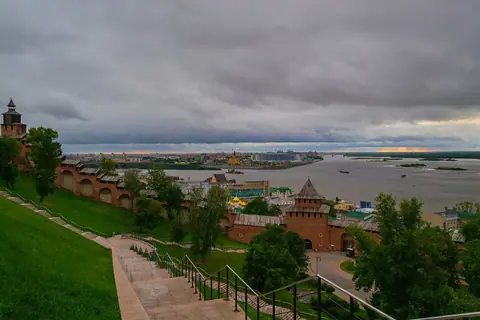
Nizhny Novgorod: Upper Bluffs, Strelka and Seasons
Nizhny Novgorod, Russia
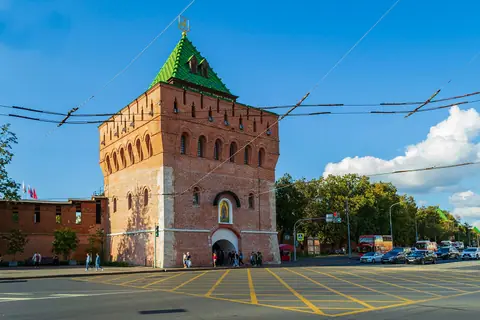
Things to Do in Nizhny Novgorod: Kremlin Wall Walk, Strelka and Rivers
Nizhny Novgorod, Russia
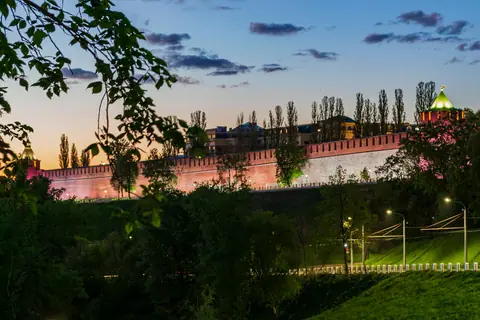
Nizhny Novgorod Kremlin: 13 Brick Towers and Archangel Cathedral
Nizhny Novgorod, Russia
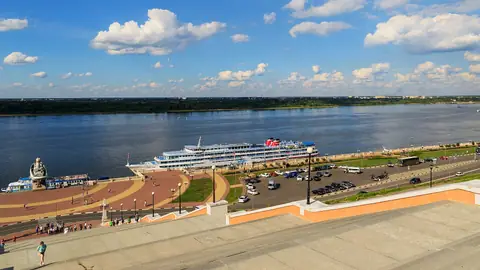
Chkalov Stairs and Upper Volga Embankment: Mansions and River Views
Nizhny Novgorod, Russia
