


























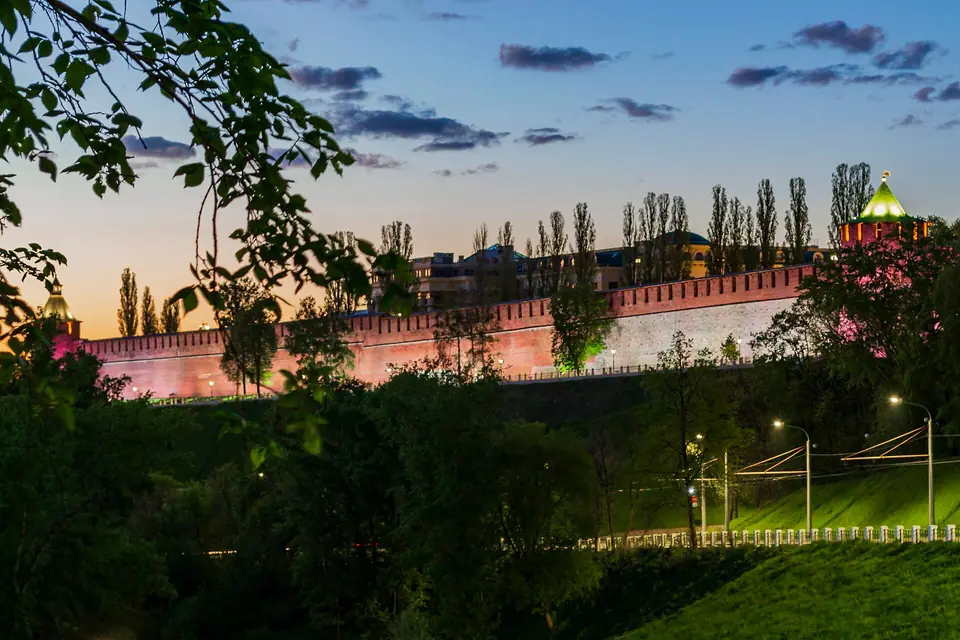
Nizhny Novgorod Kremlin: 13 Brick Towers and Archangel Cathedral
Constructed between 1500 and 1515 under Italian architect Pietro Francesco, the 2-kilometre brick fortress drops down a steep ravine to the riverfront.
Rising across steep hillsides above the Oka and Volga confluence, the Nizhny Novgorod Kremlin was built in red brick between 1500 and 1515 to replace earlier timber and stone fortifications dating to the founding of the city in 1221 and Prince Dmitry Konstantinovich's fourteenth-century citadel. Work began in 1500, and main construction proceeded from 1508 to 1515 under the supervision of Italian architect Pietro Francesco, recorded in Russian chronicles as Peter Fryazin. Serving as Muscovy's main eastern stronghold against the Kazan Khanate, the fortress withstood Tatar sieges in 1520 and 1536 and was never captured by an enemy force.
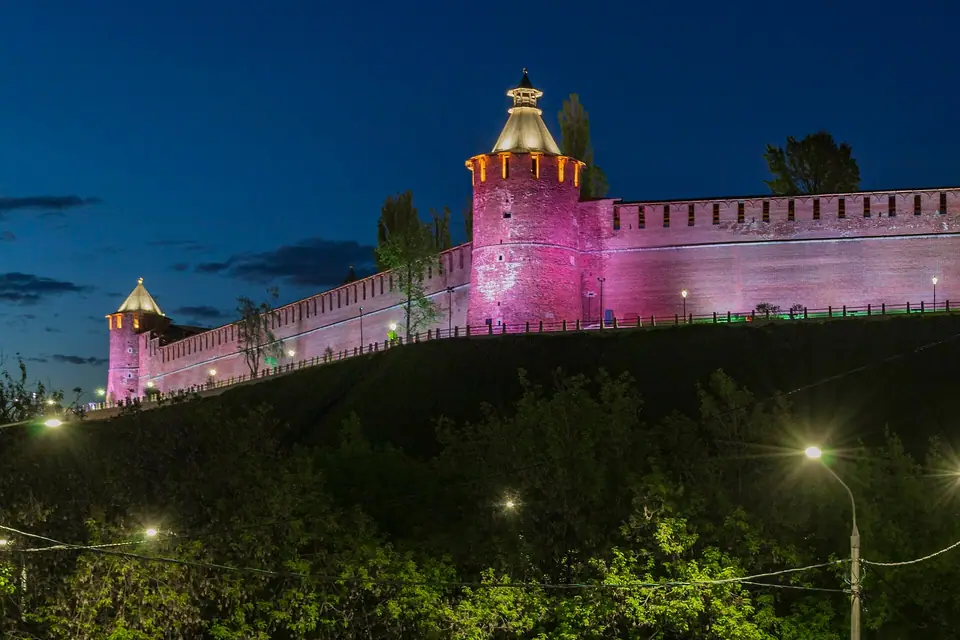
The 2-Kilometre Wall Walk and 13 Towers
The fortress wall runs for 2 kilometres (2,045 metres) with 13 surviving towers, comprising five rectangular gate towers and eight round towers, and drops steeply between the upper square and the lower riverfront. Visitors enter from Minin and Pozharsky Square through Dmitrievskaya Tower, the main gate tower, which was redesigned in 1895 by architect Nikolai Sultanov for the 1896 All-Russia Industrial and Art Exhibition. On the lower riverside section, Zachatskaya Tower had collapsed due to a landslide in the eighteenth century; after it was rebuilt in 2012, the entire 2-kilometre circuit opened as a continuous elevated walkway linking Dmitrievskaya, Kladovaya, Nikolskaya, Koromyslova, Taynitskaya, Severnaya, Chasovaya (Clock), Ivanovskaya, Belaya, Zachatskaya, Borisoglebskaya, Georgievskaya, and Porokhovaya towers.
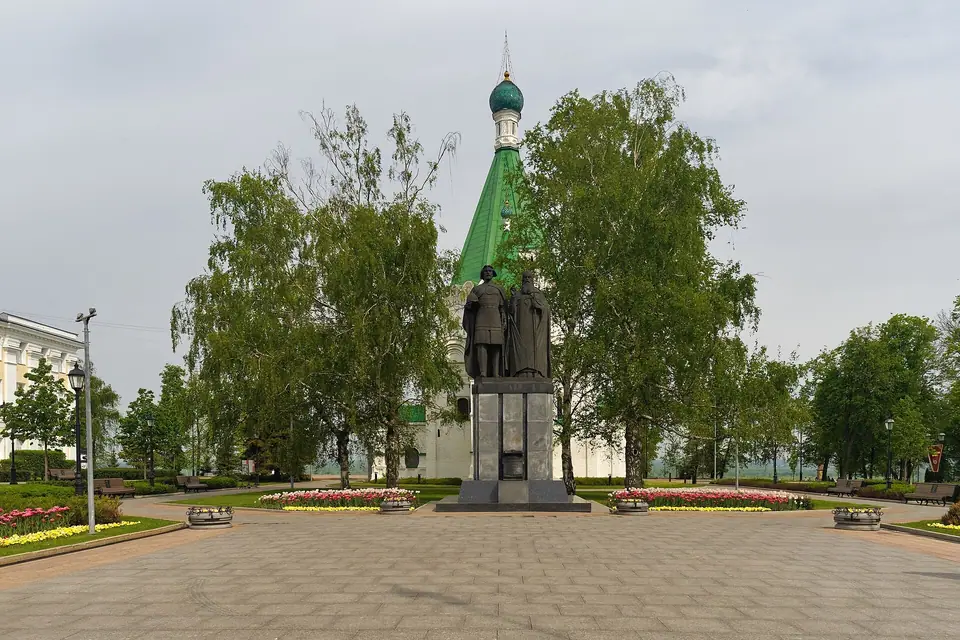
Archangel Michael Cathedral and Kuzma Minin's Tomb
Inside the courtyard stands the Cathedral of the Archangel Michael, the oldest surviving church in the Kremlin. Founded in wood in 1221 and rebuilt in white stone in 1227, the current hipped-roof church with its octagonal tent tower was constructed from 1628 to 1631 by master builders Lavrenty Vozoulin and Antipa Konstantinov. In 1962, the remains of merchant Kuzma Minin, who organised the militia with Prince Dmitry Pozharsky, were transferred into the cathedral, which stands near the 1828 obelisk to Minin and Pozharsky designed by Avraam Melnikov.
Transfiguration Belfry, Arsenal and Funicular
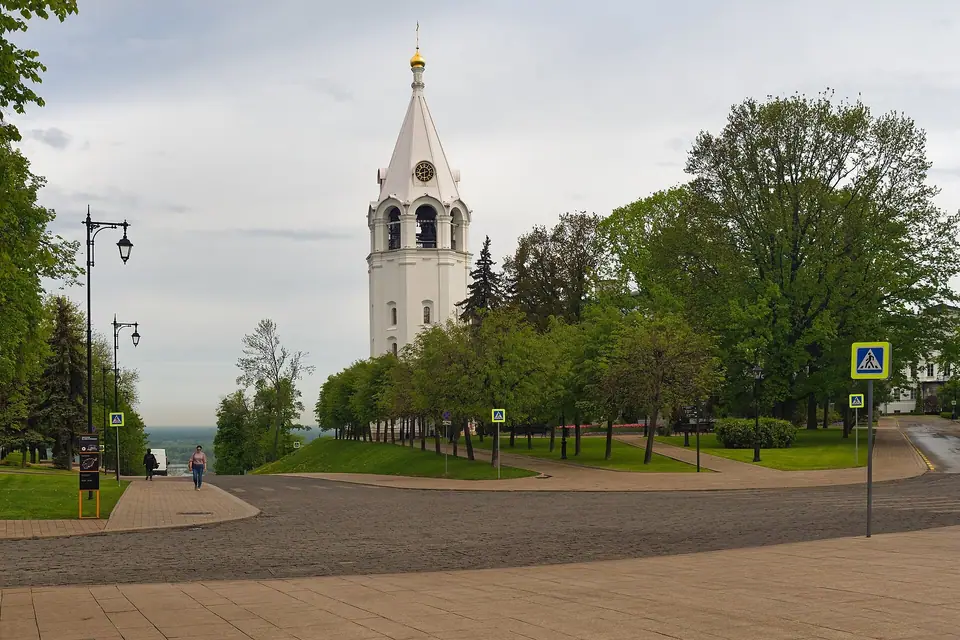
Beside the cathedral rises the rebuilt bell tower of the demolished Transfiguration Cathedral, fitted with a lift to an upper viewing gallery overlooking Strelka Spit and the Chkalov Stairs. The nineteenth-century Arsenal building (built under Emperor Nicholas I) houses contemporary art exhibitions, while the reconstructed Kremlin funicular (first opened in 1896 and reopened after reconstruction in 2024) links the upper courtyard near Northern Tower with Rozhdestvenskaya Street below.
Planning Your Kremlin Visit
Allow two to three hours to walk the full 2-kilometre wall circuit and visit the interior courtyards; wear flat-soled shoes for the steep internal stone steps between Ivanovskaya and Chasovaya towers.
Traveller tips
Real advice from people who have been to Nizhny Novgorod Kremlin: 13 Brick Towers and Archangel Cathedral. Every tip is read by our team before it goes live.
No tips yet. Been here? Yours could be the first.
Thank you! Your tip will appear here after a quick review.
More in Nizhny Novgorod
Continue exploring Nizhny Novgorod with related neighbourhood, food, and planning guides
What to Eat in Nizhny Novgorod: Volga Fish, Ukha and Gorodets Pryanik
Nizhny Novgorod, Russia
How to Get to Nizhny Novgorod: Strigino Airport and Lastochka Trains
Nizhny Novgorod, Russia
Getting Around Nizhny Novgorod: Metro Bridge, Trams and Cableway
Nizhny Novgorod, Russia
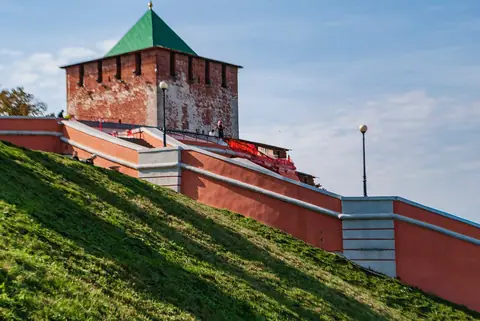
What to Wear in Nizhny Novgorod: River Wind, Steep Slopes and Churches
Nizhny Novgorod, Russia
