


























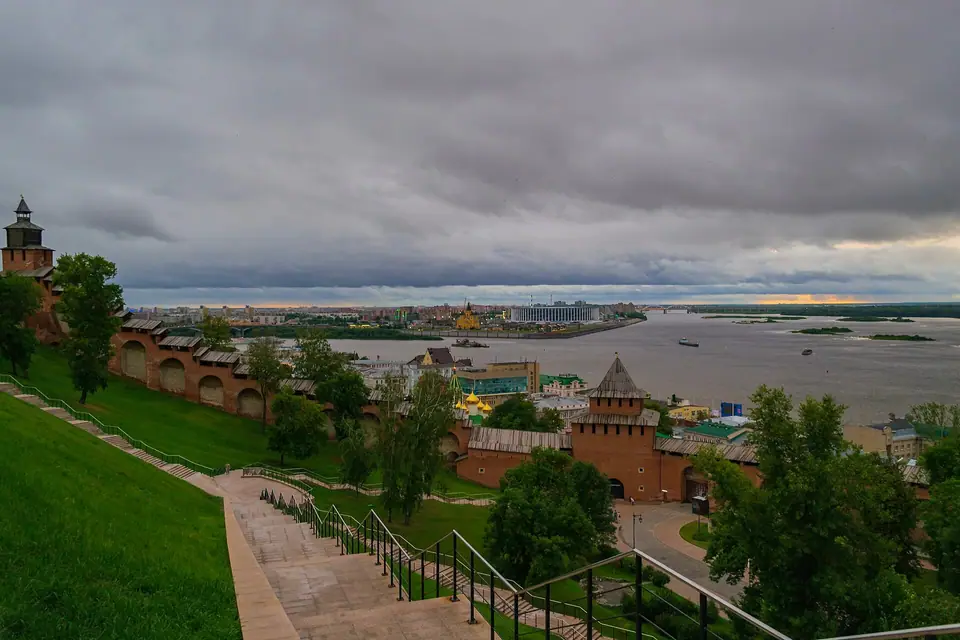
Nizhny Novgorod: Upper Bluffs, Strelka and Seasons
How Nizhny Novgorod fits together across the Oka River, linking the sixteenth-century hilltop Kremlin and merchant boulevards with the 1817 Fairgrounds.
Founded in 1221 by Grand Prince Yuri II Vsevolodovich of Vladimir on the wooded hills above the confluence of the Oka and Volga rivers, 420 kilometres east of Moscow, Nizhny Novgorod grew into a major frontier stronghold and later the commercial heart of the Volga basin. In the mid-fourteenth century Prince Konstantin Vasilyevich moved the capital of the Suzdal-Nizhny Novgorod principality here from Suzdal, and in 1612 local merchant Kuzma Minin and Prince Dmitry Pozharsky assembled the national militia that liberated Moscow during the Time of Troubles. Renamed Gorky from 7 October 1932 to 22 October 1990 after writer Maxim Gorky, who was born here in 1868 as Alexey Maximovich Peshkov, the city restored its historic riverfront parks, museums, and embankments for its 800th anniversary in 2021.
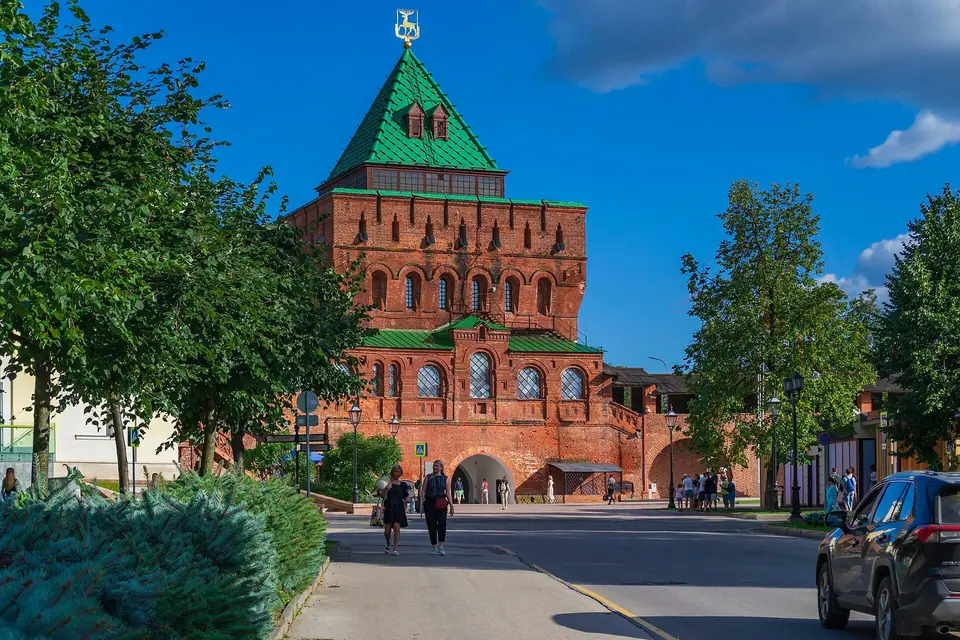
Upper Town and Lower Town Layout
The Oka River divides Nizhny Novgorod into two distinct halves across eight city districts. On the high eastern right bank rises the hilly historic Upper Town (Nagornaya), encompassing Nizhegorodsky, Prioksky, and Sovetsky districts. Here the 1500 to 1515 Nizhny Novgorod Kremlin, Minin and Pozharsky Square, pedestrianised Bolshaya Pokrovskaya Street, and the cliff-top Upper Volga and Fedorovsky embankments sit 80 metres above the water. Directly below the fortress walls along the riverfront runs Rozhdestvenskaya Street, the old Lower Posad merchant quarter where salt, grain, and shipping companies operated beside the Oka docks.
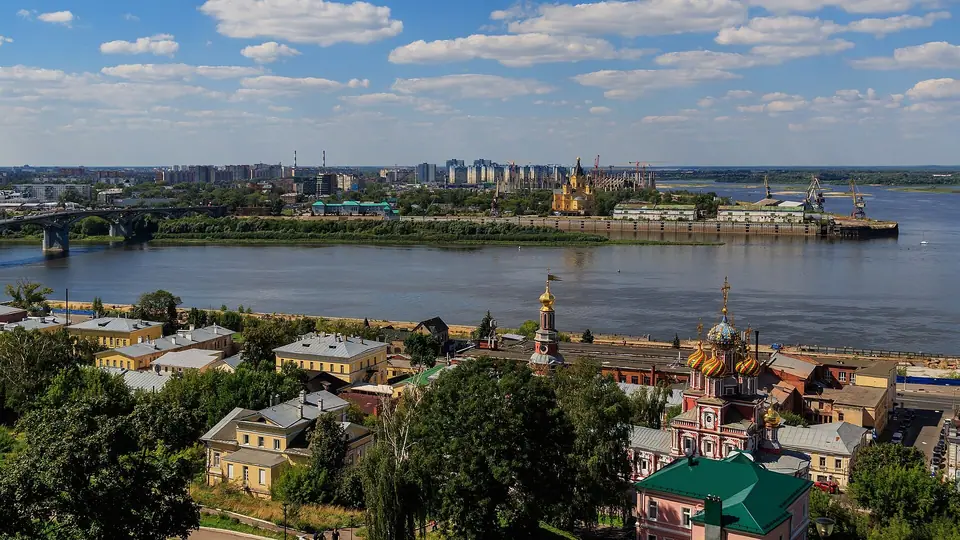
Strelka Spit, the Fairgrounds and When to Visit
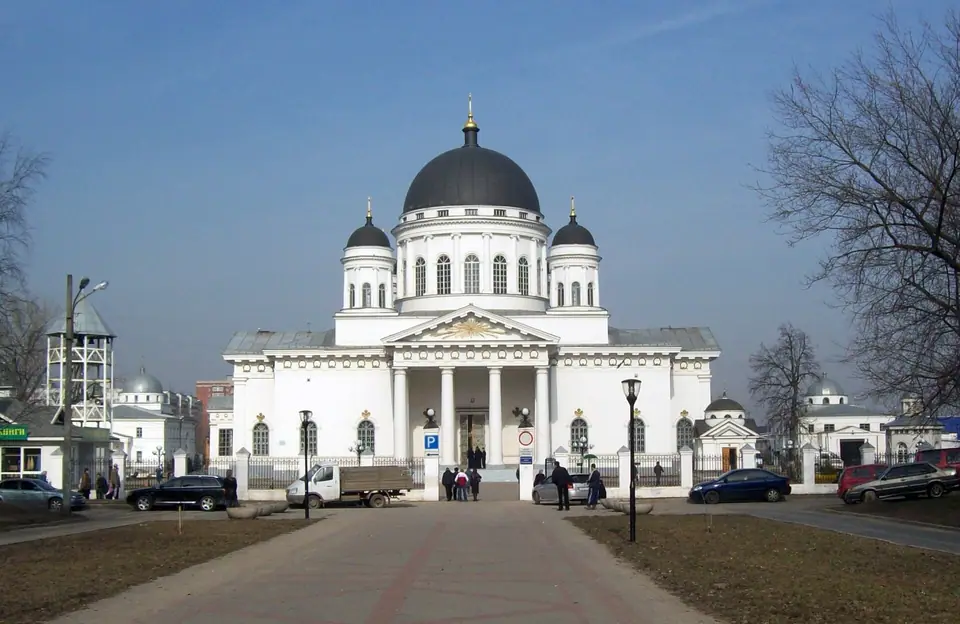
Across the Oka on the low western bank lies the flat Lower Town (Zarechnaya), which includes Kanavinsky, Avtozavodsky, Sormovsky, Moskovsky, and Leninsky districts. At the river confluence projects the Strelka Spit, crowned by the 87-metre Alexander Nevsky Cathedral (built 1868 to 1881) and the iron lattice Pakgauzy pavilions preserved from the 1882 Moscow and 1896 All-Russia Exhibitions. Just inland stand the 1890 Main Fair Building and the 1822 Empire-style Old Fair Cathedral, built after the great trade fair moved here from Makaryevo in 1817 under engineer Agustín de Betancourt. Warm months from May to September bring long sunset walks along the northwest-facing embankments (giving Nizhny Novgorod its nickname as the "Capital of Sunsets"), rides on the Volga aerial cable car to Bor, and Valdai hydrofoil excursions to Gorodets, while winter wraps the brick Kremlin and river terraces in snow. Read our things-to-do guide, arrival guide, accommodation guide, and 3-day itinerary to plan your visit across both banks of the Oka and Volga.
Traveller tips
Real advice from people who have been to Nizhny Novgorod: Upper Bluffs, Strelka and Seasons. Every tip is read by our team before it goes live.
No tips yet. Been here? Yours could be the first.
Thank you! Your tip will appear here after a quick review.
More in Nizhny Novgorod
Continue exploring Nizhny Novgorod with related neighbourhood, food, and planning guides
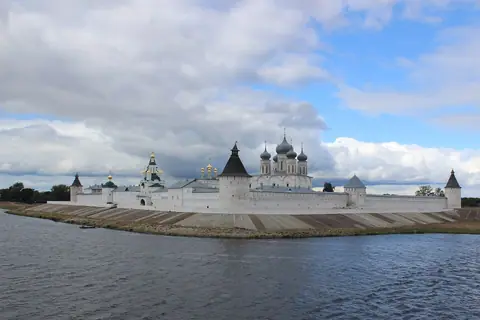
Day Trips from Nizhny Novgorod: Gorodets, Makaryev and Shukhov Tower
Nizhny Novgorod, Russia
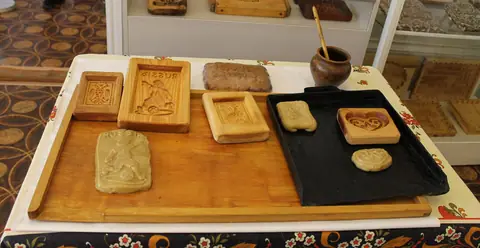
What to Eat in Nizhny Novgorod: Volga Fish, Ukha and Gorodets Pryanik
Nizhny Novgorod, Russia
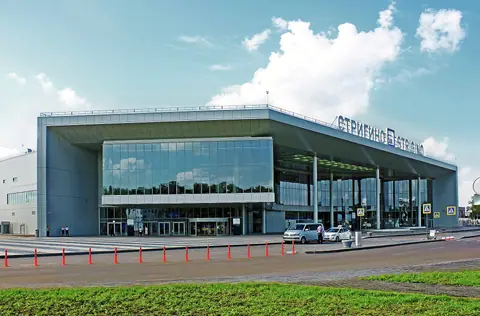
How to Get to Nizhny Novgorod: Strigino Airport and Lastochka Trains
Nizhny Novgorod, Russia
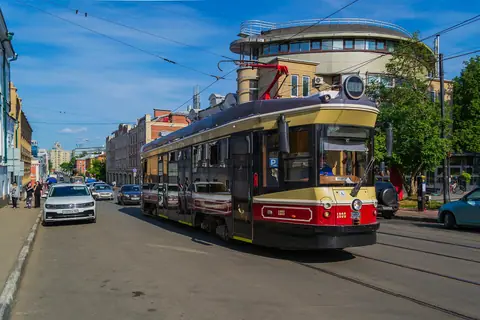
Getting Around Nizhny Novgorod: Metro Bridge, Trams and Cableway
Nizhny Novgorod, Russia
