


























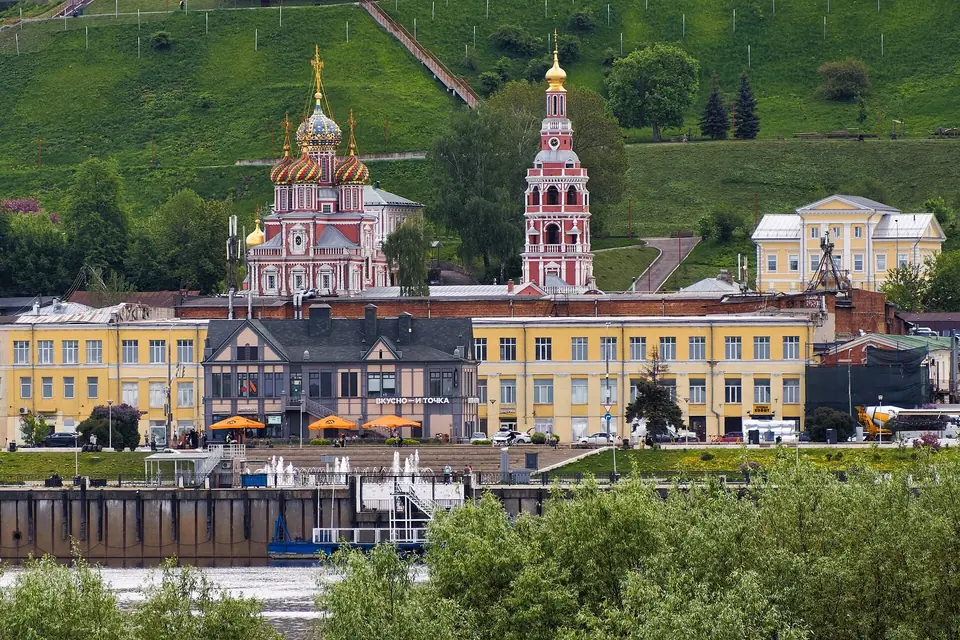
Rozhdestvenskaya Street, Stroganov Church and Fedorovsky Embankment
Running along the foot of the Upper Town bluffs, the merchant street of the Lower Posad leads from the Kremlin walls to the carved 1719 Stroganov Church.
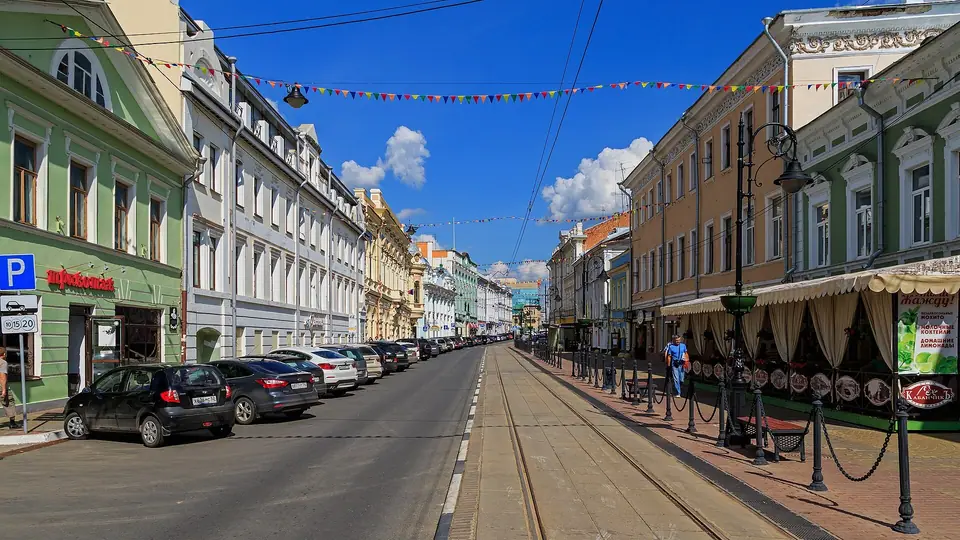
Stretching from National Unity Square at the foot of the Ivanovskaya Tower of the Nizhny Novgorod Kremlin west to Alexander Nevsky Square before Kanavinsky Bridge, Rozhdestvenskaya Street was the commercial heart of the Lower Posad (Nizhny Posad). Throughout the nineteenth century, when the Nizhny Novgorod Fair operated across the Oka, banking houses, steamship companies, hotels, and salt, tea, and grain merchants built stone offices and arcades along this lower street parallel to the Lower Volga Embankment. Today Rozhdestvenskaya Street is lined with protected architectural monuments, wide granite pavements, cast-iron streetlamps, and the historic Tram 11 line.
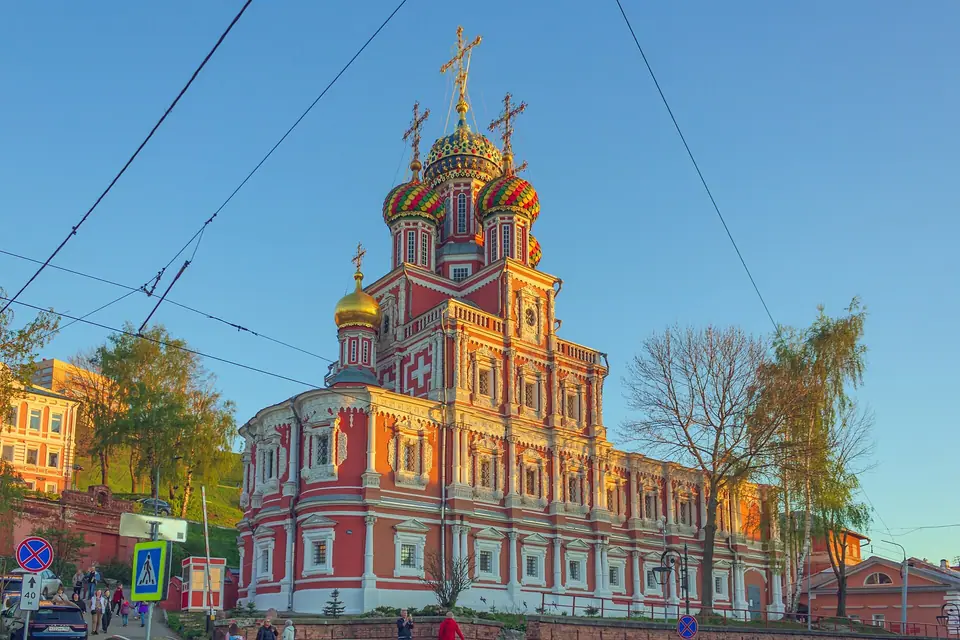
The 1719 Stroganov Church and National Unity Square
At the eastern start of the walk on National Unity Square stands the red-brick Church of the Nativity of John the Baptist on the Torg (rebuilt in stone in 1676 to 1683 and restored in 2004, with the bronze copy of Ivan Martos's monument to Minin and Pozharsky in front) alongside the Blinov Passage (built in the 1870s at no. 24) and the Bugrov merchant buildings. Further west at 34 Rozhdestvenskaya Street rises the Church of the Nativity of the Blessed Virgin Mary, universally known as the Stroganov Church. Commissioned by salt industrialist Grigory Dmitrievich Stroganov in 1696 and completed by his widow Maria Yakovlevna, the church was consecrated in 1719 by Archbishop Pitirim. A masterpiece of the Stroganov Baroque style, its red-brick walls are richly encrusted with white stone carvings around windows, columns, and portals, while five domes painted in swirling multi-coloured patterns recall Saint Basil's Cathedral in Moscow. Its octagonal bell tower carries a nineteenth-century clock.
Annunciation Monastery at the Oka Mouth
At the western end of Rozhdestvenskaya Street on the hillside above Kanavinsky Bridge stands the Annunciation (Blagoveshchensky) Monastery, the oldest monastery in the city, founded in the early thirteenth century and rebuilt in the seventeenth century with its five-domed 1649 Annunciation Cathedral, bell tower, and whitewashed walls.
Fedorovsky Embankment and 800th Anniversary Park
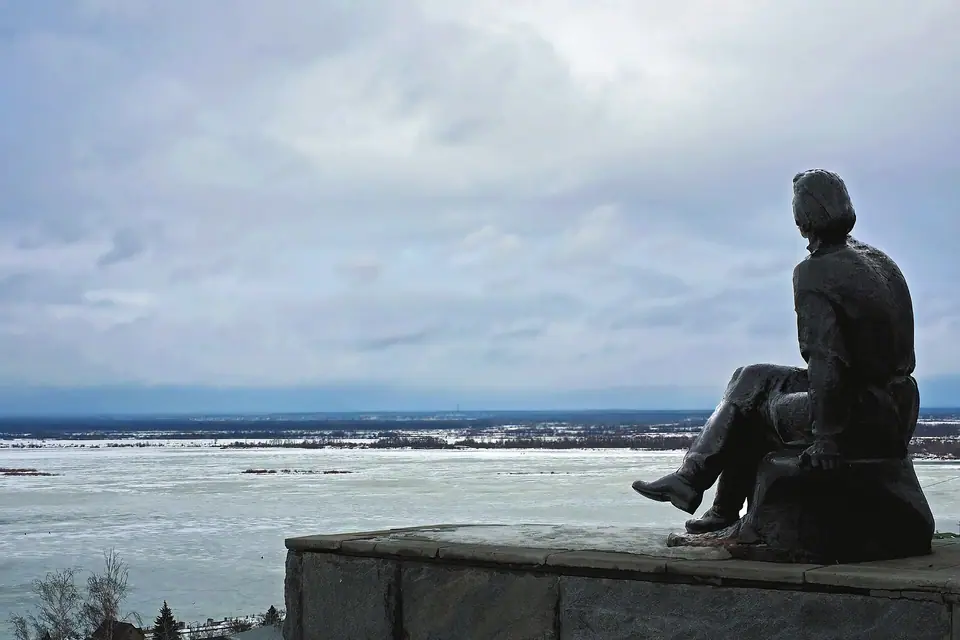
From Rozhdestvenskaya Street, stepped walkways and footbridges climb the steep Pochainsky and hillside ravines to Fedorovsky Embankment, laid out after Emperor Nicholas I's 1834 visit, named after mineralogist Nikolai Fedorovsky in 1963, and transformed in 2021 into the terraced Park of the 800th Anniversary of Nizhny Novgorod around the 1972 bronze Maxim Gorky monument by Ivan Shmagun, looking directly across to Strelka Spit.
Traveller tips
Real advice from people who have been to Rozhdestvenskaya Street, Stroganov Church and Fedorovsky Embankment. Every tip is read by our team before it goes live.
No tips yet. Been here? Yours could be the first.
Thank you! Your tip will appear here after a quick review.
More in Nizhny Novgorod
Continue exploring Nizhny Novgorod with related neighbourhood, food, and planning guides
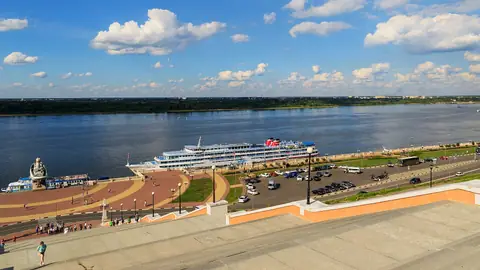
Chkalov Stairs and Upper Volga Embankment: Mansions and River Views
Nizhny Novgorod, Russia
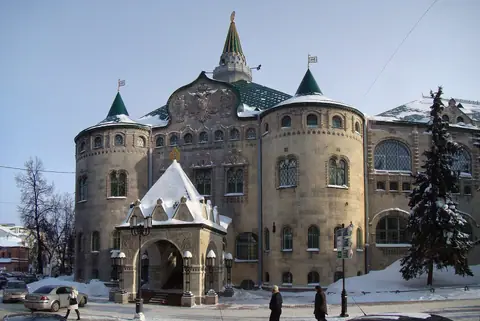
Bolshaya Pokrovskaya Street and the 1913 Neo-Russian State Bank
Nizhny Novgorod, Russia
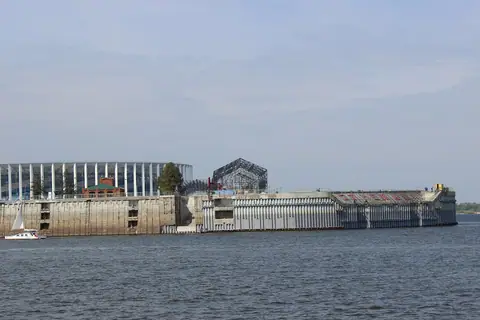
Strelka Spit: Alexander Nevsky Cathedral, Pakgauzy and Fairgrounds
Nizhny Novgorod, Russia
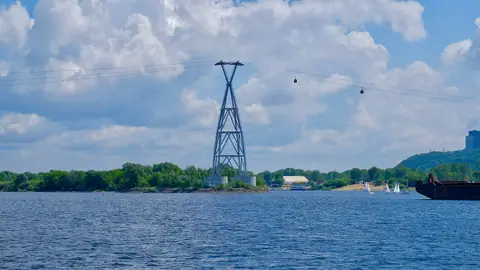
Volga Aerial Cable Car to Bor and Pechersky Ascension Monastery
Nizhny Novgorod, Russia
