


























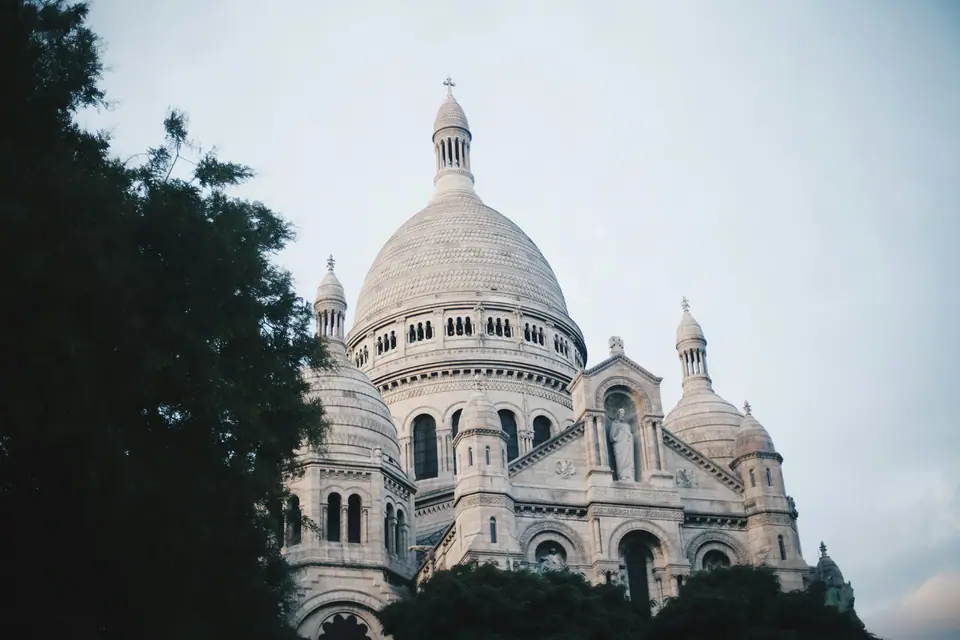
Photo by DAVID TAPIA SAN MARTIN on Unsplash
Montmartre Walking Guide: Sacré-Cœur, Artists' Lanes & Vineyard Route
A downhill walking loop across Paris's 130-metre hilltop village, from the Art Nouveau kiosk at Abbesses to Sacré-Cœur, the vineyard, and Rue Lepic.
The limestone and gypsum hill of Montmartre (mohn-MAR-truh) rises to 130 metres above sea level in the 18th arrondissement at the northern edge of the Right Bank. That elevation makes it Paris's highest natural point. Named after Saint Denis (martyred around 250 CE), it stayed an independent village outside the tax walls until Baron Haussmann annexed it in 1860. Wine untaxed by the city customs barrier (Mur des Fermiers Généraux) was cheap here, and hillside studio rents were low. Those conditions drew late nineteenth- and early twentieth-century artists to the hill. Edgar Degas, Pierre-Auguste Renoir, Vincent van Gogh, Henri de Toulouse-Lautrec, Suzanne Valadon, Amedeo Modigliani, and Pablo Picasso all lived and painted along its cobbled lanes. Today, crowds pack the front steps of Sacré-Cœur and the portrait easels of Place du Tertre. Walking two blocks north down the back slope, however, reveals quiet ivy-covered stairs, two surviving windmills, and Paris's last working vineyard.
How to reach the hilltop: Abbesses Metro vs Funiculaire de Montmartre
The Butte Montmartre rises steeply above Boulevard de Clichy and Boulevard de Rochechouart. How you arrive determines how many stairs your knees face before the walk begins:
- Abbesses Station (Metro Line 12) vs Anvers Station + Funiculaire de Montmartre. For our self-guided walking loop below, ride Metro Line 12 to Abbesses, the deepest metro station in Paris at 36 metres underground. Follow the platform signs for the lift (ascenseur) rather than climbing the 176 mural-lined spiral stairs. You step out beneath one of only two surviving original 1900 Hector Guimard glass-and-cast-iron Art Nouveau canopies (édicules). If you want to reach the parvis of Sacré-Cœur with zero uphill climbing, ride Metro Line 2 to Anvers instead. Walk two blocks north up Rue de Steinkerque to Place Louise-Michel and board the automatic electric Funiculaire de Montmartre (opened in 1900). It climbs the 36-metre vertical slope beside the 222 steps of Rue Foyatier in 90 seconds. The funicular accepts a standard RATP Metro-Train-RER fare on your Navigo Easy card.
Step-by-step Montmartre walking route (2.5 to 3 hours, mostly downhill after Sacré-Cœur)
- Place des Abbesses & the Mur des Je t'aime (Wall of Love). Step out of Abbesses station onto triangular Place des Abbesses and walk twenty metres into the tiny garden of Square Jehan-Rictus. There stands the Mur des Je t'aime, created in 2000 by calligrapher Fédéric Baron and muralist Claire Kito. "I love you" is inscribed 311 times in 250 languages across 612 dark-blue enamelled lava tiles spanning 40 square metres. Across the square stands the red-brick Church of Saint-Jean-de-Montmartre (1894 to 1904), the first church in France built with reinforced concrete.
- Place Émile-Goudeau & the Bateau-Lavoir (13 Place Émile-Goudeau). Climb five minutes up Rue Ravignan to shaded, cobble-paved Place Émile-Goudeau around its cast-iron Wallace fountain. At Number 13 stands the timber studio building nicknamed the Bateau-Lavoir ("Laundry Boat"). Here Pablo Picasso lived from 1904 to 1909 and painted Les Demoiselles d'Avignon in 1907, launching Cubism. Though the interior burned in 1970 and was rebuilt as private studios, a historical window display tells its story.
- Basilique du Sacré-Cœur & Saint-Pierre de Montmartre. Follow Rue Azaïs onto the upper terrace of the Basilica of the Sacred Heart (Sacré-Cœur, sah-kray KUR). Architect Paul Abadie designed it in Romano-Byzantine style after the Franco-Prussian War and Paris Commune of 1870 to 1871. Construction began in 1875 and the basilica was consecrated in 1919. Its four domes and 83-metre bell tower (holding the 19-tonne Savoyarde bell, cast in 1895) are built of Château-Landon travertine stone. That stone exudes calcite when it rains and bleaches whiter with age. Entry to the basilica nave, crowned by Luc-Olivier Merson's 475-square-metre gold ceiling mosaic of Christ in Majesty (1922), is free daily from morning to late evening. A separate ticket lets you climb 300 spiral steps to the Dome for a 360-degree view from 200 metres above the Seine. Next door stands Église Saint-Pierre de Montmartre, consecrated in 1147 for the royal Benedictine Abbey and holding four ancient Roman marble columns.
- Place du Tertre, La Maison Rose, Clos Montmartre Vineyard & Au Lapin Agile. Walk immediately west of Saint-Pierre across Place du Tertre, the old village square where up to 140 licensed portraitists share easels. Look briefly and skip the overpriced surrounding cafés. Turn north onto quiet Rue de l'Abreuvoir past the pink-and-green corner facade of La Maison Rose. Germaine Gargallo and Ramon Pichot opened this famous corner spot in 1908 at the top of Rue des Saules. On your left sits the Clos Montmartre, a working 1,556-square-metre hillside vineyard planted in 1933 with 1,762 Gamay and Pinot Noir vines. It produces around 1,000 bottles a year for charity. Opposite its lower corner stands the ochre cottage of Au Lapin Agile (oh lah-PAHN ah-ZHEEL, 22 Rue des Saules). Operating since 1860, the cabaret still displays André Gill's 1875 sign of a rabbit leaping from a saucepan.
- Musée de Montmartre, Moulin de la Galette, Rue Lepic & Moulin Rouge. Step into the Musée de Montmartre and Renoir Gardens at 12 Rue Cortot, the oldest house on the Butte, dating to the seventeenth century. Renoir painted here in 1876 and Suzanne Valadon kept her studio upstairs. Then stroll west along Rue Lepic past the wooden Moulin de la Galette. The windmill pairs the 1622 Moulin Blute-Fin with the 1717 Moulin Radet, immortalised in Renoir's 1876 canvas at the Musée d'Orsay. Pass Number 54, where Vincent and Theo van Gogh lived from 1886 to 1888, and the Café des Deux Moulins at 15 Rue Lepic from the 2001 film Amélie. Finish at the red neon sails of the 1889 Moulin Rouge cabaret at Place Blanche on Boulevard de Clichy (Metro Line 2).
Avoiding the Sacré-Cœur bracelet scam and picking the best time of day
Montmartre is dramatically calmer during the early morning on weekdays, when bakery shutters rise along Rue des Martyrs and Rue Caulaincourt. When climbing or descending the lower garden stairs of Square Louise-Michel below Sacré-Cœur, watch for the well-known friendship-bracelet scam. Men standing on the steps hold out woven string and try to loop a tight knot around your wrist. Once tied, they demand cash. Keep your hands in your pockets or folded across your chest, and say a firm "Non" without breaking stride. Better yet, use the side staircase along Rue du Chevalier-de-la-Barre and Rue Paul-Albert instead, which connects seamlessly to our Paris 3-day itinerary and neighbourhood guide.
Where it is
- 1Montmartre Walking
- Paris-Orly Airport (ORY) · about 18 km from here in a straight line
- Directions in Google Maps
Stations and taxi ranks: OpenStreetMap. Airports: OurAirports. Distances are in a straight line.
Traveller tips
Real advice from people who have been to Paris. Every tip is read by our team before it goes live.
No tips yet. Been here? Yours could be the first.
Thank you! Your tip will appear here after a quick review.
More in Paris
Continue exploring Paris with related neighbourhood, food, and planning guides
Best Time to Visit Paris: Month-by-Month Weather, Crowds & Events
Paris, France
What to Wear in Paris: Season-by-Season Packing, Shoes & Museum Rules
Paris, France
Eiffel Tower Guide: Summit vs 2nd Floor Tickets, Stairs & Viewpoints
Paris, France
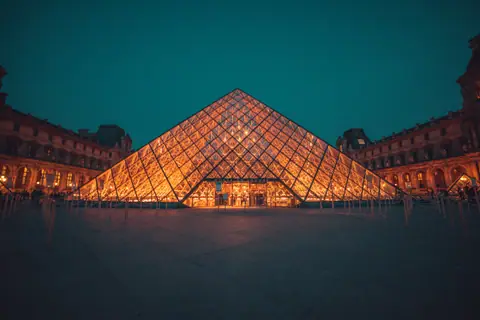
Louvre Museum Guide: Entrances, 3 Wings, Masterpieces & Timed Tickets
Paris, France
