


























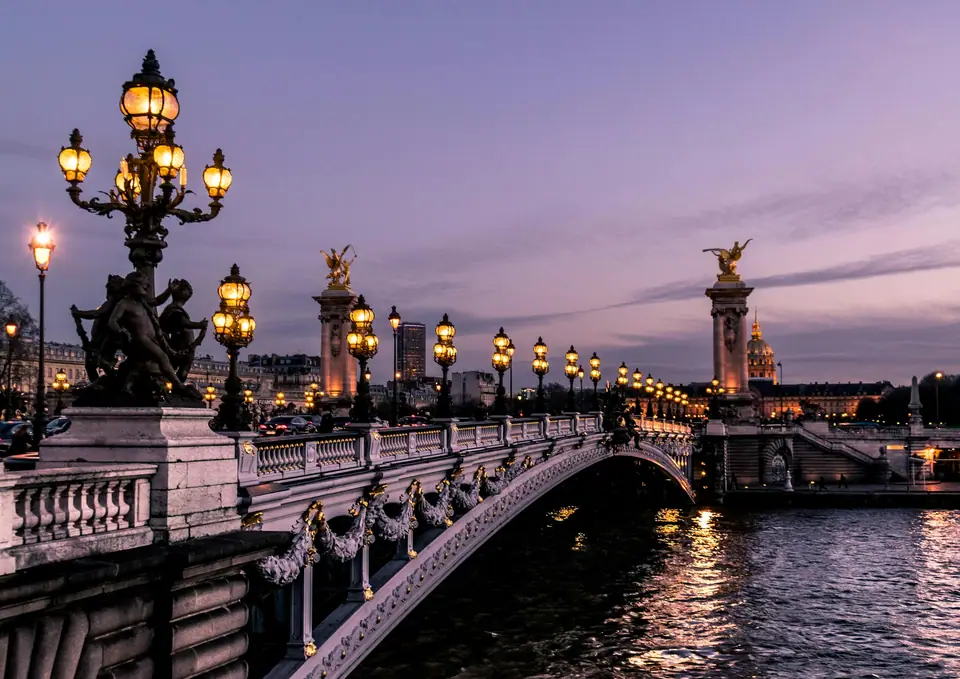
Photo by Léonard Cotte on Unsplash
Best Things to Do in Paris: 12 Iconic Landmarks, Museums & Walks
From Gothic stained glass on the Île de la Cité and Impressionist halls at the Orsay to underground ossuaries and nineteenth-century covered passages.
Paris concentrates more architectural monuments and fine-art collections inside a five-kilometre radius than almost any other capital in Europe. Trying to see everything on a single visit guarantees museum fatigue. The smarter approach is to pair one major ticketed collection each morning with a free architectural walk, royal garden, or historic covered arcade in the afternoon. You can follow those exact geographical clusters in our Paris 3-day itinerary.
Île de la Cité: Restored Notre-Dame Cathedral and Sainte-Chapelle
Every first trip to Paris should begin on the Île de la Cité. This boat-shaped island in the Seine is where Roman Lutetia and medieval France began. At its eastern tip rises the twin-towered Gothic facade of Cathédrale Notre-Dame de Paris. Begun under Bishop Maurice de Sully in 1163, the cathedral was completed in the fourteenth century. After the roof fire of 15 April 2019, master stonecutters, carpenters, and stained-glass artisans rebuilt the oak roof truss. They also restored the 96-metre Viollet-le-Duc spire and the vaulted limestone ceiling. Since its reopening in December 2024, the cleaned blonde Lutetian stone interior glows with remarkable brightness. Entry to the cathedral nave is free; check the official site for free digital reservation slots.
Three hundred metres west inside the courtyard of the Palais de Justice stands the royal reliquary chapel of Sainte-Chapelle (sahnt shah-PELL). King Louis IX (Saint Louis) consecrated it on 26 April 1248 to house the Crown of Thorns. Climb the narrow spiral stair from the painted Lower Chapel into the soaring Upper Chapel. There, fifteen lancet windows reaching 15 metres high replace load-bearing stone walls. Together they display 1,113 thirteenth-century stained-glass biblical scenes. Book a midday slot on a sunny day when daylight illuminates the red and blue glass.
The Great Art Museums: The Louvre, Musée d'Orsay, and Orangerie
Three world-famous museums line a two-kilometre stretch of the Seine between Pont des Arts and Place de la Concorde. Each occupies a converted historic building:
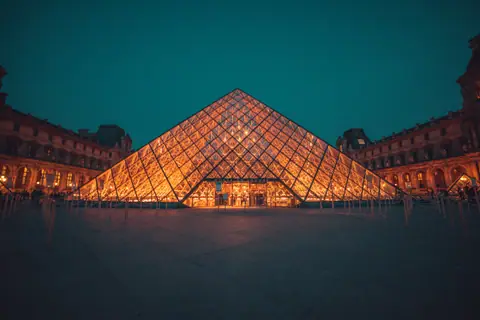
- Musée du Louvre vs Musée d'Orsay. Housed in the former royal palace on the Right Bank, the Musée du Louvre (opened in 1793) spans 72,735 square metres of gallery space. Its rooms trace art from Mesopotamian antiquities to 1848 European painting. Plan a focused three-hour visit using our wing-by-wing route. Directly across the river on the Left Bank stands the Musée d'Orsay (moo-ZAY dor-SAY). It occupies Victor Laloux's Beaux-Arts railway station built for the 1900 World's Fair. Opened as a museum in 1986, it picks up the chronological story from 1848 to 1914. The Orsay holds the world's largest collection of Impressionist and Post-Impressionist canvases by Monet, Manet, Degas, Renoir, Cézanne, and Van Gogh. Most visitors can enjoy its highlights comfortably in two and a half hours.
- Musée de l'Orangerie (Tuileries Garden). At the western edge of the Tuileries stands an 1852 citrus shelter near Place de la Concorde. Inside, Claude Monet designed two custom oval white rooms (opened in 1927) to display eight monumental panels of his Nymphéas (Water Lilies). The curved canvases span 200 square metres above a lower level of Cézanne, Matisse, and Modigliani works.
- Musée Rodin (Hôtel Biron, 7th Arrondissement). Just south of the golden dome of Les Invalides, sculptor Auguste Rodin lived inside the eighteenth-century Hôtel Biron from 1908 until 1917. Its 3-hectare sculpture garden displays original bronze casts among rose beds. Highlights include The Thinker (Le Penseur), The Gates of Hell, and The Burghers of Calais.
The Eiffel Tower, Arc de Triomphe, and the UNESCO Seine Quays
Rising 330 metres above the Champ de Mars, Gustave Eiffel's 1889 wrought-iron lattice tower anchors the western skyline. Our Eiffel Tower guide compares second-floor stair tickets, summit lifts, and the hourly five-minute evening light sparkle. For a classic panoramic photograph that includes the Eiffel Tower in the frame, head to Place Charles de Gaulle. Climb the 284 steps inside the 50-metre Arc de Triomphe, commissioned by Napoleon in 1806 and inaugurated in 1836. From its roof terrace, twelve grand avenues radiate outward in a star (L'Étoile).
Connecting the Eiffel Tower to the Île de la Cité are the pedestrianised lower quays of the Parc Rives de Seine. Walking the five kilometres from Notre-Dame past the 1607 stone arches of Pont Neuf (the oldest standing bridge in Paris) takes 90 minutes. Along the route you cross the gilded winged horses of the 1900 Pont Alexandre III. Along the upper parapet sit the dark-green metal boxes of the bouquinistes (boo-kee-NEEST). These second-hand booksellers have operated riverside stalls for four centuries.
Underground & Hilltop Paris: Montmartre, the Catacombs, and Père Lachaise
- Montmartre and Sacré-Cœur Basilica (18th Arrondissement). Rising 130 metres above sea level on Paris's highest natural hill, the white travertine domes of Sacré-Cœur overlook cobbled lanes where Renoir and Picasso painted. Follow our step-by-step Montmartre walking route.
- The Paris Catacombs (14th Arrondissement, Place Denfert-Rochereau). Twenty metres beneath the Left Bank lie former Lutetian limestone quarry tunnels. Engineers converted them into a municipal ossuary between 1786 and 1814 when overcrowded parish cemeteries were cleared. A 1.5-kilometre underground walk passes stacked femurs and skulls belonging to approximately 6 million Parisians. Visitors descend 131 spiral steps and climb 112 steps at a constant temperature of 14°C.
- Père Lachaise Cemetery (20th Arrondissement). Napoleon opened this famous hillside cemetery in 1804 across 44 hectares of wooded lanes holding 70,000 burial plots. Visitors walk among the graves of Frédéric Chopin, Édith Piaf, Marcel Proust, Jim Morrison, and Oscar Wilde. Entry is free.
Royal Parks, Canal Saint-Martin, and the Covered Passages
Balance museum hours with Paris's historic green spaces and nineteenth-century arcades. On the Left Bank, Queen Marie de' Medici created the 23-hectare Jardin du Luxembourg in 1612. The gardens surround the Palais du Luxembourg, which today houses the French Senate. Visitors pull olive-green metal chairs beside the octagonal pond or the 1630 Medici Fountain. On the northeastern Right Bank, the 4.5-kilometre Canal Saint-Martin opened in 1825 across the 10th and 11th arrondissements. It draws locals to its arched iron footbridges and water locks. On rainy afternoons, step inside the glass-roofed Passages Couverts of the 2nd and 9th arrondissements. Highlights include Passage des Panoramas (1799), Galerie Vivienne (1823), and Passage Jouffroy (1845), all featured in our Paris seasonal guide.
Where it is
- 1Paris
- Paris-Orly Airport (ORY) · about 14 km from Paris in a straight line
- Directions in Google Maps
Stations and taxi ranks: OpenStreetMap. Airports: OurAirports. Distances are in a straight line.
Traveller tips
Real advice from people who have been to Paris. Every tip is read by our team before it goes live.
No tips yet. Been here? Yours could be the first.
Thank you! Your tip will appear here after a quick review.
More in Paris
Continue exploring Paris with related neighbourhood, food, and planning guides
Best Time to Visit Paris: Month-by-Month Weather, Crowds & Events
Paris, France
What to Wear in Paris: Season-by-Season Packing, Shoes & Museum Rules
Paris, France
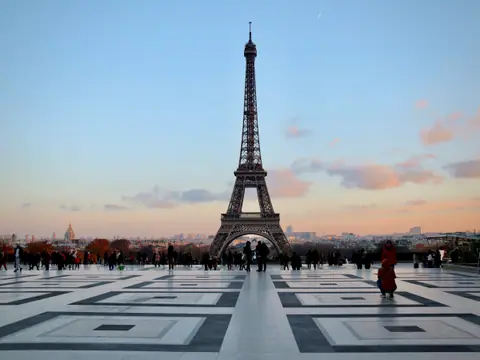
Eiffel Tower Guide: Summit vs 2nd Floor Tickets, Stairs & Viewpoints
Paris, France
Louvre Museum Guide: Entrances, 3 Wings, Masterpieces & Timed Tickets
Paris, France
