


























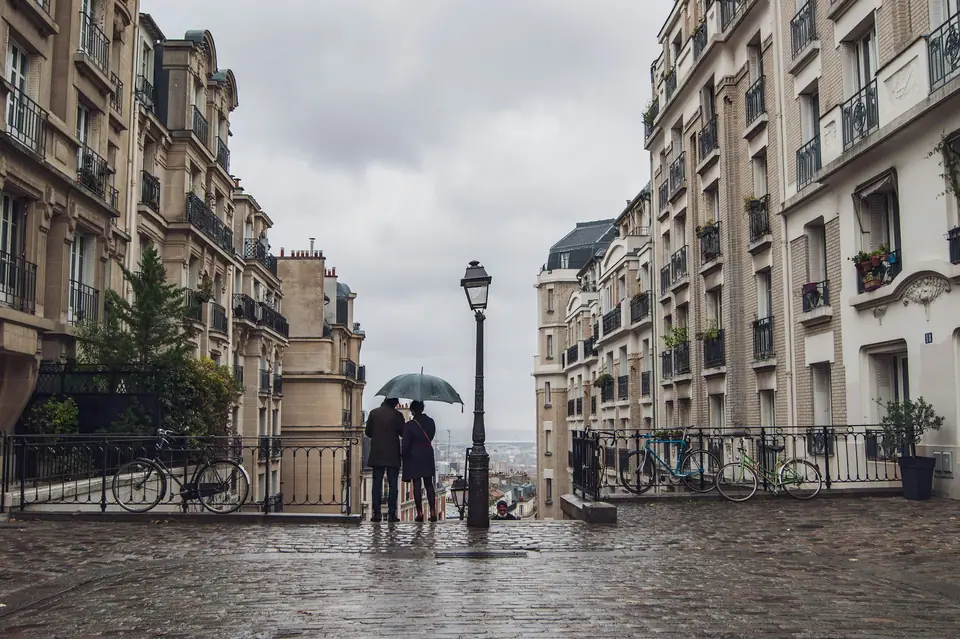
Photo by Jean-Baptiste D on Unsplash
What to Wear in Paris: Season-by-Season Packing, Shoes & Museum Rules
Why broken-in shoes and neutral layers matter more than trends, plus bag rules at the Louvre and temperature drops inside the Catacombs.
Dressing well in Paris has nothing to do with runway fashion and everything to do with two practical realities. First, you will walk 12 to 18 kilometres (15,000 to 22,000 steps) a day across granite cobbles and limestone gravel. Second, you will spend hours moving between windy Seine bridges, non-air-conditioned nineteenth-century metro tunnels, and strict museum security checkpoints. Locals rely on a simple uniform of well-cut neutral layers in navy, black, charcoal, camel, olive, and crisp white. They pair these neutrals with broken-in leather trainers or ankle boots. Packing around that same capsule palette lets you move effortlessly from a morning climb in Montmartre to the Louvre and an evening bistro in the Marais.
Footwear engineering: surviving cobbles, gravel, and 300 metro stairs
Before packing a single jacket, test your shoes on a two-hour brisk walk at home. Parisian street surfaces are far more varied and unforgiving than smooth pavement:
- What you walk on. In historic quarters like the Marais, the Latin Quarter, and the Butte Montmartre, streets have uneven sandstone and granite cobbles (pavés, pah-VAY) that punish thin soles. Those stones become slick after a brief rain shower. In the Tuileries Garden, the Jardin du Luxembourg, and the Palais-Royal, paths are surfaced with fine pale crushed limestone gravel. That fine stone coats dark suede shoes in white dust and works its way into open sandals. In addition, many central stations on the 1900 RATP Metro network lack escalators or lifts from platform to street level. You will easily climb 200 to 400 concrete steps every day.
- What works vs What to leave behind. Pack two alternating pairs of broken-in, supportive closed-toe shoes. Ideal pairs include leather low-profile walking trainers (in white, black, or neutral tones) and flat leather loafers or rubber-soled Chelsea boots. Rotating shoes between days prevents blisters. Leave brand-new stiff shoes, thin flip-flops, and narrow stiletto heels at home. High heels wedge between Montmartre cobbles and are prohibited on fragile historic parquet floors at monuments such as the Palace of Versailles.
Season-by-season layering for Seine breezes and microclimates
Paris averages 9 to 13 wet days every month (51 to 76 mm of monthly rainfall), and wind funnels steadily along the open Seine corridor. Three light layers always outperform one heavy coat; check our Paris weather calendar before zipping your suitcase:
- Spring (March to May, highs 12°C to 19°C, lows 4°C to 10°C). Morning breezes along the Pont Neuf and Trocadéro feel crisp even when afternoon sun warms café terraces to 18°C. Bring a water-resistant trench coat or wool jacket, a merino jumper, cotton shirts, dark denim or tailored trousers, and a scarf.
- Summer (June to August, highs 23°C to 26°C, Heatwaves 34°C+). Pack breathable natural fabrics such as linen shirts, lightweight cotton trousers, midi skirts, or structured dresses, plus UV sunglasses and a compact foldable hand fan. Avoid heavy synthetic fabrics. Many historic hotels, traditional bistros, and older Metro lines (Lines 6, 7, 8, 12, and 13) have no air conditioning and feel warm at rush hour. Even in July, tuck a light cardigan into your day bag if you have booked the Paris Catacombs. Those quarry tunnels 20 metres underground remain a damp 14°C year-round. Bring that same layer for an evening Eiffel Tower summit slot 276 metres up in the wind.
- Autumn (September to November, highs 22°C dropping to 11°C). September days still suit light cotton layers and an unstructured blazer. October and November require waterproof leather ankle boots, a lined wool coat or weatherproof raincoat, and a sturdy wind-resistant compact umbrella.
- Winter (December to February, highs 7°C to 10°C, lows 2°C to 4°C). Damp oceanic humidity at 80 percent makes 4°C beside the Seine feel biting. Pack a thermal base layer, a warm wool overcoat or tailored down coat, leather gloves, a knit hat, a wool scarf, and thick wool socks. Because museums like the Louvre and Musée d'Orsay are strongly heated inside, wear layers you can peel off easily at the cloakroom.
Church etiquette, dining dress codes, and museum bag dimensions
- Cathedrals and Basilicas (Notre-Dame, Sacré-Cœur, Sainte-Chapelle). Parisian churches do not post strict bare-knee guards at every door like the Vatican in Rome, yet active places of worship require modest, respectful dress. Remove hats or caps immediately upon entering restored Notre-Dame Cathedral and Sacré-Cœur Basilica. Avoid beachwear or low-cut sleeveless vests in summer, and keep a light cotton scarf in your bag to drape over bare shoulders.
- Evening Bistros, Brasseries, and Michelin Dining. Parisians rarely wear gym leggings, running shorts, or oversized graphic hoodies outside of exercising in a park. For 90 percent of neighbourhood bistros, wine bars, and historic brasseries (such as Bouillon Chartier, Bofinger, or Lipp), smart-casual daytime attire is completely appropriate. Dark jeans or chinos, a collared shirt or neat knitwear, and clean leather trainers or loafers fit right in. For a Michelin-starred dining room or an evening at the Palais Garnier, wear tailored trousers, a blazer or dress, and leather shoes.
- Museum Cloakroom Limits & Anti-Pickpocket Bags. Under France's Vigipirate security rules, major museums ban large suitcases and backpacks exceeding 55 by 35 by 20 centimetres inside the building. That rule applies at the Musée du Louvre, Musée d'Orsay, Centre Pompidou, and Sainte-Chapelle. Smaller backpacks and wet umbrellas must go into the free cloakroom (vestiaire). Carry a compact zip-top crossbody bag worn in front of your body on the RER B, Metro Line 1, and around Trocadéro and Sacré-Cœur.
6-item daily day-pack checklist for Paris sightseeing
Before stepping out of your hotel each morning, check that your zip-top crossbody bag holds six compact essentials. Pack a refillable water bottle for the city's 1,200 free Eau de Paris fountains and a portable phone power bank, since digital QR tickets and Navigo passes drain batteries fast. Add a compact windproof umbrella, a lightweight cotton scarf, and tissues or hand sanitiser for public automated street toilets (sanisettes). Finally, carry your passport or national ID card if collecting age-verified museum admission.
Where it is
- 1Paris
- Paris-Orly Airport (ORY) · about 14 km from Paris in a straight line
- Directions in Google Maps
Stations and taxi ranks: OpenStreetMap. Airports: OurAirports. Distances are in a straight line.
Traveller tips
Real advice from people who have been to Paris. Every tip is read by our team before it goes live.
No tips yet. Been here? Yours could be the first.
Thank you! Your tip will appear here after a quick review.
More in Paris
Continue exploring Paris with related neighbourhood, food, and planning guides
Louvre Museum Guide: Entrances, 3 Wings, Masterpieces & Timed Tickets
Paris, France

Montmartre Walking Guide: Sacré-Cœur, Artists' Lanes & Vineyard Route
Paris, France

Where to Stay in Paris: Best Arrondissements & Neighbourhoods Compared
Paris, France
Paris 3-Day Itinerary: Step-by-Step First-Timer Route by Metro & Foot
Paris, France
