Photo: Alf van Beem · CC0
Kapsalon, Surinamese Counters and Harbour Food Halls
From the 2003 Delfshaven invention of the kapsalon and West-Kruiskade Surinamese roti to Dutch maatjesharing, bitterballen, Markthal, and Katendrecht food halls.
Where visitors elsewhere in the Netherlands seek mostly pancake houses and aged cheese shops, Rotterdam cooks straight from its modern port demographics. With 52.9 percent of residents tracing at least one parent abroad, street kitchens shift effortlessly between Cape Verdean invention, Turkish grills, Surinamese spice pans, and coastal Dutch herring carts. Tasting Rotterdam well means mixing late-night foil trays with vaulted market stalls, historic almond biscuits, and dockside brewing halls.
The 2003 Delfshaven Origin of the Rotterdam Kapsalon
Rotterdam's signature late-night invention began in Delfshaven in 2003 under Cape Verdean hairdresser Nataniël "Tati" Gomes, who died in 2023 aged 47. Walking down Schiedamseweg from his salon, Gomes asked neighbourhood Turkish shawarma shop El Aviva to pack his favourite lunch items inside one foil takeaway container. Word spread quickly as regulars ordered "the hairdresser's dish", naming it the kapsalon (KAHP-sah-lon, Dutch for barbershop).
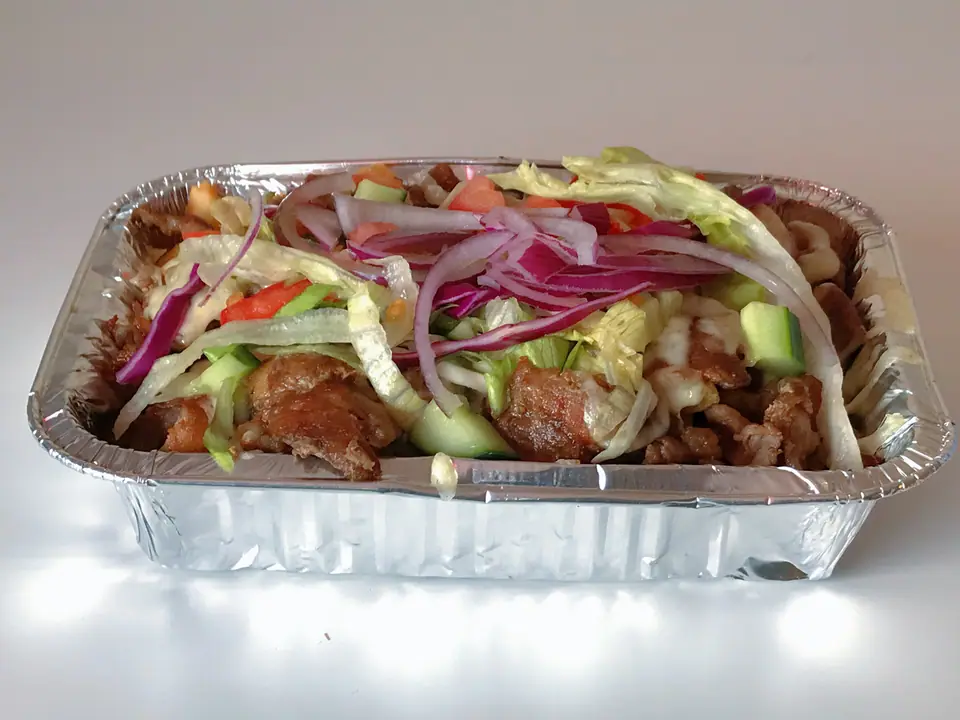
Each classic kapsalon layers six distinct components inside one hot tin tray. Crisp French fries form the base beneath spiced shawarma or döner meat and thick Gouda baked until melted. Vendors finish the tray cold with shredded iceberg lettuce, creamy garlic sauce, and fiery Indonesian-Dutch sambal chilli paste. Press reports in AD (2006) and de Volkskrant (2011) noted large servings reaching 1,800 kilocalories before the dish spread across 12 foreign destinations by 2017, from Berlin and Belgium to Cardiff and Kathmandu. Sharing one regular foil tray keeps afternoon walks comfortable.
Surinamese Roti and Broodje Bakeljauw Along West-Kruiskade
Walk five minutes south-west from Rotterdam Centraal along multicultural West-Kruiskade and Nieuwe Binnenweg to find standout lunchtime value. Decades of Surinamese, Javanese-Surinamese, and Antillean migration filled these avenues with family warungs frying golden snacks behind steamed glass counter windows. Market groceries stock tropical vegetables next to crisp spiced pastries and hot lunch trays. Focus closely on two signature house plates:
Broodje bakeljauw (BROHD-yuh bah-kel-YOW) fills a soft white bread roll with salted cod sautéed in tomato, onion, garlic, and aromatic Madame Jeanette chilli. For sit-down meals, order Surinamese roti: split-pea flatbread folded beside curried chicken or spiced potato, yardlong beans, and boiled egg. Pair spicy plates with crisp cold ginger beer or Indonesian-Surinamese saoto chicken-noodle soup topped with crunchy fried potatoes and vermicelli.
June Maatjesharing, Bitterballen and Hot Market Stroopwafels
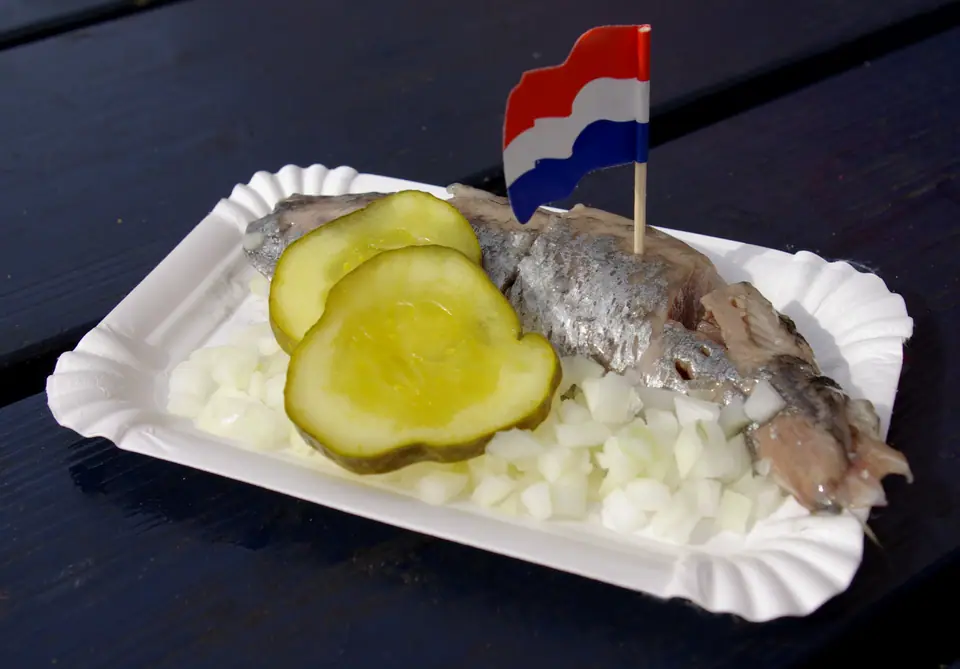
Traditional coastal Dutch snacks hold equal ground on open-air market squares and neighbourhood brown cafés (bruine cafés). Watch street fishmonger trailers (viskramen) for maatjesharing (MAHT-yes-hah-ring), tender young cured herring celebrated each June as fresh Hollandse Nieuwe arrives. Hold whole silver fillets by the tail, or request bite-sized cubes served with chopped raw white onions and sharp gherkins.
Come late afternoon, traditional wooden pubs pour Dutch lagers and craft beers beside baskets of piping-hot bitterballen. Crisp golden breadcrumbs wrap thick savoury beef ragout served with small pots of coarse mustard. Always pause briefly so molten ragout centres cool slightly before biting into the crust. On outdoor Binnenrotte market days outside the Markthal, fresh-pressed stroopwafels leave hot iron griddles steaming, binding two thin baked waffle discs smoothly together with warm, sticky caramel syrup.
Almond-Swirl Maasstroompjes Biscuits and Winter Stamppot
Away from street carts, Rotterdam preserves an authentic local bakery heirloom born during the interwar decades. Created in 1934, crisp butter biscuits called Maasstroompjes (MAHS-strohm-pyuhs) pair flaky pastry with swirled toasted almond paste echoing river eddies along the Nieuwe Maas. Packed inside sturdy decorative tins, they travel neatly inside rail luggage home. During chilly November through March winds, neighbourhood Dutch kitchens ladle hearty stamppot, mashing winter potatoes with curly kale or endive beneath split smoked rookworst sausage.
Markthal Vaulted Stalls Under Arno Coenen's Ceiling
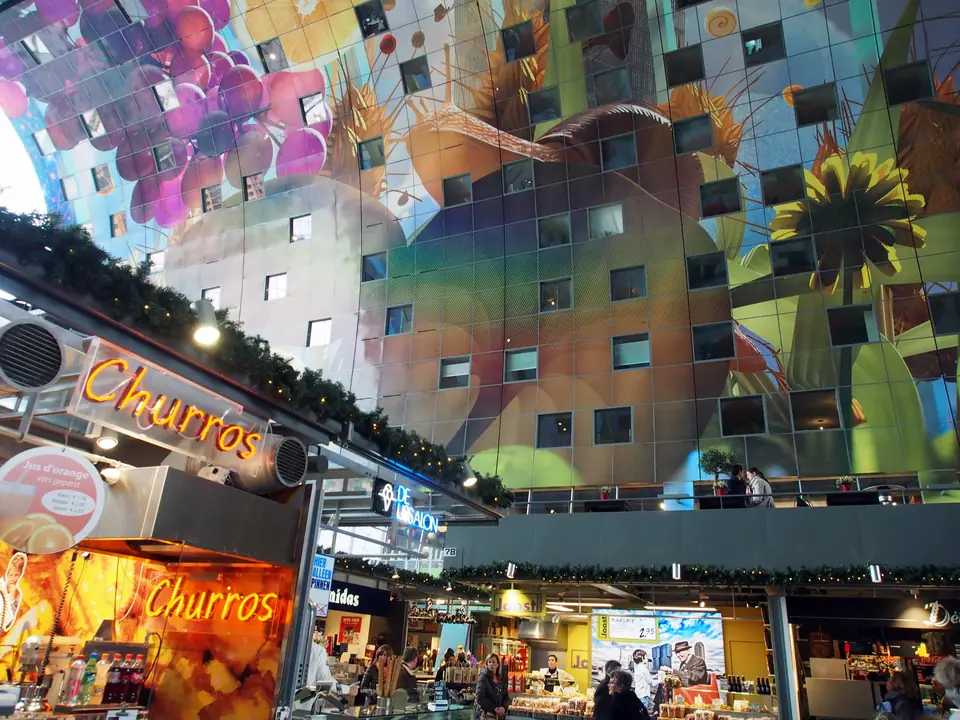
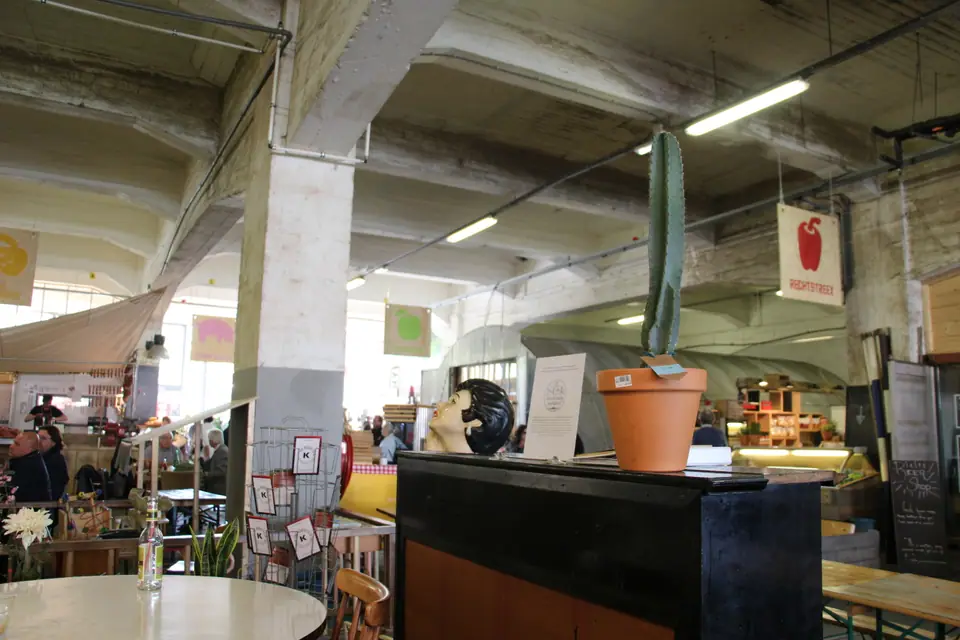
Steps from Blaak metro station on Dominee Jan Scharpstraat, MVRDV's horseshoe Markthal gathers roughly 96 fresh-food units under one weatherproof vault. Fishmongers, spice traders, aged Dutch cheese booths, and sit-down mezzanine kitchens cluster beneath Arno Coenen's painted ceiling mural. Grazing individual plates across stalls makes rainy lunch breaks simple without formal restaurant waits. On busy weekends, midday mezzanine tables fill fast, so browsing standing counters between morning errands works smoothly.
Foodhallen Wilhelminapier and Katendrecht's Fenix Food Factory
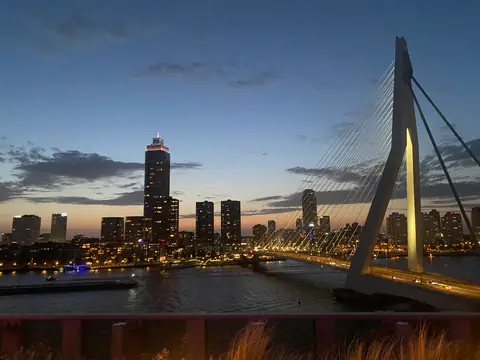
Crossing the Erasmus Bridge south opens two dockside culinary halls linked by a brief stroll across Rijnhaven footbridge. Inside restored port warehouse Pakhuismeesteren on Wilhelminapier, Foodhallen Rotterdam groups curated multi-kitchen street-food stands around central craft bars suited to mixed dining groups. Just across the pedestrian span on Katendrecht stands Fenix Food Factory right beside Rijnhaven harbour piers. Independent bakers, Dutch cheesemongers, and Kaapse Brouwers craft-brewery taps fill tables overlooking Wilhelminapier towers.
Ordering Habits and Dining Logistics Across Rotterdam
- Kapsalon vs. Broodje Bakeljauw: Pick a rich foil tray of kapsalon after long walks, or choose a lighter Surinamese salted-cod roll along West-Kruiskade for crisp midday spice.
- Outdoor market mornings vs. indoor halls: Visit Binnenrotte market stalls around Blaak for warm stroopwafels and cured herring in dry weather, reserving Markthal and Foodhallen for wet gusts.
- Card-only counters across modern halls: Many newer Rotterdam bakeries, coffee bars, and food-hall stalls accept contactless debit or credit cards exclusively (alleen pinnen) instead of cash notes.
- Tap water at tables: Restaurants vary on free table carafes, though municipal Evides tap water from sinks in hotels and apartments stays safe to drink.
Where it is
- 1Rotterdam
- Rotterdam The Hague Airport (RTM) · about 5 km from Rotterdam in a straight line
- Amsterdam Airport Schiphol (AMS) · about 47 km from Rotterdam in a straight line
- Directions in Google Maps
Stations and taxi ranks: OpenStreetMap. Airports: OurAirports. Distances are in a straight line.
Traveller tips
Real advice from people who have been to Rotterdam. Every tip is read by our team before it goes live.
No tips yet. Been here? Yours could be the first.
Thank you! Your tip will appear here after a quick review.
More in Rotterdam
Continue exploring Rotterdam with related neighbourhood, food, and planning guides