





















Best Time to Visit Samarkand: Seasonal Weather, Navruz & Silk Road Calendar
Time your trip to Samarkand for the mild spring and autumn Silk Road windows, Navruz festivities in March, golden melon harvests in September, or quiet winter blues.
Samarkand sits at 702 metres in the Zeravshan basin between the Kyzylkum Desert and the Pamir-Alay mountains. The city enjoys a continental semi-arid climate with more than 2,850 hours of sunshine a year. Because the city sits 480 metres higher than desert Bukhara, it catches cooling afternoon breezes off the Zarafshan Range. Samarkand stays 3°C to 4°C cooler than Bukhara and Khiva in summer, giving it longer, milder spring and autumn seasons. Pair this month-by-month weather breakdown with our Samarkand dress code and packing guide and our Samarkand 3-day itinerary.
| Season & Months | Avg. High / Low (°C) | Train & Hotel Demand | Seasonal Highlights & Conditions |
|---|---|---|---|
| Spring (Late March to May). | 15°C to 28°C / 4°C to 14°C. | Peak season (April to May); book Afrosiyob trains 45 days ahead. | Navruz New Year (21 March), blooming apricot and pomegranate orchards, and green mountain passes. |
| Autumn (September to early November). | 14°C to 29°C / 2°C to 13°C. | Peak season (Sept to Oct); high demand for boutique courtyard hotels. | Dry azure skies, harvest of honey melons, figs, and pomegranates at Siyob Bazaar, and warm evenings. |
| Summer (June to August). | 33°C to 36°C / 18°C to 20°C. | Moderate; easy last-minute hotel and monument access. | Zero rain and intense midday sun; ideal for 07:00 dawn visits and evening floodlit walks. |
| Winter (Mid-November to Mid-March). | 7°C to 12°C / -2°C to 3°C. | Low; 30% to 40% lower hotel rates and empty madrasah courtyards. | Crisp cold mornings with occasional light snow dusting the turquoise domes of Registan Square. |
Spring (Late March, April, and May): Navruz and green hills
Late March through the end of May is the freshest and greenest time of year in Samarkand. Winter snow still caps the 2,500-metre peaks of the Zarafshan Range south of the city along the Tahtakaracha Pass toward Shakhrisabz. Meanwhile, the foothills burst into wild red tulips and poppies and the courtyard gardens of the Registan and Konigil bloom with white apricot, cherry, and mulberry blossoms. April daytime temperatures average a pleasant 21°C to 23°C, rising to 26°C to 28°C in May with cool 12°C to 14°C nights.
On 21 March, Uzbekistan celebrates Navruz, the ancient Persian and Central Asian vernal equinox New Year (a three- to four-day national holiday). Across Samarkand's parks, University Boulevard, and Siyob Bazaar, families gather around giant cauldrons stirring sumalak, a rich, caramel-coloured pudding made from sprouted wheat germ cooked continuously with walnuts and pebbles for twenty-four hours while women sing folk songs, together with spring ko'k samsa pastries stuffed with wild mountain herbs and spinach.
Autumn (September, October, and early November): Harvest skies and melons
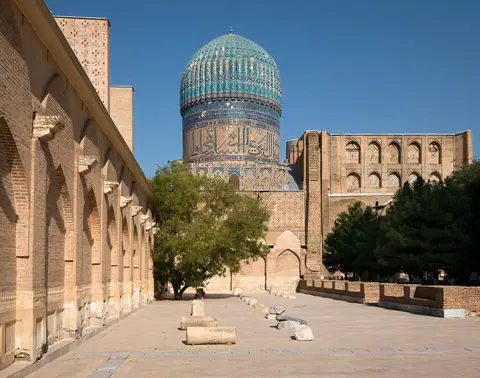
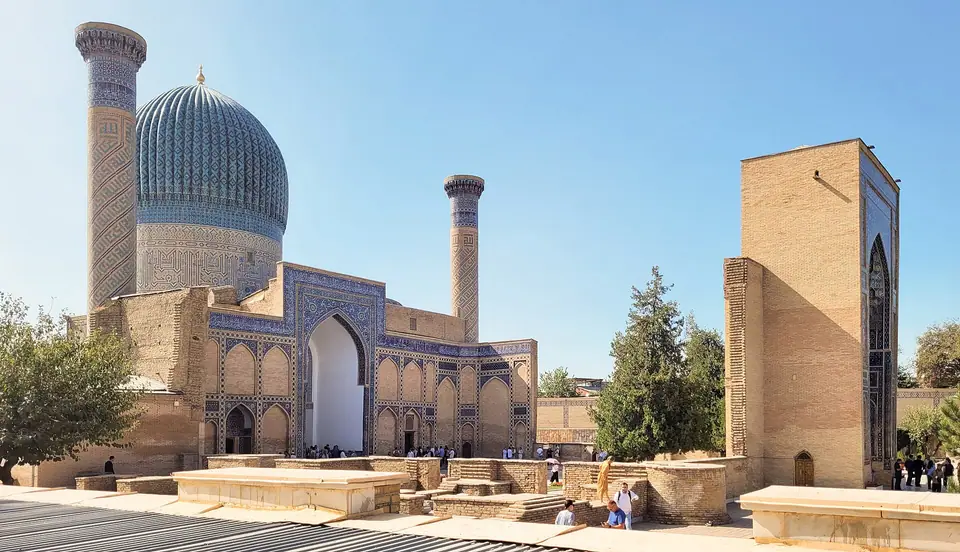
Mid-September through the first week of November rivals spring as the absolute prime window to visit Samarkand, and actually beats April if you want guaranteed rain-free photography. Whereas March and April average seven or eight brief spring rain showers, September and October are bone-dry, averaging just one to three rain days per month. These months deliver deep cobalt skies that make the turquoise domes of Gur-e-Amir and Bibi-Khanym glow in afternoon light.
Autumn is also the culinary climax of the Uzbek agricultural year at Siyob Bazaar. Farm trucks from across the Zeravshan valley unload fragrant torpedo-shaped Mirzachul honey melons, giant crimson pomegranates from Dashnabad, black Kishmish grapes, fresh walnuts, and golden persimmons. Daytime highs sit at 28°C to 29°C in September and 21°C to 23°C in October, before cooling to a crisp 14°C to 16°C in the first half of November.
Summer (June, July, and August): Dawn photography and evening floodlights
During June, July, and August, Samarkand experiences long, cloudless days with virtually zero rainfall and afternoon highs of 33°C to 36°C (occasionally reaching 39°C during July). Because Samarkand sits at 702 metres in an irrigated river valley rather than the Kyzylkum dunes, afternoons stay 4°C to 5°C milder than in Bukhara. Low 25% humidity also keeps the shaded brick madrasah arcades noticeably cool.
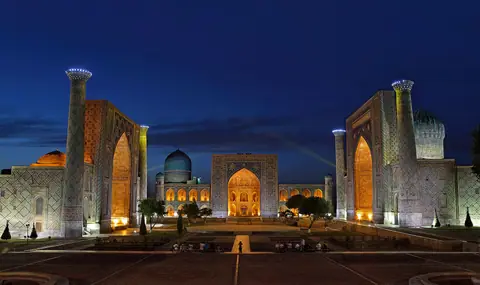
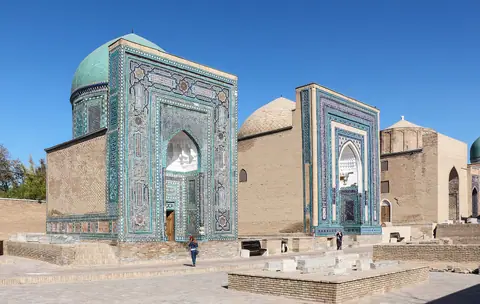
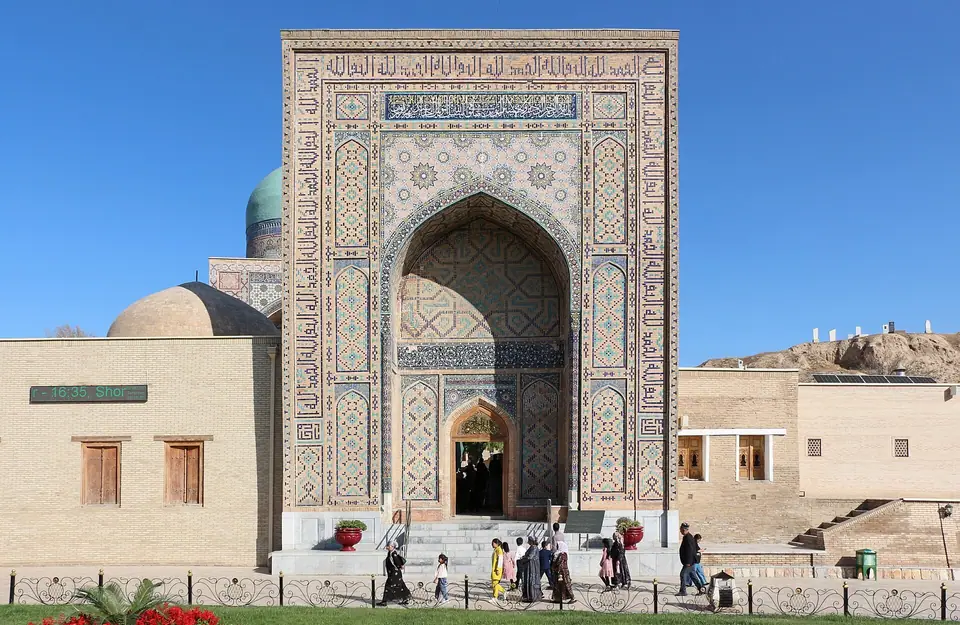
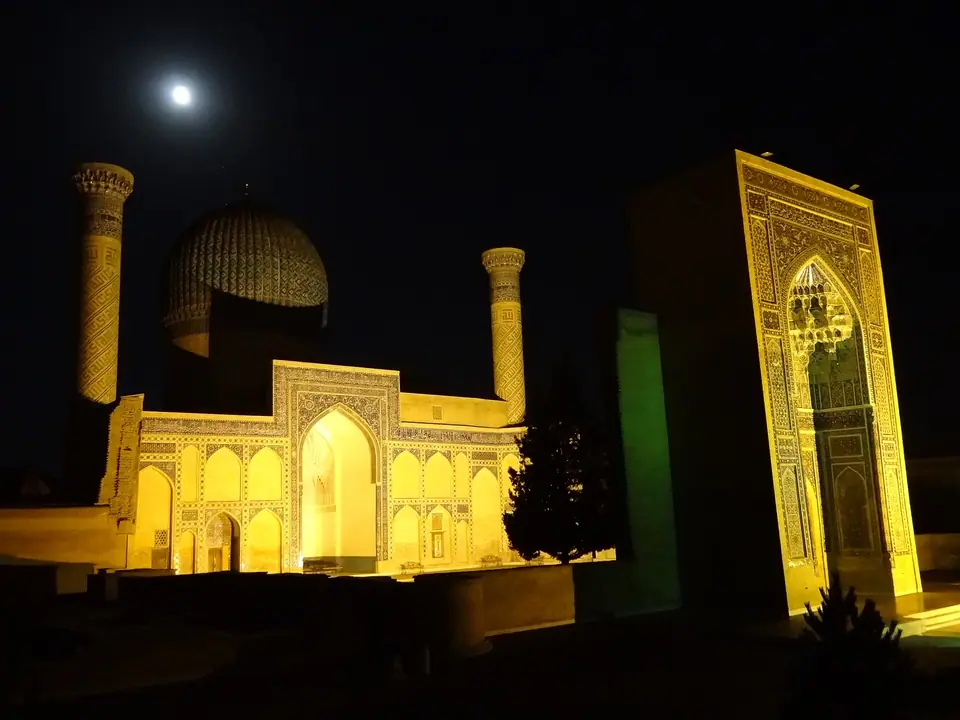
If travelling in summer, adopt the Silk Road schedule: start your day at 07:00 at Shah-i-Zinda and 08:00 at Registan Square when temperatures are a pleasant 21°C to 23°C and the ceramic tiles catch soft eastern light. Enjoy a midday lunch of Samarkand plov at 12:00, followed by an afternoon rest or a shaded walk by the Konigil waterwheels. Return to Gur-e-Amir and Registan between 18:30 and 22:00 when locals fill the cool parks.
Winter (December, January, and February): Empty courtyards and snow-dusted domes
Unlike high-altitude Kyrgyzstan or the Kazakh steppe, winter in Samarkand is relatively mild: daytime highs average 7°C to 10°C in December and January (rising to 11°C to 13°C by late February). Meanwhile, overnight lows hover just around -2°C to 1°C. Each winter brings three or four brief snowfalls that dust the turquoise domes of Gur-e-Amir and Shah-i-Zinda in white powder. During these quiet months, you can often stand completely alone inside the gilded Tilya-Kori mosque.
Every major monument, museum, and restaurant remains open year-round in winter, Afrosiyob trains run on their full schedule, and boutique hotels offer 30% to 40% discounts with cosy underfloor heating.
Silk and Spices & Sharq Taronalari festivals
Every two years in late August, Registan Square hosts the UNESCO-backed Sharq Taronalari ("Melodies of the Orient") Music Festival. Founded in 1997, the event brings traditional ensembles from over seventy countries to perform beneath the illuminated madrasahs. In addition, Independence Day on 1 September brings city-wide concerts and fountain shows across University Boulevard and the Silk Road Samarkand complex.
Traveller tips
- Book April to May and September to October Afrosiyob trains the day they release. During the two peak shoulder windows, tour groups reserve large blocks of seats on the 07:30/08:00 morning Afrosiyob from Tashkent. Set a calendar reminder 45 days before your trip to book on eticket.railway.uz.
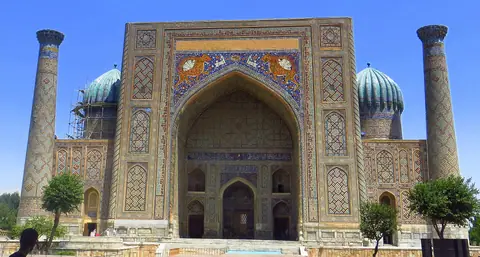
- Golden-hour timing at Shah-i-Zinda vs Registan. Shah-i-Zinda's narrow north-south corridor receives its best direct sunlight between 07:30 and 10:00. By contrast, the western Ulugh Beg Madrasah on Registan Square catches warm morning light and the eastern Sher-Dor Madrasah glows orange in the final 90 minutes before sunset.
- Check Tahtakaracha Pass weather in January and February. If planning a winter trip over the Tahtakaracha Pass to Shakhrisabz, check the forecast first. Heavy snowfall occasionally closes the mountain pass for a few hours, requiring cars to detour via Karshi.
- Book April, May, September, and October courtyard hotels six weeks early. Samarkand's peak 22°C to 28°C shoulder seasons bring heavy international demand to the historic mahalla guesthouses around Registan Square. Early booking secures quiet ground-floor courtyard rooms.
- Adopt a split-day schedule during June, July, and August. In midsummer, visit outdoor sites like Shah-i-Zinda, Bibi-Khanym, and Registan between 07:00 and 11:00. Spend the 12:30 to 16:30 heat inside the air-conditioned Afrosiab Museum or under the riverside mulberry trees at Konigil village, then return outdoors at 17:30.
- Experience Nowruz festivities around 21 March. Visiting Samarkand during the vernal equinox brings outdoor music, craft stalls around Registan, and cauldrons of sumalak (sprouted wheat pudding stirred overnight by neighbourhood women) across the mahallas.
- Enjoy empty monuments and crisp blue skies in November and March. If you pack a warm fleece and windproof jacket for 12°C to 15°C daytime highs, early spring and late autumn offer bright sunlight on the turquoise domes with almost zero queues.
- Check mountain pass weather before winter trips to Shakhrisabz. Between December and February, occasional snow squalls at the 1,788-metre Tahtakaracha Pass can delay sedans for a few hours until road crews clear the summit.
Keep your digital hotel registration slips and train tickets saved offline on your phone for quick inspection at station gates. Local mahalla pharmacies, ATMs, and bottled-water kiosks sit within a five-minute walk of University Boulevard, Registan Street, and the southern entrance to Siyob Bazaar.
If you need a quiet break during the afternoon, step into one of the traditional courtyard teahouses near Bibi-Khanym or along Orzu Mahmudov Street. Ordering a pot of green tea (#95 leaf) with dried apricots and roasted salted apricot kernels costs under 20,000 UZS (~$1.60 as of November 2026) and offers shaded rest before the evening illuminations begin.
Where it is
- 1Samarkand
- Samarkand International Airport (SKD) · about 4 km from Samarkand in a straight line
- Directions in Google Maps
Traveller tips
Real advice from people who have been to Samarkand. Every tip is read by our team before it goes live.
No tips yet. Been here? Yours could be the first.
Thank you! Your tip will appear here after a quick review.
More in Samarkand
Continue exploring Samarkand with related neighbourhood, food, and planning guides