Shah-i-Zinda Necropolis Guide
Complete guide to Shah-i-Zinda Necropolis in Samarkand: Qusam ibn Abbas shrine, 14th-century carved terracotta and majolica tombs, dress code, and stair co
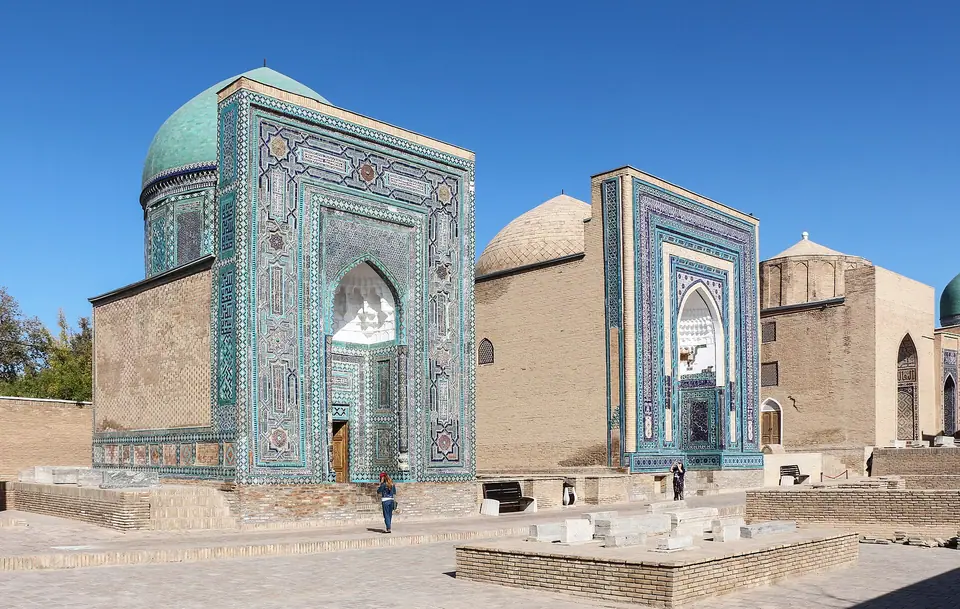
Carved into the southern slope of Afrosiab just 700 metres northeast of Bibi-Khanym Mosque, Shah-i-Zinda ("The Living King") is Samarkand's holiest shrine. It also serves as an open-air museum of nine centuries of Central Asian ceramic art. Unlike the vast imperial scale of Registan Square, Shah-i-Zinda consists of more than twenty intimate mausoleums, mosques, and portals built shoulder-to-shoulder along a narrow 200-metre medieval street. Here Amir Timur's sisters, wives, nieces, and military generals were buried as close as possible to the 7th-century shrine of the Prophet Muhammad's cousin, Qusam ibn Abbas.
| Section of Shah-i-Zinda | Elevation & Stair Count | Key Monuments & Dates | Ceramic Technique to Spot |
|---|---|---|---|
| 1. Lower Group (Chartak I). | Base entrance + 40 medieval steps. | Ulugh Beg Portal (1434 to 35) & Kazi Zade Rumi Double-Domed Tomb. | Under-glaze Cobalt & White Banna'i brickwork. |
| 2. Middle Group (The Avenue). | Mid-slope level corridor (120 m). | Shad-i-Mulk Aga (1372), Shirin Bika Aga (1385) & Octagonal Tomb. | Deeply carved glazed terracotta & cut mosaic (kashin). |
| 3. Upper Group (Chartak III). | Upper plateau (+10 steps). | Qusam ibn Abbas Complex (11th to 15th c.) & Tuman Aga (1405). | 11th-century carved elmwood door & kundal gold-relief tile. |
The Legend of Qusam ibn Abbas and the "Forty Steps" Tradition
The spiritual anchor of the entire necropolis lies at the northern top of the hill. According to early Islamic chronicles, Qusam ibn Abbas arrived in Sogdiana in the late 7th century (around 676 CE) during the early Arab campaigns to preach Islam in Samarkand. Legend holds that when attacked during prayer, Qusam picked up his own head and descended into a deep subterranean well. There he lives on until the end of time as Shah-i-Zinda ("The Living King").
After passing through the monumental southern entrance portal built by Ulugh Beg in 1434 to 1435, visitors ascend the famous medieval brick staircase, traditionally called the Forty Steps. Modern restorations count between 36 and 40 risers depending on where you start at the threshold. Local Uzbek pilgrims count the steps silently while ascending and descending; if the number you count going up matches the number you count coming down, your prayers and intentions are considered blessed.
How to Read the Three Generations of Timurid Tilework
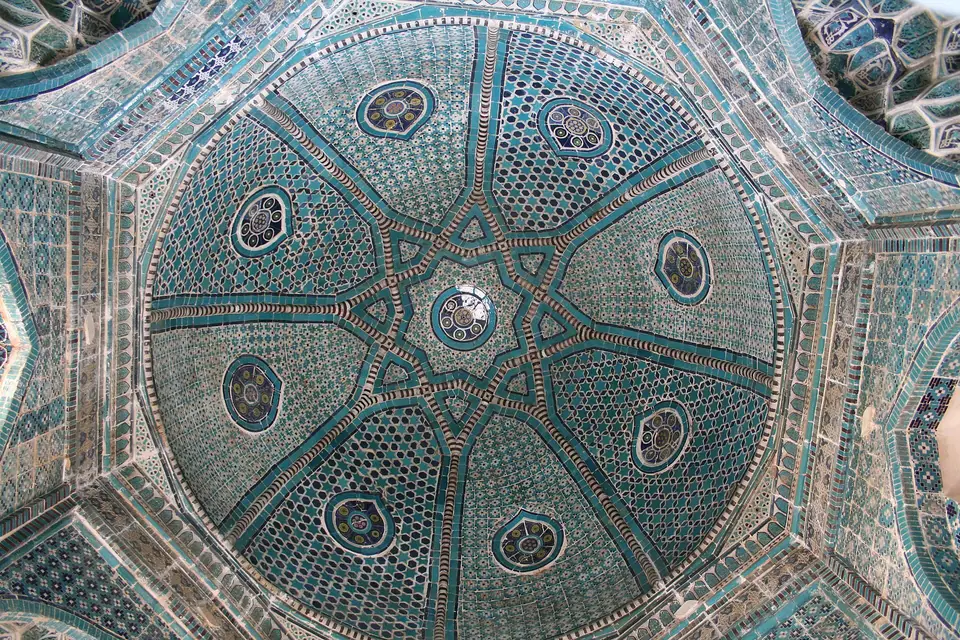
Walking up the middle avenue of Shah-i-Zinda allows you to trace a rapid 50-year technological revolution in medieval ceramic chemistry between 1360 and 1410:
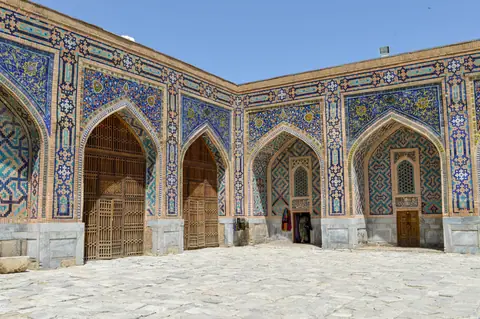
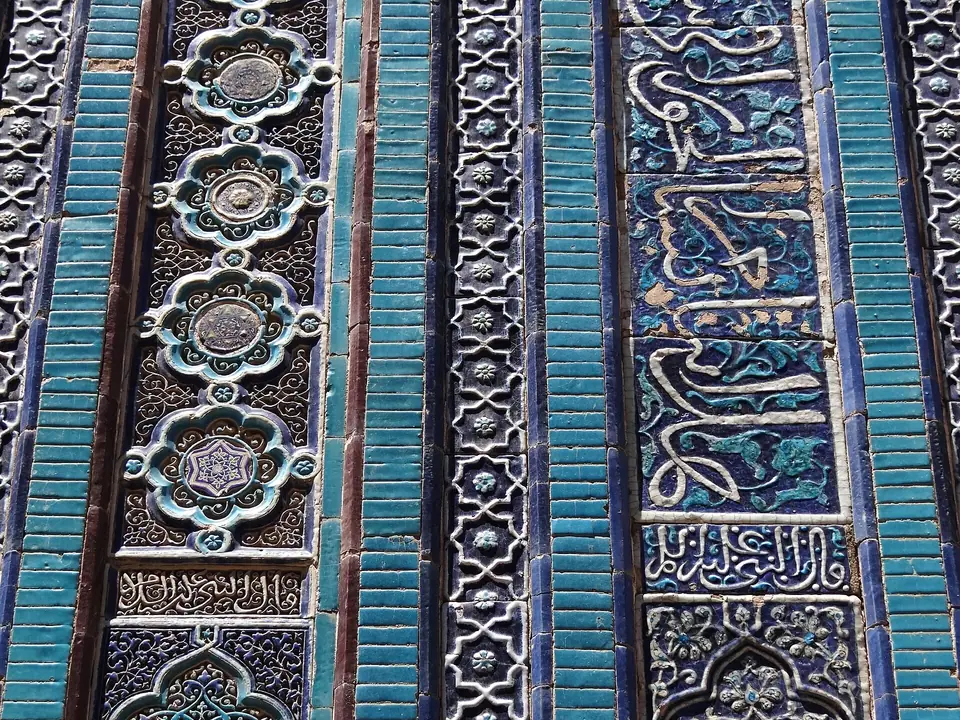
- Carved Glazed Terracotta (1360s to 1370s): Stop before the Shad-i-Mulk Aga Mausoleum (1372) on the left side at the top of the stairs, the earliest securely dated Timurid building in Samarkand, erected by Timur's sister Turkan Aga for her daughter. Examine its engaged corner columns and portal closely without touching the fragile glaze. Every floral vine and Kufic band was carved into thick clay slabs before firing in turquoise and cobalt, creating deep shadow relief.
- Polychrome Majolica (1370s to 1380s). Across the lane in the Emirzade Mausoleum (1386), craftsmen painted multiple mineral glazes onto flat tiles separated by manganese outlines (cuerda seca). This faster technique introduced bright yellow and green accents.
- Cut Tile Mosaic / Kashin (1385 to 1405). At the Shirin Bika Aga Mausoleum (1385), built for Timur's beloved younger sister. The Tuman Aga Complex (1405) in the upper courtyard, Persian masters imported from Shiraz and Tabriz chipped individual monochrome glazed tiles into thousands of tiny jigsaw-like pieces and fitted them together with zero mortar gaps. Step inside Shirin Bika Aga to see its 16-sided drum pierced by stained-glass plaster grilles (panjara) and delicate wall landscape paintings of birds and pomegranates.
The Upper Courtyard and the Shrine of Qusam ibn Abbas
Passing beneath the domed third archway (Chartak III), where an intricately carved 1404 two-leaf elmwood door inlaid with ivory once hung, turn right into the 11th-to-15th-century Qusam ibn Abbas Complex. Remove your shoes before stepping onto the carpeted floor of the 15th-century mosque and the adjacent ziyaratkhana (pilgrimage hall). Through a carved 1334 wooden lattice grille, you can peer into the inner sanctuary (gurkhana). Inside stands the four-tiered lusterware cenotaph of Qusam ibn Abbas, inscribed with Quranic verses on martyrs.
Practical Visiting Rules, Dress Code, and Photography Timing
- Opening Hours and Ticket Price (Nov 2026). Open daily from 07:00 to 21:00 (08:00 to 19:00 in winter). Foreign adult admission is 50,000 UZS (~3.95 USD), payable by cash or card at the lower booth.
- Strict Modesty Dress Code. Unlike Registan Square, which functions primarily as a secular museum, Shah-i-Zinda is an active Muslim pilgrimage shrine where Uzbek families come daily to recite prayers with an imam. Both men and women must have shoulders and knees completely covered (no shorts, mini-skirts, or sleeveless tops), and women should bring a headscarf for entering the Qusam ibn Abbas sanctuary.
- Beat the 09:15 Bottleneck. Because the central avenue is only 3 to 4 metres wide, even two tour groups can fill the entire frame. Arrive between 07:00 and 08:15 when oblique morning sunlight rakes across the eastern portals and the corridor is silent, or visit after 17:30 before sunset. After finishing, walk across the pedestrian bridge over Islam Karimov Street to pair your visit with Hazrat Khizr Mosque and Siyob Bazaar.
As you walk from the lower portal up through the middle and upper chartaks, pause to notice the acoustic and thermal design of the corridor. Even on a 34°C July morning, the tall flanking brick walls and recessed iwan vaults create a shaded microclimate where a natural updraft cools the stepped stone pavement. Inside smaller tombs like Anonymous Tomb II and the octagonal pavilion, look up at the upper corners. Tiers of glazed muqarnas honeycomb cells transition the square walls into sixteen-sided domes.
For lovers of epigraphy, Shah-i-Zinda displays three distinct scripts side by side. Geometric Kufic brickwork spells sacred names across the outer drums, while flowing white Thuluth Quranic bands frame the cobalt portals. Inside the tombs, delicate Persian verses lament the brief lives of the Timurid princesses buried below.
At the top of the hill beyond the Qusam ibn Abbas shrine, a quiet path leads into the modern cemetery of Samarkand. It offers wide views across the dry clay gullies of the ancient Afrosiab city mound toward the Ulugh Beg Observatory in the northeast.
Where it is
- 1Shah-i-Zinda Necropolis
- Samarkand International Airport (SKD) · about 4 km from here in a straight line
- Directions in Google Maps
Traveller tips
Real advice from people who have been to Samarkand. Every tip is read by our team before it goes live.
No tips yet. Been here? Yours could be the first.
Thank you! Your tip will appear here after a quick review.
More in Samarkand
Continue exploring Samarkand with related neighbourhood, food, and planning guides