Photo: Szczecinolog · CC BY-SA 4.0
Maultaschen, Spätzle and Trollinger in Swabian Besen
Swabian comfort dishes, the legal rules of seasonal Besenwirtschaft broom taverns, Württemberg wines, and Martin Elsaesser's 1914 Markthalle.
Swabian cooking grew out of practical farmstead kitchens built around flour, fresh eggs, beef broth, brown lentils, and hillside wine. Rather than chasing fleeting tasting-menu trends, Stuttgart tastes truest inside wood-panelled brewery halls, seasonal vineyard farmhouses, and Martin Elsaesser's sunlit 1914 market hall steps south of Schillerplatz.
How a Seasonal Swabian Besenwirtschaft Works
Tucked along eastern wine suburbs including Uhlbach, Untertürkheim, Obertürkheim, Rotenberg, and Bad Cannstatt sit seasonal farm taverns called Besenwirtschaften (BAY-zen-veert-shahf-ten), or simply Besen. State wine regulations bar winegrowers from running full-time year-round restaurants inside farm buildings. Instead, vintners open working press houses, vaulted stone cellars, and timber family parlours straight to walk-in guests during fixed seasonal windows. That legal limit gives vineyard outings an authentic rural rhythm tied directly to pruning and autumn harvest spells.
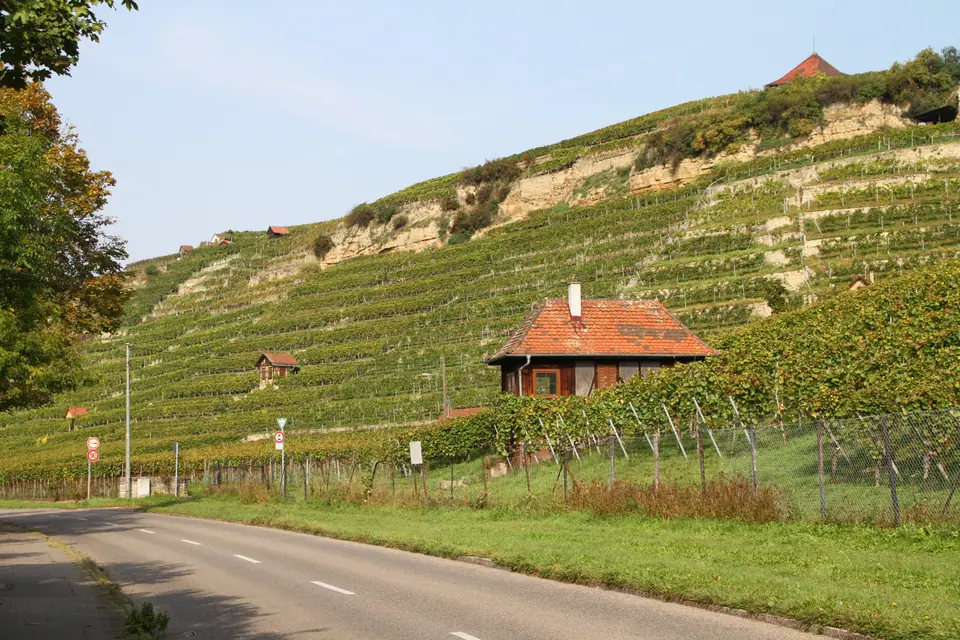
- Spot the birch broom beside the street gate: State law restricts each winegrower to a maximum of four open months per calendar year. Opening spells usually split between spring and autumn weeks. Hanging a tied birch broom (Besen) or evergreen branch outside the doorway means tables are open. Once it comes down, shutters lock until next season.
- Share bench tables inside homes or barns: Families convert cosy parlours, press houses, or garages into unpretentious dining rooms. Ask politely before sliding onto long communal wooden benches next to locals. Conversation flows effortlessly across wooden boards once food plates begin landing.
- Order pitchers of estate-grown wine: Cellars pour strictly from their own steep vineyard plots. Pale ruby, cherry-fruity Trollinger red dominates daytime carafes served cool in classic handled mugs. Deeper, pepper-spiced Lemberger reds and crisp hillside Riesling round out most seasonal cellars cleanly.
- Pair wine with compact butcher plates: Kitchens skip fancy multi-course menus for simmered pork belly and Schlachtplatte sausages. Sour gherkins, crusty brown loaves, and warm Swabian potato salad finish every plate. Cooks dress those sliced potatoes in hot beef stock, vinegar, and mustard instead of heavy mayonnaise.
Five Swabian Classics and Local Breweries
Back in central Weinstuben and cavernous beer halls poured by city breweries such as Stuttgarter Hofbräu, Dinkelacker, and Schwaben Bräu, blackboards return faithfully to five regional dishes. Locals order them steady across every season. Traditional Swabian kitchens prize hand-scraped flour noodles, clear beef broths, and caramelised onions cooked slow in heavy iron pans. Steaming winter bowls trade places with crisp leaf salads and lye pretzels during warm terrace afternoons.
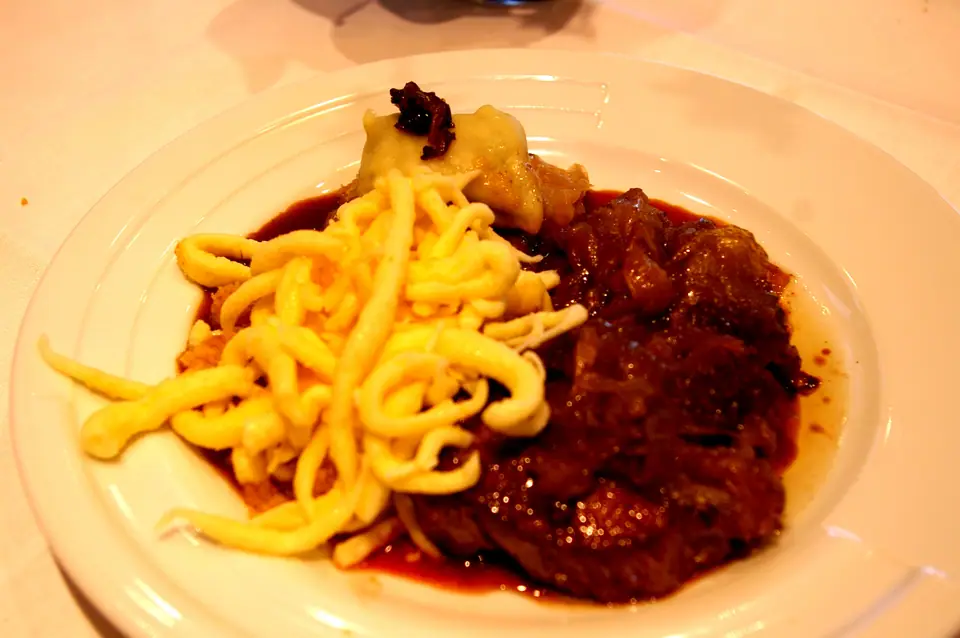
- Schwäbische Maultaschen: Square pasta parcels filled with minced meat, spinach, soaked bread, onions, and parsley hold European Union protected status since 2009. Maulbronn monastery folklore nicknames them Herrgottsbescheißerle ("little Lord-cheaters"), claiming monks hid meat during Lent inside green herb dough. Kitchens serve them sliced in clear beef broth (in der Brühe) or seared golden with egg and caramelised onions (geschmälzt) beside warm potato salad.
- Kässpätzle: Soft fresh egg noodles layer piping hot inside cast skillets with grated regional alpine cheeses such as Bergkäse and Emmentaler. Crisp fried onion rings pile generously on top beside sharp green salad.
- Linsen mit Spätzle und Saitenwürstle: Braised brown lentils sharpened gently with dark wine vinegar meet long hand-formed Spätzle noodles. Two lightly smoked Vienna-style pork sausages crown the dish on cold basin evenings.
- Zwiebelrostbraten: Thick pan-seared rump or sirloin steak arrives glazed in glossy Trollinger jus under crisp or soft braised onion rings. Cooks plate the beef beside buttered noodles or broth-dressed potato salad.
- Laugenbrezel and buttered pretzels: Slim crunchy salted arms meet a split soft belly across downtown bakeries from dawn. Morning counters bake fresh trays even on Sundays when regular supermarket doors stay locked.
Notice how warm Swabian Kartoffelsalat balances those rich sauces cleanly on the plate. Cooks dress thin potato slices in hot beef stock, wine vinegar, and sharp mustard rather than heavy mayonnaise, keeping side servings bright and tangy beside seared cutlets or browned pasta parcels.
Inside the 1914 Markthalle on Dorotheenstraße
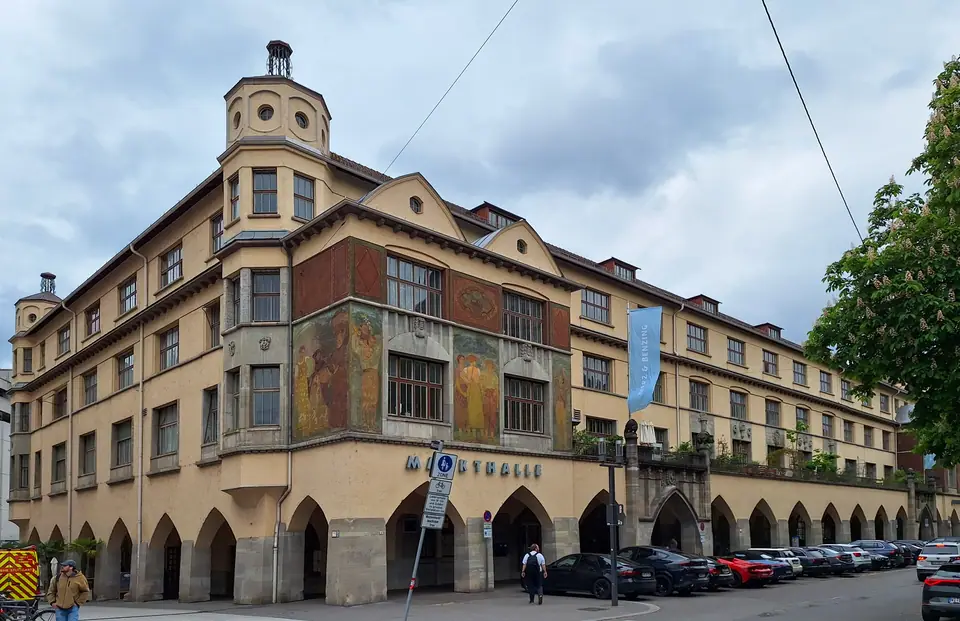
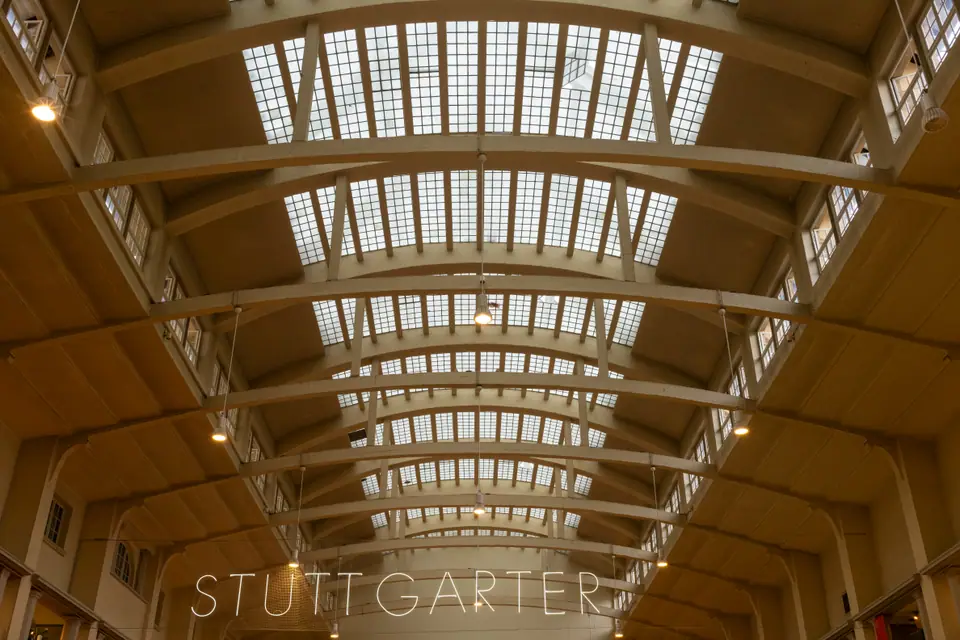
For easy midday grazing without sitting two hours in a tavern, walk south from Schillerplatz into Markthalle Stuttgart at Dorotheenstraße 4. Designed in reinforced concrete by architect Martin Elsaesser and opened on 31 January 1914, this bright Art Nouveau market hall spans roughly 33 independent stalls beneath a vaulted glazed roof.
Tall daylight skylights illuminate slender concrete arches framing stalls packed with smoked Black Forest meats, alpine raw-milk cheeses, fresh cut flowers, truffle counters, and crusty sourdough loaves. Standing hot counters ladle fresh Maultaschen and daily soups straight into quick midday bowls. Upper galleries wrap slender columns with housewares and quiet balcony cafés overlooking colourful produce baskets below. Remember that the Markthalle locks tight every Sunday along with regular downtown retail.
Check seasonal opening boards if planning a late-afternoon sweep toward eastern wine villages. Many Besenwirtschaften open from mid-afternoon onward and close once harvest barrels run dry, whereas central beer halls operate steady lunch and dinner sittings throughout the week. For late-night beer and casual plates without travelling uphill, follow VVS tram routes back into central residential streets.
Two practical money habits keep dining smooth across Stuttgart. Smaller Markthalle stalls, corner bakeries, and countryside Besen parlours regularly prefer euro cash notes over cards. At sit-down taverns, add 5 to 10 percent verbally to your stated bill while paying your server directly. Never leave loose change sitting on empty tablecloths. Plan wine loops around late-August Weindorf or October harvest weeks, explore Stuttgart-West corner bars near Feuersee for low-key suppers, and work off rich sauces on Rotenberg's hillside vineyard steps.
Where it is
- 1Stuttgart
- Stuttgart Airport (STR) · about 10 km from Stuttgart in a straight line
- Directions in Google Maps
Stations and taxi ranks: OpenStreetMap. Airports: OurAirports. Distances are in a straight line.
Traveller tips
Real advice from people who have been to Stuttgart. Every tip is read by our team before it goes live.
No tips yet. Been here? Yours could be the first.
Thank you! Your tip will appear here after a quick review.
More in Stuttgart
Continue exploring Stuttgart with related neighbourhood, food, and planning guides