Photo: Martin Hahn · CC0
Wasen Beer Tents, Wine Villages and Kessel Heat
When Stuttgart shines and when the valley traps heat: DWD climate normals, Frühlingsfest, August Weindorf, autumn Wasen, and winter markets.
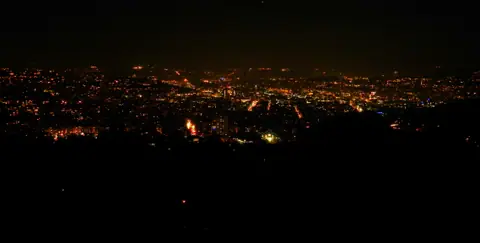
Seasons inside Stuttgart answer directly to the city's sheltered horseshoe bowl. Ringed on three sides by wooded hills that slow brisk cross-winds, the inner basin holds stagnant July warmth far longer than open northern German plains. Picking the right week balances humid valley afternoons against lively autumn harvest festivals.
DWD Climate Normals Across the Kettle Basin
Official 1991-2020 records from Deutscher Wetterdienst Station 04928 at Stuttgart-Schnarrenberg (314 metres) outline a mild continental climate averaging 10.7 degrees Celsius annually. Total precipitation reaches 691 millimetres across roughly 112 wet days of 1.0 millimetre or more. Annual sunshine averages 1,813.9 hours, swinging sharply between bright July peaks and overcast December days.
Rain falls unevenly across months rather than saturating cold winter weeks. Late spring and summer deliver the heaviest downpours, led by May (78 millimetres over 12 wet days), June (77 millimetres), July (84 millimetres), and August (74 millimetres) through afternoon thunderstorms. March (44 millimetres), April (38 millimetres), and September (52 millimetres) regularly offer crisper dry skies ideal for ridge hikes. Out on the higher Filder plateau, Stuttgart-Echterdingen Station 04931 records 680.8 millimetres per year, echoing that same warm-season rain balance.
Spring Blossoms and Europe's Largest Spring Fair
From mid-April through mid-May, daytime averages climb smoothly from 16 degrees Celsius in April to 20 degrees in May. March wakes slowly at 11 degrees with 44 millimetres of precipitation, while crisp April stays drier at 38 millimetres. Pink fruit blossoms open across Rosensteinpark lawns and Neckar terraces as outdoor cafés reclaim square pavements. Three weeks from mid-April into early May bring the Stuttgarter Frühlingsfest to Cannstatter Wasen meadows, widely recognized as Europe's largest spring folk festival.
Brewery marquees, brass bands, and towering Ferris wheels fill the riverside plain without matching autumn's intense hotel squeeze. Outside fairground gates, Ludwigsburg palace beds burst into tulip colour and hillside Stäffele climbs stay fresh before summer heat settles in. Pack a light folding umbrella in May anyway because warm midday build-up still triggers brisk afternoon cloudbursts.
Summer Kessellage Heat and Tunnel Closures
July and August push afternoon highs up to 25 degrees Celsius (25.2 and 25.1 degrees at elevated Schnarrenberg), while sheltered downtown stone along Königstraße feels noticeably hotter. Although July logs 241.6 sunshine hours, wooded rims throttle evening air circulation inside the valley pocket, producing humid stillness called Kessellage heat.
Tour air-conditioned car museums during afternoon peaks, then take the Zacke rack railway or U15 uphill toward breezier benches on Birkenkopf, Eugensplatz, or Fernsehturm around sunset. Summer travellers must watch rail advisories carefully. Deutsche Bahn routinely schedules multi-week core S-Bahn tunnel closures during Baden-Württemberg school holidays from late July through early September, diverting lines onto surface tracks or replacement buses.
Late-August Weindorf in Downtown Squares
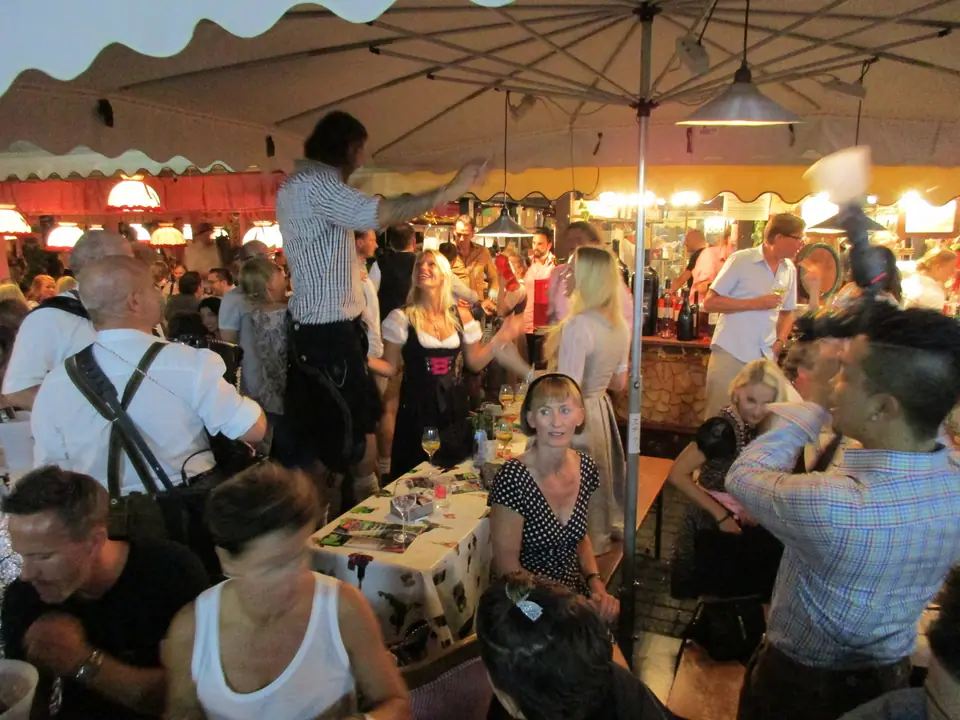
Once late-summer storms ease in August, central squares shift into twelve days of the Stuttgarter Weindorf. Covering Marktplatz, Schillerplatz, and Kirchstraße, close to three dozen timber wine arbours (Weinlauben) serve over 100 Württemberg wines beside steaming plates of Maultaschen and Kässpätzle. Evening string lights turn downtown cobblestones into an open-air wine village steps from the Old Castle without needing a designated driver.
Autumn Wasen Beer Tents and Vine Harvest Walks
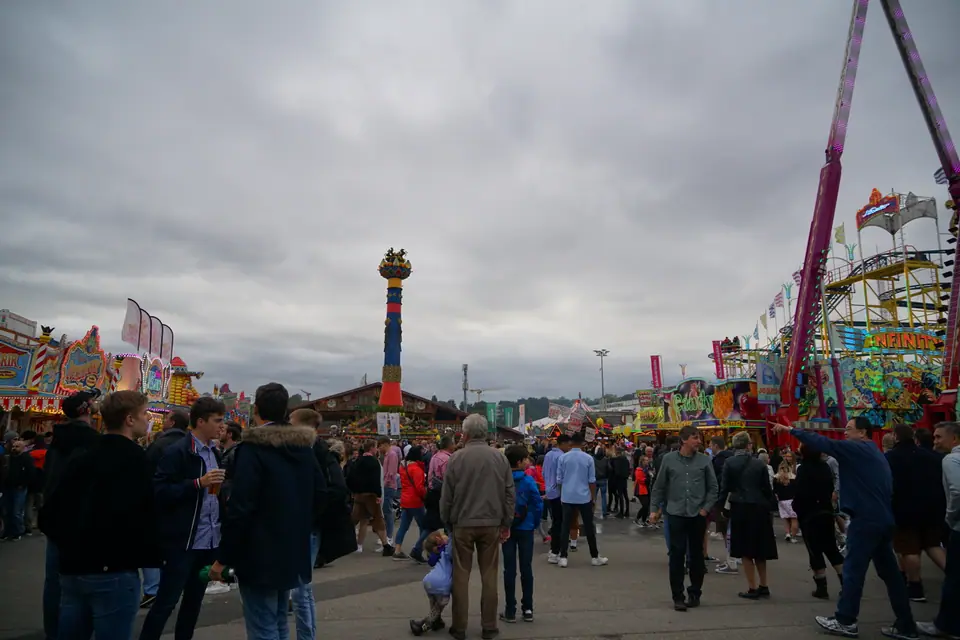
September (20 degrees Celsius mean high, 52 millimetres rain) and early October stand out as Stuttgart's best all-round season. Across 16 to 17 days spanning late September into early October, Bad Cannstatt hosts the Cannstatter Volksfest, universally called the Wasen (VAH-zen). King Wilhelm I and Queen Katharina founded this agricultural fair in 1818 to revive Württemberg farming after the catastrophic 1816 "Year Without a Summer".
Centred on its 26-metre carved wooden fruit column (Fruchtsäule), the Wasen ranks as the world's second-largest folk and beer fair behind Munich's Oktoberfest. Huge brewery tents pack cheerful crowds onto wooden benches every night. Weekend table slots sell out early and push Bad Cannstatt room rates higher, whereas weekday afternoons feel far easier to wander freely.
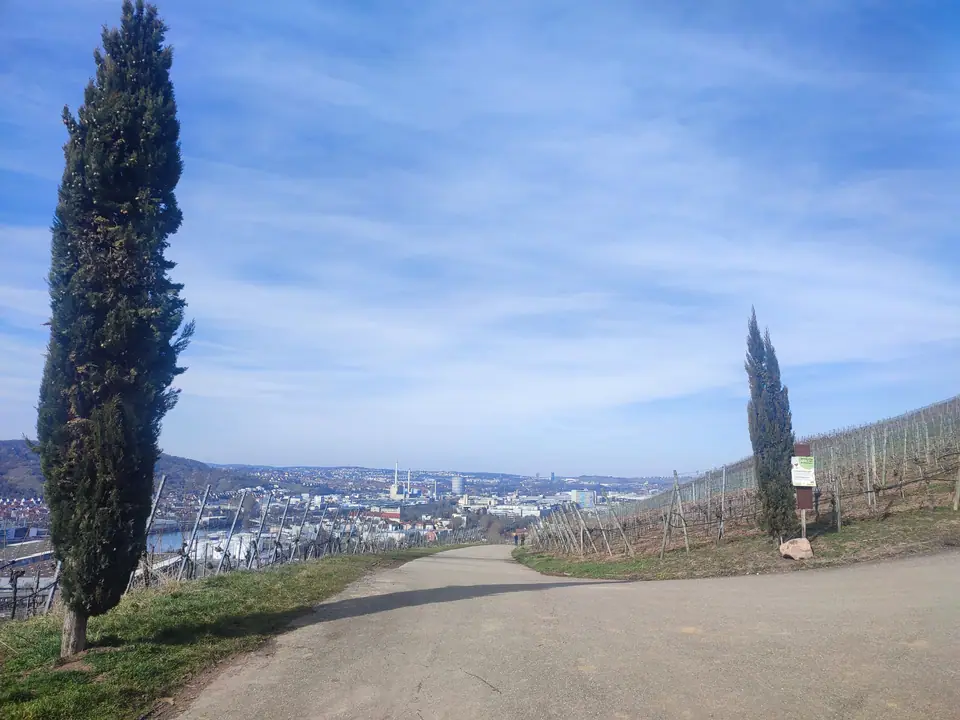
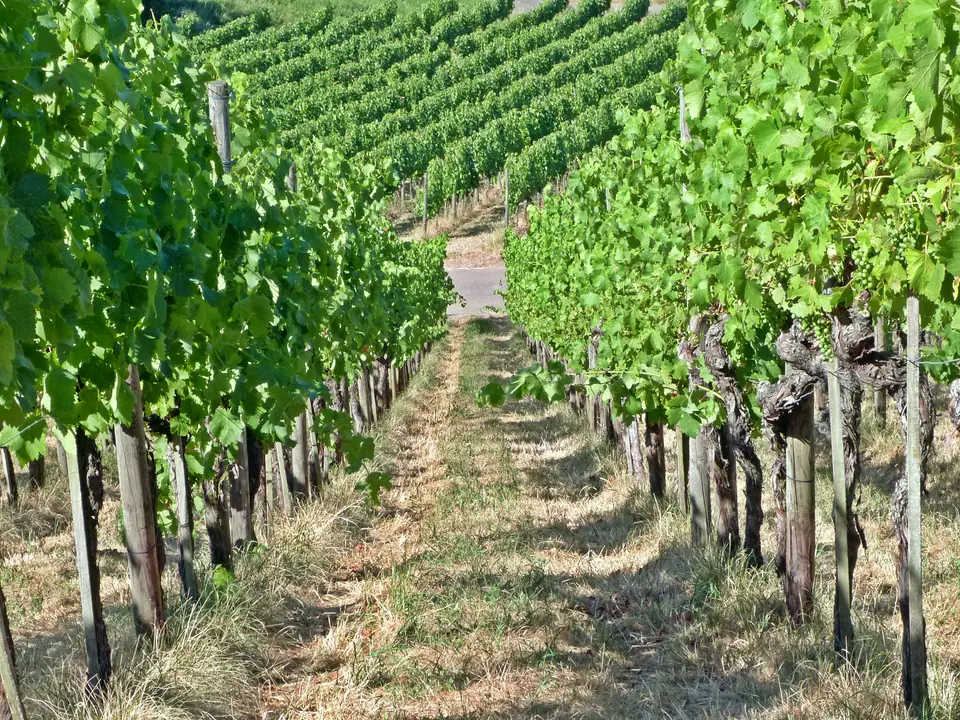
Walk two kilometres east of the fairground rides in October and crowds melt into golden quiet. Vine canopies turn bright yellow above Untertürkheim, Rotenberg, and Uhlbach under crisp 15-degree afternoons and 56 millimetres of average October rainfall. Harvest season opens rural Besenwirtschaften broom taverns along vineyard lanes, pouring young wine beside steep slate walls. Clear autumn sunlight draws walkers smoothly between terraced slopes and hilltop stone overlooks without summer's stagnant valley heat.
Winter Steam Spas and Historical Markets
November and December cool sharply to daytime highs of 9 and 6 degrees Celsius, dipping near freezing at dawn beneath valley fog. January (5 degrees high, -1 low) and February (7 degrees high, 37 millimetres rain) stay brisk and uncrowded. December logs just 60.1 sunshine hours, yet late November through 23 December lights Schlossplatz and Schillerplatz with wooden stalls of the Stuttgarter Weihnachtsmarkt, documented back to 1692.
Steaming mineral baths in Bad Cannstatt and quiet gallery halls keep winter days cosy indoors. Raincoats and layered knitwear beat heavy parkas whenever mild southwest air sweeps across Baden-Württemberg mid-winter. Warm indoor days also pair smoothly with the Mercedes-Benz Museum in Bad Cannstatt and lunch counters inside central Markthalle. Hotel rates outside Christmas weekend peaks stay reasonable, giving architectural visitors clear street views at Weißenhofsiedlung without heavy summer foliage.
If balancing pleasant walking warmth, moderate rain risk, and cultural energy sits top of your list, aim squarely for May or September. Both shoulder months showcase bright green vineyard slopes across Bad Cannstatt, Rotenberg, and Uhlbach before deep winter valley mist settles back over the river floor.
Where it is
- 1Stuttgart
- Stuttgart Airport (STR) · about 10 km from Stuttgart in a straight line
- Directions in Google Maps
Stations and taxi ranks: OpenStreetMap. Airports: OurAirports. Distances are in a straight line.
Traveller tips
Real advice from people who have been to Stuttgart. Every tip is read by our team before it goes live.
No tips yet. Been here? Yours could be the first.
Thank you! Your tip will appear here after a quick review.
More in Stuttgart
Continue exploring Stuttgart with related neighbourhood, food, and planning guides