Photo: Diego Delso · CC BY-SA 4.0
From Piazza Unità d'Italia Up to San Giusto Hill
Climb two millennia in one short hill walk from Piazza Unità d'Italia's imperial seafront past Roman stones and medieval alleys up to San Giusto Cathedral and Castle.
Trieste gathers two millennia of urban stonework onto one compact slope climbing steadily inland from harbour flagstones. Start beside waterfront lanterns at sea level and walk calmly uphill. Within half an hour your steps pass Austrian ministries, Roman theatre ruins and austere medieval masonry before opening onto castle battlements overlooking the gulf.
Europe's Largest Seafront Square at Piazza Unità d'Italia
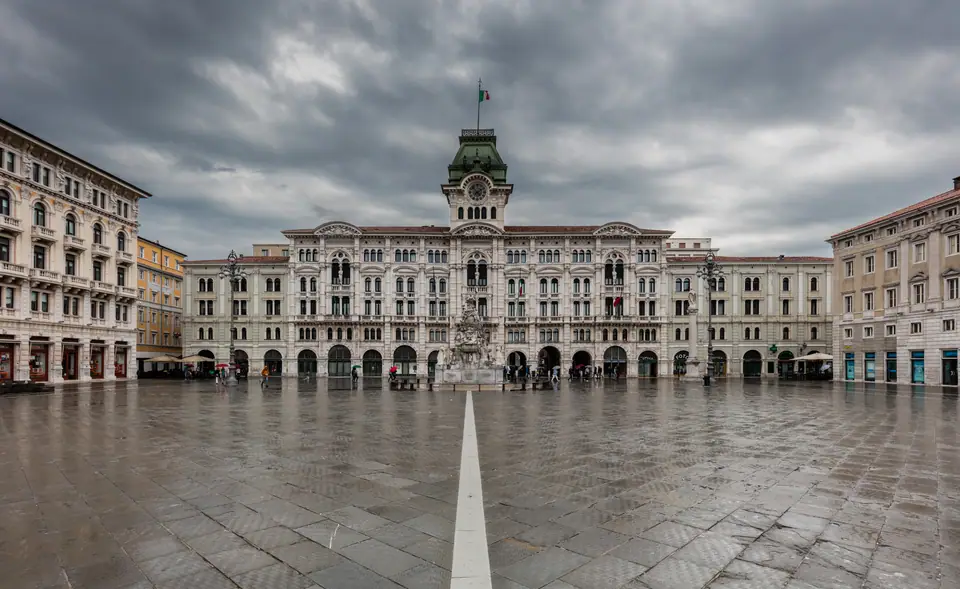
Known prior to 1918 simply as Piazza Grande, Piazza Unità d'Italia throws an entire long flank straight onto the Adriatic Gulf between twin historic piers. White Istrian stone facades enclose this broad rectangle on three inland borders, pairing imperial scale with bright sea reflection. Pause near the carved Fountain of the Four Continents in front of the town hall to take in the plaza's sweeping proportions.
Facing the waves stands Giuseppe Bruni's 1875 Palazzo del Municipio. Twin bronze clocktower bell-ringers fondly nicknamed Micheze and Jacheze tap passing hours high above its central balcony. Side wings align dignified Palazzo Modello, ornate Palazzo Stratti housing Caffè degli Specchi, and the former Austrian Lloyd headquarters topped by sculpted maritime figures.
Roman Stones at the Foot of the Hill
Cross the busy traffic corridor of Corso Italia behind the town hall and wide Austrian geometry shrinks instantly into winding medieval cobbles. Uncovered during extensive urban clearance works in 1938, ancient Roman Tergeste reappears beside modern apartment doors.
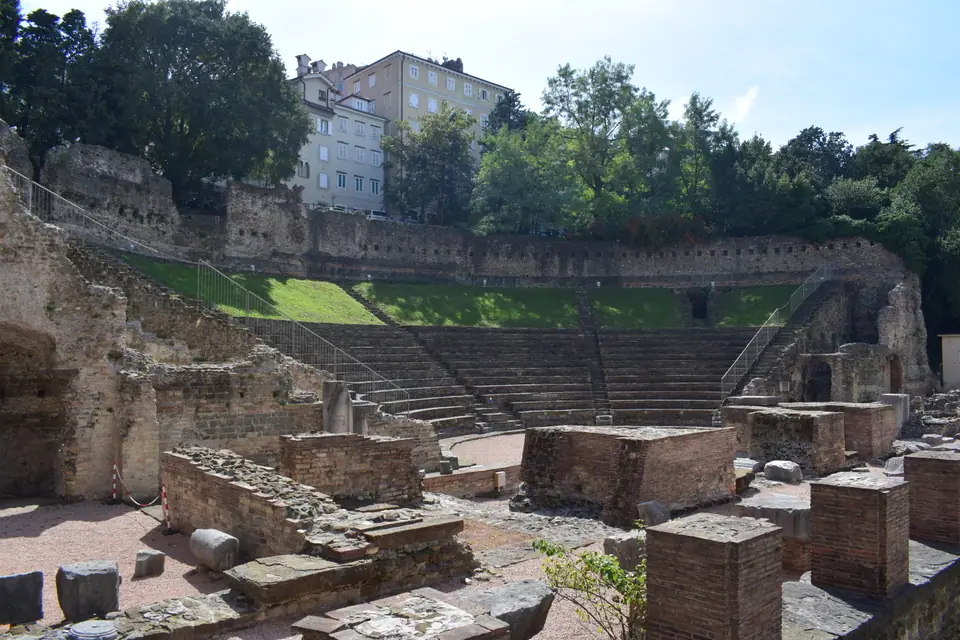
Teatro Romano and Arco di Riccardo
Carved straight into solid bedrock during the late 1st century AD, Teatro Romano once seated around 3,500 to 6,000 spectators facing the old shoreline. Climb five uphill blocks along narrow Via del Castello to step quietly beneath Arco di Riccardo. This Roman limestone gate dating back to the 1st century BC (roughly 33 to 32 BC) anchors quiet Piazzetta Barbacan between warm stone walls.
Medieval Quiet Around San Silvestro and Santa Maria Maggiore
Where steps grow steeper above Roman masonry, medieval and Baroque sanctuaries crowd tight onto sunlit ledges overlooking port cranes. Directly beneath the tall Baroque Jesuit facade of Santa Maria Maggiore stands San Silvestro, Trieste's oldest surviving church dating back to the 11th to 12th century.
Step inside San Silvestro's austere Romanesque stonework to feel how starkly plain medieval stone contrasts with ornate baroque plasterwork next door. Moments uphill, shady cypresses shelter Roman gravestones, Corinthian column shafts and carved Latin slabs inside the Orto Lapidario garden. Visitors arriving from Rome or Verona quickly note a clear regional shift. Here provincial Roman carving merges calmly with austere Central European church roofs.
Two Churches Fused Inside Cattedrale di San Giusto Martire
At the flat summit plateau, Trieste's patron cathedral solves a medieval shortage of floor space directly across its rugged sandstone facade. Between 1302 and 1320, masons removed adjoining inner walls to fuse two separate earlier churches, Santa Maria Assunta and the shrine of San Giusto, beneath one wide asymmetric timber roof.
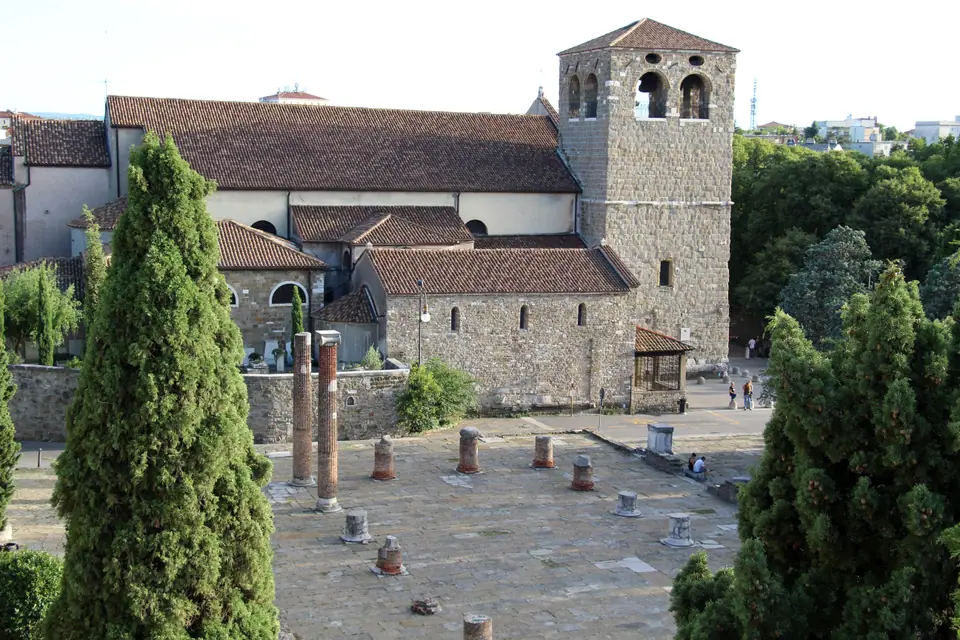
Fourteenth-Century Rose Window and Byzantine Mosaics
Inspect the square bell tower studded with salvaged Roman reliefs cut straight from a vanished Capitoline temple atop this acropolis hill. Step quietly inside beneath the lacy stone Gothic rose window. Gold-ground 12th-century Veneto-Byzantine apse mosaics glow overhead, flanking patron martyr Saint Justus beside austere medieval bishops and apostles.
Castello di San Giusto and the Bastion Horizon
Facing the grassy cathedral square rises the triangular stone fortress of Castello di San Giusto. Builders broke ground in 1470 under Emperor Frederick III. Work crews reinforced its corner bastions steadily until roughly 1630. Elevated parapet walks sweep clear panoramas from Slovenian karst cliffs past Miramare headland down across Borgo Teresiano. Stone lookout towers catch warm noon sun while maritime flags snap neatly over calm Gulf water below.
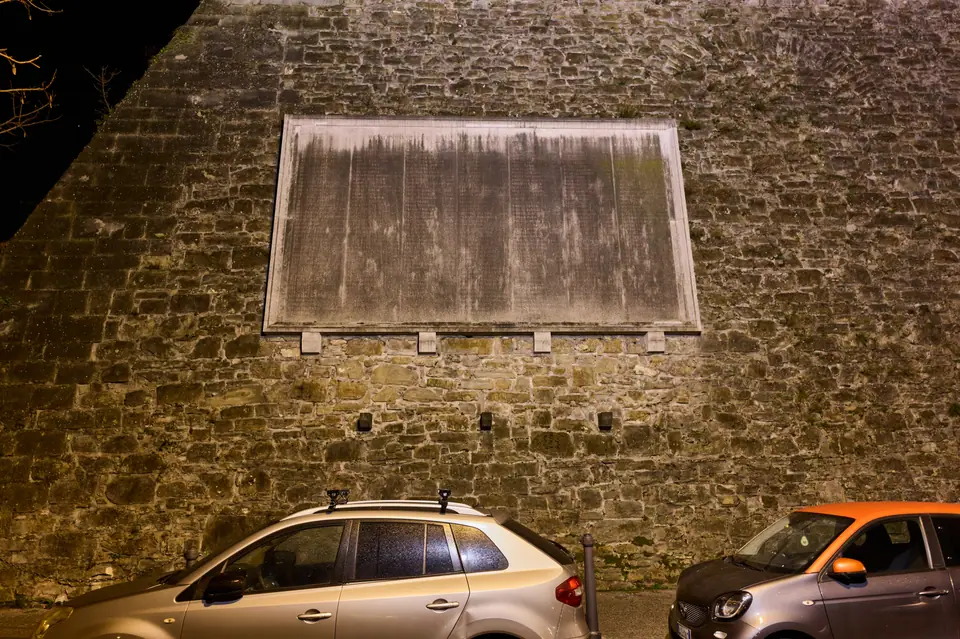
Inside the courtyard rooms, civic museum halls display historic halberds, armour, wall tapestries and carved civic emblems saved from vanished gates. Early climbs catch soft sea mist lifting off Istrian bays while late afternoons warm the ramparts gold before harbour lights flicker on below. Resting on weathered stone benches inside the upper bastion reveals how red clay roofs drop down toward white shipping cranes and blue gulf swells.
Watch local dog walkers and joggers circle the grassy ridge beneath umbrella pines before twilight cools steep cobbles. Even busy summer evenings turn calm up along cathedral flagstones once tour groups wander downhill toward harbour restaurants. Benches overlooking western bays offer serene places to map your evening stroll back toward downtown lights.
Descending Through Old Portals Back to Cavana
Follow shaded switchbacks down Via della Cattedrale or descend stone stair flights winding toward Piazza Attilio Hortis to protect tired knees. Quiet residential alleys pass carved house lintels, wrought-iron street lanterns and tiny pocket gardens clinging cheerfully to terraced hillside walls. Stopping for fresh gelato or a cold glass of regional wine down in Cavana closes the circular walk cleanly. Late twilight chimes ringing from San Giusto still drift softly down narrow paved gullies onto harbourside terraces.
From the wide marble stage of Piazza Unità d'Italia to the silent Romanesque nave atop San Giusto, Trieste stacks two millennia vertically without ever losing sight of Adriatic water.
Weigh steep hill stairs carefully against level apartment streets inside our neighbourhood accommodation guide, or continue west toward Venice once your walk reaches the Rive promenade.
Where it is
- 1From Piazza Unità d'Italia Up to San Giusto Hill
- Trieste Airport (TRS) · about 31 km from here in a straight line
- Venice Marco Polo Airport (VCE) · about 112 km from here in a straight line
- Directions in Google Maps
Stations and taxi ranks: OpenStreetMap. Airports: OurAirports. Distances are in a straight line.
Traveller tips
Real advice from people who have been to Trieste. Every tip is read by our team before it goes live.
No tips yet. Been here? Yours could be the first.
Thank you! Your tip will appear here after a quick review.
More in Trieste
Continue exploring Trieste with related neighbourhood, food, and planning guides