Photo: Schreckgespenst · CC BY-SA 4.0
Limestone Caverns of Grotta Gigante and the Carso
Climb from Trieste's harbour up to the Carso plateau via Tram di Opicina or Bus 42 for Grotta Gigante's vast cavern, Strada Napoleonica ridge walks and Val Rosandra.
Directly above Trieste's terraced rooftops climbs a stark, dry plateau of fractured pale limestone extending across into western Slovenia. Known as the Carso, this porous upland gave modern earth science the international term "karst". Over millions of years, underground waterways like the mysterious Timavo carved cathedral-sized voids beneath quiet pastures and dry oak woods.
Climbing From Saltwater Level to the Karst Plateau
Reaching upland trails requires no rental car and lifts travellers clear of summer seafront warmth inside half an hour. Board Tram di Opicina Line 2 from Piazza Oberdan to climb steep pine slopes onto the rim before transferring uphill onto local buses. Or ride urban Bus 42 straight from Piazza Oberdan directly to the quiet hamlet of Borgo Grotta Gigante (Briščiki in Slovene).
Cool ridge breezes replace downtown buzz swiftly once roads clear Villa Opicina. Weathered limestone outcrops poke through red meadow grass beside dry-stone walls and fragrant wild sage bushes. Deep sinkholes called doline shelter shady beech pockets and stone farmsteads hidden politely from winter gales. That upland border connects Trieste geographically toward Ljubljana and western Zagreb paths framed inside our city overview guide.
Even on bright coastal mornings, the jump in altitude feels dramatic. Red iron soil peeks around gnarled juniper roots while distant church spires pierce pine stands across quiet village clearings.
Inside the Main Chamber of Grotta Gigante
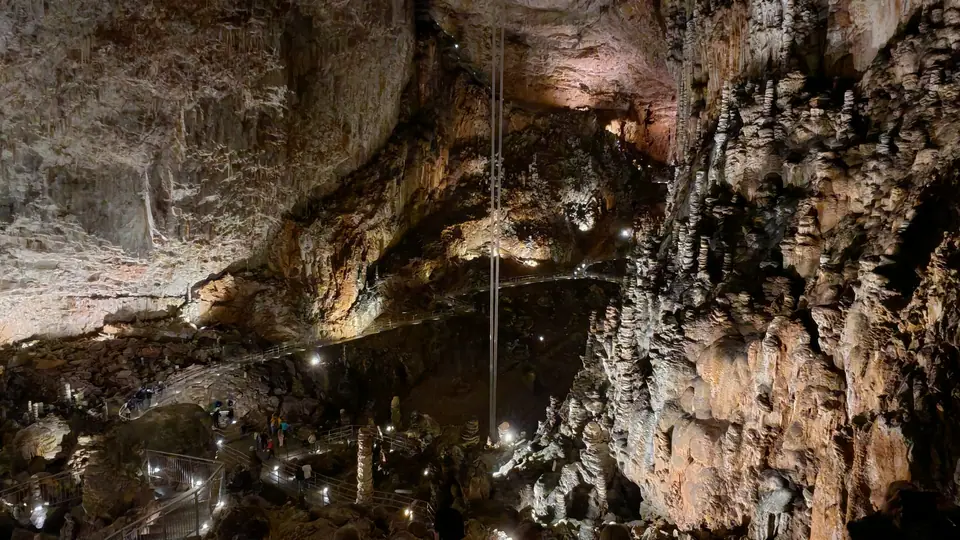
Opened as a show cavern early in the 20th century, Grotta Gigante astounds guests through one immense natural limestone vault rather than tight crawls. Stepping down from the plateau rim reveals a silent subterranean hall measuring 98.5 metres high, 167.6 metres long and 76.3 metres wide, enclosing roughly 365,000 cubic metres of cool underground air.
Geodetic Pendulums and Guided Cavern Metrics
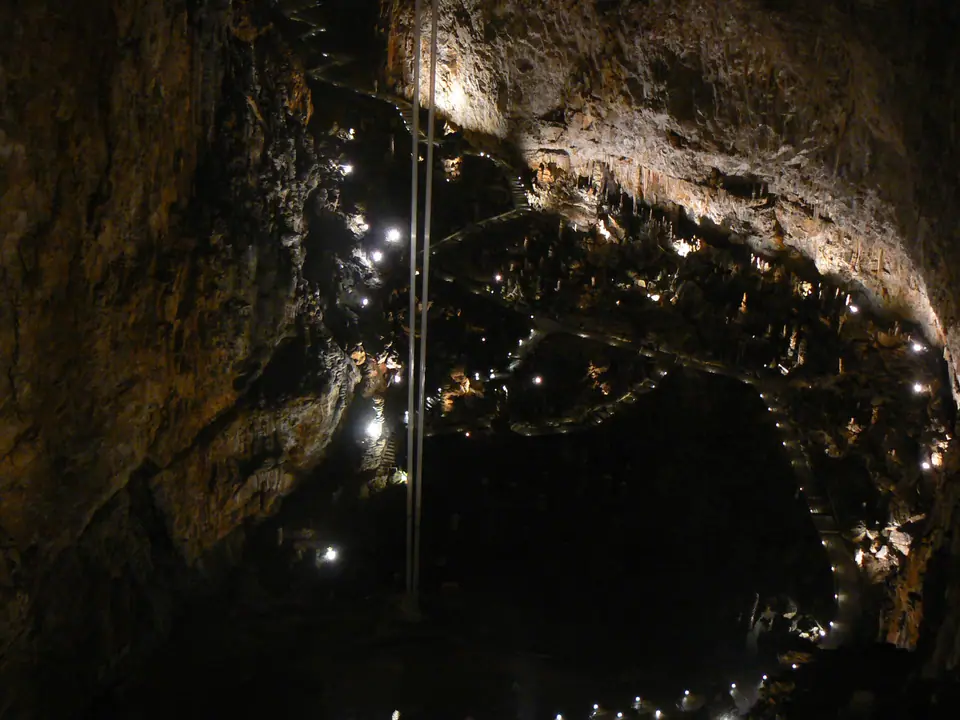
Walkways wind calmly past gleaming mineral flowstone and the towering 12-metre-tall Colonna Ruggero stalagmite toward an extraordinary scientific station. Installed in 1959 by geodesist Antonio Marussi, twin horizontal geodetic pendulums hang 95 metres from upper vault mountings toward floor sensors. Those sensitive cables measure subtle Earth tides inside solid crust, slow tectonic movements and distant earthquakes cleanly through dark silence.
Completing the guided route demands steady knees rather than climbing skill. Visitors step down 500 stone entrance stairs to the steady 11°C chamber floor before climbing 500 exit stairs back up into warm pine daylight. Handrails border every terraced flight while focused lighting shows pale calcite domes cleanly overhead. Water droplets echo clearly off distant stalagmites whenever tour voices pause beside deep rock balconies.
Walking Strada Napoleonica and Val Rosandra Above the Gulf
Once blinking back out beneath open skies, combine caverns effortlessly with two classic plateau walks overlooking coastal waters.
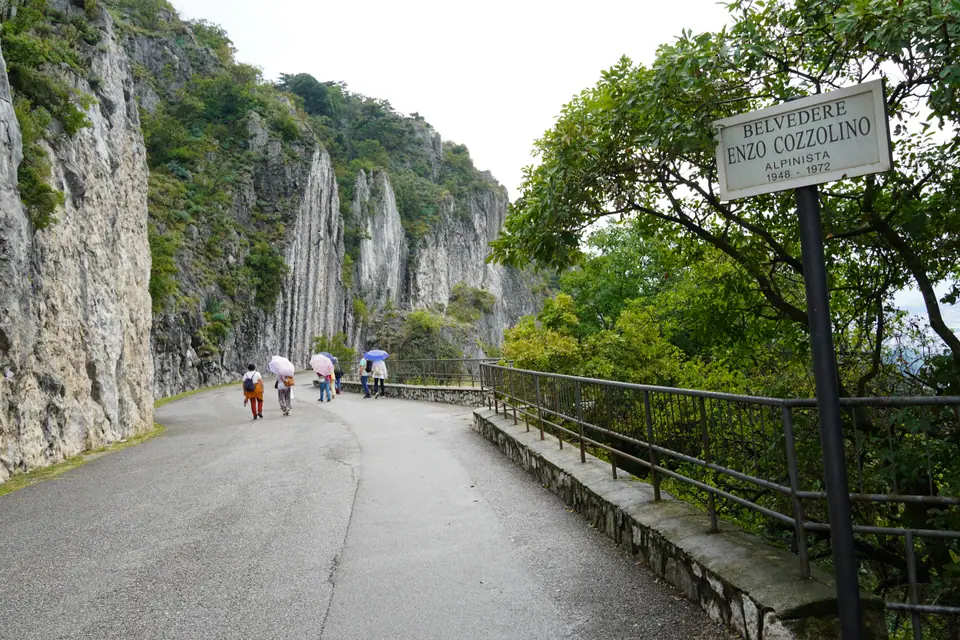
Tracing a virtually level terrace between Obelisco di Opicina and Prosecco village, the 3.7-kilometre Strada Napoleonica hugs sheer pale rock ledges overlooking Barcola and the wider Adriatic horizon. Wide crushed gravel surfaces stay family-friendly between limestone climbing cliffs on one side and cargo ships moored far below across the bay. Warm benches along sunny bends let hikers rest facing Istrian capes before turning back toward tram stops.
Weekend families push strollers effortlessly along this smooth bluff while rock climbers scale pale vertical limestone overhead. Even brisk afternoon walks feel refreshing up here when sea winds brush fragrant wild thyme over gravel edges.
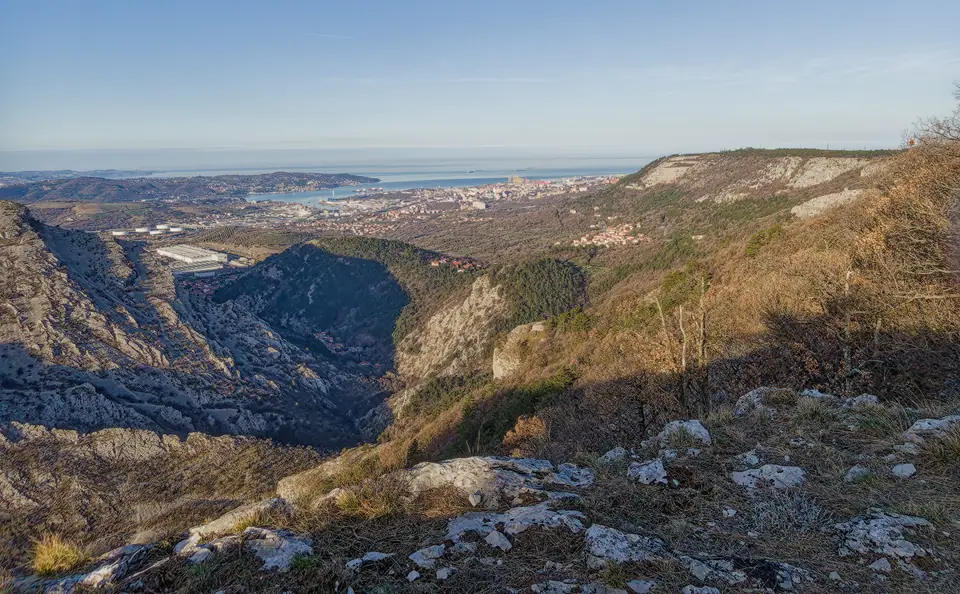
South near San Dorligo della Valle, Val Rosandra carves the Carso's rare open surface river canyon between dramatic scree walls above Muggia Bay. Autumn drapes nearby ridges in bright crimson sumac foliage contrasting sharply against grey cliff faces. Stone trails pass ruined watermills and quiet limestone springs tucked carefully along shaded ravine benches. Even modest hill scrambles reward hikers with golden hawk shadows gliding overhead between rocky bluffs.
Spring brings bright wild orchids and fragrant herb blossoms out across sheltered canyon ledges before dry summer air settles down over limestone flats. Pack light snacks so peaceful valley viewpoints stretch without rushing back toward city buses. Shaded oak leaves rustle overhead along gentle switchbacks descending smoothly toward country inns and stone bridges.
Practical Preparation for the Cavern and Karst Trails
Pack a few simple layers before hopping aboard Bus 42 or the Opicina tram uphill so cool cave drafts and warm sunlit cliff paths both feel comfortable.
- Bring a warm fleece for 11°C cavern air. Even when July afternoons warm seafront piers to 29°C down beside the Rive, damp subterranean temperatures stay cool year-round. Light jackets prevent shivers during slow guided stops beside floor formations.
- Wear grippy closed walking shoes. Natural mineral condensation dampens smooth stone across all 500 downward and 500 exit stairs inside Grotta Gigante. Rubber-soled trainers or hiking boots hold wet steps far safer than smooth sandals.
- Pack drinking water and sun hats on open trails. Bright stretches along Strada Napoleonica and Val Rosandra bounce fierce noon glare off pale white limestone. Public water taps stay sparse between village centres and trailhead benches.
- Check guided cave tour schedules before riding Bus 42. Grotta Gigante admits visitors strictly on scheduled guided groups spaced cleanly across opening hours. Pairing bus times with entry slots avoids long waits outside.
- Finish near an open Carso village trattoria or osmiza. Celebrate plateau mileage with crisp white Vitovska wine and cured farmhouse pork explored inside our guide to Triestine dishes and osmize.
Where it is
- 1Limestone Caverns of Grotta Gigante and the Carso
- Trieste Airport (TRS) · about 27 km from here in a straight line
- Venice Marco Polo Airport (VCE) · about 112 km from here in a straight line
- Directions in Google Maps
Stations and taxi ranks: OpenStreetMap. Airports: OurAirports. Distances are in a straight line.
Traveller tips
Real advice from people who have been to Trieste. Every tip is read by our team before it goes live.
No tips yet. Been here? Yours could be the first.
Thank you! Your tip will appear here after a quick review.
More in Trieste
Continue exploring Trieste with related neighbourhood, food, and planning guides