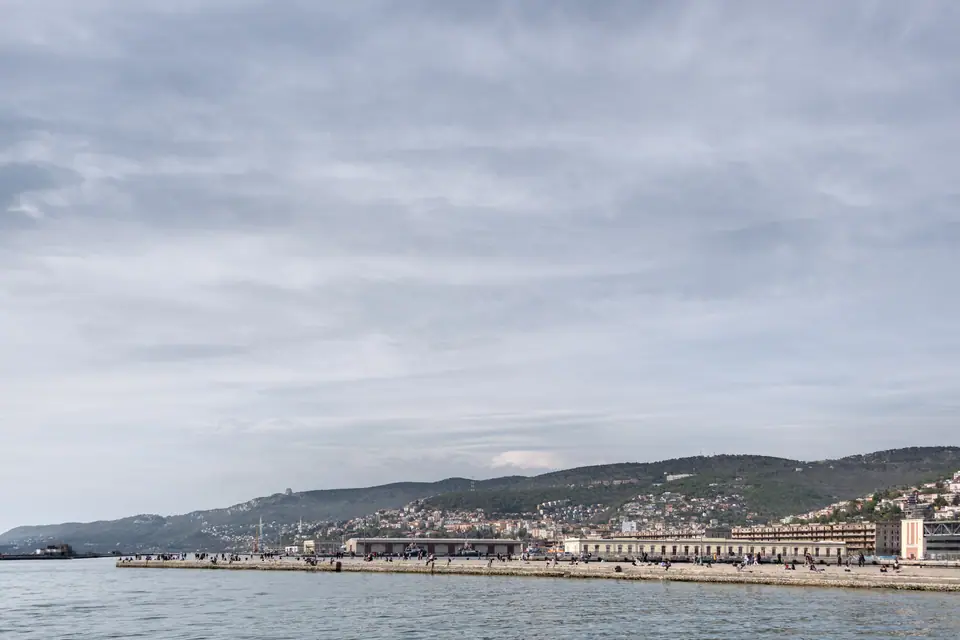
Photo: Giorgio Galeotti · CC BY 4.0
Caffè Storici, Rive Waterfront and Roman Stones
Stroll stone harbour piers, ride the vintage Tram di Opicina up the limestone ridge, browse modern art at Museo Revoltella and pause inside Risiera di San Sabba.
Trieste packs variety into compact blocks through sudden shifts from saltwater quays to forested limestone ridges. In one easy day you can walk a deep-water stone pier, study 19th-century Italian sculpture and climb a forested escarpment on a vintage tram. Short distances let every landmark blend seamlessly with coffee breaks and sea breezes.
Walking the Stone Pier of Molo Audace
Projecting 246 metres straight into the gulf off Piazza Unità d'Italia, Molo Audace feels like an open stone deck floating over clear water. Builders laid the initial stone spur between 1743 and 1751 directly over the wreck of the ship San Carlo. Crews extended it in 1778 and again across 1860 and 1861, before city authorities renamed the pier in 1922 after the Italian destroyer Audace docked on 3 November 1918.
Sunset Over the Gulf and Piazza Unità
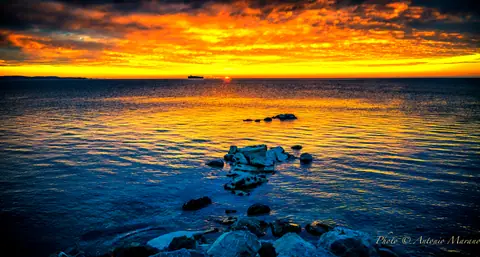
Walk out toward the brass compass rose near dusk. Looking back frames Piazza Unità d'Italia glowing warm amber beneath pine ridges. Bring a windproof jacket outside summer because crisp winds sweep rapidly across the open paving without railings.
Early mornings here feel completely different from evening promenades. Photographers share the pier with anglers rigging lines beside iron mooring rings and coastal ferries slipping quietly away across calm grey water. Watch how pale mountain ridges behind Monfalcone catch pink dawn light well before streetlamps switch off downtown.
Borgo Teresiano and the Grand Canal Grid
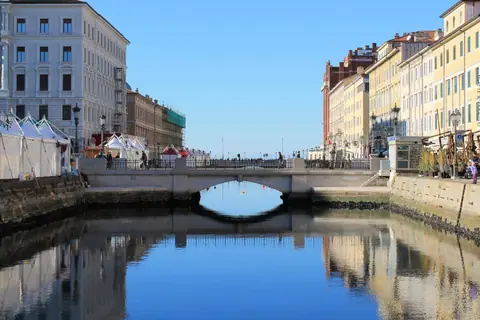
Two blocks north of Molo Audace, wide Habsburg avenues enclose the straight salt waters of Canal Grande. Wooden skiffs and small launches tie cleanly below granite quays laid when traders hauled grain, textiles and timber directly from hulls to warehouse doors. Cross Ponte Rosso beside the bronze statue of James Joyce to watch streetlamps flicker across flat water.
Sant'Antonio Nuovo and San Spiridione
At the canal's inland end rises Matteo Pertsch's wide neoclassical portico of Sant'Antonio Nuovo. One street behind, bright turquoise domes and silver hanging lamps illuminate the Serbian Orthodox church of San Spiridione. That neighbourly blend of Latin porticoes and Byzantine gold mosaics creates a striking visual contrast against Venice or Renaissance piazzas in Verona.
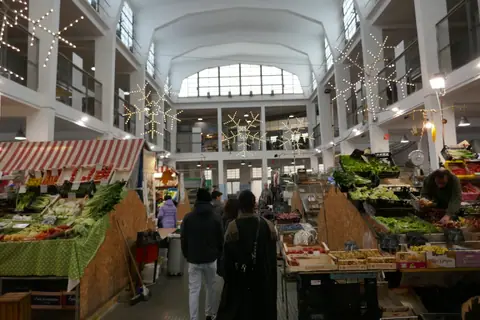
Morning markets often fill nearby squares beside Piazza Ponterosso with flower stalls, cured cheeses and wicker baskets. Take a slow loop down Via Roma before steering back toward the docks.
Historic Tram di Opicina Line 2 Up the Escarpment
Climbing aboard Tram di Opicina Line 2 from Piazza Oberdan turns an ordinary commute into pure mechanical theatre. Painted blue-and-white wooden tramcars glide away on urban street tracks before pausing near Piazza Scorcola. Special funicular cable tractor cars couple quietly behind or ahead to guide carriages up a steep 26 percent incline toward Villa Opicina.
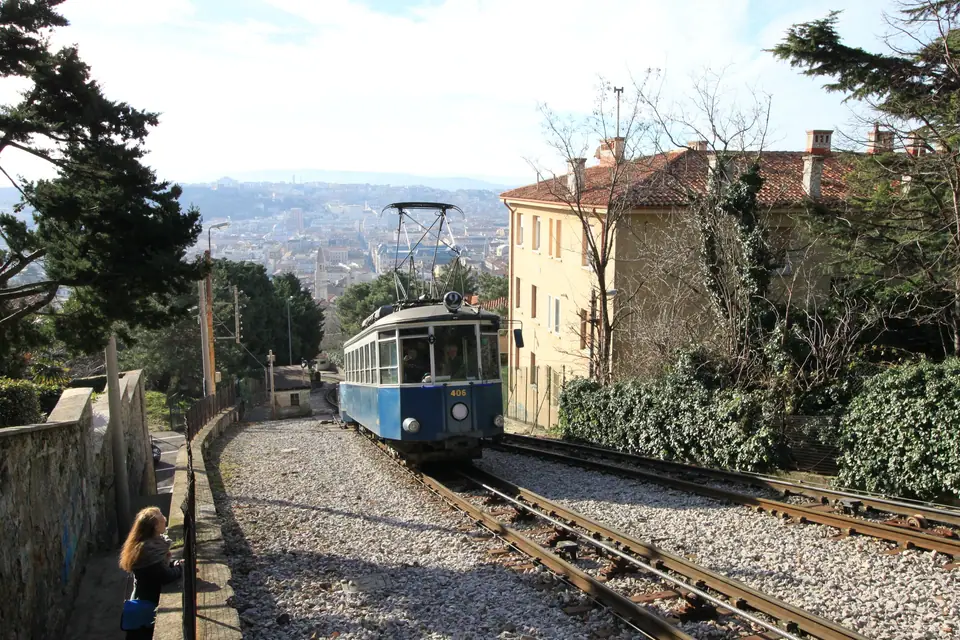
Following prolonged engineering repairs, the full Tram di Opicina Line 2 reopened on 1 February 2025. After a temporary maintenance suspension starting in April 2026, passenger trams resumed service on 20 July 2026. Buy standard TPL FVG urban tickets from station newsstands or mobile apps before boarding at Piazza Oberdan. Morning climbs avoid hiker queues and offer clear panoramic drops over rooftops and harbour cranes.
Galleries, Roman Ruins and Old Harbour Pavings
Down beside leafy Piazza Venezia stands the refined town palace of Baron Pasquale Revoltella, banker, Austrian Lloyd co-founder and dedicated arts patron. Upon his death in 1869, Revoltella bequeathed his home, personal wealth and modern art collection to Trieste, launching Museo Revoltella in 1872. In the late 20th century, architect Carlo Scarpa linked the Baron's gilded salons with bright minimalist top-lit galleries next door.
Museo Revoltella on Via Armando Diaz
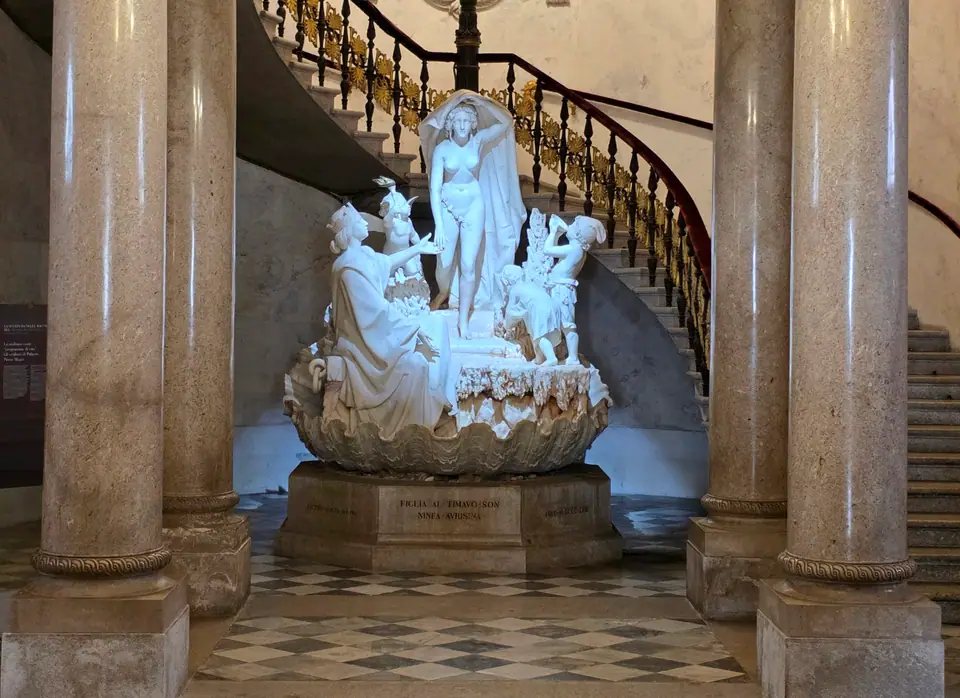
Budget unhurried time inside Museo Revoltella at Via Armando Diaz 27. Lower floors keep richly upholstered period sitting rooms, walnut staircases and Pietro Magni's delicate marble sculpture La Ninfa di Aurisina intact. Upper galleries trace late 19th-century and modern Italian painting up to an airy rooftop terrace scanning harbour funnels.
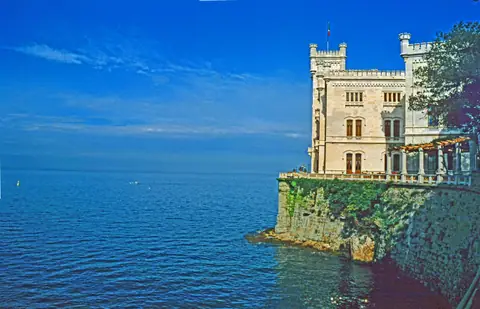
Wait until late afternoon to step out onto Museo Revoltella's roof terrace when sea glare turns amber over the breakwater cranes. Stepping down toward the water leads cleanly past sailors' lanes in Cavana or north toward Miramare Castle.
Maritime exhibits and historic roasteries profiled in our port and coffee guide round out quiet harbour afternoons. Travellers continuing southwest toward Bologna enjoy seeing how northern Italian museum design adapts smoothly to Austrian merchant stonework.
Bearing Witness at Risiera di San Sabba
South of downtown docks, municipal buses run quickly to the stark brick industrial complex of Risiera di San Sabba. Constructed between 1908 and 1913 as an industrial rice-husking factory, the compound fell under German SS control after September 1943. Occupiers converted its brick rooms into a police detention, transit and murder camp containing Italy's only Nazi-era crematorium.
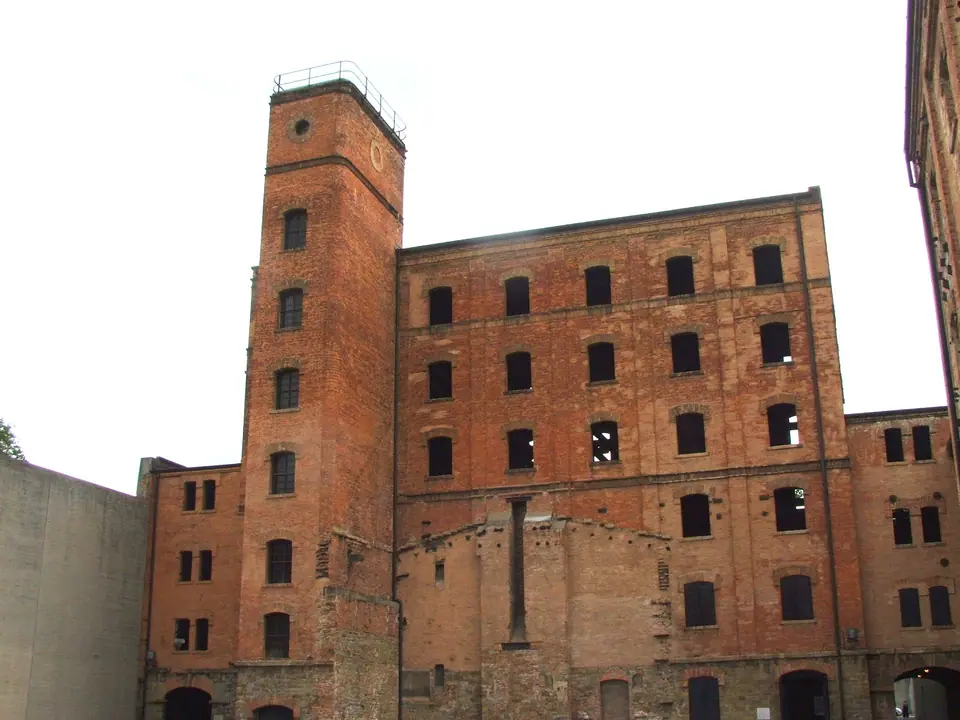
Declared an Italian National Monument in 1965, the site reopened as a civic memorial museum in 1975 through austere designs by architect Romano Boico. Soaring raw concrete walls frame the empty courtyard, passing preserved prison cells and the metal floor outline of the dismantled chimney. Time spent inside lends quiet, vital gravity to an Adriatic trip before heading back uphill into sunlight.
Back in central streets, evening brings walkers out onto Piazza Attilio Hortis and across Canal Grande bridges to watch dusk gather along white stone piers. Simple urban bus links and compact blocks leave plenty of breathing room between daytime sightseeing and late dinner plans.
Where it is
- 1Trieste
- Trieste Airport (TRS) · about 31 km from Trieste in a straight line
- Venice Marco Polo Airport (VCE) · about 112 km from Trieste in a straight line
- Directions in Google Maps
Stations and taxi ranks: OpenStreetMap. Airports: OurAirports. Distances are in a straight line.
Traveller tips
Real advice from people who have been to Trieste. Every tip is read by our team before it goes live.
No tips yet. Been here? Yours could be the first.
Thank you! Your tip will appear here after a quick review.
More in Trieste
Continue exploring Trieste with related neighbourhood, food, and planning guides