Quick Field Data
- UNESCO Inscription: 2021 (Ref. 1561, inscribed 25 July 2021), 22-part serial cultural network across Quanzhou, Fujian Province, south-eastern China; Criterion (iv).
- Scale & Footprint: 536.08-hectare serial footprint spanning urban Licheng districts, estuary bridges, docks and inland production hills between the Jin and Luoyang rivers.
- Access & Ticketing: State-owned monuments protected under China's Cultural Relics Law, Fujian provincial regulations and the revised Rules for Historic Monuments of Ancient Quanzhou (Zayton); check local municipal heritage notices and temple gate desks for access rules across dispersed sites.
- Arrival Logistics: Served by Quanzhou Jinjiang International Airport (JJN), 19 kilometres south of the urban core, with Xiamen Gaoqi International Airport (XMN) 60 kilometres southwest and coastal rail links connecting southward toward Hong Kong (531 kilometres).
Zayton Port Origins Between the Jin and Luoyang Estuaries
Readers asking where is quanzhou china locate a major coastal city on the Jin River's north bank beside the Taiwan Strait. Anchoring Fujian Province's Southern Coast between Xiamen and Zhangzhou to the south and Putian to the north, historic Quanzhou occupies a peninsula between the Jin and Luoyang estuaries. Mountainous interior districts reach halfway across Fujian toward Longyan and Sanming, connecting rural ironworks and celadon kilns with deep tidal anchorages via canals and bridges. Today its extended prefecture spans Licheng, Fengze, Luojiang, Jinjiang, Nan'an, Shishi and Hui'an across 11,245 square kilometres.
Long before rising as the Song-Yuan Maritime Silk Road hub, settlements along the Jin River absorbed successive administrations. Min-speaking settlers arrived around 284 CE during the Jin dynasty, naming both the Jin River and neighbouring Jinjiang city, while Sui general Yang Su subdued Wang Guoqing's Chen State forces in the 590s. Tang authorities established Quanzhou (from Quan, Spring Prefecture) in 718 CE, welcoming Arab and Persian traders early on. During the Five Dynasties era, Qingyuan Circuit (renamed Pinghai Circuit in 964) governed southern Fujian practically independently for 29 years from 949 to 978 under four rulers. Founder Liu Congxiao expanded maritime shipping and planted Indian coral trees (Erythrina variegata), earning Quanzhou the epithet Citong Cheng (Erythrina City), before ruler Chen Hongjin peacefully surrendered to the Northern Song in 978 to spare the city from war.
Medieval Arab, Persian and European texts celebrated the quanzhou china port under the Arabic name Zayton or Zaiton, meaning City of Olives. Transcribed as Caiton and Zaytún, Zayton linked phonetically to Citong and gave English the textile term satin. Earlier European sailors also wrote Chinchew (from Hokkien Chincheo), initially conflating Quanzhou with neighbouring Zhangzhou's Yuegang port on the Jiulong River. In Hokkien usage, zhou originally signified alluvial river islands, apt for Quanzhou's estuarine peninsula. Under the Northern Song, Quanzhou opened an imperial Maritime Trade Bureau (shibosi) in 1079 or 1087, overtaking Guangzhou and overland routes. A 1095 stele notes two 20-ship Southern Seas convoys arriving annually, exporting sugar, alcohol, salt and celadon ceramics (ninety percent of Fujian pottery output); by 1120, prefecture population reached 500,000.
Southern Song and Yuan chronicles underline Quanzhou's global reach together with later seismic and maritime shocks. A 1206 report listed merchants from Arabia, Iran, India, Sumatra, Cambodia, Brunei, Java, Champa, Burma, Anatolia, Korea, Japan and the Philippines, while customs inspector Zhao Rugua wrote Description of Barbarian Nations circa 1225 using Quanzhou as China's sea-distance zero point. Both Marco Polo and Ibn Battuta praised Zayton as one of the world's wealthiest ports. Yet intermittent Visayan coastal raids struck from eastern Taiwan around 1225, and Yuan Mongol fleets sailed against Japan and Java. Later came a 1357 revolt prompting massacres of foreigners, plus severe earthquakes in 1394 and 29 December 1604. Southern Song curbs against copper coin outflows during paper-money inflation, Japanese trade shifts to Ningbo and Zhapu, Ming-Qing piracy restrictions, nineteenth-century opium smuggling and harbour siltation gradually curtailed ocean voyages.
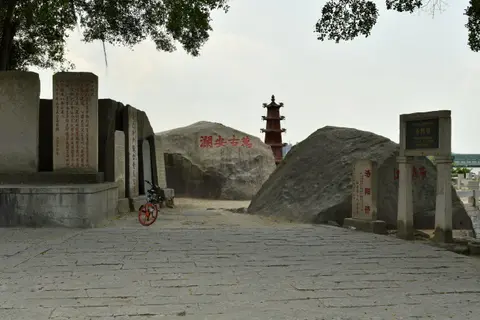
Kaiyuan Temple, Twin Stone Pagodas, and Tamil Hindu Carvings
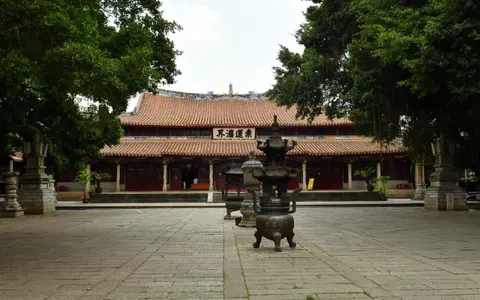
Exploring things to do in quanzhou china starts on West Street inside the 78,000-square-metre grounds of Kaiyuan Temple. Built in 685 or 686 CE inside landlord Huang Shougong's mulberry garden, legend holds Huang promised the plot if white lotuses bloomed on his mulberry branches within three days. After blossoms appeared, Master Kuang Hu founded Lotus Temple, commemorated on the Main Hall's Sanglian Dharma plaque before Tang officials renamed it Kaiyuan Temple in 738 CE. Flanking halls along its Dense-Eaves axis include Tianwang-dian (bearing Zhu Xi's couplet inscribed by monk Hong Yi), Daxiongbao Hall, the Sweet Dew Altar of Precepts, Tanyue Ancestral Temple, Virtue Hall, Zunsheng Hall and Zangjing-ge.
Preserving Tang layout beneath late Ming reconstruction, the 20-metre-tall Daxiongbao Hall spans nine rooms wide by six deep across 1,387.75 square metres. Inside sit gilded copper statues of the Five Tathagatas (Akshobhya, Amoghasiddhi, Vairocana, Amitabha and Ratnasambhava) cast during the Five Dynasties and Ten Kingdoms era (907 to 960 CE). Behind the hall, the Sweet Dew Altar of Precepts features complex Ruyi caisson brackets carrying 24 Flying Apsara musicians with pipas, fiddles and castanets above a Ming wooden Rocana Buddha seated on a thousand-petal lotus bearing tiny six-centimetre Buddhas.
Flanking the courtyard stand China's tallest twin stone pagodas crafted in Buddhist Dense-Eaves masonry. East Zhenguo Pagoda began in timber in 865 CE before Song masons rebuilt it in carved granite in 1238 CE, rising five octagonal storeys to 48.24 metres with 80 reliefs including the Cinnabar Cloud Great Sage monkey deity. West Renshou Pagoda, founded in 917 CE during the Later Liang and renamed by Song Emperor Huizong in 1114 CE, rises 44.06 metres beside a 1,300-year-old mulberry tree. Literary tradition links these monkey reliefs to prototypes inspiring Sun Wukong in Ming novel Journey to the West, renewed globally after contemporary video game Black Myth: Wukong featured both pagodas. Behind Daxiongbao Hall also stand greenish-grey granite pillars and a Vishnu statue from a 1283 Hindu temple built by Tamil Ainnurruvar Valanjiyar merchants in Chola Nadu style. Comparable maritime links carried silk craft westward and left Chinese fishing nets in Kochi and Chini chatti pottery names across southern India.
Across the wider prefecture, mountain kilns and river valleys operated in direct sync with maritime docks. Producers far northwest in Fujian's uplands smelted iron and fired jade-coloured celadon bowls, shipping bulk cargoes down canals and across stone spans like Luoyang and Anping bridges straight toward Song customs piers. That unified inland-to-ocean system explains why Quanzhou surpassed overland trade routes and briefly outshone Guangzhou during the Northern Song era.
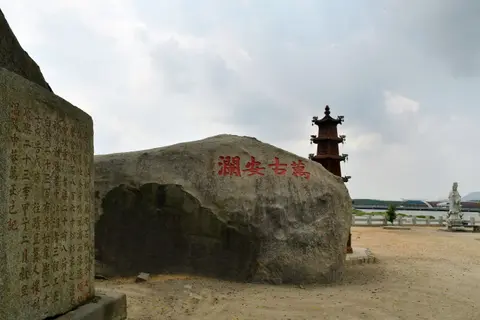
Qingjing Mosque and Multicultural Maritime Silk Road Faiths
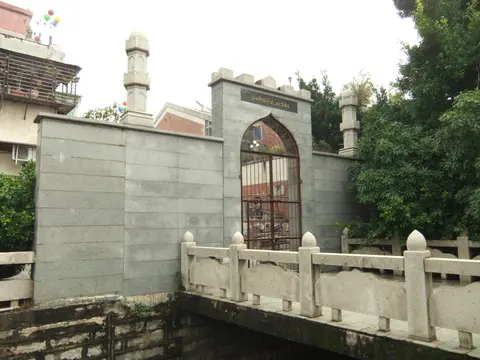
Along Tumen Street, the 2,500-square-metre Qingjing Mosque preserves China's oldest stone mosque gateway and physical evidence of medieval Indian Ocean Muslim settlers. Though popularly termed Qingjing Mosque after inscriptions transferred from a destroyed south-gate mosque (Shenjingsi), epigrapher Hamada Hagras confirmed its original Arabic foundation inscription names it Masjid al-Ashab, Mosque of the Companions. Erected in 1009 or 1010 CE during the Northern Song and renovated in 1310 CE through patronage from Ihamed B. Muhammed Gudeish of Shiraz after disasters, the courtyard received protective Yongle Emperor edicts during Ming maritime restrictions.
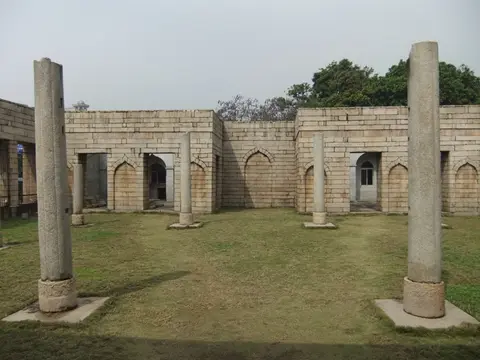
Stone architecture inside Qingjing Mosque blends Middle Eastern spatial form with local Southern Fujian (Minnan) building craft. Facing Tumen Street stands mainland China's sole stone mosque gatehouse, built of diabase and white granite with three connected vaults under five metres wide resembling an Iranian iwan beneath a crenellated rooftop once used to sight Ramadan moons. Lotus carvings inside the dome lead toward the roofless 30-by-27-metre Fengtian Hall, styled like Abbasid mosques at Samarra and Kairouan with three rows of four columns, eight street windows, Surah Al-Insan facade bands and six blind flanking mihrabs. After a 1761 typhoon tore away Fengtian Hall's roof, prayers shifted into the red-brick, raw-earth Minnan courtyard of Mingshan Hall with ventilated north, south and east doorways.
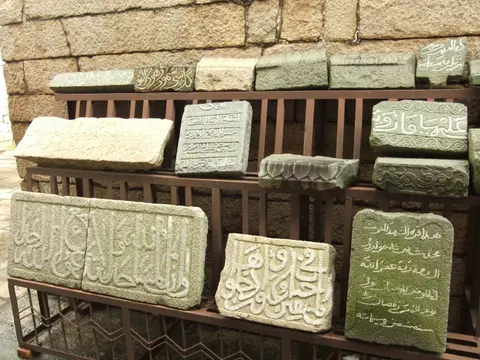
Across 536.08 hectares, 22 serial sites bind religious pluralism directly to docks, navigation pagodas, ceramic kilns and iron production hills. Excavations around Qingjing Mosque in the 1980s exposed Song pottery and Yuan timber traces, while dozens of Islamic grave tablets discovered in 1950s construction moved to the Quanzhou Maritime Museum. Owned by the state under multiple cultural-city, religious, marine and scenic regulations, the series is managed through China's Cultural Relics Law, Fujian provincial protections and revised Zayton statutes, uniting four administrative levels in quarterly coordination meetings.
Access Zones Across Quanzhou's Song and Yuan Heritage Network
Reviewing a quanzhou china map before visiting clarifies how downtown shrines in Licheng connect northeast and southwest to tidal estuary bridges. Verify gate admission procedures at temple courtyards and municipal heritage desks before travelling across outlying districts.
| Complex Zone | Key Highlights | Access & Ticket Rule |
|---|---|---|
| Licheng Urban Religious Core | Kaiyuan Temple (West Street) with twin stone pagodas and Tamil carvings, plus Qingjing Mosque on Tumen Street. | Accessible along city streets on foot or local transit; verify temple and mosque courtyard entry tickets and modest dress rules. |
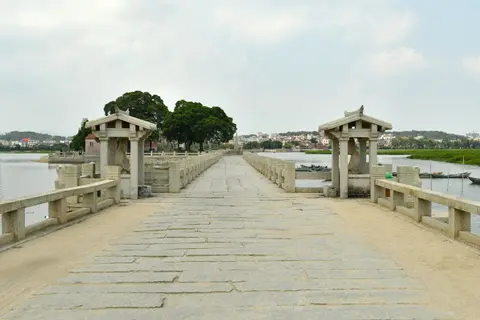
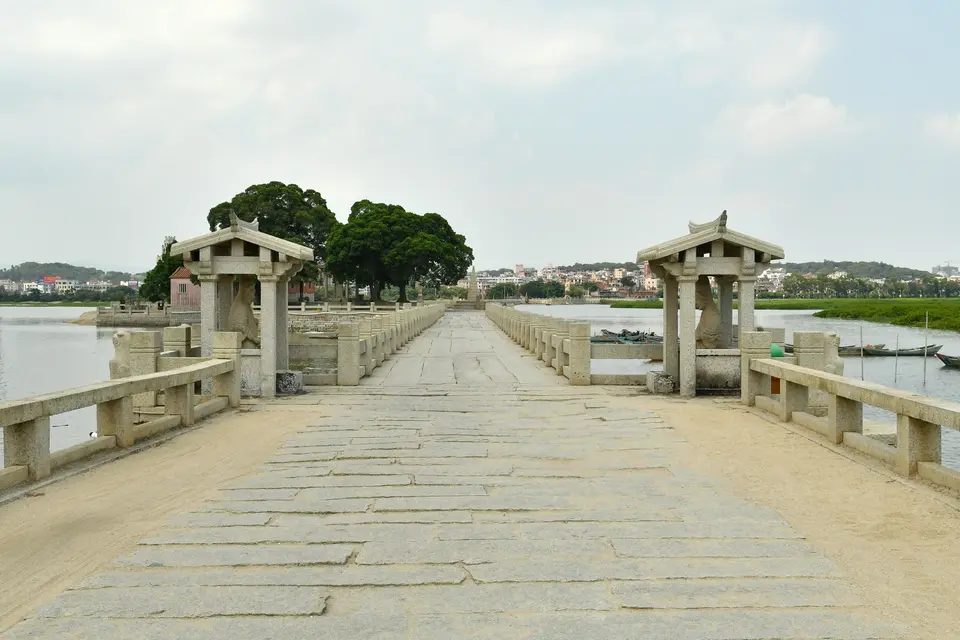
| Luoyang Estuary Crossing | Song-era Luoyang Bridge spanning the tidal mouth northeast of downtown with guardian warrior statues and Zhongzhou Island stelae. | Open pedestrian stone causeway and island monument terraces; obey coastal tide advisories along exposed lower masonry piers. |
| Southern Bridge and Maritime Corridor | Twelfth-century Anping Bridge extending across coastal mudflats southwest of the city centre, plus museum collections. | Separate road or bus transfer south toward Jinjiang and Nan'an; check local Quanzhou Maritime Museum visiting hours. |
Three Maritime and Architectural Details Across Quanzhou
- South Indian Granite Vishnu Pillars at Kaiyuan Temple: Look behind Daxiongbao Hall to examine greenish-grey granite columns carved in thirteenth-century Chola Nadu style. These pillars record active Tamil merchant life inside a Chinese Buddhist monastery.
- Crenellated Diabase Gate Tower at Qingjing Mosque: Study the three vaulted granite-and-diabase arches opening off Tumen Street. Inside, spot the carved lotus ceiling medallion beneath crenellations built for Ramadan lunar sightings.
- Zhongzhou Island Stelae on Luoyang Bridge: Walk mid-span across Luoyang Bridge to inspect carved guardian warriors and historic tablets. Ming cliff calligraphy and Qing repair stelae document centuries of coastal bridge maintenance.
Quanzhou China Airport Code, Typhoon Seasons, and City Planning
Checking the quanzhou china airport code and port directories confirms fast regional connections right beside the Taiwan Strait. Quanzhou Jinjiang International Airport (IATA: JJN) sits just 19 kilometres south of the serial heritage zone, while Xiamen Gaoqi International Airport (IATA: XMN) provides a larger regional hub 60 kilometres southwest. Modern maritime cargo directories still track shipping traffic under the official quanzhou china unlocode registry, while checking local quanzhou china time tables keeps coastal high-speed train and flight transfers smooth.
Seasonal planning across Quanzhou's humid subtropical climate helps visitors avoid coastal storms and quanzhou china flood disruptions. Four distinct seasons carry temperatures ranging from 0 to 38 degrees Celsius, with summer months bringing typhoons, heavy rainfall and occasional storm damage across low estuaries just as a 1761 typhoon unroofed Fengtian Hall. Milder spring and autumn windows offer comfortable walking conditions across West Street courtyards, Tumen Street stonework and exposed stone spans at Luoyang and Anping bridges.
Allocating two full days lets visitors pair downtown Licheng's Buddhist, Islamic and Hindu stonework with crossing Luoyang Bridge and touring the Quanzhou Maritime Museum's Song-Yuan grave inscriptions and navigational artefacts. High-speed coastal railways also link southern Fujian smoothly southward along China's southeast coast toward Hong Kong (531 kilometres southwest). Explore further Asian maritime heritage networks inside our UNESCO World Heritage Atlas.